



A cave painting on the Indonesian island of Sulawesi may be the oldest evidence of ancient Indonesian cave art ever discovered, according to researchers. This artwork, depicting a human-like figure interacting with a warty pig, indicates that people might have been using art as a form of the oldest storytelling much earlier than previously believed.
Archaeological evidence shows that Neanderthals began marking caves around 75,000 years ago, but these markings were typically non-figurative. Until recently, the oldest known figurative cave painting was a 21,000-year-old rock art panel in Lascaux, France, illustrating a bird-headed human charging a bison. However, in 2019, archaeologists discovered numerous examples of rock art in the caves of the Maros-Pangkep karst. This rock art included a 15-foot-wide (4.5 meters) panel portraying human-like figures engaging with warty pigs (Sus celebensis) and anoas (Bubalus) — dwarf buffalos native to Sulawesi.
The discovery suggests that ancient Indonesian cave art might represent the oldest storytelling through visual means. Storytelling plays a crucial role in human evolution and could be a factor in our species’ success. Evidence of storytelling in art, especially very early cave art, is exceptionally rare. Researchers have dated the rock art panel and found it to be at least 43,900 years old, with the oldest image of a warty pig in the area being 45,500 years old.
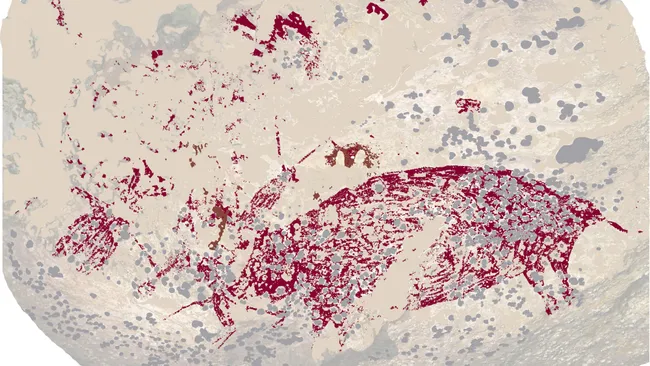
Using a more sensitive dating technique, archaeologists now believe the rock art is at least 4,000 years older than previously thought, making it approximately 48,000 years old. More intriguingly, a similar depiction of the human-like figure and warty pig was found at another cave in Leang Karampuang, dating back to at least 51,200 years ago. This makes it the oldest known narrative art, showcasing the significance of ancient Indonesian cave art in the history of the oldest storytelling.
Archaeologists were particularly fascinated by the depiction of part-human, part-animal figures, known as therianthropes, in this narrative art. This unique portrayal underscores the creativity and symbolic thinking of early humans in Sulawesi, highlighting the importance of ancient Indonesian cave art in understanding the origins of oldest storytelling practices.
Archaeologists are particularly fascinated by depictions of therianthropes because they provide evidence for early humans’ ability to imagine supernatural beings that do not exist in real life. This ability reflects a significant leap in cognitive development and the emergence of complex symbolic thinking.


The earliest evidence of a therianthrope was previously the 40,000-year-old ‘Lion Man’ sculpture discovered in a cave in Germany. However, the ancient Indonesian cave art found in Sulawesi has pushed back these dates by nearly 20,000 years, a groundbreaking revelation. These depictions demonstrate an even earlier instance of sophisticated human cognition, challenging previous notions of the timeline of symbolic and narrative art development.
Derek Hodgson, an archaeologist and scientific advisor for INSCRIBE, a European-based project investigating the development of writing, noted that these findings from Indonesia are revolutionary. They highlight that early humans, unlike Neanderthals or other archaic species, were capable of producing complex figurative art. This early evidence of therianthropes suggests a rich tradition of oldest storytelling practices.

To accurately date the narrative art, researchers employed a technique called laser ablation uranium-series imaging. This advanced method allowed for the precise dating of the cave paintings by analyzing tiny calcite samples, just 0.002 inches (44 microns) long. Previously, scientists had relied on carbon-dating larger calcite clusters, known as cave “popcorn,” which had accumulated over thousands of years.
By using smaller samples, the archaeologists achieved a higher resolution of the age distribution of the calcite on the cave walls. This technique also minimized damage to the artwork, preserving the integrity of the ancient Indonesian cave art. The researchers believe that this innovative dating method could revolutionize the way other ancient records are dated, offering new insights into the history of oldest storytelling traditions.
Renaud Joannes-Boyau, a geochronologist at Southern Cross University in Australia, emphasized that this new dating approach changes the way historical dating is conducted and has broad applications for other archaeological records. The combination of advanced dating techniques and the discovery of these early narrative depictions underscores the significance of ancient Indonesian cave art in the study of human cognitive and cultural evolution.
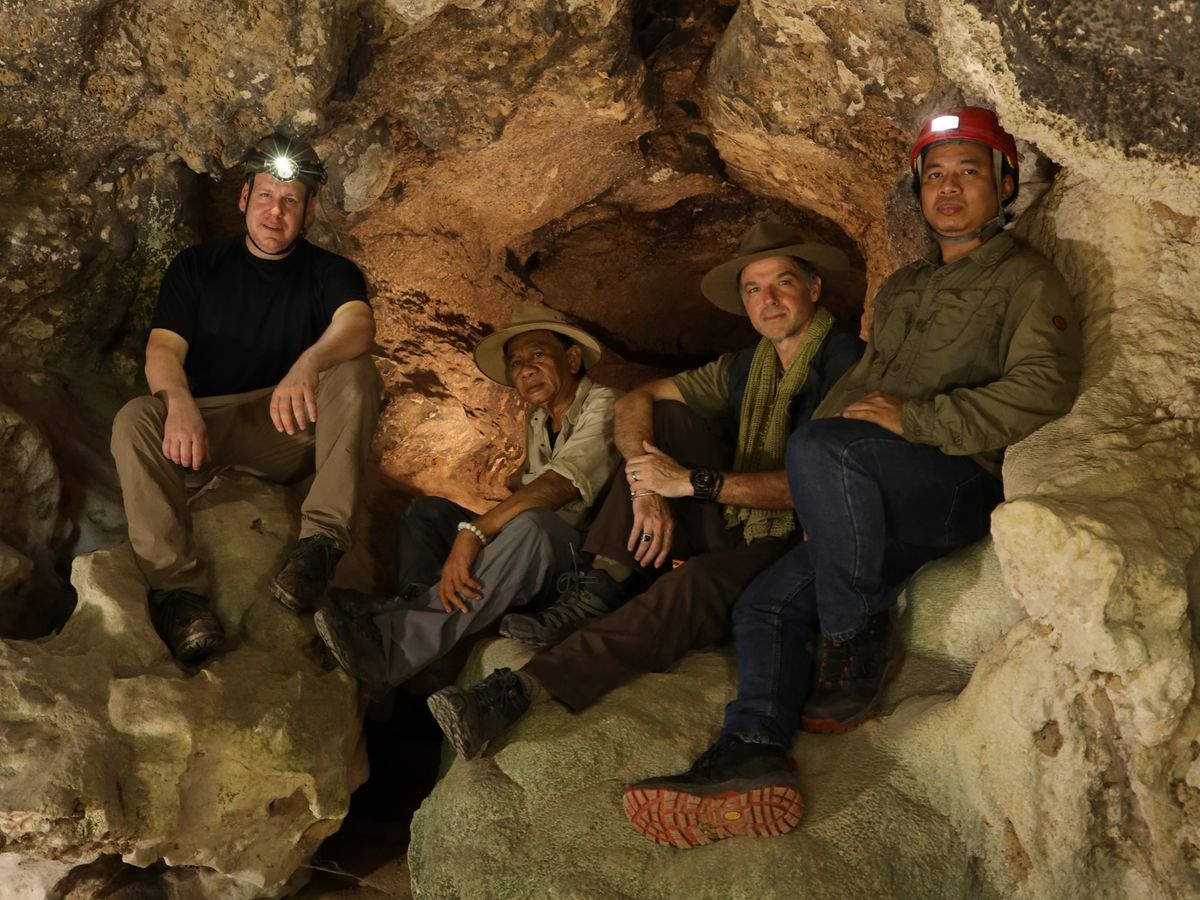
However, not all experts agree with the conclusions drawn by the researchers. Paul Pettitt, a paleolithic archaeologist at Durham University in the U.K., expressed skepticism about the claim that the art represents a narrative. He suggested that the interpretation of the images as storytelling required a significant leap of faith, despite the robust dating methods used.
Pettitt argued that it was difficult to determine whether the paintings were intended to be seen as a cohesive narrative or if they were simply isolated depictions that happened to be located near each other. This perspective highlights the ongoing debate within the archaeological community regarding the interpretation of ancient Indonesian cave art and its role in oldest storytelling practices.
The researchers acknowledged that the identity of the painters remains unknown, though they are likely to have been Homo sapiens. The cave’s lack of evidence for human habitation suggests it may have been used exclusively for creating art. Situated at a higher elevation and tucked away from other areas, the cave might have served as a special location dedicated to art-making. This raises intriguing possibilities about the rituals and stories that could have been associated with these artworks, further emphasizing the significance of ancient Indonesian cave art in the context of oldest storytelling.
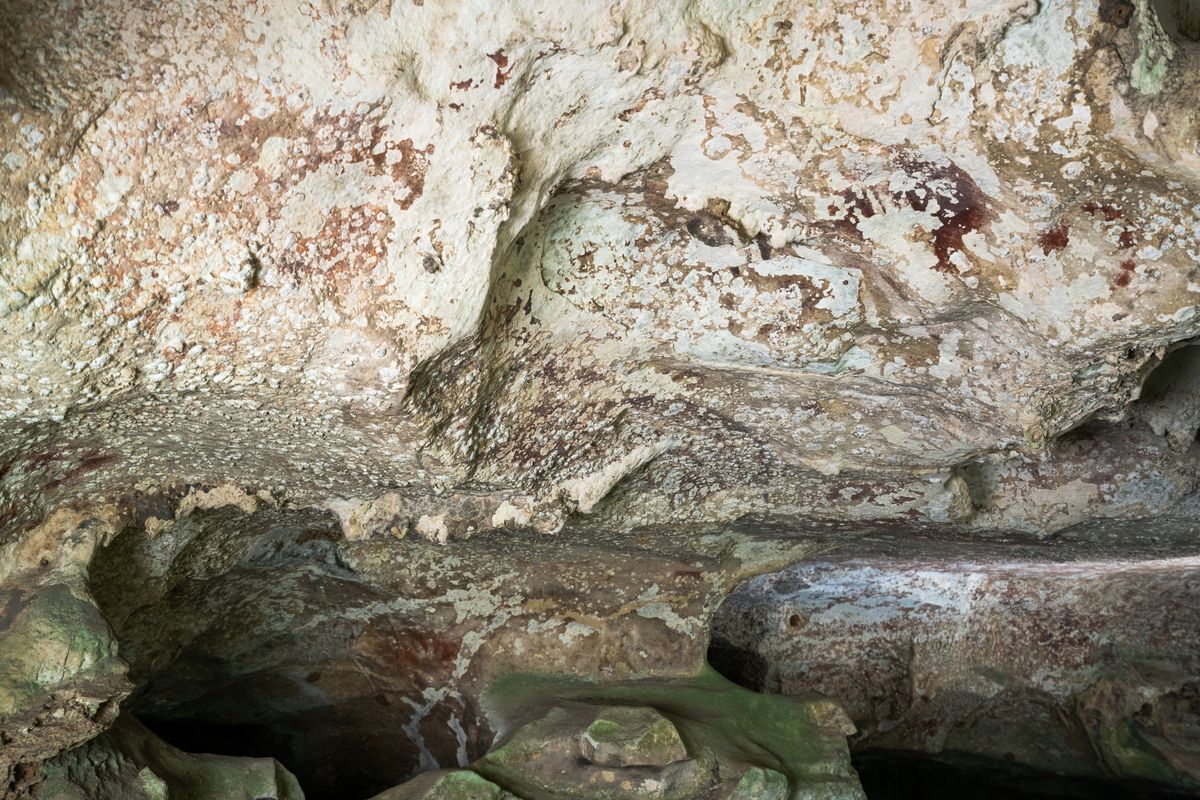
(Credit: BRIN Google Arts and Culture)
Maxime Aubert, an archaeologist and geochemist at Griffith University, speculated that early humans might have ventured into these high-level caves specifically to create art. The unique placement of the cave suggests that it was a special place in the landscape, potentially used for rituals or storytelling purposes. This hypothesis underscores the cultural and spiritual importance that ancient Indonesian cave art may have held for early humans.
The research team plans to continue surveying and dating more rock art in the region. Recently, Adhi Agus Oktaviana, the study’s lead author and an archaeologist at the Center for Prehistory and Austronesian Studies (CPAS) in Indonesia, discovered another painting in a different cave. This new painting features three figures: a human, a half-human-half-bird, and a bird figure. Although this painting has not yet been analyzed, it hints at the possibility of finding even more remarkable examples of ancient Indonesian cave art.
Maxime Aubert expressed optimism about uncovering additional beautiful and significant artworks hidden in the region’s caves. The ongoing exploration and analysis of these findings promise to shed further light on the early traditions of oldest storytelling and the complex symbolic expressions of ancient humans.
- ONLINE NEWS Tjandra, K. (2024b, July 3). 51,000-year-old Indonesian cave painting may be the world’s oldest storytelling art. livescience.com. [livescience.com]
- JOURNAL Garfinkel, A. P., Mukhopadhyay, T. P., & Molinar, M. (2016). Patterned Body Anthropomorphs of the Cosos: Revisiting the Shamans and Animal Masters of Deep Time. ResearchGate. [ResearchGate]
- WEBSITE Cook, J. (2017, October 10). The Lion Man: an Ice Age masterpiece. The British Museum. [The British Museum]
APA 7: TWs Editor. (2024, July 4). Ancient Indonesian Cave Art: Oldest Storytelling Found. PerEXP Teamworks. [Online News Link]