



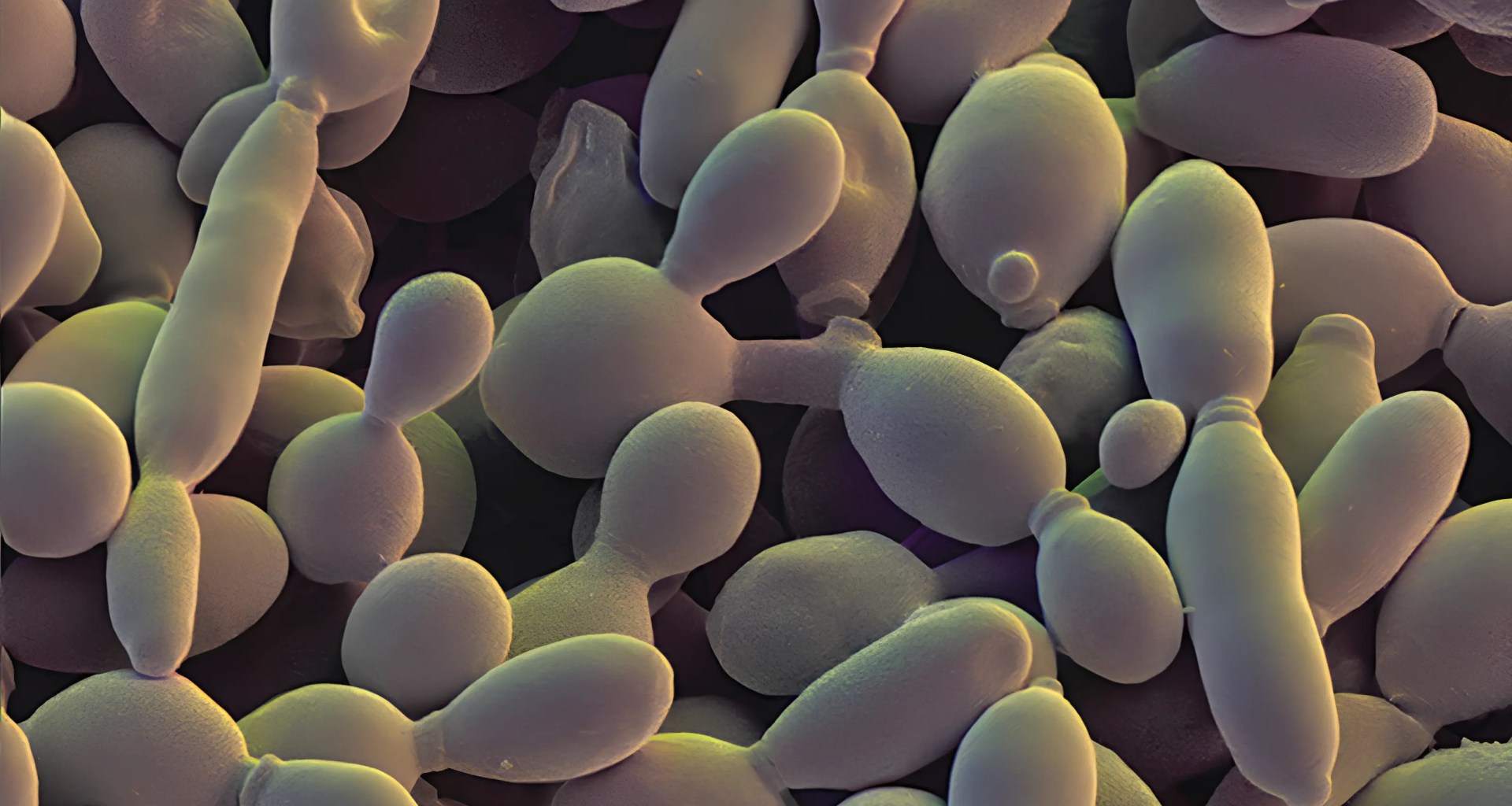
APA 7: TWs Editor & ChatGPT. (2023, November 9). Researchers Achieve Milestone in Synthetic Yeast Creation: Chromosome XI Successfully Constructed. PerEXP Teamworks. [News Link]
Published in Cell Genomics, the endeavor signifies the successful assembly of one of the 16 chromosomes within the yeast genome by the UK team. This collaborative project, known as the international synthetic yeast genome collaboration, stands as the largest-ever undertaking in the field of synthetic biology.
The “Sc2.0” collaboration, spanning a remarkable 15-year duration, has united teams from various corners of the globe, including the UK, US, China, Singapore, France, and Australia. Their collective objective has been to synthesize all of the yeast’s chromosomes. In tandem with this publication, nine additional papers have been released by different research teams, each detailing their progress in creating synthetic chromosomes. The culmination of this monumental genome project, which stands as the most extensive synthetic genome endeavor to date, is anticipated to take place in 2024.
This undertaking marks a pioneering endeavor in constructing the synthetic genome of a eukaryote, a category of living organisms characterized by the presence of a nucleus, including animals, plants, and fungi. The selection of yeast as the focal organism for this project stems from its advantageous attributes, notably its compact genome and its intrinsic capacity to merge DNA fragments, enabling the researchers to craft synthetic chromosomes within yeast cells.
Throughout human history, yeast has played an integral role, having been harnessed for baking and brewing for millennia. In more contemporary times, it has been employed for chemical manufacturing and as a model organism to understand the functioning of our own cells. This extensive familiarity with yeast genetics, surpassing that of any other organism, made yeast the clear and ideal choice for this ambitious project.
Under the leadership of Dr. Ben Blount from the University of Nottingham and Professor Tom Ellis at Imperial College London, the UK-based team has officially announced the successful assembly of synthetic chromosome XI. This decade-long endeavor to construct the chromosome culminated in the creation of a DNA sequence comprising approximately 660,000 base pairs, which represent the fundamental “letters” composing the DNA code.
The synthetic chromosome has been integrated in place of one of the yeast cell’s native chromosomes. Following a meticulous debugging phase, it has been successfully fine-tuned to enable the cell to grow with a level of vitality equivalent to that of a natural cell. This synthetic genome, apart from enhancing our comprehension of genomic operations, is poised to offer a multitude of practical applications.
Unlike a mere duplication of the natural genome, the Sc2.0 synthetic genome has been intentionally engineered with innovative attributes, endowing cells with unique capabilities absent in nature. One such feature empowers researchers to induce a rearrangement of gene content within the cells, generating a diverse array of cell variants, each with distinct characteristics. From this pool, individuals with enhanced traits can be selected for a broad spectrum of applications in fields such as medicine, bioenergy, and biotechnology. This approach essentially resembles an accelerated form of evolutionary adaptation.
Furthermore, the team has demonstrated the adaptability of their synthetic chromosome as a novel platform for investigating extrachromosomal circular DNAs (eccDNAs). These eccDNAs are autonomous circular DNA structures that have separated from the genomic DNA and are now acknowledged as contributors to the aging process and as factors associated with the development of malignancies and resistance to chemotherapeutic drugs in numerous cancer types, including glioblastoma brain tumors.
Dr. Ben Blount, one of the principal scientists involved in the project, serves as an Assistant Professor in the School of Life Sciences at the University of Nottingham. He emphasized that the synthetic chromosomes represent significant technological accomplishments, providing a wide array of new possibilities for advancing our understanding and practical applications in the realm of biology. This can encompass tasks such as engineering novel microbial strains to enhance environmentally friendly bioproduction and aiding in the comprehension and combat of diseases.
The synthetic yeast genome project serves as an exemplary instance of large-scale scientific collaboration, bringing together a substantial and diverse community of researchers from across the globe. Being part of this monumental undertaking has been an enriching experience, with everyone involved working collectively toward a common and shared objective.
Professor Tom Ellis, affiliated with the Center for Synthetic Biology and the Department of Bioengineering at Imperial College London, highlighted the significance of their team’s achievement. Their creation of a completely redesigned chromosome, capable of seamlessly substituting a natural one, lays a solid groundwork for the development and construction of synthetic chromosomes and even entire genomes for more complex organisms, such as plants and animals.
Resources
- NEWSPAPER University of Nottingham. (2023, November 8). Scientists report completion of chromosome XI, a major step towards creating the world’s first synthetic yeast. Phys.org. [Phys.org]
- JOURNAL Blount, B. A., Lu, X., Driessen, M. R. M., Jovicevic, D., Sanchez, M. I., Ciurkot, K., Zhao, Y., Lauer, S., McKiernan, R. M., Gowers, G.-O. F., Sweeney, F., Fanfani, V., Lobzaev, E., Palacios-Flores, K., Walker, R. S. K., Hesketh, A., Cai, J., Oliver, S. G., Cai, Y., Stracquadanio, G., Mitchell, L. A., Bader, J. S., Boeke, J. D., & Ellis, T. (2023). Synthetic yeast chromosome XI design provides a testbed for the study of extrachromosomal circular DNA dynamics. Cell Genomics, 3(11), 100418. [Cell Genomics]