



Over the span of the past four years, the pathogen responsible for instigating Coronavirus Disease 2019 (COVID-19), identified as SARS-CoV-2, has not only infected a staggering 770 million individuals globally but has also been associated with over 6.9 million deaths. The profound impact of SARS-CoV-2 is frequently ascribed to its unique ability to not only suppress the interferon (IFN) response but also to concurrently stimulate the production of an array of cytokines.
This dual modulatory action sets the stage for a phenomenon known as a cytokine storm, a pivotal factor contributing significantly to the heightened mortality observed in COVID-19 patients. Despite the recognized importance of the cytokine storm in disease severity, the specific mechanisms by which SARS-CoV-2 initiates this cascade of immune responses have, until recently, remained elusive.
In an effort to unravel this critical aspect, a distinguished research team spearheaded by Prof. Xue Yuanchao from the Institute of Biophysics at the Chinese Academy of Sciences, in collaboration with their scientific counterparts, has undertaken a comprehensive examination of the SARS-CoV-2-to-host RNA–RNA interactions. This intricate exploration seeks to shed light on the intricate molecular dialogue between the viral RNA and the host’s cellular machinery, providing valuable insights into the initiation and progression of the cytokine storm.
By delving into the nuanced dynamics of RNA interactions, this research endeavor not only addresses a pivotal question in the understanding of COVID-19 pathology but also holds the potential to uncover novel therapeutic targets for mitigating the cytokine storm and alleviating the severity of the disease. The findings from this investigation are anticipated to contribute significantly to the evolving landscape of our comprehension of SARS-CoV-2 pathogenesis, paving the way for more targeted interventions and improved outcomes for individuals affected by COVID-19.
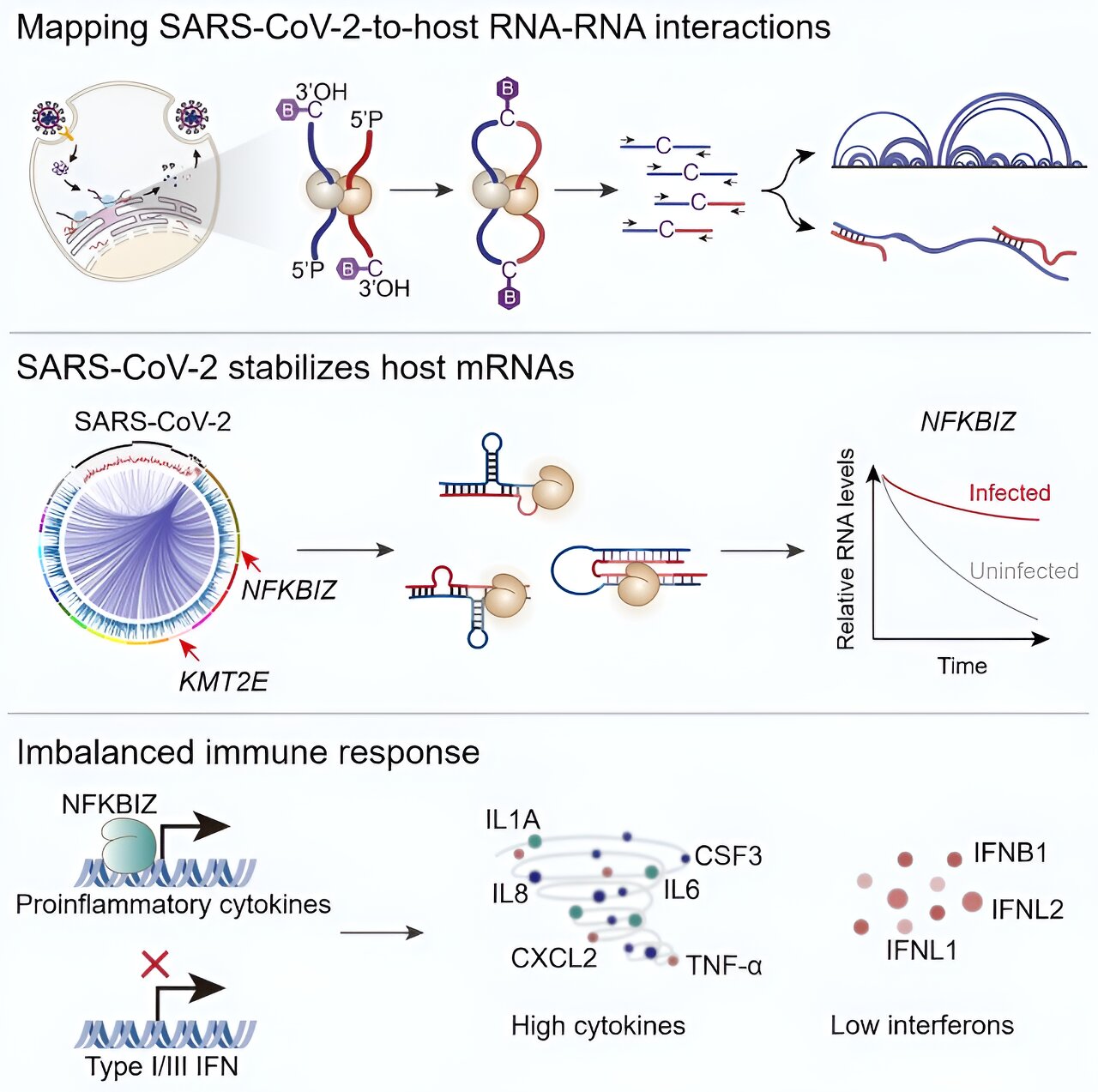
Published in Molecular Cell on December 20, this study provides unprecedented insights into the molecular intricacies governing the interaction between SARS-CoV-2 RNA and host mRNAs, shedding light on the underlying mechanisms triggering the notorious cytokine storm.
Leveraging cutting-edge RIC-seq technology, the research team conducted an exhaustive mapping of SARS-CoV-2-to-host RNA–RNA interactions within infected cells and lung tissues obtained from deceased COVID-19 patients. Employing mass spectrometry analysis of the RNA pull-down assay, the researchers uncovered a crucial finding: SARS-CoV-2 RNA establishes base pairs with the 3′ UTR of host mRNAs and recruits the RNA-binding protein YBX3. This interaction serves to stabilize host mRNAs within A549-ACE2 and Vero cells. Notably, disrupting the SARS-CoV-2-to-host RNA–RNA interaction or knocking down YBX3 led to a significant reduction in host mRNA stability and impeded the replication of SARS-CoV-2.
Within the cohort of stabilized host mRNAs, NFKBIZ emerged as a pivotal player in promoting cytokine production while simultaneously suppressing interferon (IFN) responses, potentially contributing to the onset of the cytokine storm. Experimental knockdown of NFKBIZ resulted in a marked decrease in the expression levels of proinflammatory factors such as IL-6, IL-8, and CXCL2. Simultaneously, the levels of type I/III IFNs, including IFNB1, IFNL1, and IFNL2, increased. These findings underscore the intricate orchestration of the cytokine storm by SARS-CoV-2 through the stabilization of host mRNAs, with NFKBIZ playing a pivotal role in modulating inflammatory responses and IFN dynamics.
The revelations from this study not only enhance our understanding of the molecular events underpinning COVID-19 pathology but also present potential avenues for therapeutic intervention by targeting the SARS-CoV-2-host RNA interactions and key regulatory elements such as NFKBIZ. This comprehensive exploration is poised to shape the landscape of future research, providing valuable insights into strategies to mitigate the severity of the cytokine storm and improve outcomes for COVID-19 patients.
The findings from this groundbreaking research not only illuminate the intricate regulatory dynamics of RNA–RNA interactions governing the immunopathogenesis of RNA viruses, notably SARS-CoV-2, but also hold the promise of advancing novel strategies in the ongoing battle against COVID-19.
By unraveling the molecular intricacies of how SARS-CoV-2 RNA interacts with and stabilizes host mRNAs, thereby instigating the cytokine storm, this study provides a crucial framework for understanding the complex interplay between viral RNA and host cellular machinery. This knowledge is instrumental in deciphering the underlying mechanisms of severe cases of COVID-19, particularly in the context of the cytokine storm—a hallmark of disease severity.
The profound implications of these discoveries extend beyond comprehension alone, offering tangible avenues for the development of targeted interventions. The identified molecular mechanisms responsible for the cytokine storm serve as potential targets for therapeutic strategies aimed at disrupting or modulating specific interactions. This targeted approach, directed at the core molecular events precipitating the cytokine storm, holds significant promise in mitigating the severity of COVID-19 and improving clinical outcomes.
In essence, this research not only contributes to the scientific understanding of the intricate molecular dance between SARS-CoV-2 RNA and host cellular elements but also provides a blueprint for the development of innovative therapeutic interventions. As we continue to grapple with the challenges posed by COVID-19, these findings pave the way for more precise and effective strategies to navigate the complexities of the immune response, offering hope for improved management of severe cases and ultimately a more robust arsenal against the ongoing pandemic.
Resources
- ONLINE NEWS Nannan, Z. & Chinese Academy of Sciences. (2024, January 2). Researchers reveal molecular mechanism of cytokine storm induced by coronavirus. Medical Xpress. [Medical Xpress]
- JOURNAL Zhao, H., Cai, Z., Rao, J. Y., Wu, D., Ji, L., Ye, R., Wang, D., Chen, J., Cao, C., Hu, N., Shu, T., Zhu, P., Wang, J., Zhou, X., & Xue, Y. (2023). SARS-CoV-2 RNA stabilizes host mRNAs to elicit immunopathogenesis. Molecular Cell. [Molecular Cell]
Cite this page:
APA 7: TWs Editor. (2024, January 4). Researchers Discover How Coronavirus Causes Cytokine Storm at the Molecular Level. PerEXP Teamworks. [News Link]


