



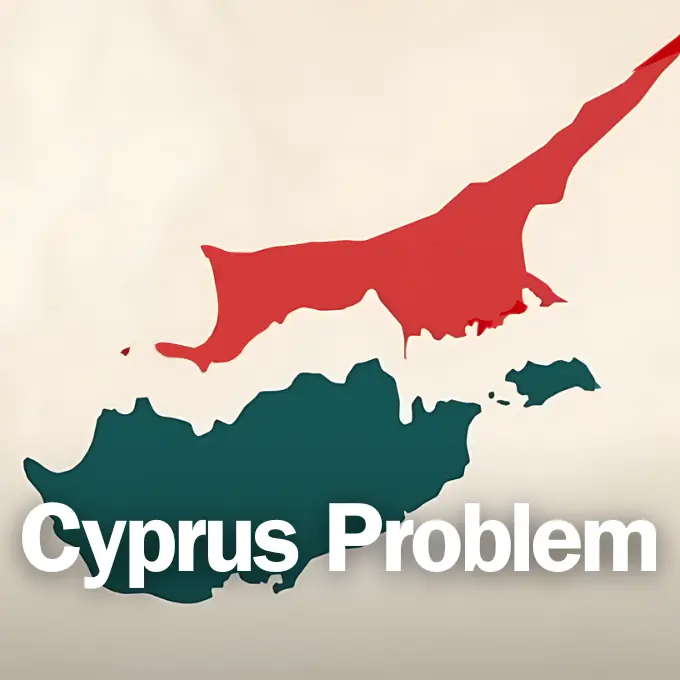
The Cyprus problem refers to the ongoing conflict and division of the island of Cyprus, which has its roots in the complex interplay of historical, ethnic, and political factors. Cyprus is located in the Eastern Mediterranean and has been a strategic point of interest for many civilizations and empires over the centuries. The modern problems in Cyprus, including the Turkish invasion of Cyprus and its consequences, began to emerge after the island gained independence from British colonial rule in 1960. This period saw the creation of the Republic of Cyprus, which implemented a power-sharing arrangement between the Greek Cypriot majority and the Turkish Cypriot minority.
However, this arrangement faced difficulties in its feasibility from the beginning. Ethnic tensions between the Greek Cypriots, who made up about 80% of the population, and the Turkish Cypriots, who comprised about 18%, led to frequent clashes and a breakdown in governance.
The situation deteriorated significantly in 1974, when a coup d’état orchestrated by Greek nationalists sought to unite Cyprus with Greece. In response to this coup, Turkey, citing its role as a guarantor of the Turkish Cypriot community, launched a military intervention, leading to the Turkish invasion of Cyprus.
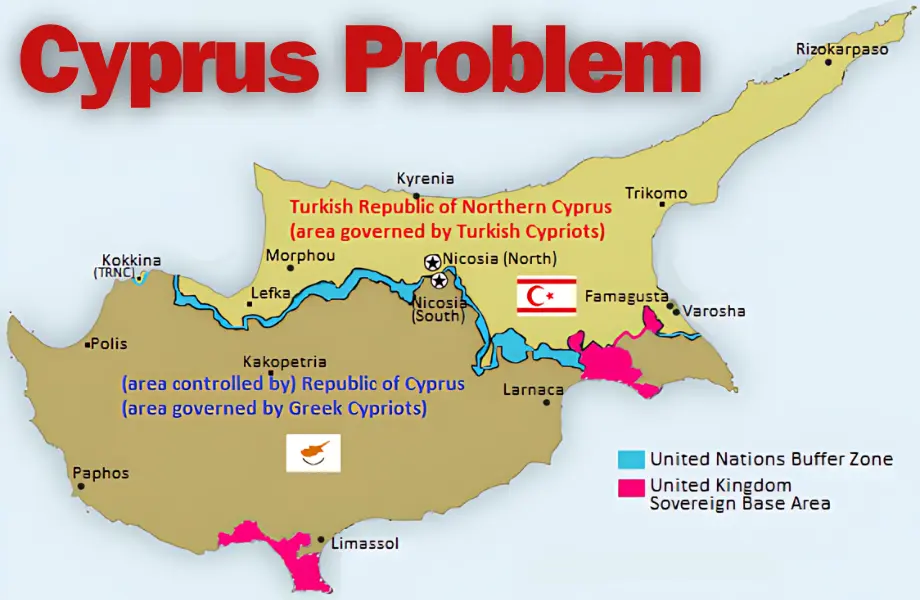
The Turkish invasion of Cyprus resulted in the occupation of the northern third of the island by Turkish forces, creating a de facto partition that persists today. This invasion displaced thousands of people from both communities, with many Greek Cypriots fleeing the north and Turkish Cypriots moving to the occupied areas. The island’s division has led to significant humanitarian issues, including the displacement of people, property disputes, and the separation of families.
The Cyprus problem has also had a profound impact on regional stability and international relations. Various efforts to resolve the conflict, including United Nations-led negotiations, have so far failed to achieve a lasting solution. The European Union’s involvement, particularly after Cyprus joined the EU in 2004, has added another layer of complexity to the issue.
Note
The Cyprus issue is interpreted differently by the Turkish government and the Turkish people, stating that they occupied the island to prevent the Turkish Cypriots from suffering genocide. This article does not express an opinion, it simply includes how the United Nations interprets the Cyprus issue.
The Turkish government’s foreign ministry published a history on this subject: [Republic of Türkiye Ministry of Foreign Affairs]
Historical Background of the Cyprus problem
Early conflicts
The Cyprus problem stems from the island’s long-standing ethnic tensions and divergent national ambitions.. Early on, problems in Cyprus emerged due to the significant presence of both Greek and Turkish Cypriots, each group with its own distinct cultural and national identities. The Greek Cypriots, who constituted the majority, aspired for Enosis, the union of Cyprus with Greece. Conversely, the Turkish Cypriots, fearing marginalization, sought Taksim, the partition of the island to establish a separate Turkish Cypriot state.
These conflicting aspirations led to problems in Cyprus, as both communities struggled for political dominance. Intercommunal violence became a recurrent issue, with notable outbreaks in the 1950s. These early conflicts set the stage for the larger crisis that would eventually unfold.

(Credit: Wikipedia English)
British colonial period
The British colonial period in Cyprus further complicated the Cyprus problem. Cyprus became a British colony in 1878, and during this time, the problems in Cyprus were exacerbated by rising nationalist movements among both Greek and Turkish Cypriots. The Greek Cypriots intensified their efforts for Enosis, while the Turkish Cypriots increasingly supported Taksim.
British colonial policies often played a role in aggravating the situation, as they implemented divide-and-rule strategies to maintain control over the island. This period saw the formation of organized militant groups such as EOKA (Ethniki Organosis Kyprion Agoniston) by Greek Cypriots, which aimed to end British rule and achieve Enosis. In response, the Turkish Cypriots formed the TMT (Türk Mukavemet Teşkilatı), dedicated to opposing Enosis and promoting Taksim.

The culmination of these problems in Cyprus during the British colonial period led to significant unrest and violence, setting a tumultuous stage for the island’s future. The complex interplay of ethnic tensions and nationalist movements during this time laid the groundwork for the eventual turkish invasion of Cyprus.
Towards independence and crisis
As Cyprus moved towards independence, the Cyprus problem remained unresolved. The Zurich and London Agreements of 1959 led to the establishment of the Republic of Cyprus in 1960, yet the new constitution did not resolve the profound divisions between Greek and Turkish Cypriots. The power-sharing arrangement quickly broke down, leading to further problems in Cyprus.
In 1974, a Greek-led coup aimed at achieving Enosis provoked Turkey to intervene militarily, citing the need to protect Turkish Cypriots. This intervention, often referred to as the Turkish invasion of Cyprus, led to the occupation of the northern part of the island by Turkish forces, creating a de facto partition that persists to this day.
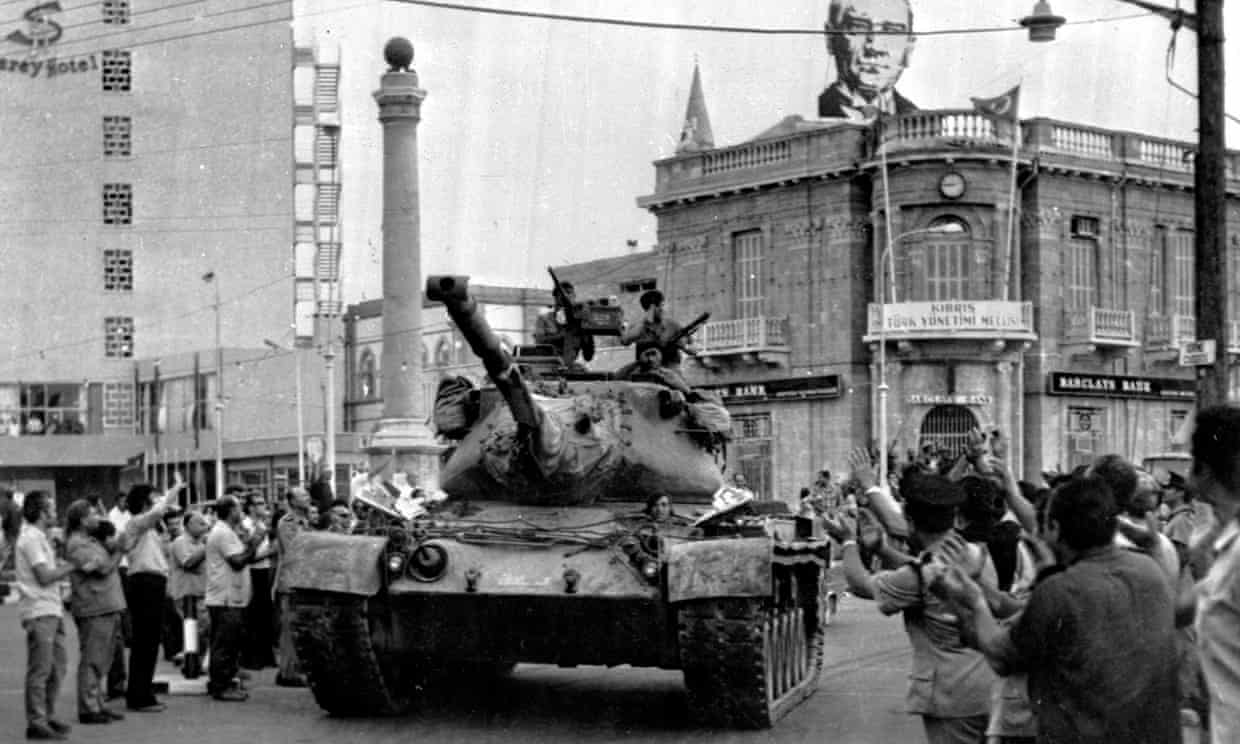
The turkey invading cyprus and the subsequent division have become central to the Cyprus problem, with numerous efforts at reunification failing to resolve the core issues. The international community has made significant efforts to resolve the Cyprus problem, with the United Nations playing a crucial role. The United Nations Peacekeeping Force in Cyprus (UNFICYP) was established in 1964 to prevent further violence and facilitate dialogue between the two communities.
Despite these efforts, the problems in Cyprus persisted, culminating in the major crisis of 1974. The events of that year marked a significant turning point in the Cyprus problem. The coup d’état by Greek nationalists seeking Enosis triggered a response from Turkey, which launched a military intervention. This action, often referred to as Turkey invading Cyprus, was justified by Turkey as a necessary measure to protect Turkish Cypriots. The Turkish invasion of Cyprus resulted in the occupation of the northern part of the island, leading to a de facto division that remains unresolved.
The Turkish invasion of Cyprus
Background and causes
The Cyprus problem originates from the island’s intricate history and ethnic divides. By 1974, Cyprus had experienced significant intercommunal violence and political instability. The immediate cause of Turkey invading Cyprus was the Greek-led coup on July 15, 1974. This coup, orchestrated by the military junta in Greece and the National Guard of Cyprus, aimed to achieve Enosis (union with Greece). This unilateral move escalated tensions and posed a threat to the Turkish Cypriot minority, prompting Turkey to act.
Turkey defended its intervention by citing the Treaty of Guarantee, which permitted Greece, Turkey, and the United Kingdom to intervene in Cyprus to reestablish constitutional order. Thus, on July 20, 1974, Turkey launched Operation Atilla, claiming the need to protect Turkish Cypriots and restore peace.

Operation Atilla
Operation Atilla, the codename for the Turkish invasion of Cyprus, began with a coordinated amphibious assault near Kyrenia on the northern coast. Turkish forces quickly advanced, facing resistance from Greek Cypriot National Guard units. Within a few days, the Turkish military secured a bridgehead and established control over a significant portion of the northern part of the island.
The initial phase of Operation Atilla resulted in a ceasefire on July 22, 1974. However, peace talks in Geneva failed to reach a resolution. On August 14, Turkey launched a second offensive, expanding its control to about 37% of the island. This military action displaced thousands of Greek Cypriots and solidified the division of Cyprus.
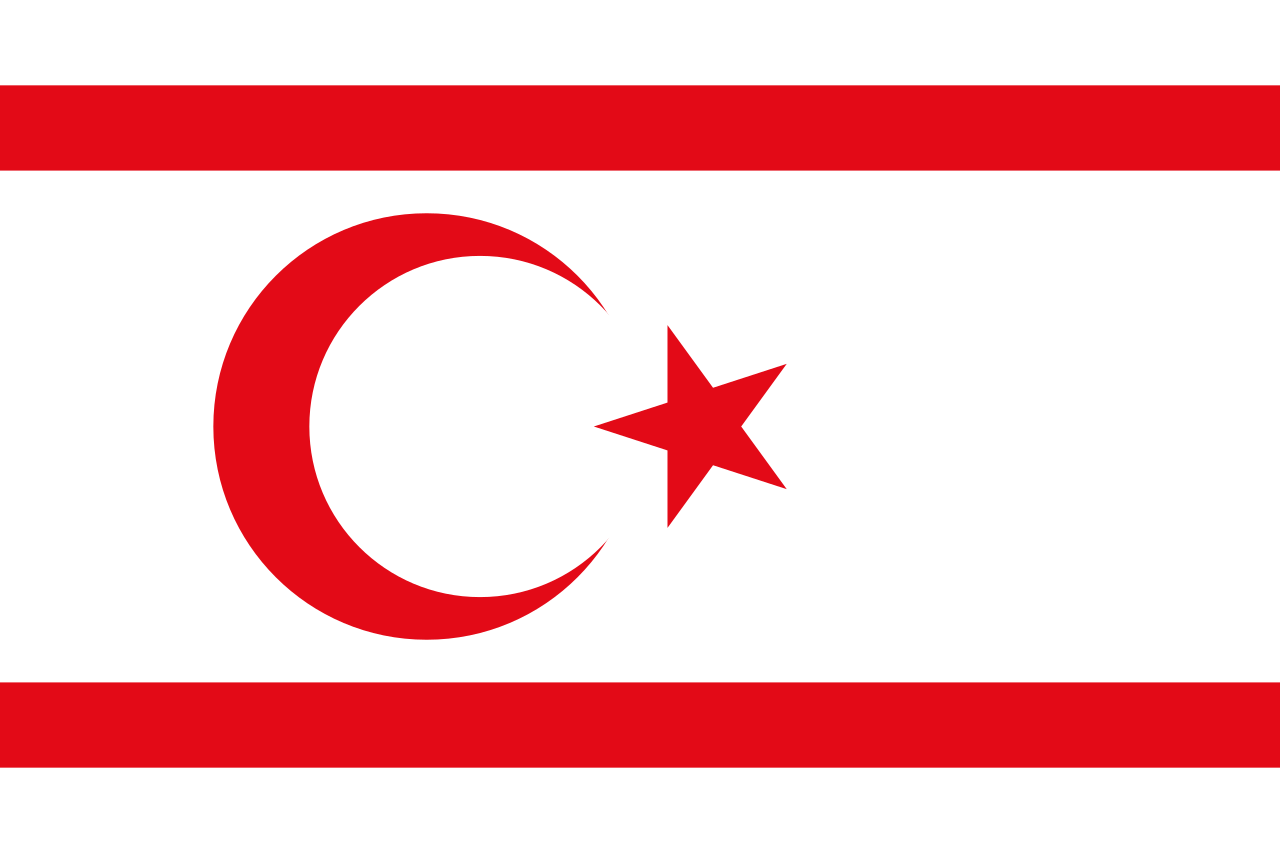
The aftermath of Turkey invading Cyprus saw the establishment of the Turkish Federated State of Cyprus in the north, later declared the Turkish Republic of Northern Cyprus (TRNC) in 1983, recognized only by Turkey.
Impact on Cypriot society
The Turkish invasion of Cyprus resulted in significant social, economic, and political repercussions. The island’s division created a significant humanitarian crisis, with approximately 200,000 Greek Cypriots becoming refugees in their own country. These displaced persons faced considerable challenges in terms of resettlement and integration.
Economically, the problems in Cyprus intensified due to the loss of property and disruption of economic activities, particularly in agriculture and tourism. The northern part of the island, under Turkish control, experienced a different trajectory of development, often hindered by international isolation and lack of recognition.
Politically, the Cyprus problem became more entrenched. The division led to the establishment of two separate administrations, each claiming legitimacy. Numerous efforts by the United Nations and other international actors to mediate and resolve the Cyprus problem have yet to achieve lasting peace and reunification. The island continues to be split, with a buffer zone overseen by UN peacekeeping troops.
Problems in Cyprus today
Ongoing division
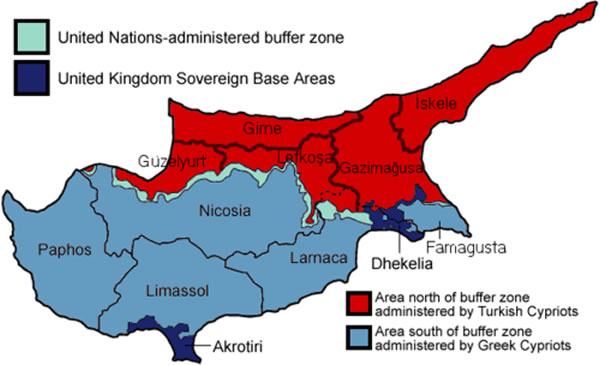
The Cyprus problem remains a pressing issue as the island continues to grapple with its division. Since the Turkish invasion of Cyprus in 1974, the island has been split into two distinct areas: The southern part of the island is governed by the internationally recognized Republic of Cyprus, while the northern part is administered by the Turkish Republic of Northern Cyprus (TRNC), recognized solely by Turkey.
This division has resulted in significant problems in Cyprus, including political, social, and economic challenges. The de facto partition persists, with a heavily fortified buffer zone managed by the United Nations Peacekeeping Force in Cyprus (UNFICYP) separating the two communities. The ongoing division hinders the possibility of a unified Cyprus and continues to impact the daily lives of both Greek and Turkish Cypriots.
Peace talks and negotiations
Efforts to resolve the Cyprus problem have been ongoing for decades, with numerous peace talks and negotiations attempting to address the underlying issues. Recent years have seen several high-profile attempts to reconcile the differences between the Greek and Turkish Cypriot communities.
Notable negotiations include the Annan Plan, which was put forward by the United Nations in 2004 but was ultimately rejected by the Greek Cypriots. Despite various rounds of talks and mediation efforts, including those facilitated by the UN and other international actors, progress has been slow and often impeded by disagreements over key issues such as property rights, territorial adjustments, and political representation.

(Credit: Wikipedia English)
European union involvement
The European Union (EU) has played a significant role in the Cyprus problem since the island’s accession to the EU in 2004. Cyprus’s membership in the EU was seen as a potential catalyst for resolving the problems in Cyprus. However, the division of the island remains a major challenge for the EU. The EU has supported various initiatives aimed at fostering reconciliation and has provided financial assistance to both communities.
The EU’s involvement includes efforts to integrate the Turkish Cypriot community into the European framework and promote cross-border cooperation. Despite these efforts, the unresolved division of the island continues to be a complex issue within the EU framework.

Global reactions
The international community has varied perspectives on the Cyprus problem and the Turkish invasion of Cyprus. Different countries and international organizations have offered divergent views on how best to address the situation. While Turkey justifies its actions during the Turkish invasion of Cyprus as a necessary intervention to protect Turkish Cypriots, many other countries and international bodies regard the occupation of northern Cyprus as a breach of international law.
The United Nations has consistently called for a peaceful resolution to the conflict and has been involved in mediation efforts. Global reactions often reflect broader geopolitical interests and alliances, which complicate the path to a comprehensive and lasting solution.
The Cyprus problem, with its deep-rooted historical and political complexities, remains a significant challenge for the international community. The United Nations has consistently worked to facilitate dialogue and mediate between the conflicting parties, aiming for a resolution that upholds the principles of peace and justice. Despite various efforts, the problem has not been resolved and there are two governments on the island.
- DICTIONARY ENTRY Encyclopedia Britannica. (n.d.). Turkish Republic of Northern Cyprus | political division, Cyprus. In Encyclopedia Britannica. [Encyclopedia Britannica]
- WEBSITE Republic of Türkiye Ministry of Foreign Affairs. (n.d.). Cyprus. Republic of Türkiye Ministry of Foreign Affairs. [Republic of Türkiye Ministry of Foreign Affairs]
- WEBSITE Hellenic Republic Ministry Of Foreign Affairs. (n.d.). The Cyprus Issue. Hellenic Republic Ministry of Foreign Affairs. [Hellenic Republic Ministry of Foreign Affairs]
- DICTIONARY ENTRY Wikipedia English. (n.d.). Turkish invasion of Cyprus. In Wikipedia English. [Wikipedia English]
- WEBSITE Theophanous, A. (n.d.). The Cyprus problem, the EU and the UN. CIRSD. [CIRSD]
- ONLINE NEWS BBC News. (2023, April 7). Cyprus country profile. BBC News. [BBC News]
APA 7: TWs Editor. (2024, July 24). The Cyprus Problem: A Complex Island Divide. PerEXP Teamworks. [Article Link]


Great read : )