



In a groundbreaking study featured in the journal PNAS, scientists from Linköping University have unveiled a revolutionary development in hydroponics, demonstrating that barley seedlings experience a remarkable 50% increase in growth when their root systems are electrically stimulated through an innovative cultivation substrate. This breakthrough holds significant promise for addressing the growing global population and the challenges posed by climate change.
The lead researcher, Eleni Stavrinidou, an associate professor at the Laboratory of Organic Electronics at Linköping University and leader of the Electronic Plants group, emphasizes the urgency of finding alternative agricultural methods. Stavrinidou underscores that the existing agricultural practices may fall short in meeting the escalating food demands of the planet, especially in light of climate change. Hydroponics, she notes, presents a viable solution, allowing for controlled food production even in urban environments.
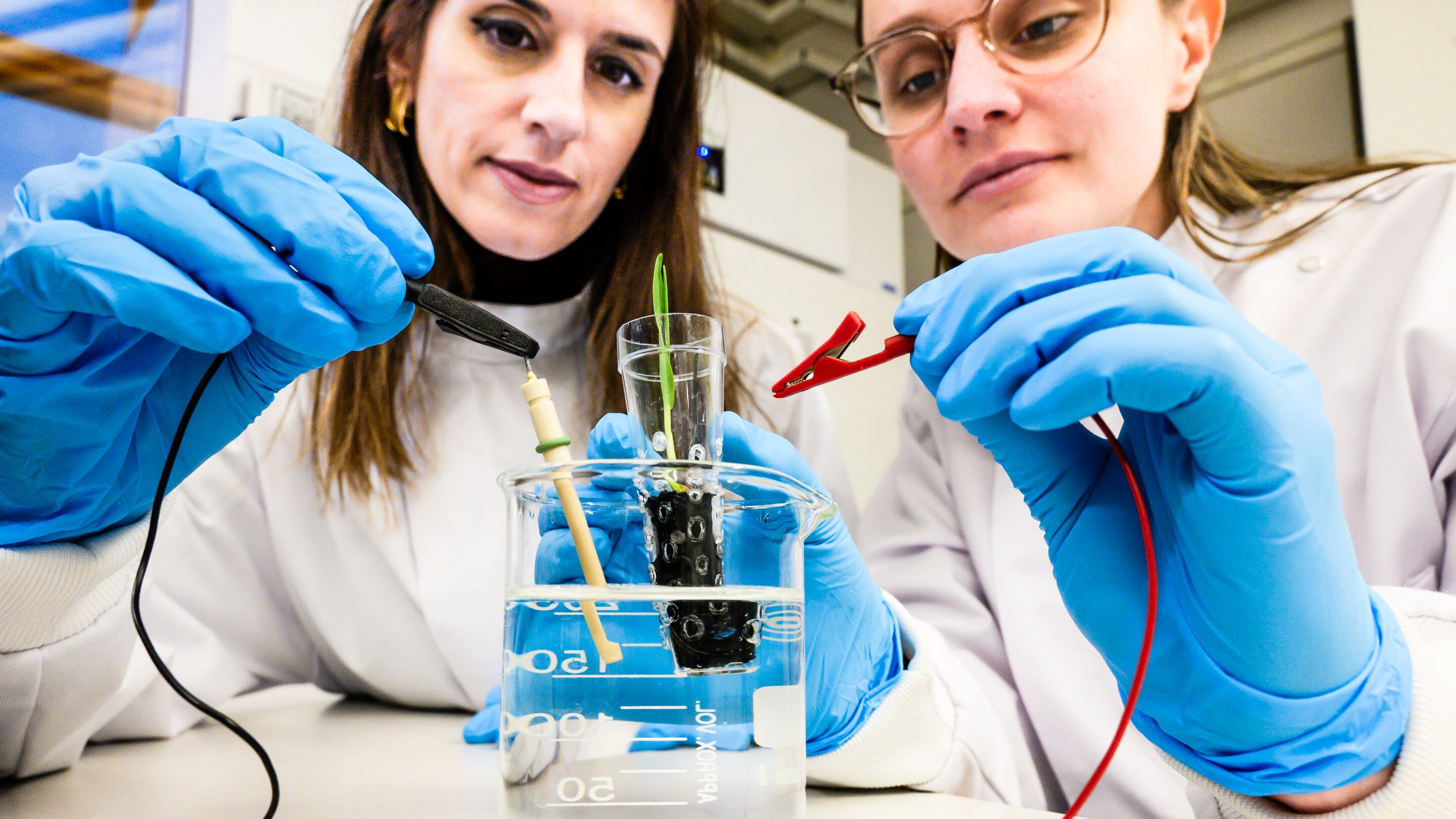
Stavrinidou’s research group introduces the concept of an electrically conductive cultivation substrate, aptly named eSoil, tailored specifically for hydroponic cultivation. Unlike traditional soil-based agriculture, hydroponics involves growing plants without soil, relying on water, nutrients, and a substrate for root attachment. The closed hydroponic system enables efficient water recirculation, ensuring each seedling receives precisely the required nutrients. This closed-loop system minimizes water usage and retains all essential nutrients—a notable advantage over traditional cultivation methods.
The study details experiments where barley seedlings, cultivated in the electrically conductive eSoil, exhibited a striking 50% increase in growth within a 15-day period when subjected to electrical root stimulation. This innovative approach not only enhances the productivity of hydroponic cultivation but also offers a glimpse into the potential of sustainable and efficient food production.
As the global population burgeons and environmental challenges intensify, solutions like eSoil and hydroponics emerge as transformative technologies that could redefine modern agriculture, making it more adaptable, resource-efficient, and capable of meeting the nutritional needs of a growing world population.

The practice of hydroponics, aside from its space efficiency benefits in vertical cultivation towers, has traditionally been associated with crops such as lettuce, herbs, and select vegetables. Grains, notably barley, have not commonly been subjected to hydroponic cultivation, primarily reserved for their use as fodder. However, a recent study challenges this norm, demonstrating that barley seedlings can indeed thrive in a hydroponic environment, showcasing accelerated growth rates through electrical stimulation.
Eleni Stavrinidou, leader of the Electronic Plants group at Linköping University, discusses the remarkable findings of the research. The study reveals that the hydroponically cultivated barley seedlings exhibit enhanced growth rates with reduced resource requirements. While the precise biological mechanisms behind this phenomenon remain unclear, the researchers observe that the seedlings process nitrogen more efficiently under electrical stimulation.
One noteworthy aspect of the research lies in the composition of the cultivation substrate. Traditional hydroponic systems often employ mineral wool, which not only lacks biodegradability but is also produced through an energy-intensive process. In contrast, the electronic cultivation substrate, named eSoil, introduced by the Linköping researchers, is composed of cellulose— the most abundant biopolymer—blended with a conductive polymer called PEDOT. Although the combination itself is not novel, this study marks the pioneering use of such a substrate for plant cultivation and interface creation.
Stavrinidou emphasizes the low energy consumption and absence of high voltage danger as key advantages of their “soil.” Unlike previous research that utilized high voltage to stimulate roots, the eSoil offers a safer and more energy-efficient alternative. The study not only presents a practical solution for sustainable agriculture but also paves the way for further exploration of hydroponic cultivation methods.
While Stavrinidou acknowledges that hydroponics may not singularly resolve global food security challenges, she emphasizes its potential to significantly aid regions with limited arable land and challenging environmental conditions. The findings underscore the versatility of hydroponics as a valuable tool in addressing specific agricultural needs and contributing to more sustainable and resource-efficient farming practices.
Resources
- ONLINE NEWS Linköping University. (2023, December 25). Researchers develop “electronic soil” that enhances crop growth. Phys.org. [Phys.org]
Cite this page:
APA 7: TWs Editor. (2023, December 26). Researchers Create Electronic Soil That Benefits Plants. PerEXP Teamworks. [News Link]


