



APA 7: TWs Editor. (2023, November 23). Record-Breaking Energy Storage Achieved by Novel Carbon Material, Could Boost Supercapacitors. PerEXP Teamworks. [News Link]
Chemist Tao Wang from ORNL and the University of Tennessee, Knoxville, explained that they achieved a breakthrough in carbon material development by blending a data-driven approach with their extensive research expertise. This fusion resulted in a carbon material exhibiting heightened physicochemical and electrochemical properties, pushing the limits of energy storage for carbon supercapacitors to new heights.
Wang spearheaded the research endeavor, titled “Machine-learning-assisted material discovery of oxygen-rich highly porous carbon active materials for aqueous supercapacitor,” which was published in Nature Communications. Chemist Sheng Dai, affiliated with both ORNL and UTK, collaborated on this significant study.
Dai emphasized the significance of the achievement by stating that the recorded storage capacitance for porous carbon in their study is the highest ever documented. He further noted that this represents a significant milestone, highlighting the novelty and importance of their findings. Dai, along with Wang, conceived and designed the experiments that led to this groundbreaking result.
The investigation took place at the Fluid Interface Reactions, Structures, and Transport Center (FIRST), an Energy Frontier Research Center led by ORNL from 2009 to 2022. Collaborating with three national labs and seven universities, the center delved into the realm of fluid-solid interface reactions that bear significance for capacitive electrical energy storage. The focus of their exploration was on capacitance, which denotes the capability to accumulate and retain electrical charge.
In the realm of energy storage devices, batteries stand out as the most familiar. They specialize in converting chemical energy into electrical energy and demonstrate exceptional prowess in storing energy. On the other hand, capacitors store energy in the form of an electric field, resembling static electricity. While they may not match batteries in terms of energy storage capacity within a given volume, capacitors exhibit the advantage of repetitive recharging without losing their ability to retain a charge. Supercapacitors, exemplified in certain electric buses, outperform traditional capacitors by storing more charge and facilitating faster charge and discharge cycles compared to batteries.
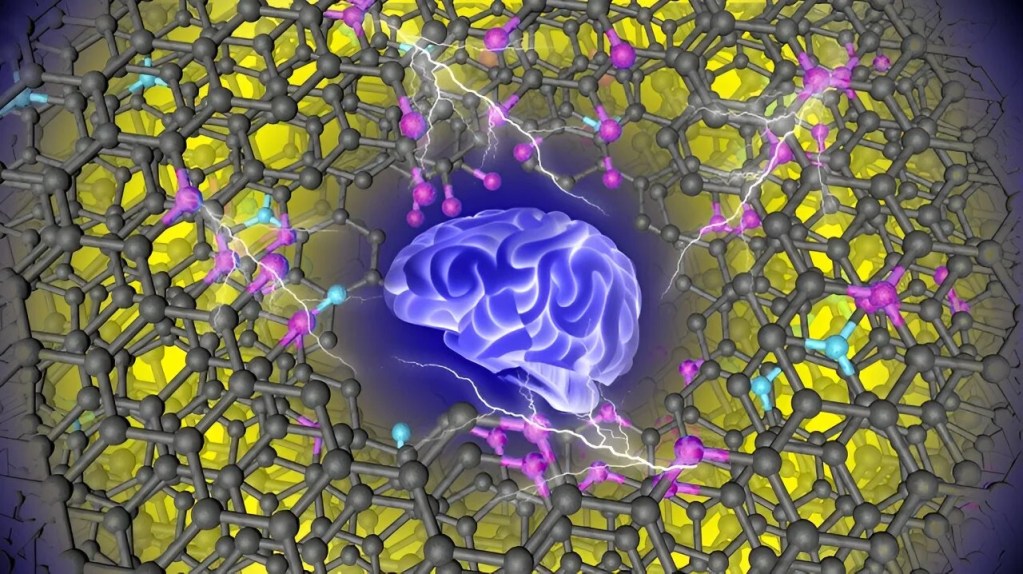
In the realm of commercial supercapacitors, a fundamental structure involves two electrodes—an anode and a cathode—segregated and immersed within an electrolytic solution. At the interface between the electrolyte and the carbon, double electrical layers efficiently disentangle and reconcile charges. The preferred materials for constructing supercapacitor electrodes are porous carbons, chosen for their ability to furnish a substantial surface area, facilitating the storage of electrostatic charge.
In the research conducted by ORNL, machine learning—a form of artificial intelligence adept at learning from data to enhance results—played a pivotal role in steering the exploration for an outstanding material. Researchers Runtong Pan, Musen Zhou, and Jianzhong Wu, affiliated with the University of California, Riverside, a partner university in the FIRST initiative, constructed an artificial neural network model. They trained this model with a specific objective: to create an ideal material tailored for efficient energy delivery.
According to the model’s predictions, the carbon electrode’s optimal capacitance would reach 570 farads per gram through co-doping with both oxygen and nitrogen.
Wang and Dai collaborated on the design of an exceptionally porous doped carbon intended to offer extensive surface areas conducive to interfacial electrochemical reactions. Subsequently, Wang executed the synthesis of this innovative material, characterized by an oxygen-rich carbon framework tailored for the storage and transportation of electric charge.
The carbon underwent activation to increase pore formation and incorporate functional chemical groups at specific sites for oxidation or reduction reactions. Traditional industry practices involve the use of activation agents like potassium hydroxide, demanding a high temperature of approximately 800°C to remove oxygen from the material. However, five years ago, Dai introduced an alternative process employing sodium amide as the activation agent. This method operates at a lower temperature, around 600°C, creating more active sites compared to the higher-temperature industrial approach. Describing it as the “Goldilocks zone” for material synthesis—not excessively cold, not overly hot—Dai emphasized the substantial impact of this approach in preserving the integrity of functional groups without decomposition.
The material produced through synthesis exhibited an impressive capacitance of 611 farads per gram, a fourfold increase compared to conventional commercial materials. Notably, pseudocapacitance, characterized by rapid and reversible oxidation-reduction reactions at the electrode material’s surface, played a significant role, contributing to 25% of the overall capacitance. The material’s surface area surpassed previous records for carbonaceous materials, measuring at over 4,000 square meters per gram.
The rapid achievement of success was facilitated by the data-driven approach, enabling Wang and Dai to accomplish in three months what would have traditionally consumed a minimum of a year.
Wang emphasized that the team reached the peak performance of carbon materials through the machine learning-guided approach. He pointed out that without the specific goal set by machine learning, the optimization of materials would have continued through a process of trial and error, with the researchers unaware of the potential limits they could achieve.
The pivotal factor behind the achievement lay in the establishment of two distinct types of pores—mesopores, ranging from 2 to 50 nanometers, and micropores smaller than 2 nanometers. Through experimental analyses, the researchers discovered that the combination of mesopores and micropores not only facilitated a high surface area for efficient energy storage but also created pathways for the transport of electrolytes. To characterize the mesopores, scanning transmission electron microscopy was carried out by Miaofang Chi and Zhennan Huang at the Center for Nanophase Materials Sciences, an ORNL-based DOE Office of Science user facility. However, the micropores proved too minute to be visualized through this technique.
At a microscopic level, the material exhibits a resemblance to a golf ball featuring profound dimples. These dimples correspond to mesopores, while the micropores are situated within the material, interspersed between these dimples.
Dai described the material as constructing a pathway for ion transport, likening it to building a highway. The design crafted by Tao and Dai focuses on optimizing high-rate performance in supercapacitors, emphasizing rapid charging and discharging capabilities. In this particular structure, the larger pores act as a superhighway, facilitating efficient ion flow, while interconnected smaller pores can be compared to smaller roads, ensuring a comprehensive network for ion transport within the material.
Wang explained that the integration of smaller pores contributes to a larger surface area, enhancing the material’s ability to store charge effectively. On the other hand, the larger pores function akin to a highway, accelerating the charge/discharge rate performance of the material. The optimal performance is achieved through a balanced combination of small and large pores, aligning with the predictions made by the artificial neural network model.
To understand how the electrolyte moves within the carbon pores, Murillo Martins and Eugene Mamontov from the Spallation Neutron Source, an ORNL-based DOE Office of Science user facility, conducted quasielastic neutron scattering. Wang likened this process to tracking the speed on a highway, highlighting that it was the first instance of neutron scattering being employed to analyze the diffusion of a sulfuric acid electrolyte within the confined spaces of carbon nanopores. The neutron scattering results revealed varying speeds of electrolyte movement: rapid within the mesopores and comparatively slower within the micropores.
Using modified step potential electrochemical spectroscopy, a technique available at only a select few locations globally, Wang conducted a quantitative analysis of the capacitance contributions originating from pores of various sizes and oxidation-reduction reactions at their surfaces. The results indicated that, among the pores, those of mesopores doped with oxygen and nitrogen made the most substantial contribution to the overall capacitance. Wang emphasized the significance of this finding in understanding and optimizing the material’s electrochemical performance.
The FIRST team conducted additional investigations into the physicochemical properties. At Ames National Laboratory, Jinlei Cui and Takeshi Kobayashi employed nuclear magnetic resonance to scrutinize the structure of polymer precursors. Simultaneously, Bishnu Thapaliya, affiliated with both ORNL and UTK, conducted Raman analysis, providing insights into the amorphous or disordered structure of the carbon. These complementary studies offered a comprehensive understanding of the material’s composition and characteristics.
Zhenzhen Yang from UTK and ORNL, along with Juntian Fan from UTK, played integral roles in conducting surface area measurements. The outcomes of this research hold promise for expediting the advancement and refinement of carbon materials tailored for supercapacitor applications. While this groundbreaking study utilized the most advanced data available at the time, the ongoing accumulation of boundary data provides scientists with additional insights to further refine the machine learning model in subsequent studies.
Wang highlighted the potential for setting new targets and expanding the limits of carbon supercapacitors through the incorporation of additional data. The success achieved in applying machine learning to materials design serves as evidence of the efficacy of data-driven approaches in driving technological advancements. The statement underscores the transformative impact that leveraging extensive datasets can have on the innovation and improvement of materials in various fields.
Resources
- ONLINE NEWS Levy, D. & Oak Ridge National Laboratory. (2023, November 22). New carbon material sets energy-storage record, likely to advance supercapacitors. Phys.org. [Phys.org]
- JOURNAL Wang, T., Pan, R., Martins, M. L., Cui, J., Huang, Z., Thapaliya, B. P., Do‐Thanh, C., Zhou, M., Fan, J., Yang, Z., Chi, M., Kobayashi, T., Wu, J., Mamontov, E., & Dai, S. (2023). Machine-learning-assisted material discovery of oxygen-rich highly porous carbon active materials for aqueous supercapacitors. Nature Communications, 14(1). [Nature Communications]