



A team of researchers has developed a ring-shaped biosensor that can be worn to monitor the hormone oestradiol in human sweat. Representing a rapid and non-invasive leap forward from traditional approaches, this technology offers an innovative method for tracking fertility and women’s health.
The study, published on September 28 in Nature Nanotechnology, introduces a single-use sensor that utilizes microfluidics, advanced electrode technology, and a set of molecules known as aptamers. This combination enables real-time measurement of hormone levels, contributing to the rising interest in technologies empowering individuals with personalized healthcare solutions.
Madhu Bhaskaran, an engineer specializing in the development of sensors and wearable technologies for healthcare at RMIT University in Melbourne, Australia, commends the paper for its excellence. She finds the ability to non-invasively monitor the hormone from sweat particularly exciting. Bhaskaran notes the significant challenge of creating a diagnostic tool with a prolonged shelf life, while still maintaining the required sensitivity and user-friendliness for home use. The comment underscores the technological advancements represented by the research and the potential implications for accessible and efficient healthcare monitoring.

In the past, individuals requiring hormone level monitoring had to visit clinics for blood tests or dispatch samples collected at home to laboratories. However, these methods are typically invasive and time-intensive. While some at-home tests rely on urine, their precision is often limited. Blood continues to be the preferred standard, but researchers are progressively exploring alternative fluids and the valuable health information they can provide, aiming for less invasive and more efficient monitoring options.
Wei Gao, a biomedical engineer at the California Institute of Technology in Pasadena and one of the study’s co-authors, emphasizes the presence of clinically relevant biomarkers in sweat, albeit at extremely low concentrations. Until now, there hasn’t been the development of sensors or wearable devices specifically designed to target reproductive hormones in sweat. The current focus on oestradiol, a hormone crucial to fertility and women’s health, highlights the research gap in these areas, which remain notably underfunded. Despite a robust demand for technologies providing insights into menstrual and fertility status, there is a recognition of the need for increased attention and investment in these vital areas of study.
Chemical antibodies
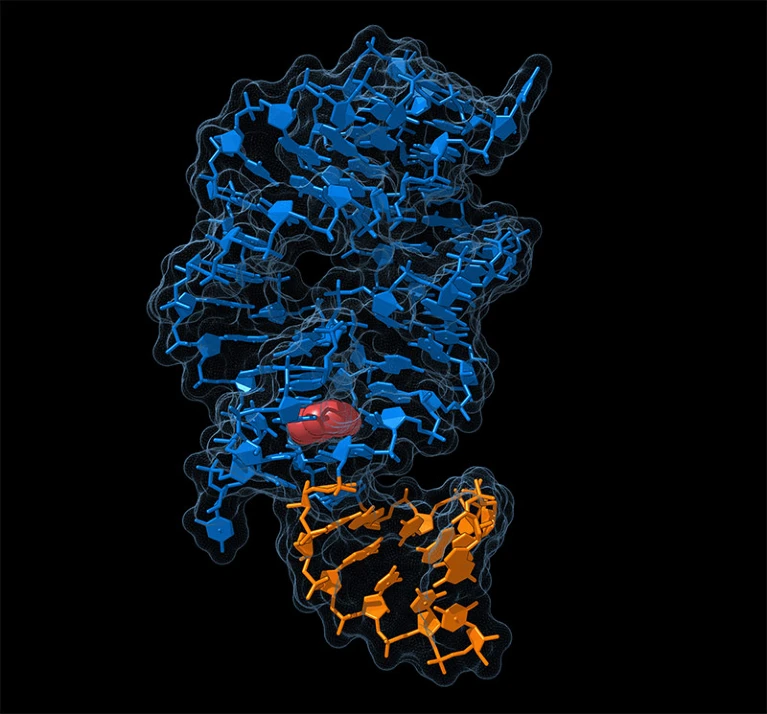
While most biosensors typically employ antibodies or enzymes to target proteins, Gao’s biosensor takes a different approach, relying on aptamers. Aptamers are short segments of single-stranded DNA or RNA strategically designed to fold in a way that allows them to bind to various targets, from small molecules to toxins. Although sometimes likened to chemical antibodies, aptamers are significantly smaller than most antibodies and can be synthesized chemically, eliminating the need for laboratory animals in their production. Previous research has successfully utilized aptamers for recognizing substances such as cortisol, serotonin, caffeine, and specific types of cancer.
In the creation of the oestradiol sensor, the researchers devised two interconnected layers of material. The first layer incorporates oestradiol-recognizing aptamers, while the second layer consists of a gold-nanoparticle electrode coated with MXene, a material that amplifies weak electrical signals. The aptamers come preloaded with single-stranded DNA labeled with methylene blue, serving as an electrochemical probe in this particular application.
When worn on a finger, the biosensor initiates a small current to stimulate sweat production, guiding the liquid into a minute reservoir. As the chamber fills with sweat, the aptamers replace the methylene blue-tagged DNA strands with oestradiol. These freed DNA strands move between the layers and bind to complementary strands on the electrode, translating methylene blue levels into a final measurement. In experiments utilizing artificial sweat, the sensor demonstrated the capability to detect oestradiol within a mere 10 minutes, even at concentrations as low as 140 nanomolar—approaching the lower limits typically observed in human sweat.
Furthermore, the ring is equipped with sensors monitoring skin temperature, pH, and sweat salt concentration. This allows the biosensor to dynamically calibrate hormone measurements in real-time, presenting the results on a mobile phone.
The meaning and implications of strong correlation
Gao and his research team initially evaluated the sensor’s efficacy using synthetic sweat. Subsequently, the sensor was deployed for menstrual cycle tracking in five women. Simultaneously, two of the women underwent blood tests for comparison with the sweat results. The researchers observed a synchronized rise and fall in both sample types, aligning with the anticipated pattern—oestradiol levels typically rise at the onset of a cycle, reaching a peak just before ovulation. Additionally, a smaller, secondary spike was noted after the release of an egg.
Bhaskaran acknowledges the promising correlation observed between blood serum and sweat in the study. However, she emphasizes the importance of recognizing the small sample size and stresses the need to ensure that the technology’s reliability extends across various conditions within the human body. This highlights the necessity for further research and testing to validate the performance and applicability of the technology under diverse circumstances.
While initially designed for menstrual cycle tracking, the ring’s capability to monitor oestradiol opens up potential applications in areas such as libido modulation, erectile function, spermatogenesis, and hormone therapy. Gao envisions the sensor’s usefulness for individuals undergoing hormone therapy.
Looking ahead, Gao aims to expand the sensor’s capabilities to concurrently track multiple hormones, including follicle-stimulating hormone, luteinizing hormone, gonadotropin-releasing hormone, and progesterone. He is actively involved in efforts to bring a range of sweat-based biosensors to the commercial market.
However, Kevin Plaxco, a biological engineer at the University of California, Santa Barbara, notes that despite advancements in aptamer design, it has not yet achieved the same level of precision as natural processes. One challenge is the negative charge of DNA and RNA, making it difficult to bind them to targets with equally strong negative charges, such as fluoride ions. Despite this, nature has demonstrated the existence of fluoride-binding aptamers in bacteria and archaea, particularly within gene-control structures known as riboswitches.
Plaxco highlights the unique challenge of developing aptamers against fluoride, considering it one of the most challenging targets. Despite this difficulty, he points out the existence of a riboswitch in nature that binds fluoride with exceptional specificity and affinity. According to Plaxco, the mere existence of such a natural mechanism suggests that as our understanding and technological capabilities advance, it will become feasible to create highly effective aptamers for various applications.
Resources
- JOURNAL Heidt, A. (2022). Wearable biosensor measures fertility hormones in sweat. Nature. [Nature]
- JOURNAL Cui, Y., Wang, M., Min, J. K., Tay, R. Y., Lukas, H., Sempionatto, J. R., Li, J., Xu, C., & Gao, W. (2023). A wearable aptamer nanobiosensor for non-invasive female hormone monitoring. Nature Nanotechnology. [Nature Nanotechnology]
- JOURNAL Wang, B., Zhao, C., Wang, Z., Yang, K., Cheng, X., Liu, W., Yu, W., Lin, S., Zhao, Y., Cheung, K. M., Lin, H., Hojaiji, H., Weiss, P. S., Stojanović, M. N., Tomiyama, A. J., Andrews, A. M., & Emaminejad, S. (2022). Wearable aptamer-field-effect transistor sensing system for noninvasive cortisol monitoring. Science Advances, 8(1). [Science Advances]
- JOURNAL Ip, I., Wang, Y., & Chang, C. (2023). Aptamer-based detection of serotonin based on the rapid in situ synthesis of colorimetric gold nanoparticles. Nanotechnology Reviews, 12(1). [Nanotechnology Reviews]
- JOURNAL Huang, P. J., & Liu, J. (2022). Selection of Aptamers for sensing caffeine and discrimination of its three single demethylated analogues. Analytical Chemistry, 94(7), 3142–3149. [Analytical Chemistry]
- JOURNAL Ciancio, D. R., Vargas, M. R., Thiel, W. H., Bruno, M. A., Giangrande, P. H., & Mestre, M. B. (2018). Aptamers as diagnostic tools in cancer. Pharmaceuticals, 11(3), 86. [Pharmaceuticals]
Cite this page:
APA 7: TWs Editor. (2023, December 1). Fertility Hormones in Sweat Measured by a Wearable Biosensor. PerEXP Teamworks. [News Link]


