



Have you ever wondered how green life on Earth became so diverse and complex? How did plants, algae, and other green organisms evolve from simple bacteria? And what does this have to do with the future of our planet?
In this news, we will explore the fascinating story of green life origin, a billion-year-old event that changed the course of evolution and transformed our planet. Let’s get started!
Exploring the intricate evolutionary journey of morphological complexity in streptophytes, encompassing land plants and various green algae, a group of scientists led by the University of Göttingen embarked on a comprehensive investigation. Their quest delved into the origins of complex plant structures, reaching back to lineages that predated the existence of land plants.
Utilizing cutting-edge gene sequencing technology, the research team unraveled the mysteries of a class of green algae called Klebsormidiophyceae. Renowned for its remarkable adaptability to diverse environments, this algae has the unique ability to colonize habitats worldwide. The scientists conducted meticulous sampling across an array of landscapes, from water bodies like streams and rivers to terrestrial settings such as bogs, soil, and tree bark, and even venturing into unconventional locations like acidic post-mining sites, sand dunes, urban walls, and building façades.

Through their thorough investigation, the researchers redefined the understanding of the relationships within this ancient group of filamentous algal land colonizers, surpassing the temporal boundaries of land plants. Modern gene sequencing data became the key to pinpointing the emergence of multicellularity nearly a billion years ago. The intriguing findings of this study, shedding light on the intricate tapestry of evolutionary history, were recently unveiled in the journal Current Biology.
Dr. Tatyana Darienko from the University of Göttingen’s Institute for Microbiology and Genetics expressed admiration for the remarkable adaptability and morphological diversity observed in these resilient microorganisms. She highlighted the fascinating aspect of their ability to thrive in diverse environments, often characterized by harsh conditions. The small yet robust organisms, as studied by the research team, demonstrate an impressive capacity for adaptation to a wide range of habitats.
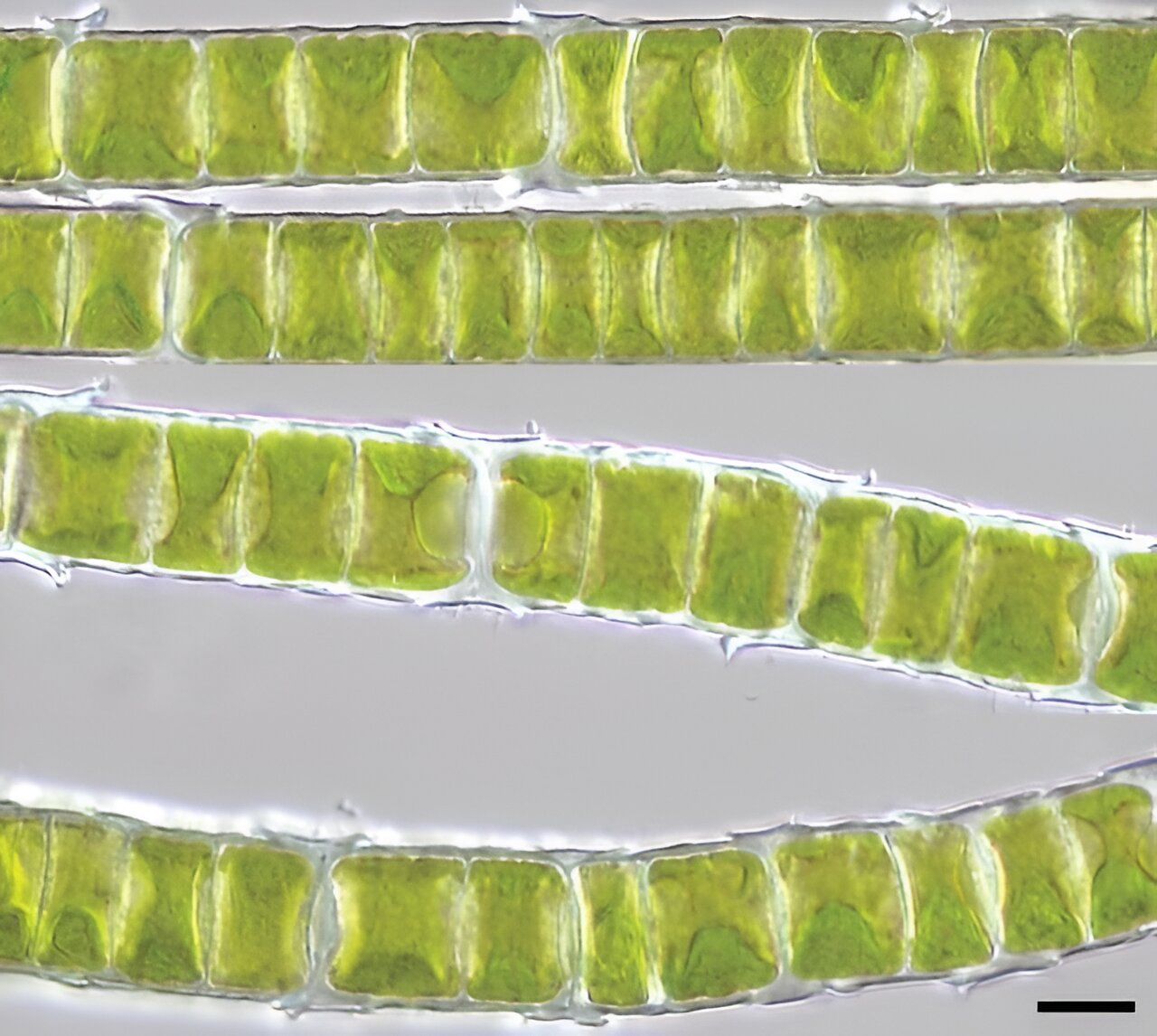
In their quest to unravel the global distribution patterns of Klebsormidiophyceae, the research team undertook a comprehensive sampling initiative. This ambitious effort aimed to shed light on the adaptability, ecological significance, and concealed diversity of these algae. Employing a sophisticated approach known as “phylogenomics,” the scientists sought to construct a nuanced evolutionary narrative by incorporating entire genomes or substantial portions of genomes into their analyses.
Navigating the intricate evolutionary history of Klebsormidiophyceae posed challenges, particularly in resolving phylogenetic relationships through traditional markers. To surmount these challenges, the researchers adopted a groundbreaking strategy. They tapped into the transcriptomes of 24 isolates from various continents and habitats, extracting insights from hundreds of genes. Dr. Iker Irisarri from the Leibniz Institute for the Analysis of Biodiversity Change explained that phylogenomics, as their chosen approach, possesses exceptional precision in reconstructing evolutionary relationships on a broad scale.

The outcome of their endeavors was the unveiling of a novel phylogenomic tree of life for Klebsormidiophyceae, delineated into three distinct orders. This innovative perspective not only enhances our understanding of the evolutionary dynamics within this algal group but also exemplifies the potency of cutting-edge methodologies in elucidating complex biological histories.
Dr. Maaike Bierenbroodspot, an expert in Applied Bioinformatics at the University of Göttingen, shared insights from the study’s deep exploration into the phylogenomic framework and molecular clock of Klebsormidiophyceae. The research unveiled an ancient ancestor of these algae, a multicellular entity thriving millions of years ago. Over 800 million years ago, its descendants began diverging into three distinct branches, marking a pivotal moment in the evolutionary timeline.

Utilizing these revelations, the researchers extended their inquiry to unravel the evolutionary history of multicellularity within streptophytes. The study yielded a significant finding— the common ancestor of land plants, other streptophyte algae, and Klebsormidiophyceae was already multicellular. Professor Jan de Vries from Göttingen University’s Institute for Microbiology and Genetics emphasized the implications of this discovery, stating that it illuminates the genetic potential for multicellularity among streptophytes, indicating an ancient origin for this fundamental trait nearly a billion years ago. This finding not only contributes to our understanding of the evolutionary dynamics within this group but also underscores the ancient roots of a crucial biological feature that has persisted across diverse lineages.
In conclusion, this study reveals that multicellularity is not a recent innovation in the streptophyte lineage, but rather a primordial characteristic that emerged in the common ancestor of land plants and their algal relatives. This suggests that the genetic and developmental mechanisms for multicellularity were already present in the earliest forms of complex green life, and that they have been maintained and diversified throughout the evolution of this group. By tracing the origin and evolution of multicellularity in streptophytes, this study enhances our knowledge of the biological and ecological factors that shaped the emergence and diversification of complex green life on Earth.
Resources
- ONLINE NEWS University of Göttingen. (2024, January 23). Complex green organisms emerged a billion years ago, says new research. Phys.org. [Phys.org]
- JOURNAL Bierenbroodspot, M. J., Darienko, T., De Vries, S., Fürst-Jansen, J. M. R., Buschmann, H., Pröschold, T., Irisarri, I., & De Vries, J. (2024). Phylogenomic insights into the first multicellular streptophyte. Current Biology. [Current Biology]
Cite this page:
APA 7: TWs Editor. (2024, January 24). Complex Green Life: How It Evolved a Billion Years Ago?. PerEXP Teamworks. [News Link]


