



Recent geological evidence reveals that around 2,500 years ago, the Ganges River underwent a sudden shift caused by a distant yet massive ancient earthquake. While shifts in river courses are common, they usually happen far upstream. This particular event, however, occurred in the delta region, roughly 200 kilometers from where the Ganges River meets the Bay of Bengal.
Such shifts pose significant risks today, as similar changes in other rivers could lead to flooding, endangering millions in modern cities located on river deltas. Rivers, as they flow across landscapes, tend to meander, especially in flat delta regions where accumulated sediments can divert their paths. These course changes generally happen over years or even centuries. However, the sudden channel shifts triggered by ancient earthquakes can happen within weeks or days.

Evidence of old river channels typically remains visible even after the river has shifted and the old path has filled with sediment. While examining satellite images of the Ganges Delta, researchers identified a slight crescent-shaped depression about 45 kilometers from the current river. This depression, nearly 2 kilometers wide and stretching for dozens of kilometers, was likely a former main channel of the Ganges River.
In 2018, researchers conducting fieldwork near the Ganges River decided to investigate the crescent-shaped depression they had identified in satellite images. They collected samples from the site for dating purposes, and a stroke of luck soon followed.


On their way back, the team discovered an open pit where someone had excavated soil to create a pond, planned to be filled the next day. In the pit’s wall, they observed distinctive vertical bands of light-colored sand embedded within darker horizontal layers of mud. These formations, known as seismites, are clear indicators of seismic activity. Seismites are essentially preserved remnants of ancient sand volcanoes. These formations occur when seismic waves from a distant ancient earthquake pressurize an underground layer of watery sand, causing it to erupt through the overlying silty mud layers.
John Shaw, a sedimentologist from the University of Arkansas, notes that these “sand blows” are difficult to explain without the occurrence of an earthquake. The width of the sand blows, the depth of the overlying sediments, and the distance to the nearest major fault zone (over 180 kilometers away) suggest that the earthquake responsible for creating the seismites was likely between a magnitude 7 and magnitude 8. This finding was reported by Elizabeth Chamberlain and her team on June 17 in Nature Communications.
Analyses of the sand grains within the seismites indicate that the ancient earthquake likely occurred around 2,500 years ago. Although there are no historical records of this seismic event, the timing of the oldest mud layers in the channel coincides with the formation of the seismites. This correlation led the team to connect the earthquake with the significant change in the Ganges River’s course.
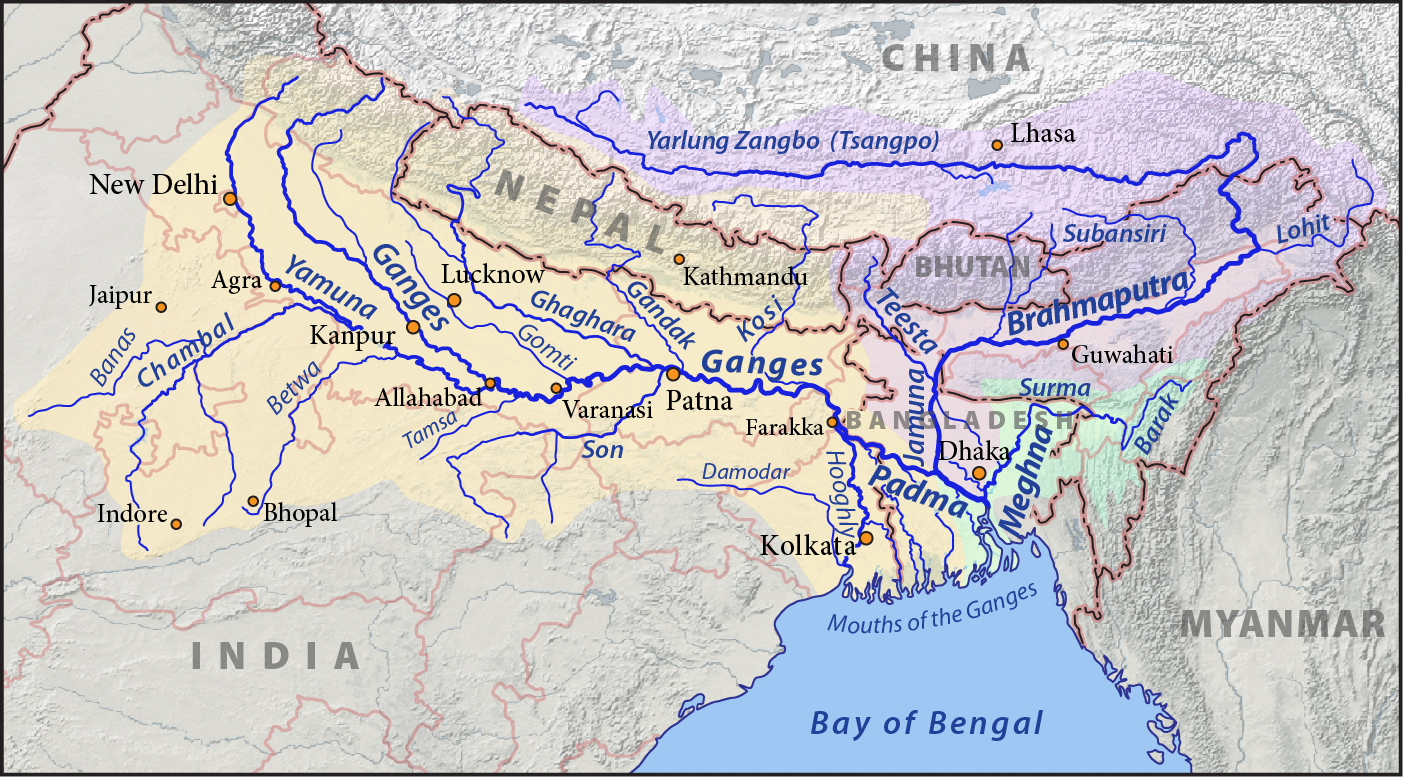
If a similar earthquake were to cause a river shift today, it could potentially endanger up to 170 million people living in an area the size of Illinois, spanning parts of India and Bangladesh. This region’s infrastructure is primarily built on sediment mounds dredged from rivers to provide elevation above floodplains, making it particularly susceptible to earthquake-induced flooding.
In addition to the direct threat of an ancient earthquake, rising sea levels due to climate change exacerbate the risk of flooded deltas. The challenge lies in anticipating and preparing for such catastrophic events, especially in areas with no prior experience of them. This compounded risk underscores the vulnerability of delta regions like the Ganges River delta to both natural and climate-related disasters.
- ONLINE NEWS Perkins, S. (2024, June 28). An ancient earthquake changed the course of the Ganges River. Science News. [Science News]
- JOURNAL Chamberlain, E. L., Goodbred, S. L., Steckler, M. S., Wallinga, J., Reimann, T., Akhter, S. H., Bain, R., Muktadir, G., Nahian, A. A., Rahman, F. M. A., Rahman, M., Seeber, L., & Von Hagke, C. (2024). Cascading hazards of a major Bengal basin earthquake and abrupt avulsion of the Ganges River. Nature Communications, 15(1). [Nature Communications]
APA 7: TWs Editor. (2024, June 28). Ancient Earthquake: How It Affects the Ganges River?. PerEXP Teamworks. [Online News Link]


