




In a cosmic narrative that challenges longstanding assumptions, scientists once believed stars were subject to an eternal magnetic brake, resulting in an inexorable slowdown of their rotation. However, recent revelations stemming from advanced observations and sophisticated methodologies have unveiled unexpected magnetic intricacies within stars. Surprisingly, the cosmic locales harboring potential alien neighbors may be centered around stars undergoing midlife crises and beyond.
This groundbreaking study, delving into the enigmatic realms of magnetic phenomena and habitable zones, has now been published in The Astrophysical Journal Letters, marking a pivotal contribution to our understanding of celestial dynamics.
The astronomical journey of exoplanet discovery traces back to 1995 when Swiss astronomers Michael Mayor and Didier Queloz unveiled the first-ever detection of a planet beyond our solar system, orbiting the distant sun-like star 51 Pegasi. Since this groundbreaking revelation, astronomers have identified more than 5,500 exoplanets orbiting stars throughout our galaxy. In recognition of their pioneering contributions, Mayor and Queloz were awarded the Nobel Prize in Physics in 2019.
This week, an international team of astronomers has rekindled interest in the iconic 51 Pegasi, presenting new observations that suggest the current magnetic environment surrounding the star may be uniquely conducive to the development of complex life. The implications of this discovery extend beyond the realm of magnetic phenomena, offering tantalizing prospects for understanding the conditions fostering habitability in distant corners of the cosmos.
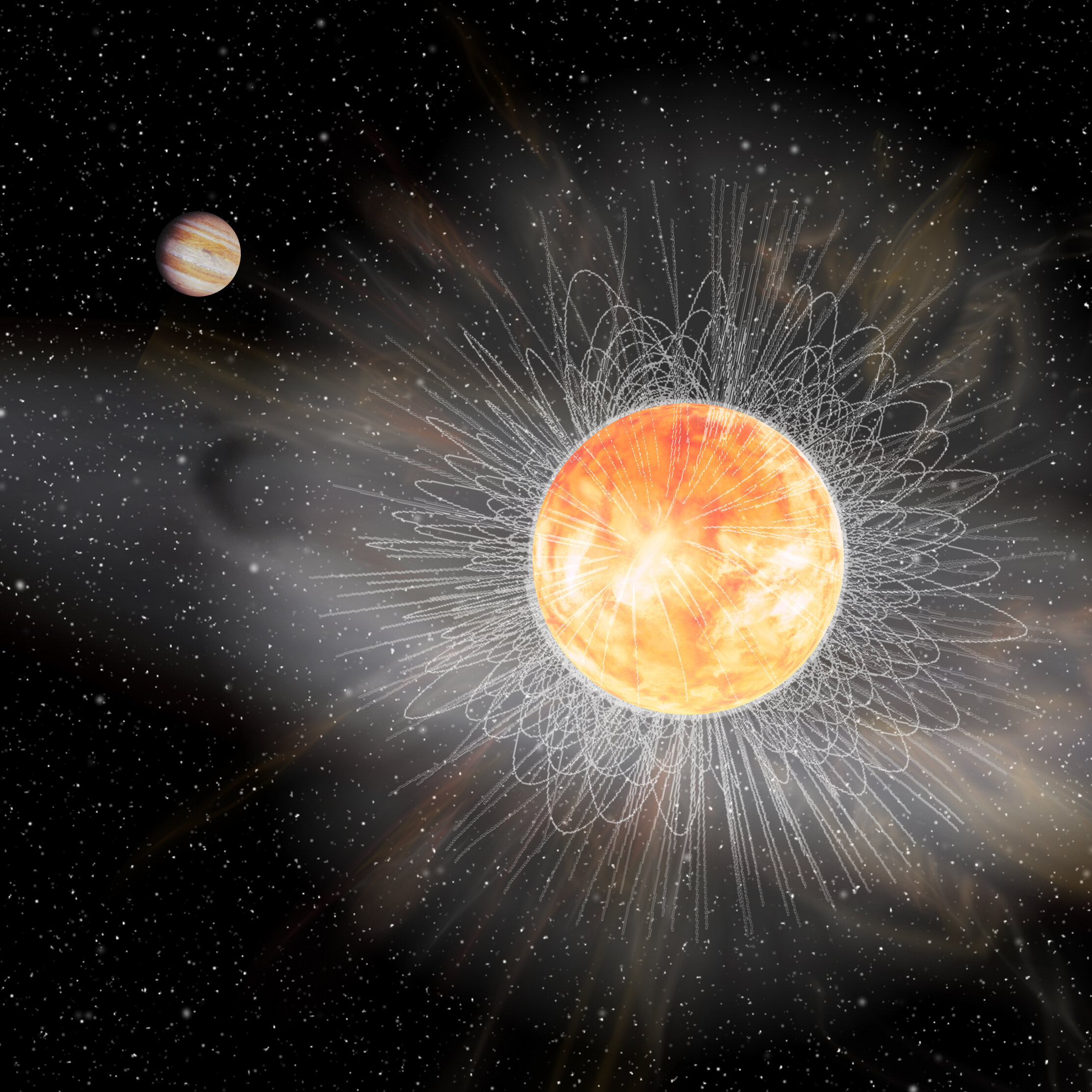
Stars akin to our sun begin their cosmic journey with a spirited spin, birthing a robust magnetic field that can erupt in violent displays, bombarding their planetary systems with charged particles and radiation. Over the eons, the star’s rotation gradually decelerates, a consequence of its magnetic field interacting with a wind flowing from its surface—a phenomenon known as magnetic braking. This mutual exchange sees the rotation slowing down, leading to a weakened magnetic field, and both properties steadily wane in tandem.
Traditionally, astronomers held the assumption that magnetic braking persisted indefinitely in aging stars like the sun. However, recent observations have introduced a paradigm shift, challenging this long-standing belief.
Travis Metcalfe, the team leader and a senior research scientist at White Dwarf Research Corporation in Golden, Colorado, emphasizes the transformative nature of these findings. “We are rewriting the textbooks on how rotation and magnetism in older stars like the sun change beyond the middle of their lifetimes,” Metcalfe asserts. This groundbreaking insight not only deepens our comprehension of stellar evolution but also holds profound implications for stars hosting planetary systems, influencing the potential for the development of advanced civilizations. The intricate dance between rotation and magnetism in mature stars is proving to be more dynamic and complex than previously envisioned, prompting a reevaluation of our cosmic narrative.
Klaus Strassmeier, the director at the Leibniz-Institute for Astrophysics in Potsdam, Germany, and a co-author of the study, contributes a significant perspective, noting, “This is because weakened magnetic braking also throttles the stellar wind and makes devastating eruptive events less likely.”
The collaborative efforts of a team of astronomers hailing from the United States and Europe brought together data from NASA’s Transiting Exoplanet Survey Satellite (TESS) to observe 51 Pegasi. These observations were complemented by cutting-edge measurements of the star’s magnetic field, conducted at the Large Binocular Telescope (LBT) in Arizona, utilizing the Potsdam Echelle Polarimetric and Spectroscopic Instrument (PEPSI). This multi-pronged approach, fusing observational data and advanced measurements, underpins the comprehensive exploration of 51 Pegasi’s magnetic dynamics, shedding new light on the intricate interplay between magnetic braking, stellar winds, and eruptive phenomena.
While the exoplanet orbiting 51 Pegasi doesn’t transit its parent star when viewed from Earth, TESS observations have unveiled subtle brightness fluctuations in the star itself. These variations, discerned through a technique known as asteroseismology, provide valuable insights into the star’s radius, mass, and age.
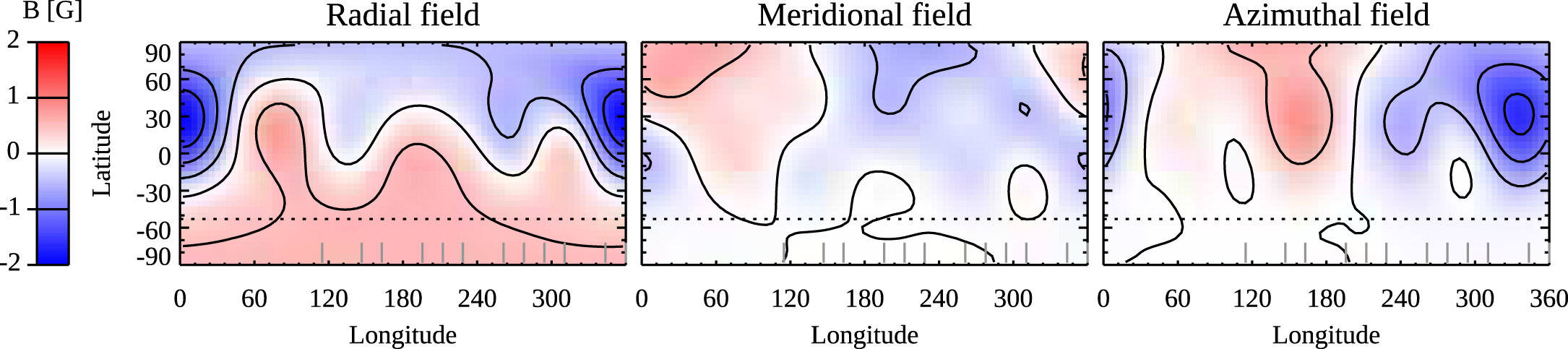
Simultaneously, the star’s magnetic field leaves a minuscule imprint of polarization on its light. Leveraging the Zeeman-Doppler Imaging technique with PEPSI on the Large Binocular Telescope (LBT), the astronomers crafted a magnetic map of the star’s surface, capturing the evolving magnetic landscape as the star rotates. This comprehensive approach enabled the team to assess the contemporary magnetic conditions enveloping 51 Pegasi.
The groundwork for this investigation was laid by prior observations from NASA’s Kepler space telescope, suggesting a potential substantial weakening of magnetic braking beyond the age of the sun. However, these findings were indirect, relying on measurements of rotation rates across a spectrum of stars with varying ages. The critical insight gleaned was that rotational slowdown seemed to plateau near the age of the sun (approximately 4.5 billion years). The latest research builds upon this foundation, employing a combination of asteroseismology and magnetic imaging to directly evaluate the intricate relationship between rotation and magnetism in aging stars like 51 Pegasi.
However, the underlying causes of the observed changes in stellar magnetism could only be discerned through direct measurements of a star’s magnetic field. The challenge lay in the fact that the targets observed by NASA’s Kepler mission were too faint for observations with the Large Binocular Telescope (LBT). The TESS mission, commencing in 2018, offered a solution by collecting measurements akin to Kepler’s, but focusing on the nearest and brightest stars, including 51 Pegasi.
Over the past few years, the research team utilized PEPSI on the LBT to measure the magnetic fields of various TESS targets, gradually unraveling the intricate evolution of magnetism in stars akin to our sun as they progress through different life stages. These observations unveiled a crucial revelation: magnetic braking undergoes a sudden change in stars slightly younger than the sun, becoming more than 10 times weaker at this juncture. This weakening trend persists as the stars continue to age.
The team attributes these magnetic variations to an unforeseen shift in the strength and complexity of the magnetic field, along with its impact on the stellar wind. The recently measured properties of 51 Pegasi underscore that, akin to our own sun, it has already undergone this transition to weakened magnetic braking.
Klaus Strassmeier, the principal investigator of the PEPSI spectrograph, expresses satisfaction, noting, “It is very gratifying that the LBT and PEPSI were able to reveal a new perspective on this planetary system, which played such a pivotal role in exoplanet astronomy.” He highlights the importance of this research as a significant step forward in the quest for life beyond our solar system.
Drawing parallels with our solar system, where life transitioned from oceans to land several hundred million years ago, coinciding with the weakening of magnetic braking in the sun, the findings suggest that older stars may provide a more stable environment for potential extraterrestrial life. Travis Metcalfe notes that the team’s discoveries point towards middle-aged and older stars as the prime candidates in the search for life outside our solar system. This groundbreaking perspective adds a new dimension to our understanding of the cosmic conditions conducive to the development of complex life beyond Earth.
Resources
- ONLINE NEWS Fohlmeister, J. & Leibniz Institute for Astrophysics Potsdam. (2024, January 10). Old stars may be the best places to search for life. Phys.org. [Phys.org]
- JOURNAL Metcalfe, T. S., Strassmeier, K. G., Ilyin, I., Buzasi, D. L., Kochukhov, O., Ayres, T. R., Basu, S., Chontos, A., Finley, A. J., See, V., Stassun, K. G., Van Saders, J. L., Sepulveda, A. G., & Ricker, G. (2024). Weakened magnetic braking in the exoplanet host Star 51 Peg. The Astrophysical Journal Letters, 960(1), L6. [The Astrophysical Journal Letters]
Cite this page:
APA 7: TWs Editor. (2024, January 11). Exploring Ancient Stars as Potential Havens for Life. PerEXP Teamworks. [News Link]


