



APA 7: TWs Editor & ChatGPT. (2023, September 21). Archaeological Find Reveals Earliest Known Wooden Construction in the World. PerEXP Teamworks. [Article Link]
Published in the journal Nature, the research unveils a remarkable discovery at the Kalambo Falls archaeological site in Zambia. Here, a well-preserved wooden artifact dating back at least 476,000 years has been unearthed, pre-dating the emergence of our species, Homo sapiens.
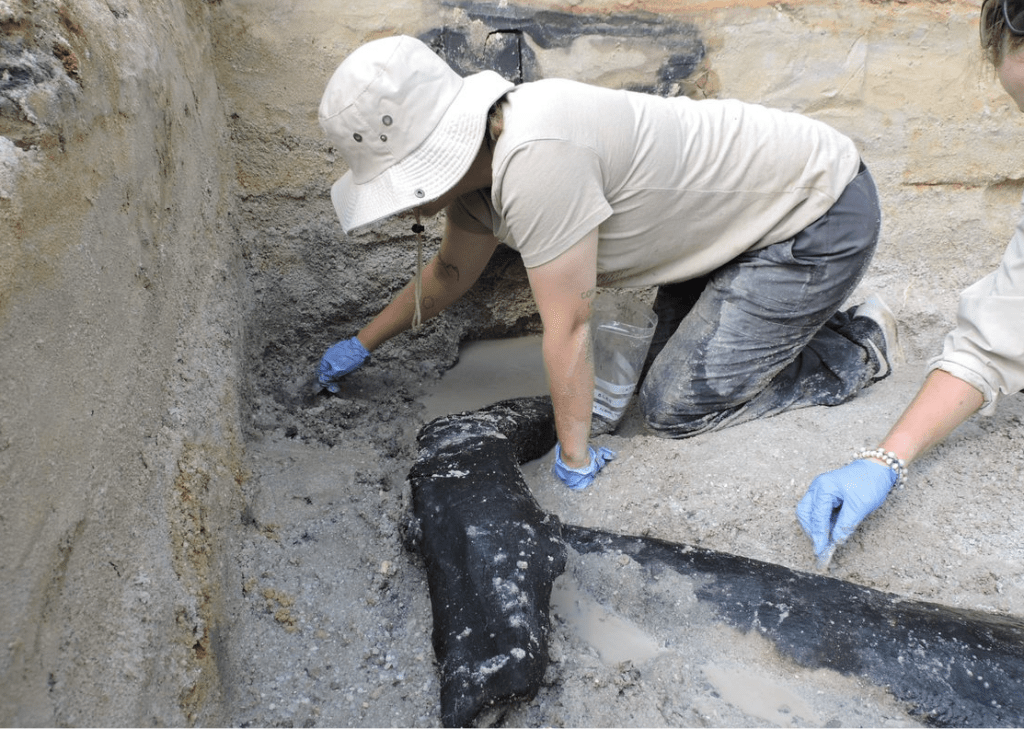
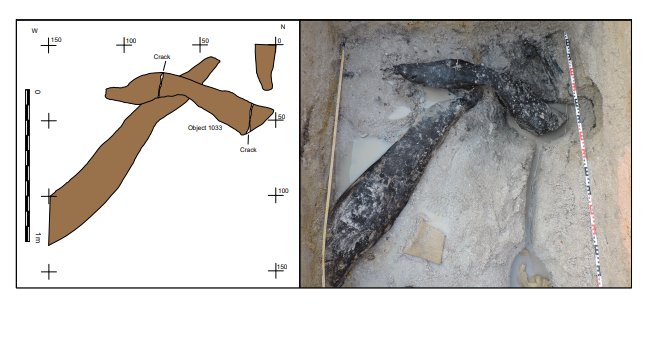
Detailed examination of the wooden specimen reveals intriguing insights: early humans at this site skillfully shaped and joined two substantial logs, likely forming the foundation of a platform or part of a structure. What sets this find apart is that it represents the world’s earliest evidence of deliberate log crafting for construction. Until now, historical indications of human wood usage were primarily associated with practical tools like fire-making implements, digging sticks, and spears.
Wood’s preservation at ancient sites is a rarity due to its susceptibility to decay. However, at Kalambo Falls, consistently high water levels have acted as a natural preservative, allowing this exceptional discovery to endure.

Perhaps most significantly, this revelation challenges the conventional notion that Stone Age humans were strictly nomadic. The presence of a perennial water source at Kalambo Falls, coupled with the surrounding forest’s abundant food resources, suggests that these ancient humans not only thrived here but also had the capacity to settle and construct enduring structures.

According to Professor Larry Barham, who heads the ‘Deep Roots of Humanity’ research project at the University of Liverpool’s Department of Archaeology, Classics, and Egyptology:
This find has changed how I think about our early ancestors. Forget the label ‘Stone Age,’ look at what these people were doing: they made something new, and large, from wood. They used their intelligence, imagination, and skills to create something they’d never seen before, something that had never previously existed.
They transformed their surroundings to make life easier, even if it was only by making a platform to sit on by the river to do their daily chores. These folks were more like us than we thought.
Larry Barham
Aberystwyth University’s team of specialists conducted the precise dating of these discoveries. Employing innovative luminescence dating methods, the researchers discerned the age of these artifacts by examining the last instance when the sand encasing the finds was exposed to sunlight.
As per Professor Geoff Duller of Aberystwyth University:
At this great age, putting a date on finds is very challenging and we used luminescence dating to do this. These new dating methods have far reaching implications — allowing us to date much further back in time, to piece together sites that give us a glimpse into human evolution. The site at Kalambo Falls had been excavated back in the 1960s when similar pieces of wood were recovered, but they were unable to date them, so the true significance of the site was unclear until now.
Geoff Duller
Located at the convergence of the Kalambo River, just above a striking 235 metres (772 foot) waterfall, is the Kalambo Falls site. Situated right on the border of Zambia and the Rukwa Region of Tanzania, this site stands at the fringes of Lake Tanganyika. Notably, due to its profound archaeological importance, this area has earned a place on UNESCO’s ‘tentative’ list for potential recognition as a World Heritage site. Professor Duller added:
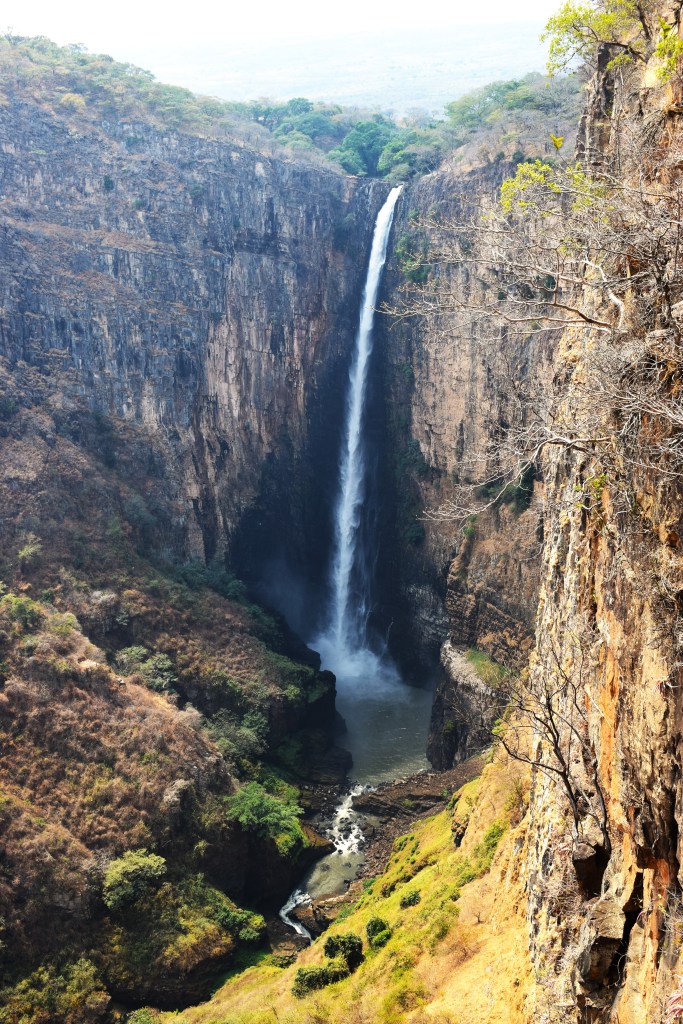
Our research proves that this site is much older than previously thought, so its archaeological significance is now even greater. It adds more weight to the argument that it should be a United Nations World Heritage Site.
Geoff Duller
This study is a crucial component of the groundbreaking ‘Deep Roots of Humanity’ initiative, which delves into the evolution of Stone Age human technology. Generously supported by the UK’s Arts and Humanities Research Council, this project collaborates with teams from Zambia’s National Heritage Conservation Commission, Livingstone Museum, Moto Moto Museum, and the National Museum in Lusaka. Professor Barham added:
Kalambo Falls is an extraordinary site and a major heritage asset for Zambia. The Deep Roots team is looking forward to more exciting discoveries emerging from its waterlogged sands.
Larry Barham
Resources
- JOURNAL Barham, L., Duller, G.A.T., Candy, I. et al. Barham, L. (2023). Evidence for the earliest structural use of wood at least 476,000 years ago. Nature. [Nature]
- NEWSPAPER Owen, C. (2023, September 20). Archaeologists discover world’s oldest wooden structure. University of Liverpool News. [University of Liverpool News]


