



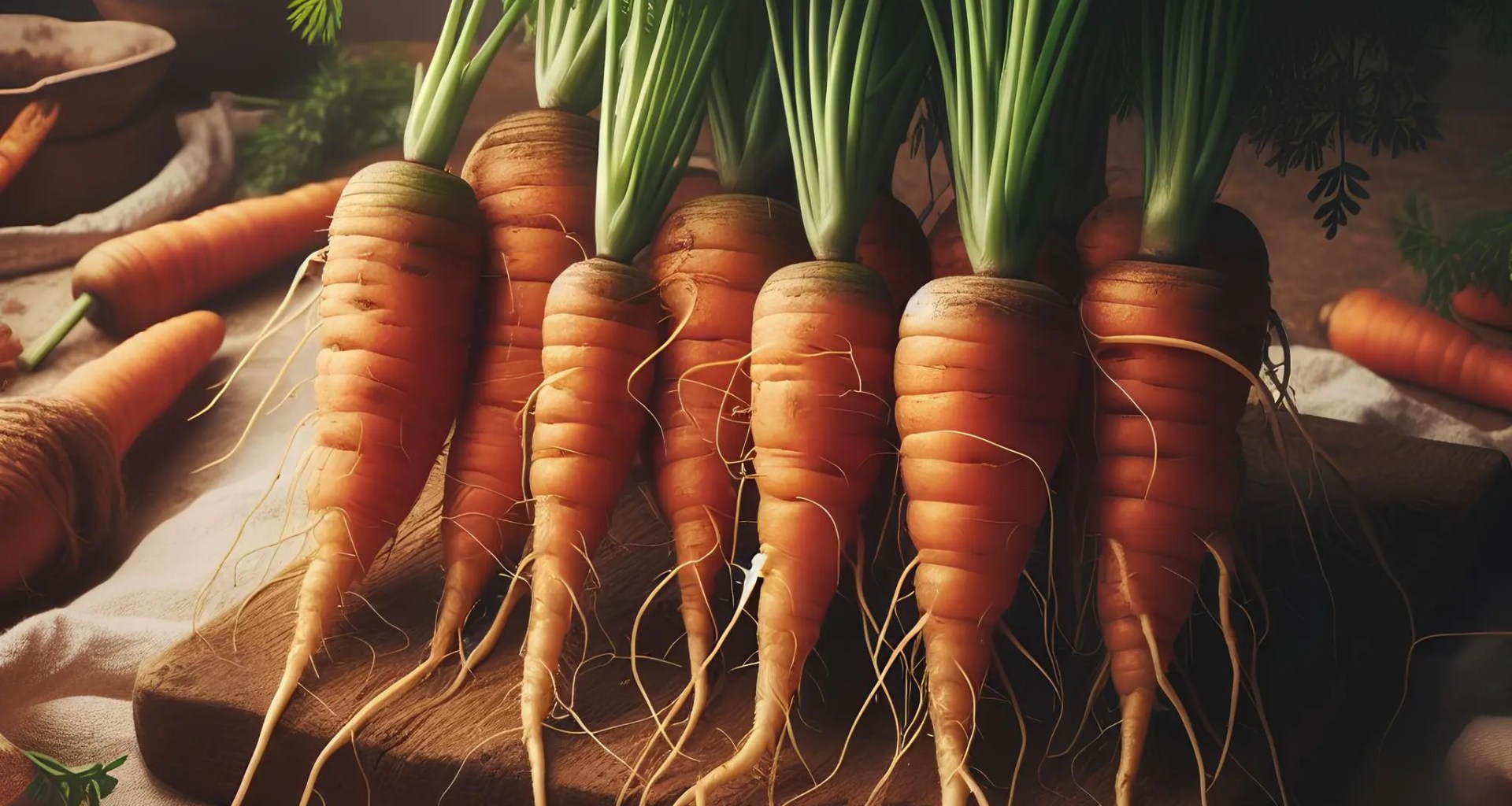
Welcome to our exploration of the “carrot ageing mystery”! In this news, we’ll delve into the intriguing world of root vegetables, specifically focusing on how aging impacts them. We’ll unravel the mystery behind carrot curling, a phenomenon that has puzzled many. So, let’s embark on this exciting journey together!
Shredded carrot pieces stand as a universally cherished snack, gracing school lunchboxes, picnic spreads, and party platters throughout the year. Researchers at the University of Bath delved into the intriguing science behind the preparation of this popular root vegetable, unraveling the secrets that prompt them to gracefully curl up if neglected.
Nguyen Vo-Bui, a Mechanical Engineering student, undertook this investigation as part of his final-year studies during the challenging circumstances of the 2021 COVID-19 lockdowns. Despite the limited access to traditional laboratories, Nguyen aimed to pinpoint the geometrical and environmental factors influencing the longevity of carrots. Working from his kitchen, he meticulously characterized, analytically modeled, and validated the aging process of over 100 Lancashire Nantes carrot halves, longitudinally sliced, utilizing finite-element (FE) models typically employed in structural engineering.
The research findings unveiled that two pivotal factors, residual stresses and dehydration, orchestrated the mesmerizing curling behavior of carrots. The rigid outer layer, or cortex, proved stiffer than the pliable central vein, known as the vascular cylinder. When sliced lengthwise, the two halves of the carrot curved gracefully due to an imbalance in stress caused by the disparity in stiffness. Furthermore, dehydration exacerbated the loss of stiffness, intensifying the captivating curling effect. The comprehensive results of this study have been published in the journal Royal Society Open Science under the title “Modelling of longitudinally cut carrot curling induced by the vascular cylinder-cortex interference pressure.”
The researchers’ recommendations for carrot manufacturers emphasize the importance of handling carrots in controlled conditions—specifically, in cold, moist, airtight, and humidity-controlled environments. These measures are aimed at preserving the inherent qualities of carrots and extending their shelf life.
The study not only unravels the secrets behind carrot curling but also offers a systematic approach to predict the deformation of various cut root vegetables. The researchers suggest that this methodology could be applicable to other plant structures as well. This newfound understanding equips food producers with a valuable mathematical tool that can be integrated into the design of packaging and food handling processes, potentially mitigating food waste.
Carrots, considered one of the world’s top crops in terms of market value, are renowned for their high production efficiency. However, a significant portion, approximately 25–30%, is wasted before processing and packaging due to deformities, mechanical damage, or infection. The study positions fresh cut and minimally processed carrots as a solution, offering a convenient and ready-to-use ingredient that utilizes carrots that might otherwise be discarded, thereby contributing to the reduction of food waste.
Dr. Elise Pegg, a senior lecturer in Bath’s Department of Mechanical Engineering and one of the authors of the research paper, supervised the study. She expressed the team’s motivation, stating, “We have mathematically represented the curl of a cut carrot over time and identified the contributing factors. Our aim was to enhance the sustainability of carrot processing, making them more durable. The methodology developed provides food producers with a practical means to optimize their processes, minimize food waste, and enhance the efficiency of packaging and transportation. Understanding the bending behavior in such systems enables us to design and manufacture products with increased durability.”
Exploring a question typically reserved for biological investigation, our approach to understanding carrot curling delves into the realm of mechanical principles. Nguyen’s commendable resourcefulness and dedication shine through in this captivating research conducted amidst the challenges of a pandemic.
Over the span of a week, the carrot halves underwent a fascinating transformation, with their average curvature radius decreasing from 1.61m to 1.1m. This change was accompanied by a 1.32-times reduction in stiffness, directly linked to the dehydration of the carrots, evident in an average weight loss of 22%.
Nguyen reflects on the project with enthusiasm, describing the experience of applying mechanical principles to vegetables as both surprising and enjoyable. The project’s uniqueness lies not only in its scientific merit but also in the creative problem-solving required to conduct experiments in a lockdown setting, devoid of traditional labs and equipment. The satisfaction of seeing this work published in an academic journal and its potential impact on the food industry is particularly rewarding for Nguyen.
The project’s challenges extended beyond the experimental phase, requiring innovative solutions for utilizing the substantial 30kg carrot harvest obtained from a farmers’ market. From carrot cake to the Indian carrot dessert Gajar Ka Halwa, and even carrot pesto, Nguyen and his flatmates enjoyed a diverse array of dishes for several days.
This research experience has fueled Nguyen’s academic journey, propelling him into a Ph.D. program at the University of Bath where he now explores residual stresses in porous ferroelectric ceramics. His resilience and ingenuity, evident in this unconventional study, continue to shape his academic pursuits and contribute to the broader scientific community.
In conclusion, Nguyen’s project, which ingeniously applied mechanical principles to vegetables, has proven to be a remarkable journey of discovery and innovation. This experience, along with the unraveling of the “carrot ageing mystery” has not only enriched Nguyen’s academic path but also propelled him into a Ph.D. program at the University of Bath. His current research on residual stresses in porous ferroelectric ceramics continues to demonstrate his resilience and creativity, contributing significantly to the scientific community. His journey serves as an inspiring example of how unconventional approaches can lead to surprising and rewarding outcomes.
Resources
- ONLINE NEWS University of Bath. (2024, January 24). Why do carrots curl? Research reveals the mechanics behind root vegetable aging. Phys.org. [Phys.org]
- JOURNAL Vo-Bui, N. A., Rogers, B. A., & Pegg, E. C. (2024). Modelling of longitudinally cut carrot curling induced by the vascular cylinder-cortex interference pressure. Royal Society Open Science, 11(1), 230420. [Royal Society Open Science]
Cite this page:
APA 7: TWs Editor. (2024, January 24). The Mystery of Carrot Curling: How Ageing Affects Root Vegetables? PerEXP Teamworks. [News Link]


