



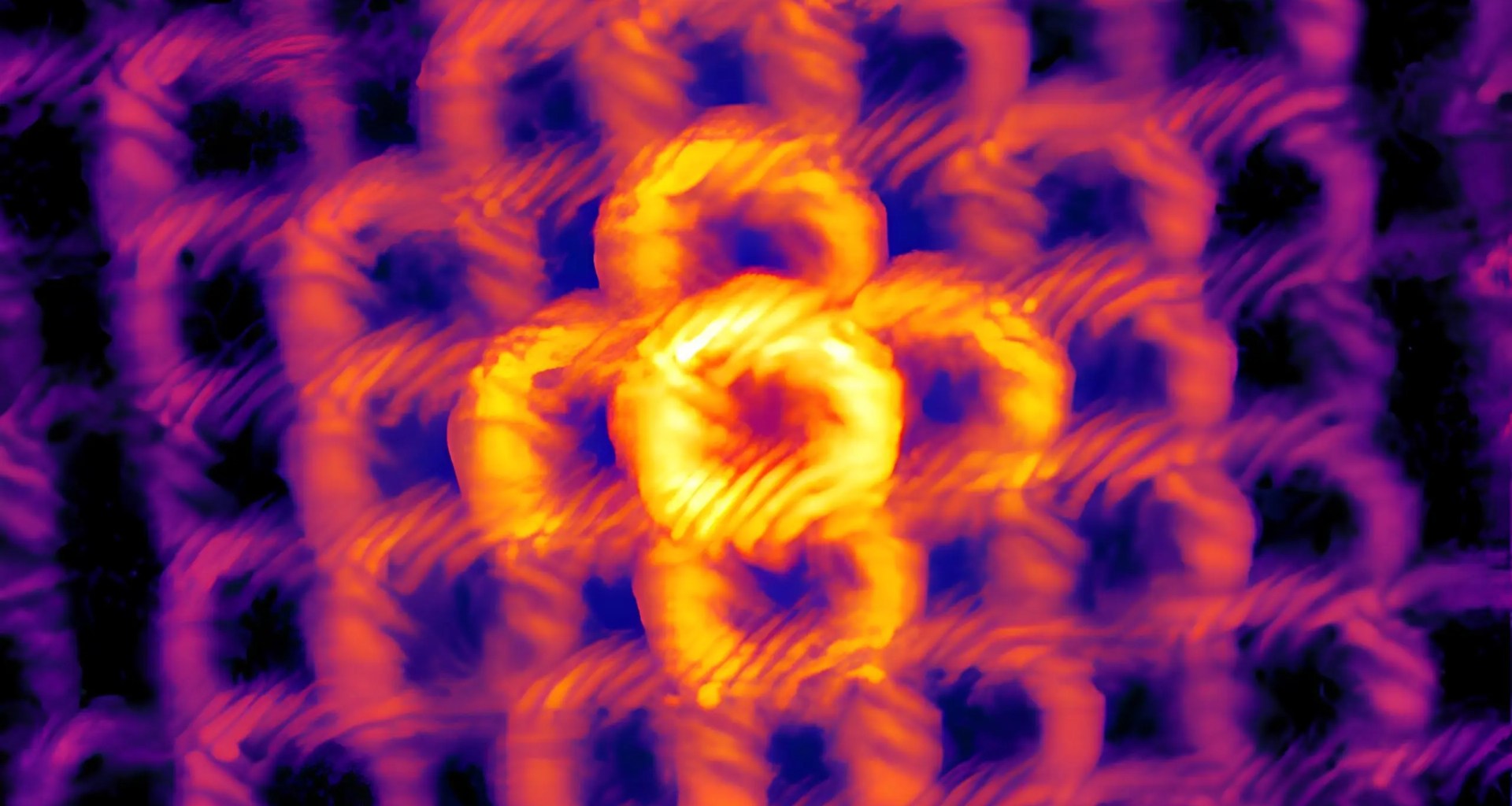
A groundbreaking technique has emerged that holds the potential to enhance the functionality of various “Nanoelectronics,” including the miniature semiconductors embedded in computer chips, according to a recent study published in Optica. This discovery, featured in a special issue of Optics & Photonics News, represents a significant advancement in ptychography—a potent method for examining minuscule entities.
Ptychography tools, unlike conventional microscopes, do not directly observe small objects. Instead, they utilize lasers to illuminate a target and subsequently measure the scattered light—a microscopic analogy to creating shadow puppets on a wall. However, despite its success, there has been one notable limitation, as explained by study senior author Margaret Murnane, a Distinguished Professor of physics.
Margaret Murnane, a fellow at JILA, which is a collaborative research institute of CU Boulder and the National Institute of Standards and Technology (NIST), notes a historical limitation of ptychography. The technique faced significant challenges when applied to highly periodic samples or objects featuring a regularly repeating pattern. This shortcoming is particularly noteworthy as it encompasses a substantial portion of nanoelectronics, posing a hindrance to its widespread applicability in this crucial domain.

Margaret Murnane underscores a critical aspect of the challenge, emphasizing that numerous pivotal technologies, including certain semiconductors, consist of atoms such as silicon or carbon arranged in regular patterns akin to a grid or mesh. The intricate nature of these structures has posed a persistent difficulty for scientists attempting to achieve a detailed, close-up view through the application of ptychography.
In their recent study, Margaret Murnane and her colleagues introduced an innovative solution to the challenge. Instead of utilizing conventional lasers in their microscopes, they generated beams of extreme ultraviolet light shaped like doughnuts.
This groundbreaking approach allows for the precise imaging of minuscule and delicate structures, measuring approximately 10 to 100 nanometers—many times smaller than a millionth of an inch. The researchers anticipate further advancements to enable the visualization of even smaller structures in the future. Importantly, the doughnut-shaped, or optical angular momentum, beams offer a non-invasive imaging method that avoids potential harm to tiny electronics, a concern associated with certain existing imaging tools like electron microscopes.
Margaret Murnane envisions the prospective application of this method in inspecting the polymers integral to the fabrication and printing of semiconductors. The distinctive advantage lies in the ability to scrutinize these materials for defects without inducing any damage to the underlying structures—a significant potential breakthrough in semiconductor manufacturing quality control.
Microscopes: Pushing the boundaries of what we can see
Margaret Murnane describes that the research endeavors to overcome the inherent limitations of conventional microscopes. Due to the constraints imposed by the physics of light, imaging tools relying on lenses can only achieve a resolution of approximately 200 nanometers. This limitation proves inadequate for capturing detailed images of entities like viruses that infect humans. While powerful cryo-electron microscopes offer the capability to visualize viruses after freezing and killing them, the challenge remains in capturing these pathogens in action and in real-time—a capability that the research aims to address.
The groundbreaking technique of ptychography, developed in the mid-2000s, offers a potential solution to surpassing the resolution limit. To grasp its application, consider the analogy of shadow puppets. When scientists aim to create a ptychographic image of a small structure, like letters spelling “CU,” they utilize a laser beam that scans the letters multiple times. As the light interacts with the “C” and the “U” (the puppets), it disperses and scatters, forming a intricate pattern (the shadows). Using highly sensitive detectors, scientists capture and record these patterns, followed by a meticulous analysis employing mathematical equations. Over time, explained Murnane, they can reconstruct the complete shape of the puppets based solely on the shadows they cast.
Margaret Murnane clarifies the approach employed in ptychography, highlighting a departure from conventional lens-based imaging. Instead of relying on a lens to retrieve the image, the technique employs sophisticated algorithms. This distinction underscores the reliance on computational methods and mathematical algorithms to reconstruct detailed images, showcasing a departure from traditional optical systems.
Margaret Murnane and her team have successfully applied this method in observing submicroscopic shapes such as letters or stars. However, when it comes to repeating structures like silicon or carbon grids, the conventional approach encounters limitations. When a regular laser beam is directed at a semiconductor featuring highly regular patterns, it tends to generate a uniform scatter pattern. This uniformity poses challenges for ptychographic algorithms, which struggle to interpret patterns lacking significant variation. The conundrum has perplexed physicists for nearly a decade.
Doughnut microscopy
In the recent study, Murnane and her team opted for a novel approach. Departing from conventional lasers, they utilized beams of extreme ultraviolet light, shaping them into a corkscrew or vortex using a spiral phase plate. These vortex-shaped beams, resembling doughnuts when projected onto a flat surface, proved instrumental in overcoming previous limitations. When directed onto repeating structures, these doughnut beams generated more intricate shadow puppets compared to regular lasers.
To assess the efficacy of this innovative method, the researchers fashioned a mesh of carbon atoms with a minute snap in one of the links. Remarkably, the team could pinpoint this defect with a level of precision unparalleled in other ptychographic tools.
Margaret Murnane underscores the advantage of their innovative approach by highlighting the potential damage incurred if attempting to image the same structure using a scanning electron microscope. The implication is that the traditional imaging method might exacerbate the damage to the sample, emphasizing the non-invasive nature of their advanced technique.
Looking ahead, Margaret Murnane and her team aim to enhance the precision of their doughnut strategy, aspiring to observe even smaller and more delicate objects. Their ultimate goal includes exploring the intricacies of living biological cells, indicating a potential expansion of applications into the realm of cellular biology.
Resources
- ONLINE NEWS Strain, D. & University of Colorado at Boulder. (2023, December 4). “Doughnut” beams help physicists see incredibly small objects. Phys.org. [Phys.org]
- JOURNAL Wang, B., Brooks, N., Johnsen, P. B., Jenkins, N. W., Esashi, Y., Binnie, I., Tanksalvala, M., Kapteyn, H. C., & Murnane, M. M. (2023). High-fidelity ptychographic imaging of highly periodic structures enabled by vortex high harmonic beams. Optica, 10(9), 1245. [Optica]
Cite this page:
APA 7: TWs Editor. (2023, December 5). The ‘Doughnut’ Beam Technique: A New Way to See Incredibly Small Objects. PerEXP Teamworks. [News Link]


