



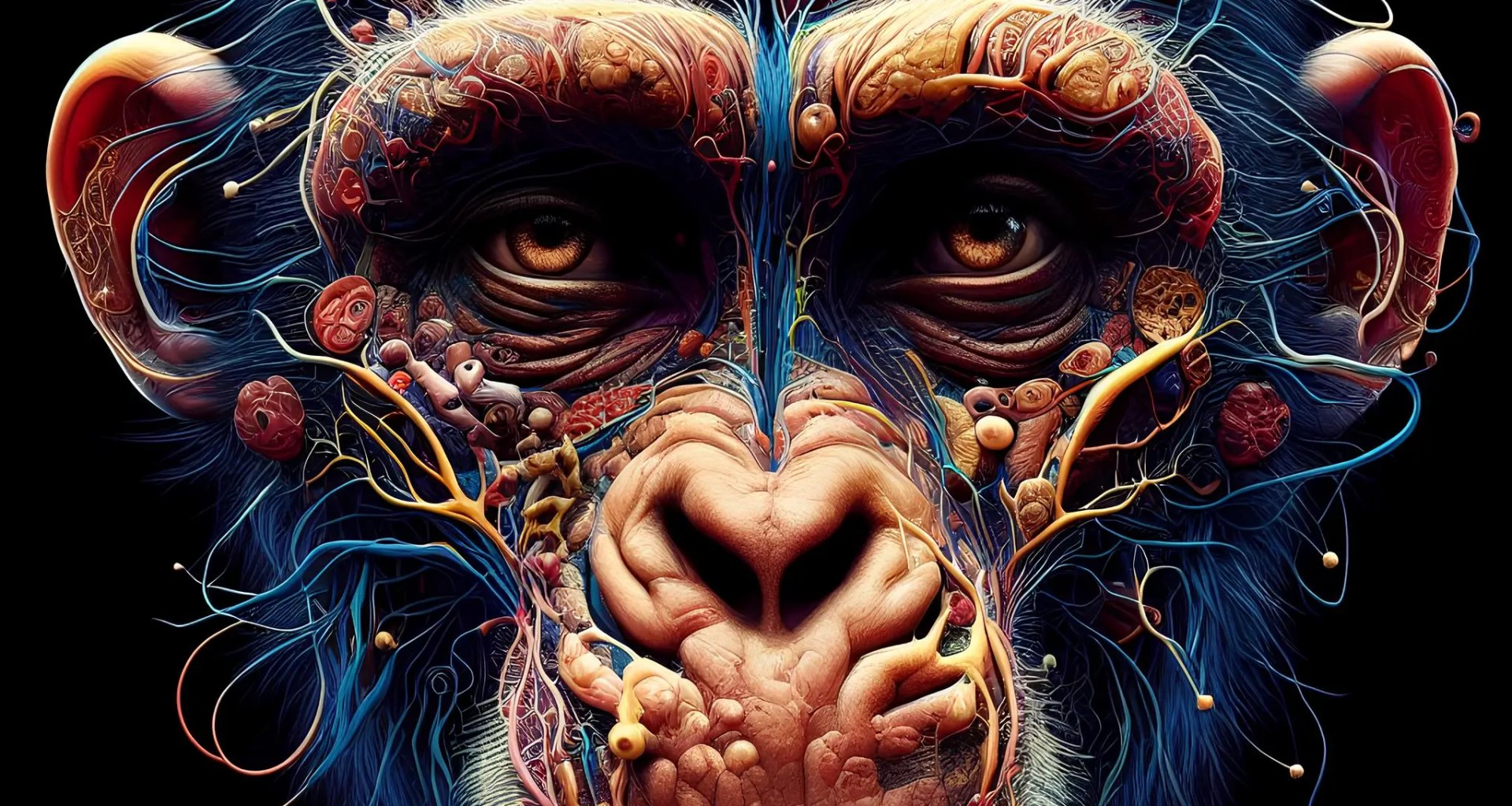
APA 7: TWs Editor & ChatGPT. (2023, October 17). Researchers Present Elaborate Brain Cell Maps for Human and Nonhuman Primates. PerEXP Teamworks. [Article Link]
International researchers have completed a comprehensive mapping of the human and nonhuman primate brains, delving into their genetic, cellular, and structural composition. This in-depth understanding of brain structure, funded in part by the National Institutes of Health’s BRAIN Initiative, promises invaluable insights into the cellular underpinnings of brain function and dysfunction. This knowledge opens doors to precision therapeutics for various brain disorders. Their breakthroughs are documented across 24 papers in Science, Science Advances, and Science Translational Medicine.
Mapping the brain’s cellular landscape is a critical step toward understanding how this vital organ works in health and disease.
These new detailed cell atlases of the human brain and the nonhuman primate brain offer a foundation for designing new therapies that can target the specific brain cells and circuits involved in brain disorders.
Joshua A. Gordon
Director of the National Institute of Mental Health
In the recent publication from the BRAIN Initiative Cell Census Network (BICCN), spanning 24 papers, the extraordinary diversity of cells within the human and nonhuman primate brains is meticulously outlined. These studies illuminate the shared characteristics and distinctions in cellular organization and gene regulation between the two. For instance:
- Among the collection, three papers unveil the inaugural cell atlas of the mature human brain, charting the brain’s transcriptional and epigenomic terrain. The transcriptome, encompassing a cell’s entire gene readouts, encodes instructions for synthesizing proteins and other cellular components. The epigenome encompasses chemical alterations to a cell’s DNA and chromosomes that influence the cell’s genetic information expression.
- Another paper delves into a comparison between the cellular and molecular traits of the human brain and those of various nonhuman primates, including chimpanzees, gorillas, macaques, and marmosets. This analysis reveals striking resemblances in cell types, proportions, and spatial arrangements within the cerebral cortex of both humans and nonhuman primates. Further scrutiny of the genetic expression patterns in cortical cells across these species indicates that even slight alterations in gene expression along the human evolutionary path triggered modifications in neuronal connections and synaptic functions, likely contributing to the human brain’s remarkable plasticity, enabling adaptation, learning, and change.
- Through an investigation into cell diversity across various brain regions in marmosets, a study unveiled a significant connection between the characteristics of adult brain cells and the traits they possessed during their developmental stages. This connection indicates that developmental programming becomes ingrained in cells from their inception and endures into adulthood, implying that certain observable features of adult brain cells might find their roots in the earliest stages of life. This discovery holds the potential to offer fresh perspectives on brain development and functionality throughout an individual’s lifetime.
- Diving into the intricacies of neurons in the neocortex’s outer layer, which plays a pivotal role in advanced functions like cognition, motor control, and language, exposed disparities between the human and mouse brains. These distinctions indicate that this brain region might be an evolutionary focal point, with the human brain’s adaptations mirroring the greater demands of overseeing the more intricate neural networks crucial to our advanced cognitive abilities.
At its heart, the BICCN is a pioneering endeavor dedicated to unraveling the intricate cellular composition of the brain. Its primary goal is to construct an exhaustive catalog of brain cells, delving into their spatial distribution, developmental processes, collaborative functions, and self-regulation mechanisms. This holistic approach aims to enhance our comprehension of the origins and progression of brain disorders, ultimately guiding more effective treatments.
This suite of studies represents a landmark achievement in illuminating the complexity of the human brain at the cellular level.
The scientific collaborations forged through BICCN are propelling the field forward at an exponential pace; the progress — and possibilities — have been simply breathtaking.
John Ngai
Director of the NIH BRAIN Initiative
The comprehensive survey of brain cell types in both human and nonhuman primate brains, as delineated in this compilation of papers, represents a significant stride toward shaping the brain therapies of tomorrow. Additionally, it paves the way for the BRAIN Initiative Cell Atlas Network, a groundbreaking initiative in conjunction with two other expansive ventures – the BRAIN Initiative Connectivity Across Scales and the Armamentarium for Precision Brain Cell Access. These collective endeavors aspire to transform the landscape of neuroscience research by elucidating fundamental principles governing the underpinnings of behavior at a circuit level and by catalyzing innovative strategies for addressing human brain disorders.
Resources
- WEBSITE National Institute of Mental Health (NIMH). (2023, October 12). Scientists unveil detailed cell maps of the human brain and the nonhuman primate brain. National Institute of Mental Health (NIMH). [National Institute of Mental Health (NIMH)]
- JOURNAL Maroso, M. (2023). A quest into the human brain. Science, 382(6667), 166–167. [Science]


