



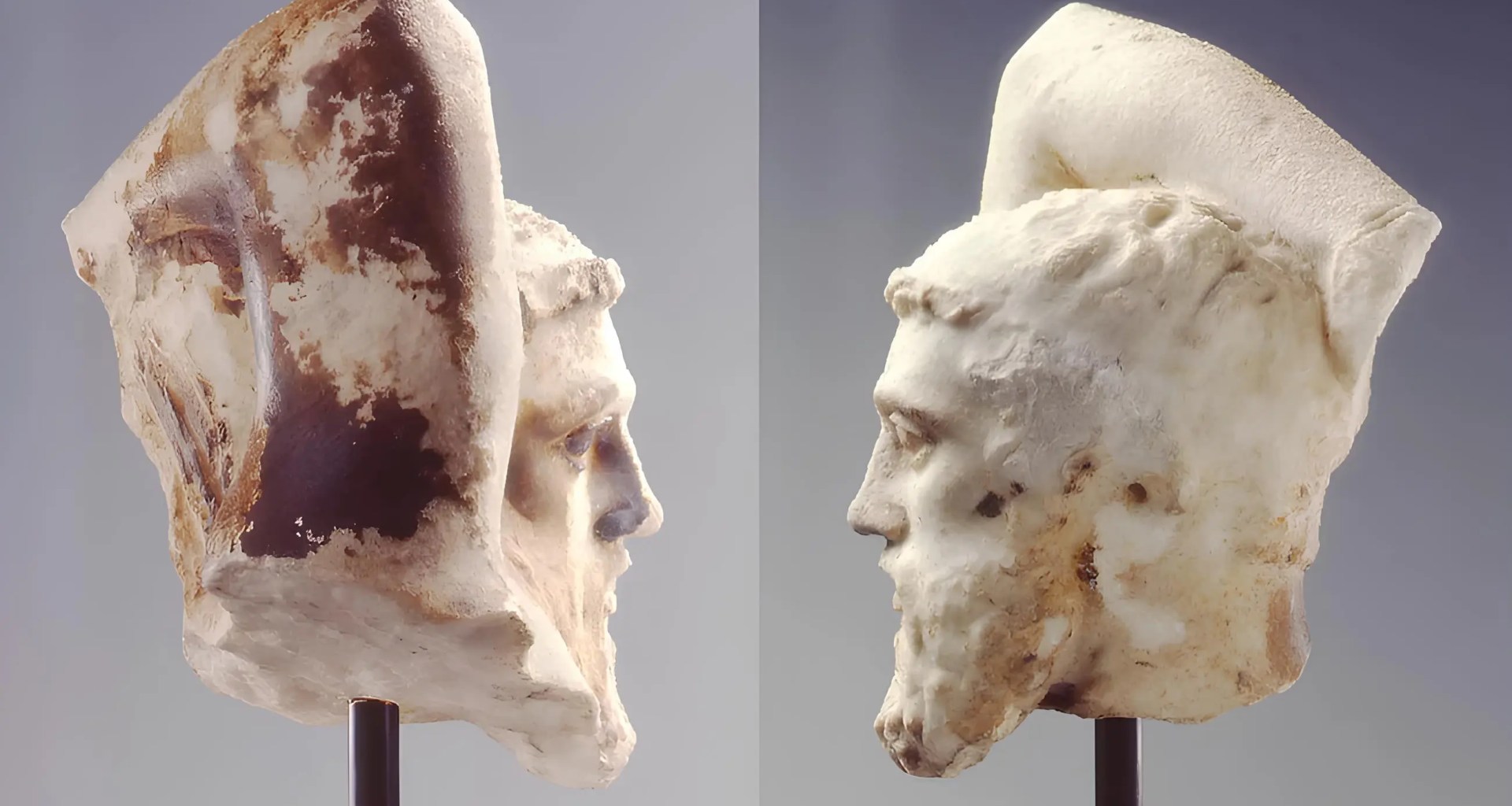
Housed within Copenhagen’s National Museum is a marble head with a storied past, once an integral part of the ancient Greek Parthenon temple on Athens’ Acropolis. Originally part of a larger scene depicting the mythical battle between Lapiths and centaurs—mythical beings blending horse and human features—the head now stands as a testament to ancient Greek mythological artistry.
Adding an intriguing layer to its narrative, the centaur head, along with other Parthenon marble fragments, bears a mysterious thin brown film. Dating back to 1830, the British Museum initially examined this enigmatic coating, exploring whether it stemmed from ancient paint. Despite efforts, the origins remained elusive, with speculations ranging from chemical reactions with the air to iron particles within the marble migrating to the surface and imparting the distinctive brown hue. The unresolved nature of this phenomenon adds an element of intrigue to an already captivating piece of ancient history.
Oxalic acid, algae & fungi for centaur head research
Professor emeritus Kaare Lund Rasmussen, an expert in the chemical analysis of historical and archaeological artifacts at the University of Southern Denmark, sheds light on the enduring mystery surrounding the peculiar brown film adorning the centaur head from Copenhagen’s National Museum. Collaborating with colleagues Frank Kjeldsen and Vladimir Gorshkov from the Department of Biochemistry and Molecular Biology, along with experts from various institutions, they’ve published their findings in the scientific journal Heritage Science.
The investigation, motivated by the persistent enigma surrounding the brown film, delved into the possibility of its origin being biological, potentially linked to organisms like lichen, bacteria, algae, or fungi. This theory, previously suggested, had not pinpointed a specific organism. Another line of inquiry explored the notion of the film being remnants of applied paint, possibly utilized for protection or toning the marble surface. Notably, their exploration builds upon the work of German chemist Justus von Liebig in 1851, who identified oxalates—salts of oxalic acid—in the brown film. While subsequent analyses have confirmed this composition, the source of the oxalates remains a persistent puzzle in the quest to unravel the intriguing history of this ancient artifact.
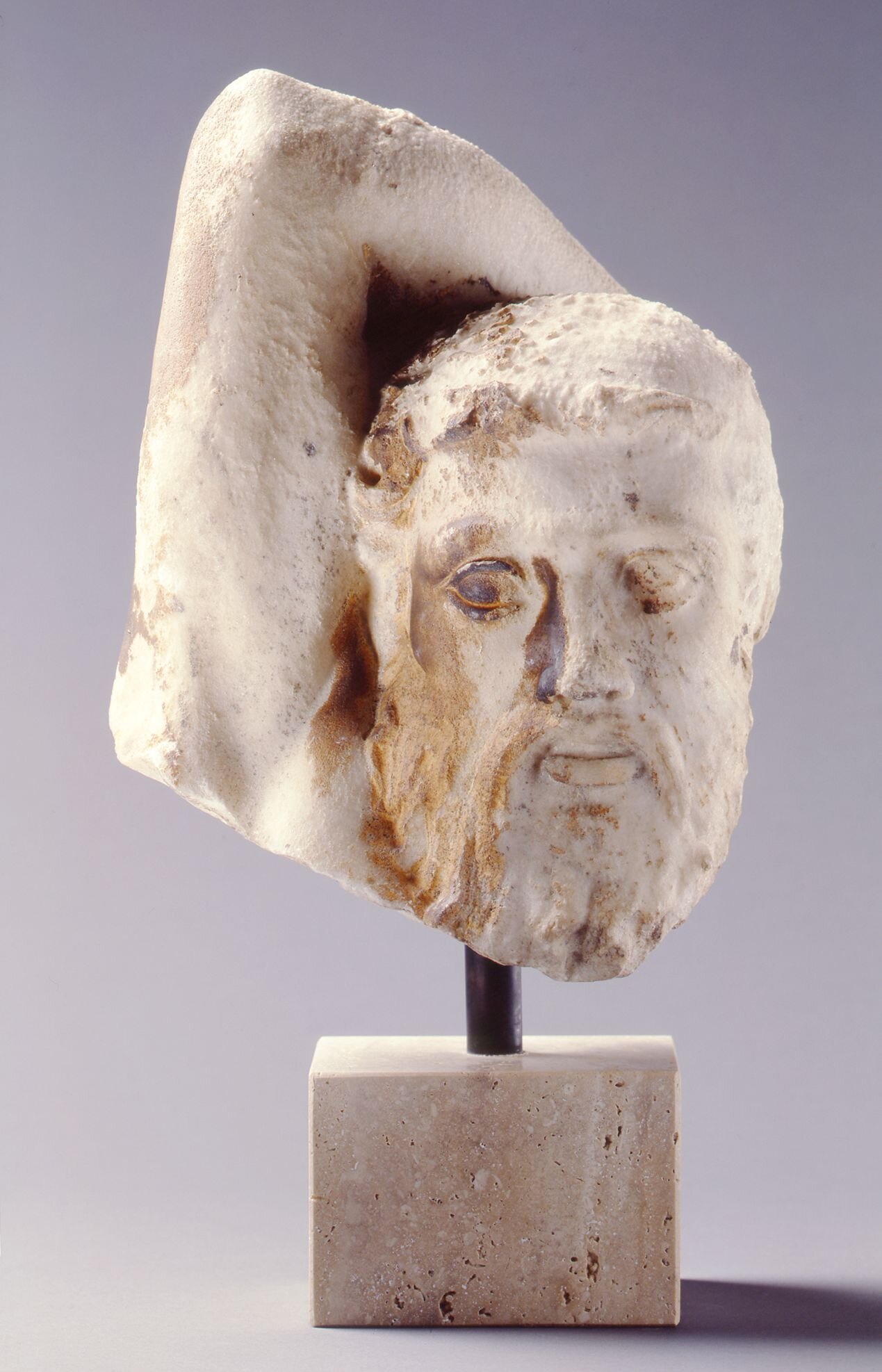
In their investigative efforts, the research team obtained permission to extract five small samples from the rear of the centaur head, initiating a comprehensive analysis at the University of Southern Denmark’s laboratories. The analyses encompassed a range of techniques, including protein analysis and Laser Ablation Inductively Coupled Plasma Mass Spectrometry.
Kaare Lund Rasmussen highlights that their meticulous examination of the samples yielded no indications of biological matter within the brown layers, except for traces of contemporary fingerprints and, intriguingly, a potential bird egg residue from ancient times. While this doesn’t outright dismiss the possibility of a historical biological substance, it significantly diminishes its likelihood, casting doubt on the theory of a biological organism’s involvement.
Furthermore, the researchers explored the likelihood of the marble surface being painted or preserved. The absence of detectable paint traces, coupled with the team’s specific search for such evidence, leads them to conclude that it is now less probable that the marble was adorned with paint or subjected to preservation techniques. Historical paints typically relied on natural ingredients like eggs, milk, or bones, and the absence of such components in the brown stain further challenges the hypothesis of applied paint or preservation practices.
Mysterious situation
In the course of their inquiry, the research team uncovered a distinctive characteristic of the brown film enveloping the centaur head: it comprises two distinct layers, each measuring approximately 50 micrometers in thickness. Notably, these layers exhibit variations in trace element composition. Despite both layers containing a combination of the oxalate minerals weddellite and whewellite, the divergence in their chemical compositions challenges the theories suggesting the migration of material, such as iron particles, from the marble’s interior or the possibility of a reaction with the air.
The existence of two separate layers also dismisses the notion of air pollution as a contributing factor. The centaur head has been sheltered indoors in Copenhagen since well before the onset of modern industrialization in the 18th century. This indoor preservation distinguishes it from marble pieces on the Acropolis, some of which have only recently been brought indoors, rendering the centaur head at the National Museum particularly valuable.
Kaare Lund Rasmussen, concluding the study, notes the likelihood that the two different brown layers have distinct origins. While theories of applied paint or conservation treatments arise, the absence of traces of such substances perpetuates the enigma surrounding the brown color, leaving it, for now, an intriguing mystery in the realm of historical and archaeological inquiry.
The journey of the centaur head to Denmark
In 1688, the centaur head, accompanied by another head from the Parthenon temple, found its way to Denmark as a generous gift to King Christian V. This historical artifact was presented by Danish Captain Moritz Hartmand, who had served in the Venetian fleet and witnessed the tragic bombardment of the Acropolis in Athens in 1687, resulting in substantial damage to the Parthenon temple. Following its arrival, the centaur head was prominently housed in the Royal Kunstkammer, a precursor to the National Museum. Since then, it has stood as a testament to ancient Greek artistry and myth, captivating visitors with its rich history and enduring presence within the cultural heritage of Denmark.
Resources
- ONLINE NEWS Svennevig, B. & University of Southern Denmark. (2024, January 18). Despite intensive scientific analyses, this centaur head remains a mystery. Phys.org. [Phys.org]
- JOURNAL Rasmussen, K. L., Rasmussen, B. B., Delbey, T., Bonaduce, I., Kjeldsen, F., & Gorshkov, V. (2024). Analyses of the brown stain on the Parthenon Centaur head in Denmark. Heritage Science, 12(1). [Heritage Science]
Cite this page:
APA 7: TWs Editor. (2024, January 19). The Enigma of the Centaur Head: How Science Failed to Explain Its Origin. PerEXP Teamworks. [News Link]