



Quantum batteries, leveraging quantum phenomena to acquire, distribute, and store power, hold the potential to outperform traditional chemical batteries in specific low-power applications. In a groundbreaking development, researchers, including those affiliated with the University of Tokyo, have harnessed an unconventional quantum process that challenges the typical understanding of causality. This innovative approach enhances the performance of quantum batteries, marking a significant step towards realizing the potential of this futuristic technology.
While the term “quantum” often brings to mind breakthroughs in the realm of subatomic physics, the spotlight tends to be on advancements in quantum computers. However, there are other noteworthy quantum technologies emerging, and one of them is the quantum battery. Despite its initially perplexing name, this innovation harbors untapped potential for sustainable energy solutions and could play a role in the integration of future electric vehicles. These cutting-edge devices are anticipated to find applications in portable and low-power scenarios, particularly in situations where recharging opportunities are limited.
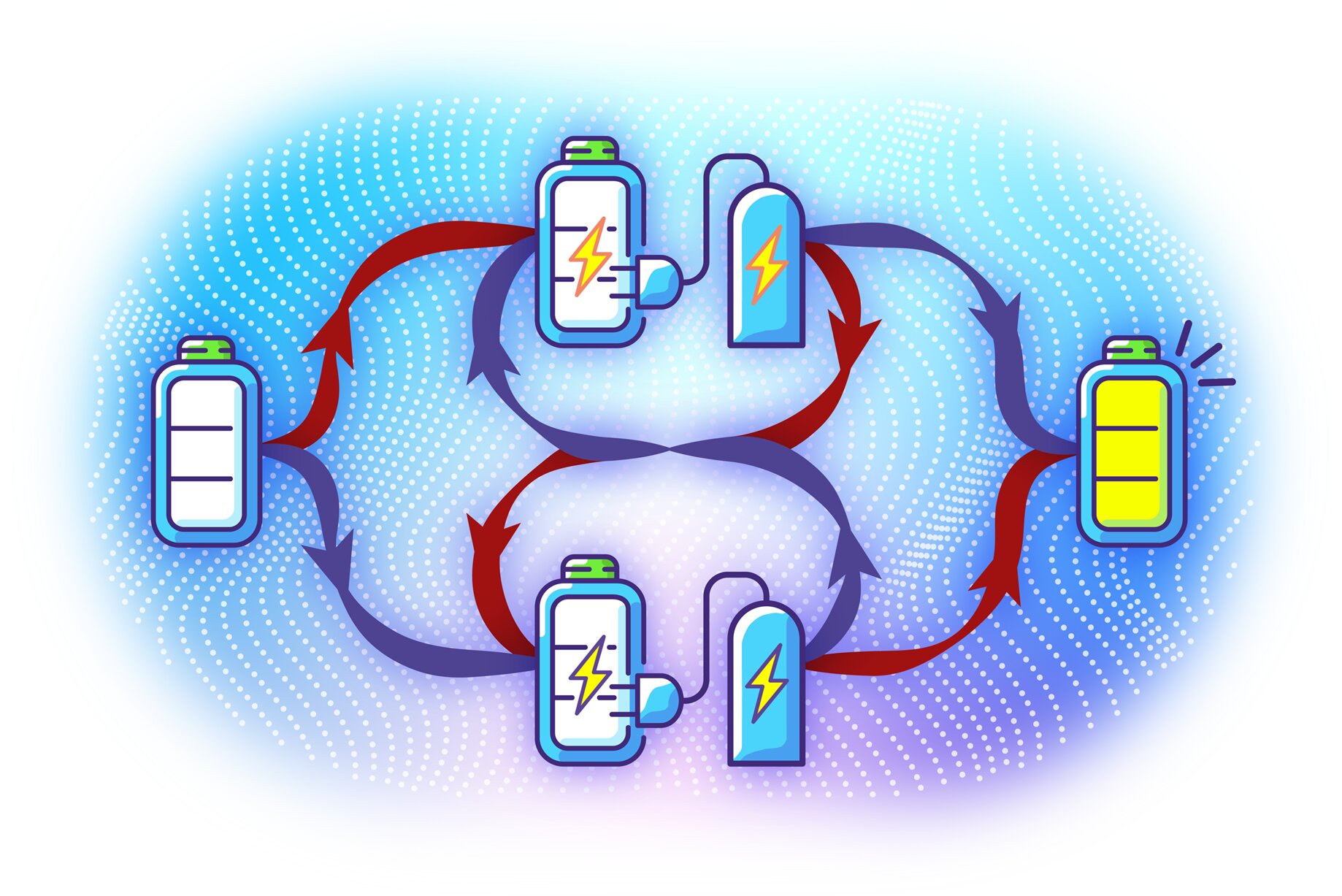
As of now, quantum batteries remain confined to the realm of laboratory experiments, with researchers globally dedicated to advancing various facets that could eventually converge into a fully operational and practical application. Specifically, graduate student Yuanbo Chen and Associate Professor Yoshihiko Hasegawa from the Department of Information and Communication Engineering at the University of Tokyo are immersed in the exploration of optimal quantum battery charging methods, with a crucial consideration being the role of time. The efficiency of quantum batteries, touted as a potential advantage, heavily depends on the intricacies of their charging process.
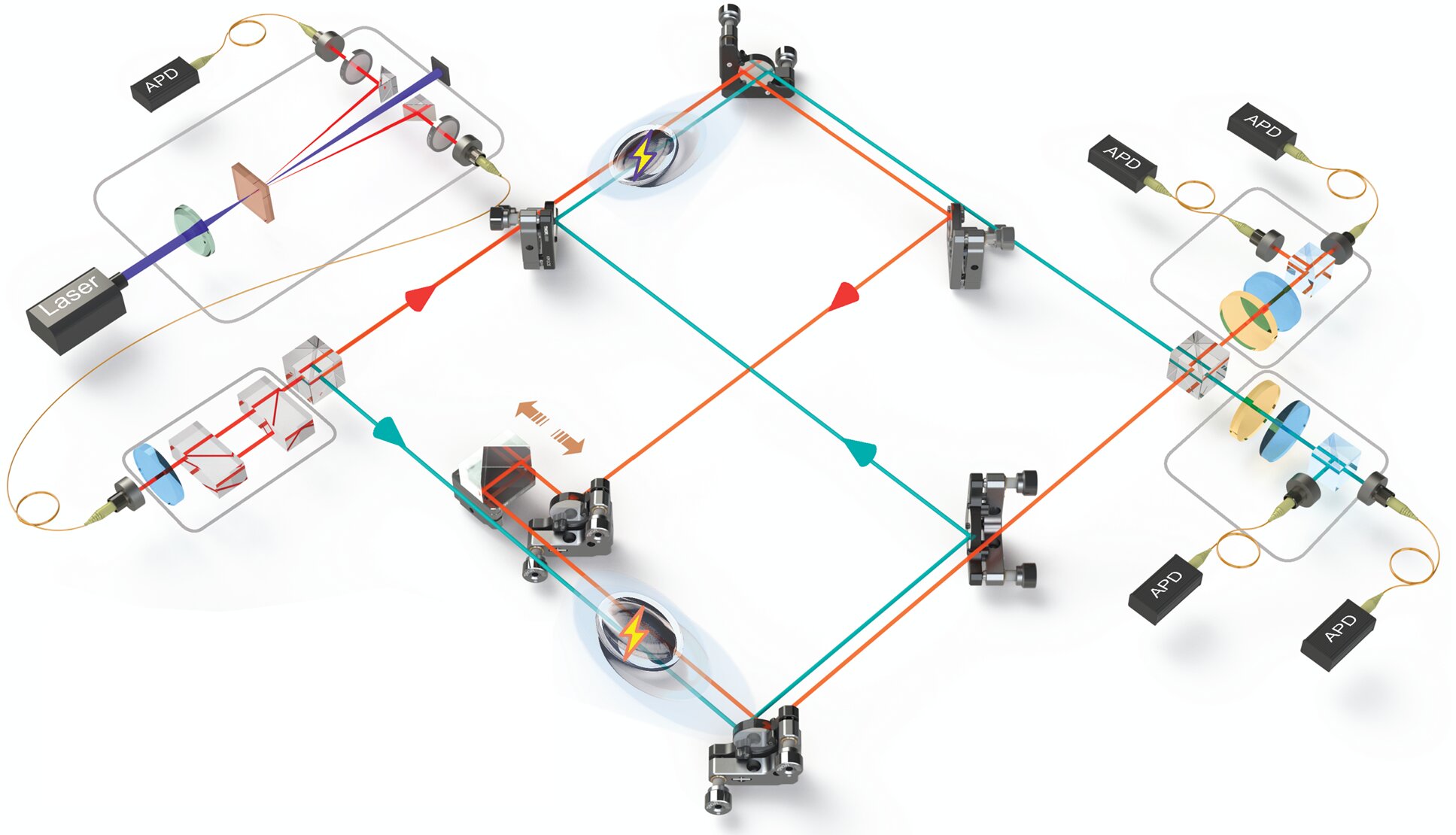
Chen, along with researcher Gaoyan Zhu and Professor Peng Xue from the Beijing Computational Science Research Center, highlighted the distinctive nature of quantum batteries compared to traditional chemical batteries used in low-power devices like smartphones or sensors. While chemical batteries rely on substances such as lithium for charge storage, quantum batteries employ microscopic particles, such as arrays of atoms. Unlike the classical laws governing chemical batteries, the behavior of microscopic particles is inherently quantum, providing an avenue to explore unconventional applications that challenge our intuitive understanding of small-scale phenomena.
In their collaborative efforts, the team utilized optical tools like lasers, lenses, and mirrors to investigate methods of charging a quantum battery. The novel approach they employed involved leveraging a quantum effect termed “indefinite causal order” (ICO). In classical physics, causality unfolds in a clear and linear manner, meaning that if event A leads to event B, the reverse scenario is excluded. However, at the quantum scale, ICO introduces a unique aspect where both directions of causality can exist simultaneously in a state known as a quantum superposition. This innovative application of ICO deviates from traditional charging methods, providing a new perspective on quantum battery technology.
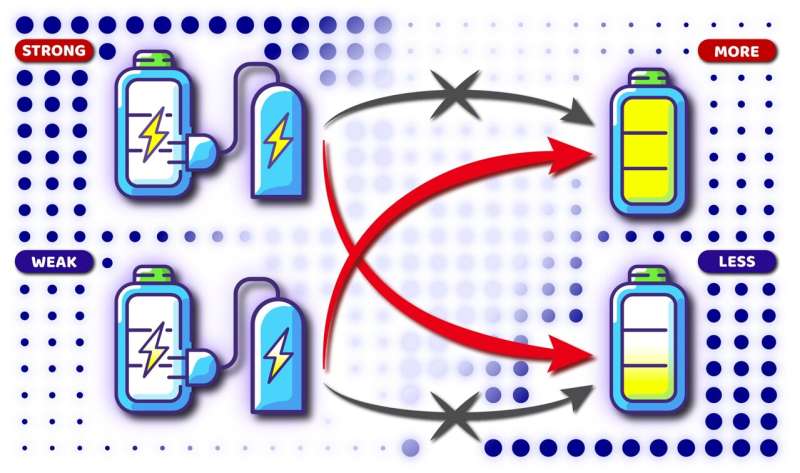
Chen emphasized the profound impact of ICO on the charging process for a battery composed of quantum particles, highlighting significant enhancements in both energy storage and thermal efficiency. In a counterintuitive revelation, the team discovered that a lower-power charger could yield higher energies and greater efficiency than a comparatively higher-power charger employing the same apparatus.
The exploration of ICO’s potential extends beyond charging low-power devices, offering opportunities in various applications related to thermodynamics and heat transfer processes. The uncovered principles, particularly the unexpected inverse interaction effect, hold promise for improving tasks such as solar panels, where heat-induced inefficiencies can be mitigated using ICO, potentially leading to increased overall efficiency.
Resources
- ONLINE NEWS University of Tokyo. (2023, December 14). New way to charge batteries harnesses the power of “indefinite causal order.” Phys.org. [Phys.org]
- JOURNAL Zhu, G., Chen, Y., Hasegawa, Y., & Xue, P. (2023). Charging Quantum Batteries via Indefinite Causal Order: Theory and Experiment. Physical Review Letters, 131(24), 240401. [Physical Review Letters]
Cite this page:
APA 7: TWs Editor. (2023, December 16). Indefinite Causal Order Enables Novel Battery Charging Method. PerEXP Teamworks. [News Link]


