



APA 7: TWs Editor & ChatGPT. (2023, November 6). Tree Diversity Boosted by the Presence of Large Herbivores like Elephants, Bison, and Moose. PerEXP Teamworks. [News Link]
Ensuring the preservation of biodiversity and addressing climate change relies significantly on the sustenance of species-rich and robust ecosystems. A critical factor in this equation is the megafauna, representing the largest animals in a given region. In a recent study featured in the journal One Earth, a collaborative global research effort, which includes Lund University, delved into the complex relationship between the population of voracious herbivores and the variety of tree species within protected areas across the globe.
According to Lanhui Wang, a researcher specializing in physical geography and ecosystem science at Lund University, their study uncovers a captivating and intricate narrative regarding the influence of large herbivorous animals on the natural landscapes of the world. In regions inhabited by these animals, the tree cover may be less dense, yet it exhibits a significantly greater diversity compared to areas devoid of large herbivores.
The study’s senior author, Jens-Christian Svenning, a professor at Aarhus University, conveyed that their global analysis unveiled a significant connection between the biomass of large herbivores and the diversity of tree cover within protected areas. This correlation was particularly notable for herbivores that primarily browse on vegetation and those with mixed feeding habits, such as elephants, bison, and moose, particularly in regions with non-extreme climates.
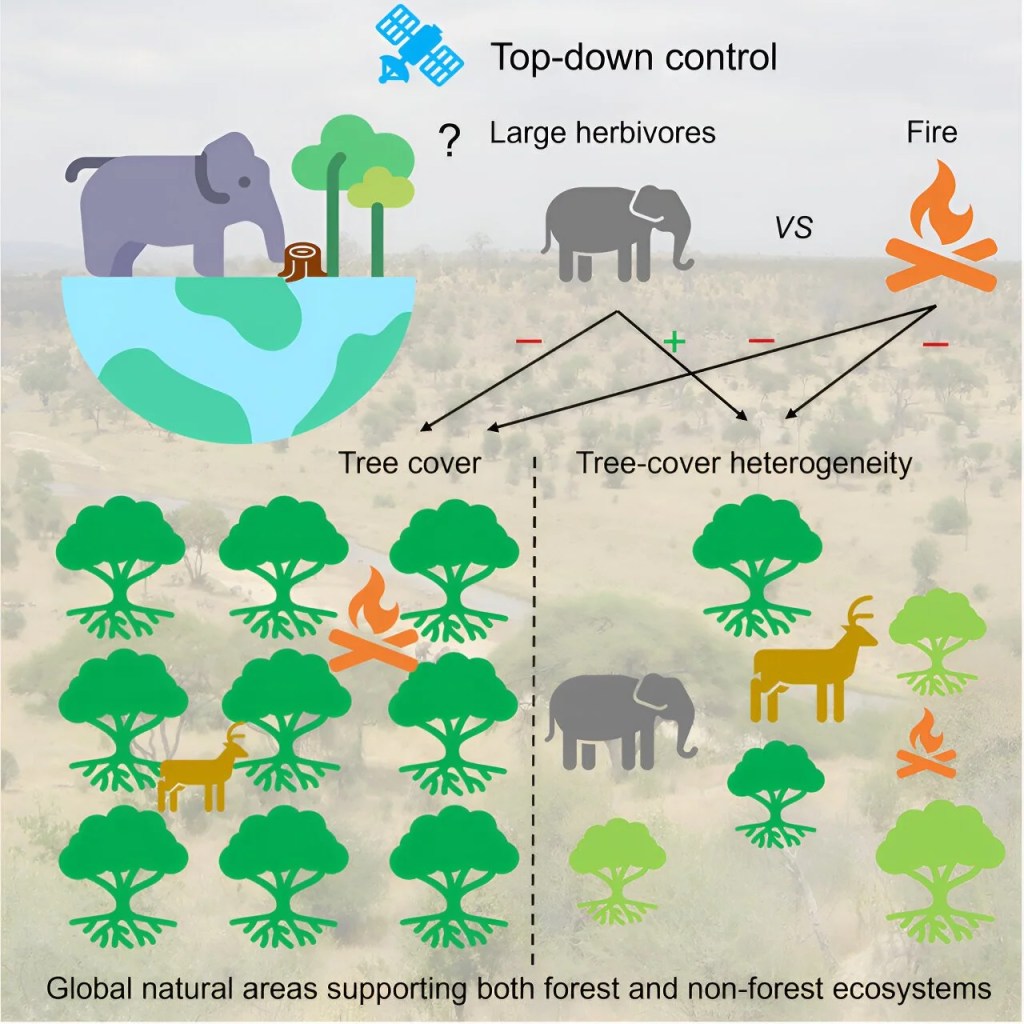
The research lends support to the concept that sizable wild herbivores play a pivotal role in fostering a multifaceted vegetation composition, which, in turn, establishes a thriving habitat for numerous other species. This effect arises from the herbivores’ dual impact, involving both their consumption of vegetation and the physical disruptions they introduce to the ecosystem.
In light of these recent research revelations, Lanhui Wang emphasizes the importance of incorporating large herbivores into restoration and conservation strategies. This integration proves essential not only for the well-being of these animals but also for recognizing their crucial role in molding landscapes and impacting biodiversity. The researchers contend that this dimension is often overlooked in the context of sustainable land management and ecosystem restoration efforts.
Lanhui Wang emphasizes that in an era when global initiatives are fervently dedicated to addressing climate change and halting biodiversity decline, their findings underscore the necessity for a more comprehensive and intricate discourse regarding ecosystem management and conservation strategies. They stress the paramount significance of assimilating a profound understanding of the ecological influence of megafauna into these discussions and actions.
The United Nations has designated the 2020s as the decade dedicated to ecosystem restoration. In an ambitious endeavor, 115 countries have pledged to rehabilitate and rejuvenate up to 100,000 square kilometers of natural habitats. To fulfill this ambitious goal, Lanhui Wang stresses that there is a global requirement for an increased presence of large, wild-living herbivores in ecosystems.
Lanhui Wang asserts that safeguarding and preserving large herbivores is indispensable in the pursuit of the United Nations’ objectives. These megafauna play a pivotal role in fostering tree cover, a factor that, in turn, facilitates carbon sequestration and the creation of a multitude of diverse habitats.
Resources
- NEWSPAPER Lund University. (2023, November 3). Large herbivores such as elephants, bison and moose shown to contribute to tree diversity. Phys.org. [Phys.org]
- JOURNAL Wang, L., Cromsigt, J. P. G. M., Buitenwerf, R., Lundgren, E. J., Li, W., Bakker, E. S., & Svenning, J. (2023). Tree cover and its heterogeneity in natural ecosystems is linked to large herbivore biomass globally. One Earth. [One Earth]


