





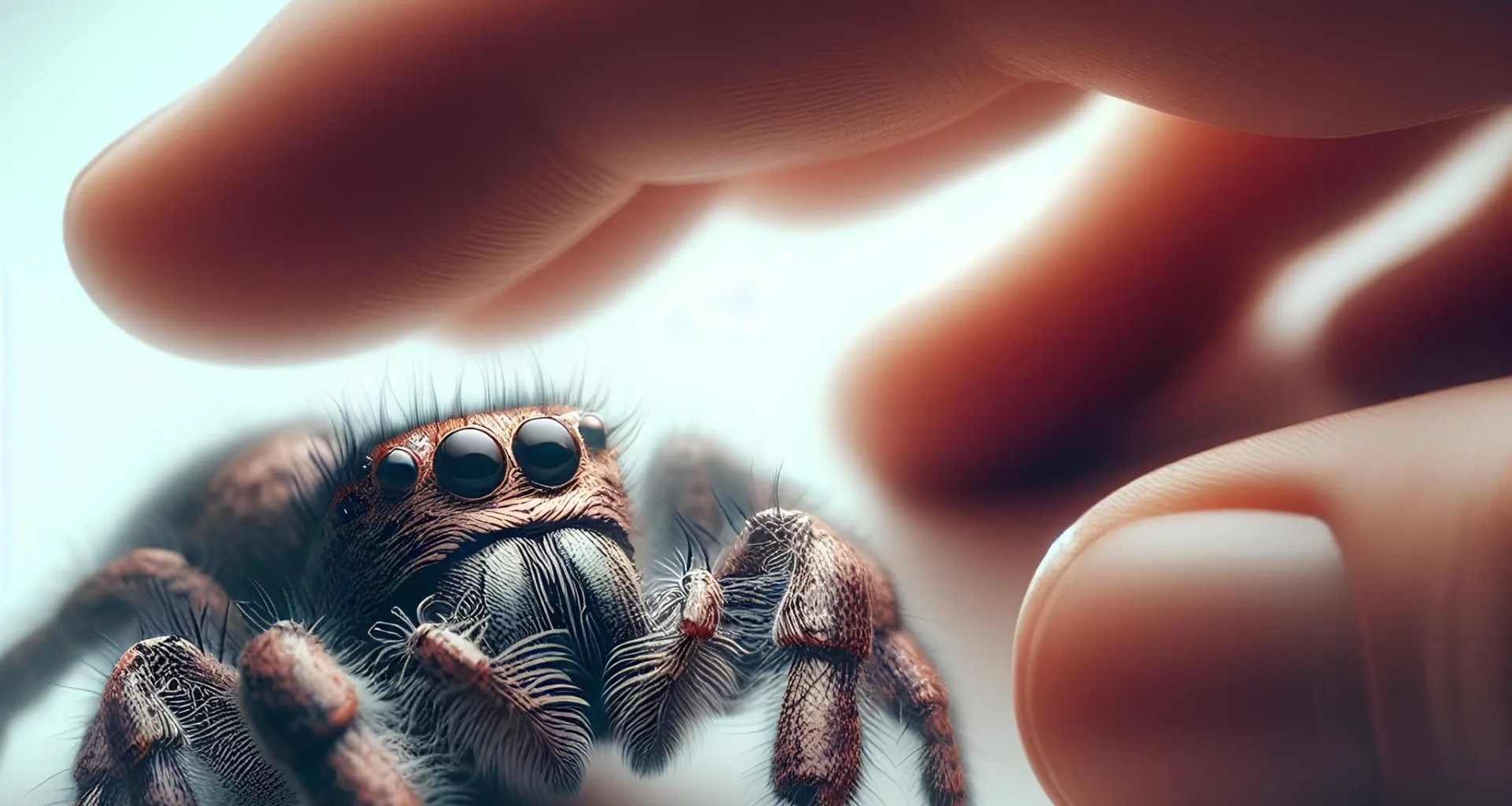
Insects and spiders often go unnoticed in our daily lives, becoming the center of attention only when we’re swatting them away. Nevertheless, these arthropods—characterized by their robust exoskeletons and segmented legs—play a pivotal role in upholding the ecosystems crucial for human survival. Astonishingly, arthropods represent an impressive 84% of the total known animal species.
A recent study published in Scientific Reports delves into the impact of human activities on arthropod biodiversity. It explores how non-biological factors, such as daily temperature fluctuations and proximity to the ocean, influence the diversity of arthropods in urban environments. The findings offer unexpected insights, pointing towards strategies that homeowners, landscapers, and urban planners can adopt to cultivate a healthy balance among these diminutive yet indispensable inhabitants.
Citizen science empowers research
Biodiversity encompasses the array of life forms within a specific area, and, in general, a richer biodiversity contributes to a more robust and resilient ecosystem. Particularly in urban environments, heightened biodiversity has been associated with various advantages, including improved air quality, reduced risk of flooding, and even enhanced mental well-being for humans.
Researchers from the USC Dornsife College of Letters, Arts and Sciences collaborated with the Natural History Museum of Los Angeles County’s BioSCAN project to evaluate arthropod biodiversity and its influencing factors in the Los Angeles basin. The BioSCAN initiative, a community science project led by the Natural History Museum, engaged approximately 80 volunteers. These volunteers contributed to the placement of small tent-like net structures, known as Malaise traps, in backyards, gardens, and diverse locations across greater Los Angeles. These traps were instrumental in collecting flying arthropods like bees, flies, and moths, while spiders were meticulously hand-collected from the same locations. This collaborative effort aimed to provide insights into the intricate web of arthropod life in the urban landscape.
Unexpected discoveries in the biodiversity of arthropods
Throughout the year-long initiative, museum staff meticulously documented arthropod populations to discern the diversity within various locales. The outcomes of this extensive study proved to be unexpectedly diverse.
Lead researcher Melissa Guzman, Gabilan Assistant Professor of Biological Sciences and Quantitative and Computational Biology at USC Dornsife, expressed surprise at the range of responses among arthropods to environmental factors such as the prevalence of land covered by asphalt or concrete and temperature fluctuations over a 24-hour cycle. The assumption was that these factors would have a uniform impact across arthropod groups, yet the findings unveiled substantial variations, both within closely related groups and across different arthropod categories.
Concrete and asphalt coverage, for instance, exhibited divergent effects on distinct insect populations. While it amplified the diversity of fruit flies from the Drosophilidae family, it appeared to diminish the diversity of crane flies in the Tipuloidea superfamily. Strikingly, spiders demonstrated heightened diversity in areas dominated by hard surfaces.
Temperature emerged as another influential factor, affecting the diversity of fungus gnats in the family Mycetophilidae and Syrphidae, a family encompassing bee-like hover flies. The research revealed that as temperatures increased, diversity among these insects notably decreased. These nuanced insights highlight the complex and varied interplay between arthropod communities and their surrounding environment.
The researchers propose that elevated summertime temperatures may lead to the desiccation of plants, a primary food source for aphids—an essential component of many hover fly diets. Additionally, the intensified foraging activity of non-native honeybees in higher temperatures creates competition for resources that some hover flies rely on.
Understanding the intricate relationship between species diversity and factors like land value, land cover, and temperature offers valuable insights for urban planners and developers. This knowledge enables them to tailor their projects to enhance biodiversity, thereby extending the associated benefits to the entire community of Angelenos. By making informed adjustments based on these ecological considerations, urban development can contribute positively to the preservation and flourishing of diverse species in the urban landscape.
Exploration unveils numerous newly discovered species
A noteworthy revelation that brought joy to the researchers, as highlighted by Brian Brown, the entomology curator at the Natural History Museum, was the unexpected discovery of numerous arthropod species previously unknown to inhabit the Los Angeles area. The project unveiled nearly 50 species that were completely novel to science.
Brian Brown emphasized that this newfound understanding significantly alters perceptions of Los Angeles’ insect biodiversity. Rather than the previously estimated 3,500 to 4,000 species, the researchers now suggest that the city may host close to 20,000 different insect species. This revelation reshapes Los Angeles as a “city of insects.”
The researchers express gratitude to the Los Angeles community members who actively participated in the BioSCAN project, acknowledging their pivotal role in unraveling the region’s biodiversity. In a tribute to their contribution, each newly discovered species was named after a participating family. This collaborative effort not only expands our knowledge of urban insect life but also underscores the vital role of community engagement in conservation initiatives.
Implications for humans
Despite facing challenges, such as the omission of seasonal variations in rainfall and temperature, the study suggests actionable steps for Angelenos to enhance arthropod biodiversity.
Lead researcher Melissa Guzman emphasizes that prioritizing green spaces and minimizing pesticide usage are key measures to foster arthropod diversity. Furthermore, she suggests that urban planners and builders can play a crucial role by incorporating microhabitats into their designs, providing spaces conducive for a wider array of species to thrive.
Although the study focused on the Los Angeles region, the researchers posit that similar outcomes would likely apply to comparable communities. This insight can guide land developers and homeowners in numerous cities across western North America, offering a blueprint for promoting biodiversity in urban environments.
Resources
- ONLINE NEWS University of Southern California. (2024, January 13). Are bugs bugging humans or the other way around? Study reveals a few surprises. Phys.org. [Phys.org]
- JOURNAL Lewthwaite, J. M. M., Baiotto, T. M., Brown, B. V., Cheung, Y. Y., Baker, A. J., Lehnen, C., McGlynn, T. P., Shirey, V., Gonzalez, L., Hartop, E., Kerr, P. H., Wood, E. M., & Guzman, L. M. (2024). Drivers of arthropod biodiversity in an urban ecosystem. Scientific Reports, 14(1). [Scientific Reports]
Cite this page:
APA 7: TWs Editor. (2024, January 15). Surprising Insights from a Study on Human-Insect Interactions. PerEXP Teamworks. [News Link]


Hey there! Came across your post on the WordPress feed and couldn’t resist saying hello. I’m already hooked and eagerly anticipating more captivating posts.
Good article!
Cool blog 🫡
Perfect ❤️
Nice explanation!
Excellent article 🌟
Great post! Thanks 😀
Happy blogging.