



Exploring the intricate world of plant communication, researchers at the University of Illinois Urbana-Champaign have delved into the dynamics of volatile organic compounds (VOCs) produced by tomato plants and how these compounds vary based on different plant features. Their findings, detailed in the Journal of Chemical Ecology, unravel the nuanced language of plants as they interact with their environment.
In the intricate tapestry of nature, the aroma of freshly cut grass in summer is not merely a sensory pleasure; it serves as a distinctive signal of plant injury. Plants, rooted in place and unable to escape threats, have evolved a sophisticated communication system utilizing chemical signals. VOCs, a repertoire of chemicals produced by plants, play a multifaceted role in this silent dialogue. Plants employ them to ready their defenses, alert each other to impending dangers, attract beneficial soil microbes for growth, and even notify insect predators of potential prey.
Erinn Dady, a graduate student in the Ngumbi lab, elucidates the communication strategy employed by plants. When a caterpillar nibbles on a leaf, the plant releases a signal akin to a beacon, summoning the caterpillar’s natural predators. This chemical communication serves as a proactive defense mechanism, essentially broadcasting the location of a potential meal to predators. The research sheds light on the intricate ways in which plants harness VOCs to navigate their interactions with the surrounding environment.
Unraveling the intricate web of factors influencing volatile organic compound (VOC) emissions is crucial for gaining insights into plant health. Previous research has delved into individual elements such as soil microbes, caterpillars, or tomato plant varieties and their impact on VOCs. In this latest study, researchers at the University of Illinois Urbana-Champaign took a comprehensive approach, examining the collective influence of these factors on plant chemistry across four tomato varieties—two heirlooms (Amish Paste and Cherokee Purple) and two hybrids (Mountain Fresh and Valley Girl).
Seeking a more representative perspective, the team departed from conventionally studied tomato varieties, often cultivated on a large scale for processing, and turned to the insights of local Illinois farmers. Based on their feedback, the researchers selected tomato varieties commonly grown in central Illinois.
The study focused on comparing the responses of untreated plants with those exposed to arbuscular mycorrhizal fungi (AMF), caterpillars, or a combination of both. To assess VOCs, the researchers enclosed eight-week-old tomato plants in odor-blocking oven bags for an hour. They then analyzed the chemicals emitted by each plant using gas chromatography-mass spectrophotometry, providing a comprehensive understanding of the intricate interplay of these factors on the chemical signals plants release into their environment.
The influence of arbuscular mycorrhizal fungi (AMF) and caterpillars on volatile emissions from tomato plants was a notable discovery in the study. Interestingly, both the AMF and caterpillars, when acting individually, demonstrated a suppressive effect on volatile emissions across all four tomato varieties—two hybrids (Mountain Fresh and Valley Girl) and two heirlooms (Amish Paste and Cherokee Purple). Surprisingly, when these factors coexisted, their combined impact was relatively modest compared to the distinct effects observed when either AMF or caterpillars were present alone.
The study revealed a puzzling decrease in volatile emissions in the presence of beneficial fungal associations (AMF), leaving researchers intrigued about the underlying reasons for this phenomenon. Equally concerning was the observation that the plants exhibited less responsiveness to caterpillars when AMF was present. Additionally, a noteworthy distinction emerged between hybrid and heirloom tomatoes, with the hybrid varieties emitting lower quantities of volatiles compared to their heirloom counterparts. These findings contribute to our evolving understanding of the intricate relationships between plant signaling, beneficial microbes, and herbivore interactions, urging further exploration into the nuanced dynamics of plant chemical communication.
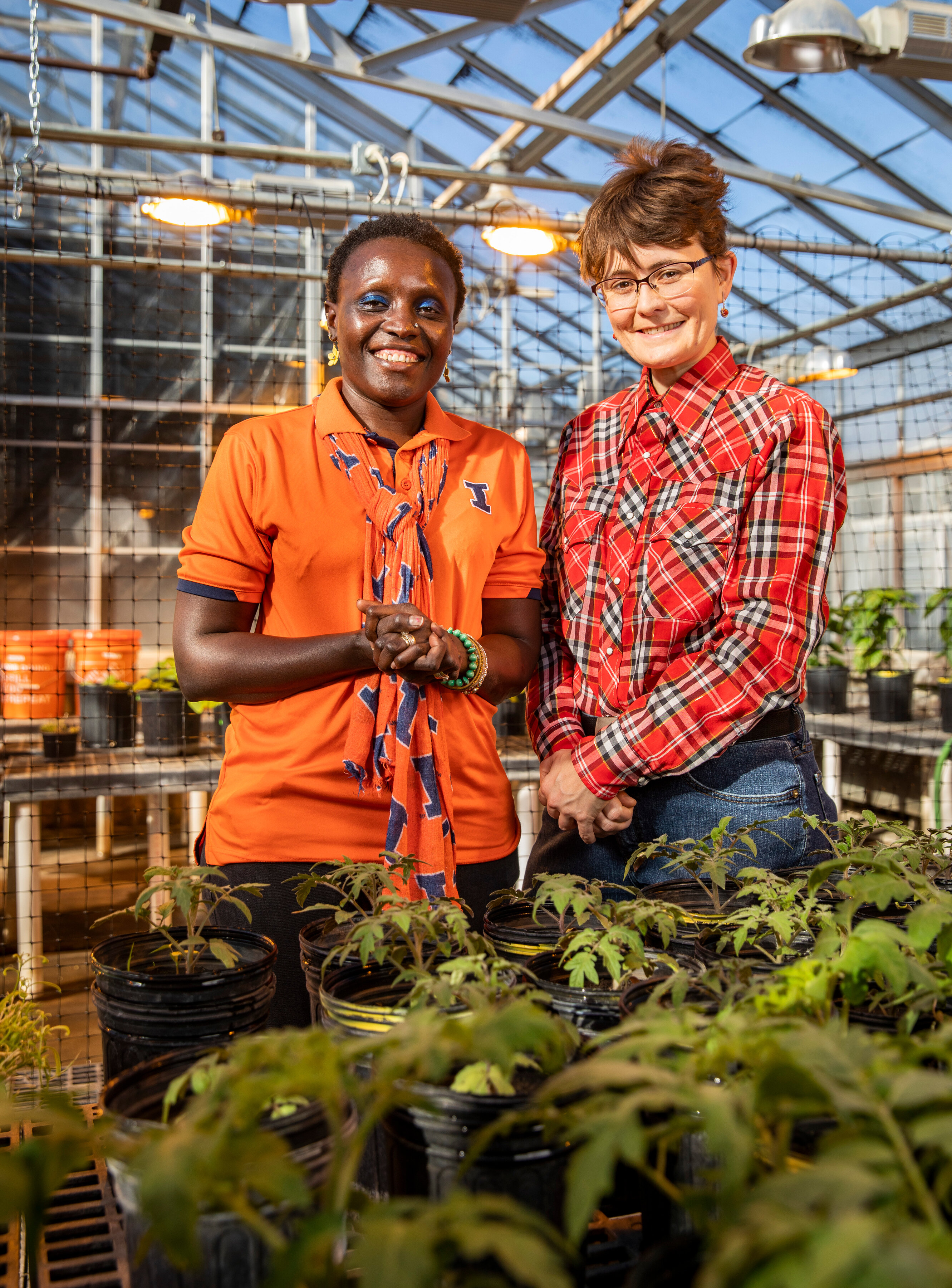
Esther Ngumbi, an assistant professor of integrative biology, highlights a compelling contrast between heirloom and hybrid tomatoes in terms of breeding objectives. Heirloom tomatoes, renowned for their rich flavor and juiciness, are meticulously bred with a focus on taste. In contrast, hybrids are designed for large-scale conventional production, often at the expense of the plant’s inherent defenses. The study underscores a potential trade-off in plant resilience resulting from our breeding practices.
Beyond flavor considerations, the research delved into the overall health and growth of the tomato plants, both above and below the ground. The findings revealed that plants forming associations with arbuscular mycorrhizal fungi (AMF) exhibited notable benefits, including higher leaf biomass and more intricate root structures. AMF, engaging in partnerships with a vast majority of land plants, establish a symbiotic trade where they extract nutrients from the soil in exchange for carbon from plants. This mutualistic relationship was particularly advantageous in the case of Cherokee Purple tomatoes, enhancing both growth and the emission of volatile organic compounds (VOCs).
Unexpectedly, plants subjected to caterpillar treatments displayed increased growth, challenging preconceived notions about the impact of herbivore interactions on plant development. The study thus prompts a reevaluation of breeding strategies and emphasizes the need for a holistic understanding of the intricate interplay between plant genetics, beneficial microbes, and environmental factors in shaping plant health and resilience.
The unexpected phenomenon of tomato plants exhibiting increased biomass in both root and above-ground structures after being subjected to caterpillar consumption has intrigued researchers. Erinn Dady suggests that this counterintuitive response may be akin to a growth trigger, comparable to pruning a tree to stimulate new growth. The researchers find this growth response to caterpillars particularly intriguing and plan to delve deeper into understanding its mechanisms.
Dady speculates on the possibility that the caterpillars might not have been perceived as a significant threat by the plants, leading to the continuation of their growth. Alternatively, the caterpillars may not have caused sufficient damage due to a lack of hunger or other factors, prompting further inquiry into the intricacies of plant-caterpillar interactions.
Esther Ngumbi emphasizes the complexity of these interactions, acknowledging that much remains unknown, especially concerning the role of various microbes. She challenges the perception that plants lack intelligence, pointing to their active responses to the environment through intricate chemical signaling. Ngumbi expresses enthusiasm for unveiling the mysteries of plant chemistry, emphasizing it as the language through which plants communicate and respond to their surroundings. The researchers are driven by a shared passion to unravel the intricate world of plant chemistry, shedding light on the sophisticated ways in which plants actively engage with and adapt to their environment.
The tomato communication study has unveiled a fascinating world where plants, like tomatoes, actively respond to their environment. This research has shed light on the intriguing phenomenon of tomato communication with both friends and foes, such as caterpillars. The complexity of these interactions, especially the role of various microbes, underscores the sophistication of tomato communication. As we continue to unravel the mysteries of plant chemistry, we are constantly reminded of the intricate language of tomato communication. This study reaffirms that plants, contrary to common perception, are intelligent beings actively engaging with and adapting to their environment.
Resources
- ONLINE NEWS Sen, A. & University of Illinois at Urbana-Champaign. (2024c, January 24). Talking tomatoes: How their communication is influenced by enemies and friends. Phys.org. [Phys.org]
- JOURNAL Dady, E., Kleczewski, N. M., Ugarte, C. M., & Ngumbi, E. (2023). Plant variety, mycorrhization, and herbivory influence induced volatile emissions and plant growth characteristics in tomato. Journal of Chemical Ecology. [Journal of Chemical Ecology]
Cite this page:
APA 7: TWs Editor. (2024, January 25). Tomato Communication: The Role of Friends and Foes. PerEXP Teamworks. [News Link]


Good read 🙃