




A groundbreaking approach to combatting neurodegenerative disorders such as Alzheimer’s disease, Parkinson’s disease, and Amyotrophic lateral sclerosis (ALS) has been pioneered by researchers from Northwestern University and the University of Wisconsin-Madison.
Their latest study, published in the journal Advanced Materials, unveils a novel method to bolster the body’s antioxidant response. This response is pivotal for shielding cells against the oxidative stress associated with numerous neurodegenerative ailments.
Heading this innovative research is Nathan Gianneschi, the Jacob & Rosaline Cohn Professor of Chemistry at Northwestern’s Weinberg College of Arts and Sciences. Alongside him are Jeffrey A. Johnson and Delinda A. Johnson from the University of Wisconsin-Madison School of Pharmacy. Together, they have unveiled promising avenues for enhancing cellular protection against debilitating neurological conditions.
Targeting oxidative stress pathways
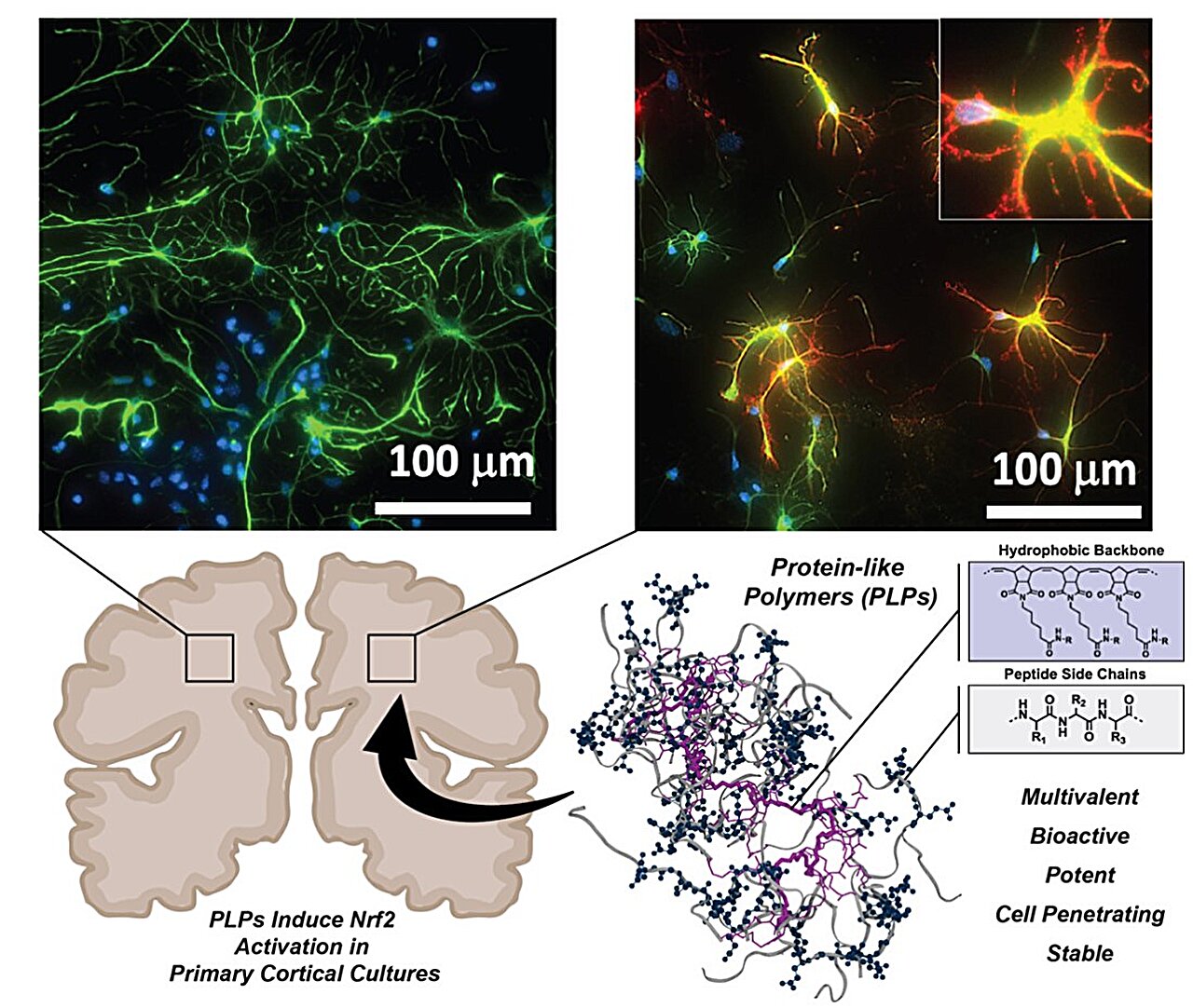
Alzheimer’s disease, marked by the buildup of beta-amyloid plaques and tau protein tangles; Parkinson’s disease, characterized by the loss of dopaminergic neurons and the presence of Lewy bodies; and ALS, which involves the degeneration of motor neurons, all share a common link of oxidative stress contributing to the progression of the diseases.
This research focuses on disrupting the interaction between Keap1 and Nrf2 proteins, which is crucial in the body’s antioxidant response. By selectively inhibiting the interaction and preventing the degradation of Nrf2, the study holds promise for alleviating the cellular damage underlying these debilitating conditions.
Jeffrey Johnson emphasized that over the past two decades, Nrf2 has been established as a primary target for treating neurodegenerative diseases. However, this innovative approach to activate the pathway presents great potential for developing therapies that can modify the course of these diseases.
Introducing protein-like polymers (PLPs)
The research team set out to tackle a formidable challenge in treating neurodegenerative diseases: precisely targeting protein-protein interactions (PPIs) within cells. Conventional methods, such as small molecule inhibitors and peptide-based therapies, have proven inadequate due to their lack of specificity, stability, and ability to enter cells.
Their study introduces an innovative solution known as protein-like polymers (PLPs). These PLPs are dense brush-like macromolecular structures synthesized through ring-opening metathesis polymerization (ROMP) of norbornenyl-peptide-based monomers. These structures mimic proteins, featuring bioactive peptide side chains capable of penetrating cell membranes, demonstrating exceptional stability, and resisting enzymatic degradation.
This targeted approach aims to inhibit the interaction between Keap1 and Nrf2 proteins, marking a significant advancement. By blocking Keap1’s ability to tag Nrf2 for degradation, Nrf2 accumulates in the cell nucleus, where it activates the Antioxidant Response Element (ARE), prompting the expression of detoxifying and antioxidant genes. This mechanism effectively bolsters the cellular antioxidant response, offering a promising therapeutic avenue against oxidative stress implicated in numerous neurodegenerative conditions.
Polymer-based therapeutics: Solutions for disease management
Gianneschi’s team has pioneered a groundbreaking development known as PLPs, which could mark a substantial leap forward in combating damage and offering hope for enhanced treatments and outcomes. Their research zeroes in on the intricate challenge of activating processes vital for the body’s antioxidant response, presenting a fresh solution that holds considerable promise.
By harnessing the principles of modern polymer chemistry, the team is delving into the realm of mimicking complex proteins. Gianneschi emphasizes the potential inherent in this endeavor, envisioning a new frontier in therapeutic design. This innovative approach holds particular relevance for diseases like Alzheimer’s and Parkinson’s, where conventional methods have faced significant obstacles.
Notably, the team’s methodology not only advances the targeting of transcription factors and disordered proteins but also underscores the adaptability and transformative potential of PLP technology in therapeutic development. The modularity and efficacy of this technology in disrupting the Keap1/Nrf2 interaction highlight its dual role — not only as a therapeutic agent but also as a tool for delving into the intricacies of biochemical processes.
Interdisciplinary collaboration in therapeutic innovation
Highlighting the collaborative nature of the study, Gianneschi’s team closely collaborated with experts across disciplines, demonstrating the significant potential of integrating materials science with cellular biology to address complex medical challenges.
According to Jeffrey Johnson, the team was approached by Professor Gianneschi and colleagues who proposed utilizing the novel PLP technology in neurodegenerative diseases, building on their previous research on Nrf2 in Alzheimer’s disease, Parkinson’s disease, ALS, and Huntington’s disease models. Despite being unfamiliar with this approach for Nrf2 activation, they enthusiastically agreed to embark on this collaborative endeavor, resulting in the generation of compelling data and subsequent publication.
This partnership emphasizes the critical role of interdisciplinary research in the development of new therapeutic strategies.
Innovative solutions in neurodegenerative disease treatment
With the groundbreaking technology pioneered by Gianneschi and his collaborators at the International Institute for Nanotechnology and the Johnson Lab at the University of Wisconsin-Madison, significant strides are being made in the realm of medicinal chemistry. Their efforts not only push the boundaries of scientific understanding but also present promising avenues for addressing the profound challenges posed by neurodegenerative diseases in contemporary society, such as Alzheimer’s and Parkinson’s.
Gianneschi emphasized the transformative potential of their research, asserting that by manipulating materials at the nanoscale, a realm where dimensions are measured in mere billionths of a meter, new avenues for combating previously intractable diseases are being unveiled. Their investigation into macromolecular drugs, which possess the capacity to replicate certain functionalities of proteins through their PLP platform, signifies a pioneering endeavor poised to reshape the landscape of therapeutic interventions.
As their research progresses toward clinical application, the prospect of offering renewed hope to individuals afflicted by conditions characterized by oxidative stress becomes increasingly tangible. Gianneschi and his team’s endeavors signify not only the dawn of a new era in medicine but also the embodiment of perseverance and ingenuity in the face of formidable medical challenges.
Resources
- ONLINE NEWS Northwestern University. (2024, February 18). Targeting “undruggable” proteins promises new approach for treating neurodegenerative diseases. Phys.org. [Phys.org]
- JOURNAL Carrow, K., Hamilton, H., Hopps, M. P., Li, Y., Qiao, B., Payne, N. C., Thompson, M. P., Zhang, X., Magassa, A., Fattah, M., Agarwal, S., Vincent, M., Buyanova, M., Bertin, P., Mazitschek, R., De La Cruz, M. O., Johnson, D. G., Johnson, J. A., & Gianneschi, N. C. (2024). Inhibiting the Keap1/Nrf2 Protein‐Protein Interaction with Protein‐Like Polymers. Advanced Materials. [Advanced Materials]
Cite this page:
APA 7: TWs Editor. (2024, February 19). Neurodegenerative Illnesses: A Breakthrough in Drugging Proteins!. PerEXP Teamworks. [News Link]


