



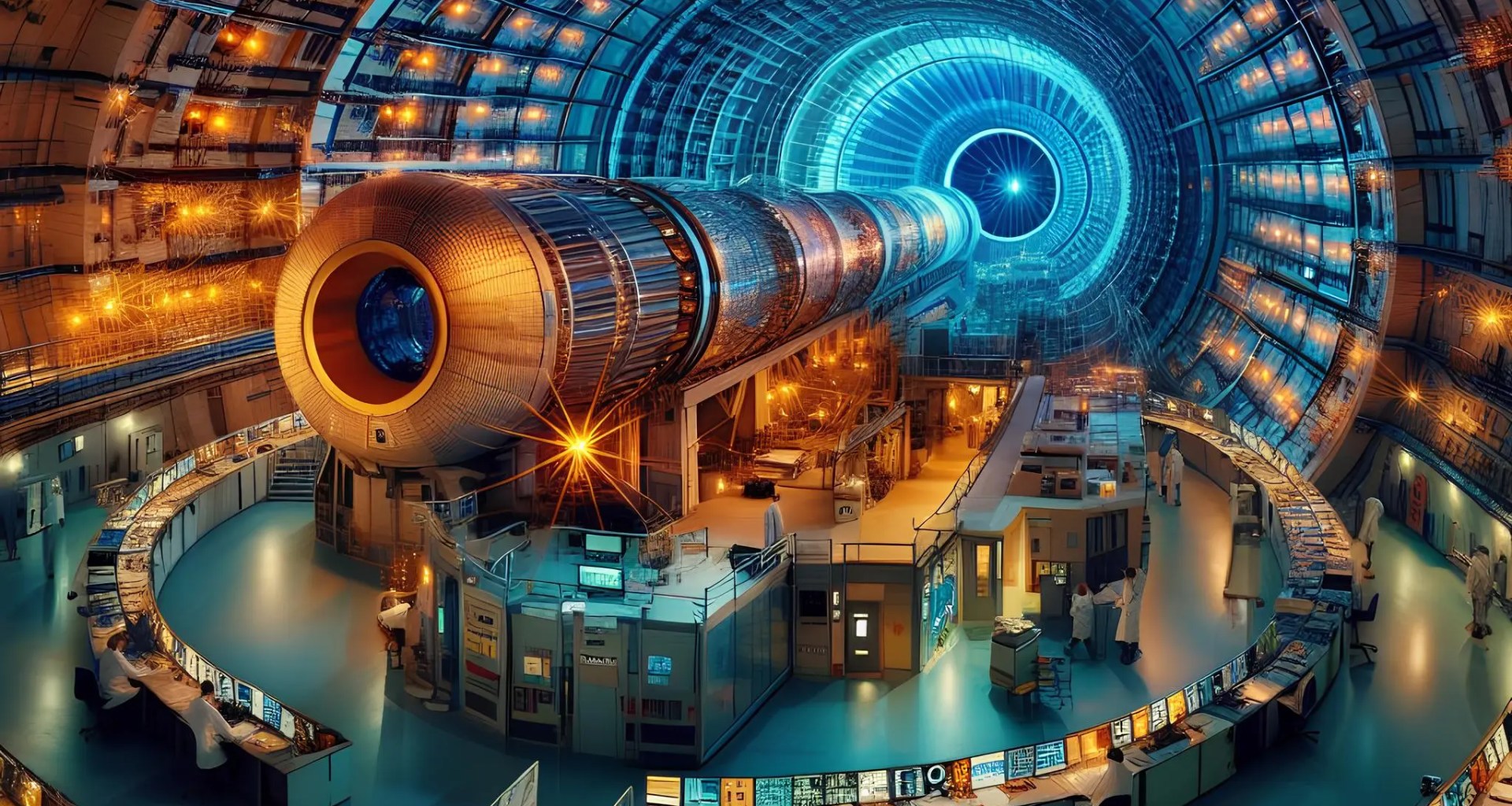
An influential group of scientists has recommended that the United States allocate funding to support proposed projects that significantly expand its endeavors in five areas of high-energy physics.
Leading the list is the Cosmic Microwave Background–Stage IV project, abbreviated as CMB-S4. This initiative envisions deploying a dozen radiotelescopes, strategically positioned between Chile’s Atacama Desert and the South Pole. The project’s objective is to seek indirect evidence of physical phenomena occurring in the moments following the Big Bang, a realm that has largely remained speculative until now.
The other four identified priorities include experiments dedicated to investigating neutrinos, encompassing both those of astrophysical origin and those synthesized in laboratories. Additionally, there is a proposal for the creation of the largest-ever dark matter detector and a recommendation for substantial U.S. involvement in an upcoming particle collider, slated to be constructed in another country, with the aim of studying the Higgs boson.
On December 7, the Particle Physics Project Prioritization Panel (P5), an ad-hoc group, unveiled recommendations following their latest convening. Tasked with providing guidance once every decade, the committee’s mandate is to offer suggestions for the principal U.S. agencies funding high-energy physics research—the Department of Energy and the National Science Foundation.
Among the five central recommendations, the report advocates for the initiation of a program demonstrating the feasibility of two entirely new types of particle accelerators, spurred by a surge of grassroots enthusiasm within the particle-physics community.
While the P5 also expressed support for smaller-scale projects, its most emphatic recommendation is the sustained U.S. funding of ongoing or under-construction experiments. Notable examples include the primary upgrade of the Large Hadron Collider (LHC), which is anticipated to extend the collider’s operations into the 2030s.
The P5’s priorities emerged from proposals presented by the broader research community at the Snowmass conference in Seattle, Washington, last year. These recommendations were carefully weighed against realistic funding levels, according to Hitoshi Murayama, a physicist at the University of California, Berkeley, who chaired the P5 committee.
Approval from the Department of Energy (DOE) or the National Science Foundation (NSF) is required for any substantial new projects, which must secure funding from Congress and, in certain instances, other governments. The P5 process, known for its consensus-building nature, has historically bolstered the credibility of the community’s requests, leading to the realization of most previous panel priorities.
Nature delves into the P5 report’s top five proposals, ranked in order of importance, as well as the panel’s deliberations on future accelerators.
The cosmic echoes of the Big Bang
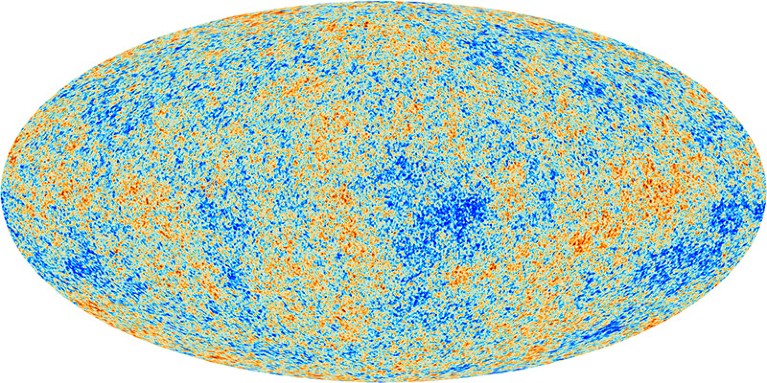
CMB-S4 aims to investigate radiation generated approximately 380,000 years after the Big Bang when the Universe transitioned from a nearly uniform particle-rich state to a gaseous form. Using microwave antennas, the project will measure the polarization of the cosmic microwave background (CMB) – the preferential angle at which the electric fields of the radiation oscillate as they reach Earth – across a significant portion of the celestial sphere.
Physicists anticipate that the resulting polarization map could unveil a distinctive pattern, serving as a signature of gravitational waves that have rippled through the fabric of space-time since the initial moments following the Big Bang. While the CMB represents the oldest detectable form of electromagnetic radiation, its polarization has the potential to offer insights into even earlier epochs.
Various large-scale experiments, such as the European space telescope Planck and the BICEP2 telescope in the South Pole, have endeavored to detect primordial gravitational waves within the CMB polarization. In the Atacama Desert, astronomers are constructing the Simons Observatory, a collection of dishes scheduled for completion in mid-2024. CMB-S4 is envisioned as an amplified iteration of the Simons Observatory, slated to commence observations in the mid-2030s.
Doubling the scope of DUNE
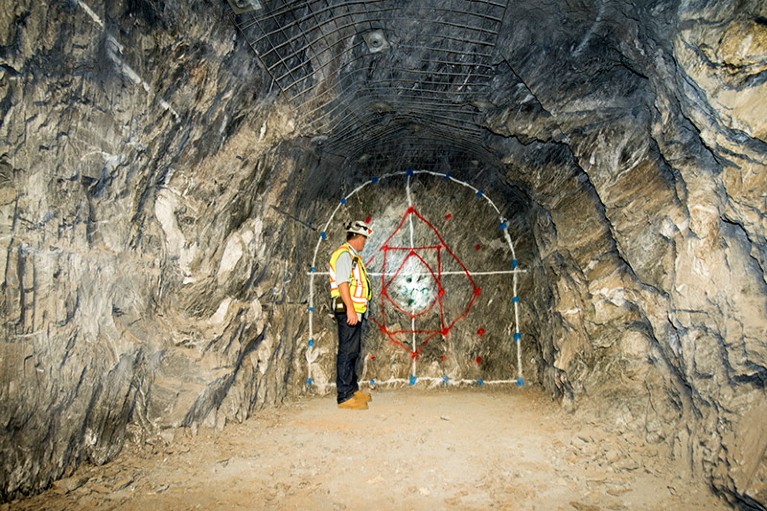
The Deep Underground Neutrino Experiment (DUNE) is presently under construction and is slated for completion in the early 2030s. However, the Particle Physics Project Prioritization Panel (P5) is already recommending an expansion of the project.
DUNE will be conducted at two locations: the Department of Energy’s Fermi National Accelerator Laboratory (Fermilab) outside Chicago and the Sanford Underground Research Facility in Lead, South Dakota. At Fermilab, an accelerator will generate a neutrino beam directed straight through the Earth’s crust, traveling nearly 1,300 kilometers before re-emerging.
In the previous 2014 P5 prioritization, the $1.9-billion DUNE project secured the top spot among new project priorities. Subsequent to this ranking, the construction faced significant delays and cost overruns, leading the Department of Energy (DOE) to reduce the size of the Dakota detector by nearly half. Even in its scaled-down form, the project is anticipated to exceed $3 billion.
Despite these challenges, the scientific rationale for DUNE is considered highly compelling by many physicists. The P5 is currently advocating for a phase-2 expansion that would restore the detector to its originally planned size and incorporate upgrades at Fermilab to intensify its neutrino beam by a factor of ten.
The Higgs boson factory: A physics dream
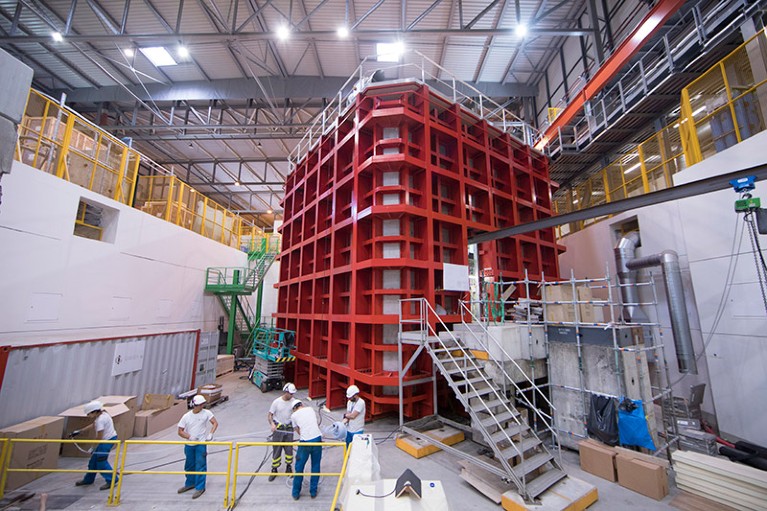
The discovery of the Higgs boson, a particle believed to confer mass to other particles, was announced by the LHC in 2012, marking the completion of the particle set predicted by the standard model of particle physics. Despite this milestone, the Higgs boson remains enigmatic. Physicists have proposed various accelerator designs capable of generating a large number of Higgs bosons, facilitating precise measurements of their interactions with other particles. These investigations could potentially reveal deviations from the standard model or even suggest an entirely new theory to supersede it.
Two primary proposals for a Higgs factory are currently under consideration. One is the International Linear Collider, likely to be led by and situated in Japan. The other involves constructing a circular collider approximately 90 kilometers in length, adjacent to the LHC, a plan championed by CERN (with a detailed feasibility study currently in progress). According to the P5 report, both of these projects can be feasibly accomplished with existing technology. If either is undertaken, the United States is recommended to make a substantial contribution, akin to its involvement in the construction of the LHC. (China is also developing its own design for a large-scale circular Higgs factory.)
WIMPs: The ultimate conclusion
Various experiments have endeavored to detect potential dark matter winds traversing the Solar System, yet success has remained elusive thus far. The hypothesis involved the prospect that hypothetical weakly interacting massive particles (WIMPs) might sporadically collide with atoms within a detector, emitting distinctive flashes of energy.
As per the P5 report, the recommendation is to carry out an exhaustive search in this direction using an augmented detector, urging U.S. agencies to fund an experiment for this purpose.
One particular method for WIMP detection, employing liquid xenon, has emerged as a leading contender. Researchers have progressively constructed detectors with larger quantities of xenon, approaching 10 tonnes. These detectors have ruled out a broad spectrum of particle interactions in their pursuit of detecting WIMPs. However, researchers assert that a comprehensive exploration of WIMP possibilities necessitates a detector containing 50 tonnes of xenon.
Hitoshi Murayama, the chair of the P5 committee, noted to Nature that making these experiments more sensitive could introduce challenges related to noise from neutrinos. He stated, “In some sense that’s the ultimate experiment because once neutrinos become a problem, then we really have to start to think what’s next.”
A much gigantic piece of ice
The IceCube observatory is designed to detect particle showers generated when high-energy neutrinos collide with atoms in the 3-km-deep ice sheet at the South Pole or in the underlying crust. Sensitive detectors capture the flashes of light produced by the falling particles as they traverse 1 km3 of ice.
IceCube has made several noteworthy discoveries, including the identification of the first ultra-high-energy neutrinos, the first neutrino traced back to a distant source, and the first neutrino map of the Milky Way.
In the P5 report, there is an endorsement for IceCube-Gen2, an expansion that involves monitoring a volume of ice increased by a factor of 10, totaling around 10 km3. This upgrade, with an estimated cost of $350 million, is anticipated to significantly enhance various aspects of neutrino research and could provide a definitive identification of the sources of the most energetic particles.
Accelerators of the future
The panel has proposed exploring the potential development of a collider designed to collide muons, particles akin to electrons but with 207 times more mass. While physicists acknowledge the uncertainty of constructing such a machine, the panel suggests an escalation of research and development efforts with the goal of creating a proof-of-principle collider.
During the press conference unveiling the report, Murayama stated, “We don’t know if a muon collider is possible, but working towards it comes with high rewards.”
The panel also recommends increased research into a technology that utilizes plasma to accelerate electrons, as well as advancements in magnets for more traditional colliders. Murayama emphasized, “We’re not abandoning anything at this stage but would like to have all these three options taken seriously.”
The panel’s stance appears to convey a strong message to CERN, the European physics laboratory near Geneva, Switzerland, which is expected to be a mandatory partner in any future multi-billion-dollar collider. While CERN’s leadership reportedly favors a larger version of the Large Hadron Collider (LHC), currently the world’s most powerful collider, many in the particle-physics community argue that the lab should keep its options open and not prematurely limit possibilities.
Resources
- JOURNAL Castelvecchi, D. (2023). Big Bang observatory tops wish list for big US physics projects. Nature. [Nature]
Cite this page:
APA 7: TWs Editor. (2023, December 11). US Physicists’ Big Dream: An Observatory for the Big Bang. PerEXP Teamworks. [News Link]


