



Researchers have developed a hybrid biocomputer merging laboratory-cultivated human brain tissue with conventional circuits, enabling the completion of tasks like voice recognition. Published on December 11 in Nature Electronics, this technology holds the potential for integration into artificial intelligence (AI) systems or serving as the foundation for enhanced models of the brain in neuroscience research.
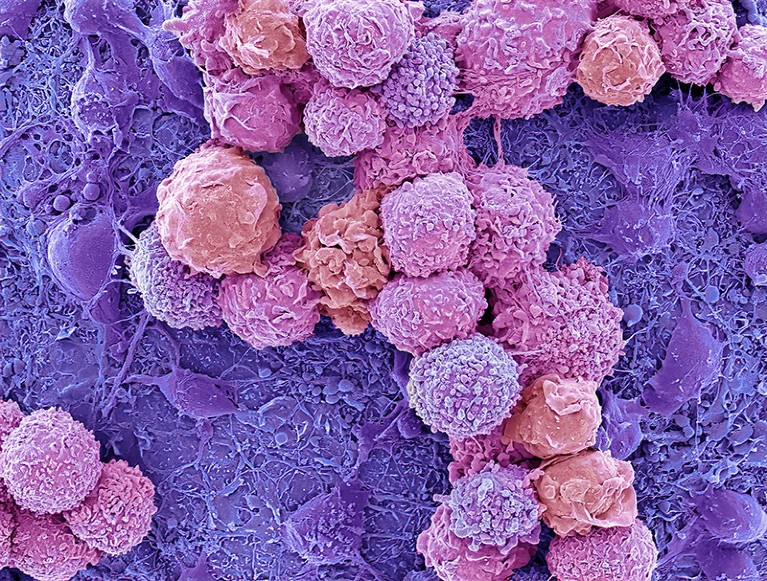
Termed Brainoware, the system incorporates brain organoids—clumps of human cell-mimicking tissue commonly utilized in research to simulate organs. These organoids, generated from stem cells with the capacity to specialize into various cell types, were transformed into neurons resembling those in the human brain.
The study, aiming to establish a connection between AI and organoids, seeks to explore the potential of leveraging the biological neural network within brain organoids for computing, according to Feng Guo, a bioengineer at the University of Indiana in Bloomington, Indiana, and co-author of the study. Both AI and the brain rely on transmitting signals within interconnected nodes forming a neural network, prompting the investigation into the feasibility of utilizing the biological neural network within brain organoids for computational purposes.
The benefits of harnessing brainpower
To create the Brainoware system, scientists position a single organoid onto a plate equipped with thousands of electrodes, establishing connections between the brain and electric circuits. Subsequently, they convert the desired input information into a pattern of electric pulses delivered to the organoid. The response of the brain tissue is captured by a sensor and then ‘decoded’ using a machine-learning algorithm capable of discerning the associated information.
In testing Brainoware’s capabilities, the researchers employed this method for voice recognition. They trained the system on 240 recordings of eight individuals speaking, converting the audio into electric signals delivered to the organoid. The miniature brain exhibited distinct reactions to each voice, generating unique patterns of neural activity. Through training, the AI acquired the ability to interpret these responses, achieving a 78% accuracy in identifying voices.
While acknowledging the need for extensive further research, Lena Smirnova, a developmental neuroscientist at Johns Hopkins University in Baltimore, Maryland, notes that the study validates fundamental theoretical concepts that could eventually pave the way for a viable biological computer. Prior experiments had demonstrated the ability of two-dimensional cultures of neuron cells to perform similar tasks, but this marks the first instance of such capabilities being demonstrated in a three-dimensional brain organoid.
Improving the brain model
Integrating organoids with computers opens the possibility for researchers to harness the efficiency and speed of human brains for AI applications, according to Guo.
Furthermore, the technology holds promise for advancing brain research, as brain organoids can replicate the architecture and functionality of a functioning brain in ways that simple cell cultures cannot achieve, as noted by Arti Ahluwalia, a biomedical engineer at the University of Pisa in Italy. Brainoware could find applications in modeling and studying neurological disorders like Alzheimer’s disease. Additionally, it may provide a means to test the reactions of organoids to various treatments, offering insights into effects and toxicities. Ahluwalia highlights the potential to replace animal models of the brain, emphasizing the promise of this approach.
However, utilizing living cells for computing presents challenges. One major concern is the preservation of organoids’ vitality, requiring careful cultivation and maintenance with incubators, a task that becomes more challenging as organoids increase in size. As Lena Smirnova notes, addressing this issue is crucial, especially as more complex tasks will necessitate larger ‘brains.’
Looking ahead, Guo underscores the importance of exploring how brain organoids can adapt to more intricate tasks and engineering them for enhanced stability and reliability. These developments are essential for potential integration into the silicon microchips commonly used in AI computing.
Resources
- JOURNAL Tozer, L. (2023). ‘Biocomputer’ combines lab-grown brain tissue with electronic hardware. Nature. [Nature]
- JOURNAL Cai, H., Ao, Z., Tian, C., Wu, Z. H., Liu, H., Tchieu, J., Gu, M., Mackie, K., & Guo, F. (2023). Brain organoid reservoir computing for artificial intelligence. Nature Electronics. [Nature Electronics]
Cite this page:
APA 7: TWs Editor. (2023, December 12). The ‘Biocomputer’: A Combination of Electronic Hardware and Lab-Grown Brain Tissue. PerEXP Teamworks. [News Link]


