



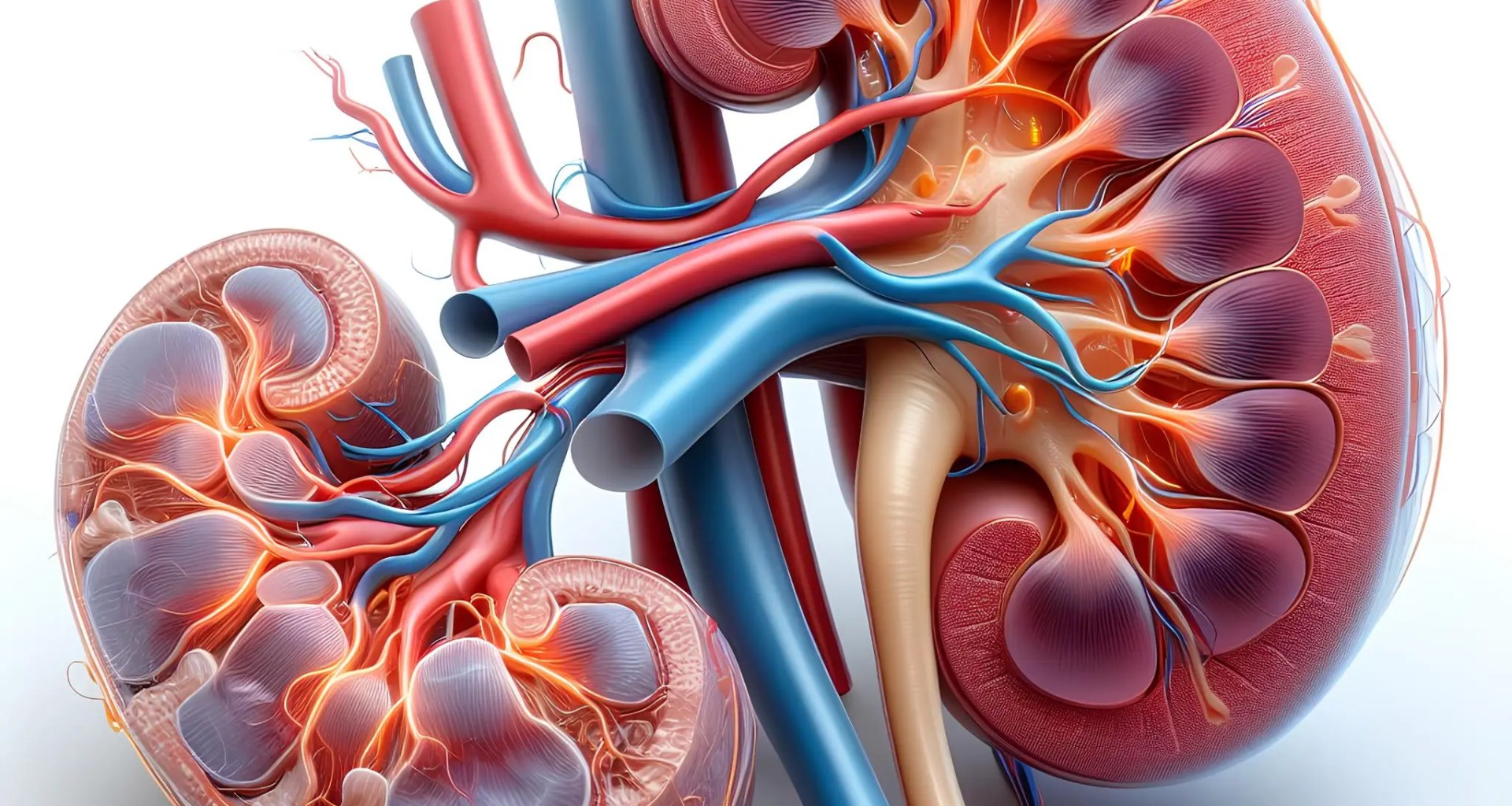
Researchers at POSTECH (Pohang University of Science and Technology) have explored kidney diseases using ultrafast ultrasound technology, allowing the capture of an impressive 1,000 images per second.
Their study focuses on achieving three-dimensional microvasculature imaging of the kidneys through the application of ultrafast ultrasound. Notably, their technique stands out for its ability to visualize the entire kidney microvasculature without the need for contrast agents. The outcomes of their research have been detailed in Advanced Science.
The kidneys play a crucial role in filtering waste and purging unwanted substances from the bloodstream. Conditions like hypertension and diabetes can compromise this vital function, potentially leading to kidney failure—a condition with irreversible consequences that often necessitate lifelong treatment, such as artificial hemodialysis or kidney transplantation from a donor.
The link between blood perfusion in the kidneys and their filtration function underscores the significance of microvascular imaging as a crucial indicator for both preventing and managing kidney failure.

Mainstream medical imaging methods such as CT (computed tomography) and MRI (magnetic resonance imaging) face constraints in accurately visualizing delicate vascular structures due to limitations in resolution and sensitivity. Furthermore, the use of contrast agents is restricted in these methods due to potential severe side effects in patients with kidney disease.
In contrast, ultrasound imaging, a method considered safe for fetal monitoring, utilizes the Doppler effect to measure real-time blood flow velocity and direction without relying on contrast agents.
Despite its safety, current ultrasound imaging speed poses challenges in capturing fine blood vessels with adequate sensitivity. To address this, a research team has revolutionized microvascular imaging by implementing ultrafast ultrasound acquisition, achieving an extraordinary speed of 1,000 frames per second—over 100 times faster than conventional ultrasound imaging.
This groundbreaking technique has enabled the researchers to achieve a global first: imaging the entire three-dimensional vascular network of the renal artery, vein, and 167 micrometers thick interlobular arteries and veins in the renal cortex without the necessity of a contrast agent.
In addition, the research team conducted continuous monitoring of renal vascular changes in an animal model induced with renal failure. They applied multivariate analysis, incorporating hemodynamic and vascular morphological indicators. The findings unveiled a pronounced decline in renal blood flow during acute renal failure. Conversely, in cases of diabetic nephropathy, the researchers detected persistent vascular degeneration in the kidneys, accompanied by vascular distortion.
Professor Chulhong Kim emphasized the significance of their system, highlighting its capability to elucidate the pathophysiology of conditions leading to kidney failure. Moreover, the technology allows for the observation of vascular changes both pre- and post-kidney transplantation. This holds significant promise for studying blood circulation and functional impairments across diverse organs, encompassing the digestive system, circulatory system, and cerebral nervous system.
Resources
- ONLINE NEWS Pohang University of Science and Technology. (2024, January 17). Ultrafast ultrasound: First successful contrast agent-free imaging of complex structure of kidneys. Medical Xpress. [Medical Xpress]
- JOURNAL Oh, D., Lee, D., Heo, J., Kweon, J., Yong, U., Jang, J., Ahn, Y. J., & Kim, C. (2023). Contrast Agent‐Free 3D renal ultrafast doppler imaging reveals vascular dysfunction in acute and diabetic kidney diseases. Advanced Science, 10(36). [Advanced Science]
Cite this page:
APA 7: TWs Editor. (2024, January 18). Pioneering Advancements: Complex Kidney Structures Imaged Successfully Without Contrast Agents Using Ultrafast Ultrasound. PerEXP Teamworks. [News Link]