



APA 7: TWs Editor & ChatGPT. (2023, October 29). NASA’s Roman Mission: Investigating the Twinkling Lights of the Milky Way. PerEXP Teamworks. [Article Link]
Roman’s extensive ongoing observation of the sky, facilitating these groundbreaking findings, stands as a significant contribution to the realm of time-domain astronomy. This branch of science is dedicated to the study of how the universe evolves and transforms over time. Roman will become a part of a collaborative effort with a growing global network of observatories, all working in concert to document these dynamic changes as they happen. Specifically, Roman’s Galactic Bulge Time-Domain Survey will concentrate its efforts on the Milky Way, harnessing the telescope’s infrared capabilities to penetrate through obstructive dust clouds that typically obscure our view of the densely populated central zone of our galaxy.
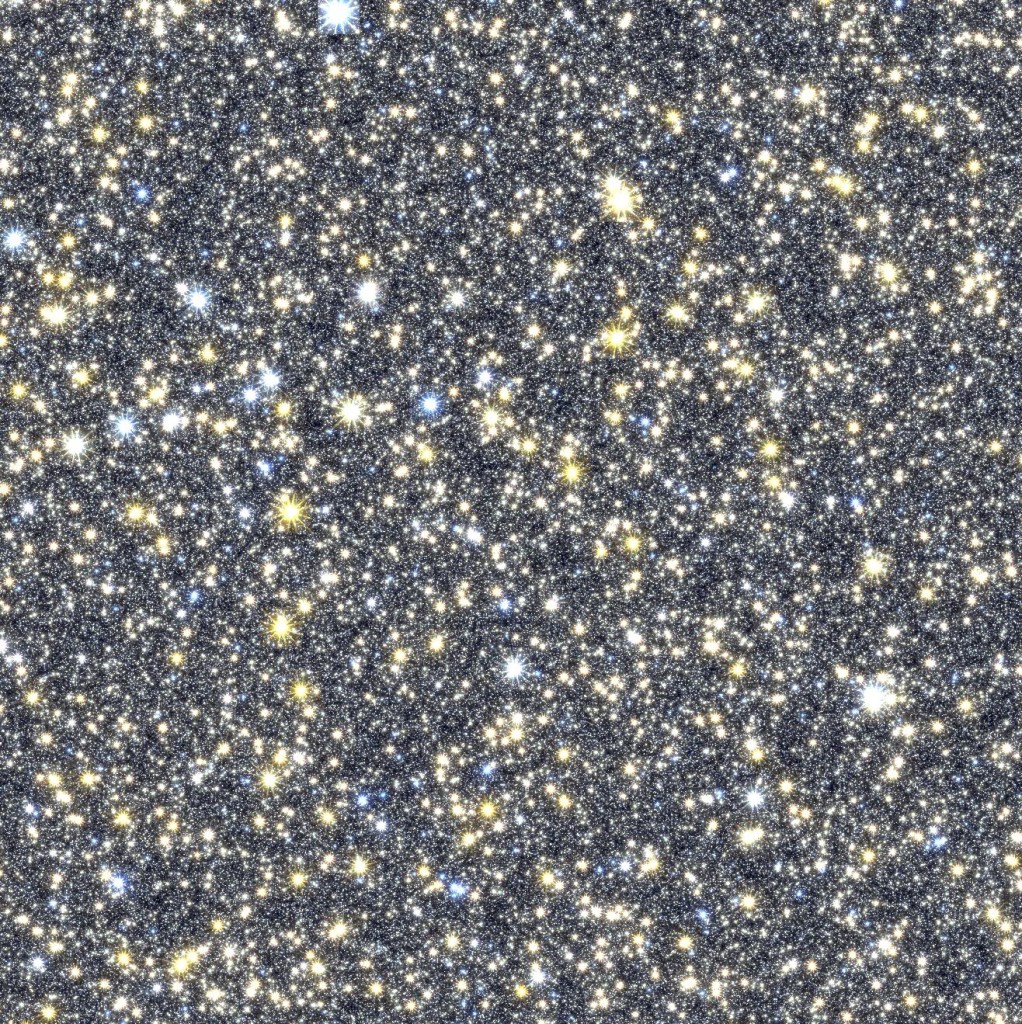
Julie McEnery, who serves as the senior project scientist for Roman at NASA’s Goddard Space Flight Center in Greenbelt, Maryland, expressed that Roman will be an exceptional tool for exploration, combining its expansive field of view with remarkable precision. The time-domain surveys conducted by Roman are anticipated to uncover a wealth of fresh insights into the universe.
Upon its anticipated launch by May 2027, the Roman Space Telescope will embark on a mission to meticulously survey the core of the Milky Way, with a particular focus on microlensing events. These events occur when an object, such as a star or a planet, aligns almost perfectly with a background star as seen from our vantage point. Since any mass distorts the fabric of spacetime, the light from the distant star bends around the closer object as they pass in close proximity. This phenomenon effectively acts as a natural magnifying glass, causing a temporary surge in the brightness of the background star’s light. This observable signal provides astronomers with confirmation of the presence of an intervening object, even if it remains invisible to direct observation.
According to the current blueprint, the survey will entail capturing an image every 15 minutes continuously, 24 hours a day, for approximately two months. This rigorous process will be repeated six times throughout the Roman Space Telescope’s primary five-year mission, resulting in a cumulative observation period exceeding one year.
Scott Gaudi, an astronomy professor at Ohio State University in Columbus, who is actively contributing to Roman’s survey planning, emphasizes that this endeavor will involve one of the most extensive sky observations ever conducted. Moreover, it will explore regions that remain largely uncharted in terms of planetary discoveries.

Astronomers anticipate that this survey will unveil over a thousand planets that orbit at substantial distances from their parent stars and exist in systems more distant from Earth than any previous mission has ever explored. Among these discoveries, there’s the potential for identifying planets residing within the habitable zone of their host stars, a region where conditions might support liquid water on the surface. Furthermore, the survey may uncover planets with masses as minimal as a few times that of our moon.
Roman’s capabilities extend to identifying “Rogue” planets that don’t follow the typical orbit around a star. This is achieved through microlensing, a technique that allows us to detect these solitary wanderers, which may have originated independently or been ejected from their original planetary systems. Investigating these rogue planets provides valuable insights into the processes of planetary system formation and evolution.
The microlensing observations carried out by Roman will play a pivotal role in advancing our understanding of the prevalence of planets in various stellar arrangements, including binary star systems. By identifying actual instances of planets orbiting two host stars, akin to the fictional “Tatooine” from Star Wars, this mission extends and builds upon the pioneering work initiated by NASA’s Kepler Space Telescope and the Transiting Exoplanet Survey Satellite (TESS). This research will shed light on the frequency of such dual-star planetary systems within our galaxy.
Within the survey’s purview, certain entities fall into a celestial category known as brown dwarfs. These objects possess a mass that places them beyond the classification of planets, yet they don’t reach the threshold necessary to initiate the fusion processes seen in stars. Delving into the study of these brown dwarfs will enable astronomers to delve into the intricate boundary that delineates the formation of planets from that of stars.
Additionally, Roman is poised to identify over a thousand neutron stars and hundreds of stellar-mass black holes. These formidable celestial entities emerge as the aftermath of massive stars depleting their fuel and undergoing gravitational collapse. Black holes are notably elusive, particularly when they lack a visible companion to indicate their presence. However, Roman’s unique capabilities enable the detection of these solitary black holes since microlensing relies solely on the gravitational effects of an object. The mission will also uncover isolated neutron stars, which are the remnants of stars that fell just short of the mass threshold required to transform into black holes.
Astronomers are set to utilize Roman to detect numerous Kuiper belt objects, icy entities predominantly strewn across the expanse beyond Neptune. Among these findings, the telescope will identify some as small as approximately six miles in diameter, which is roughly 1 percent of Pluto’s size. These discoveries will occur through various methods, including direct observation of reflected sunlight from these objects, as well as the detection of instances where they obscure the light emitted by background stars.
Another form of this celestial shadow play is poised to unveil approximately 100,000 transiting planets positioned between Earth and the galactic center. These planets, as they orbit their host stars, will intermittently pass in front of them, causing a temporary reduction in the star’s emitted light. This transit method will expose planets situated much nearer to their host stars than what microlensing can detect and is anticipated to reveal some that potentially occupy the habitable zone around their parent stars.
Additionally, scientists will undertake extensive studies in the field of stellar seismology, focusing on around a million giant stars. This process entails the examination of fluctuations in brightness that stem from sound waves reverberating throughout the gaseous interior of these stars. Through this analysis, astronomers aim to gain insights into various aspects, including the stars’ structural characteristics, age, and other pertinent properties.
The wealth of scientific insights to be derived, and beyond, will be a direct outcome of Roman’s Galactic Bulge Time-Domain Survey. Remarkably, this survey is set to occupy less than a quarter of the observation time during Roman’s five-year primary mission. Leveraging its expansive celestial perspective, astronomers will be able to delve into various investigations in unprecedented ways, effectively providing us with a fresh perspective on the constantly evolving cosmos.
Resources
- NEWSPAPER Balzer, A. (2023, October 24). Why NASA’s Roman mission will study Milky Way’s flickering lights. Phys.org. [Phys.org]
- JOURNAL Koshimoto, N., Sumi, T., Bennett, D. P., Bozza, V., Mróz, P., Udalski, A., Rattenbury, N. J., Abe, F., Barry, R., Bhattacharya, A., Bond, I. A., Fujii, H., Fukui, A., Hamada, R., Hirao, Y., Silva, S. I., Itow, Y., Kirikawa, R., Kondo, I., . . . Yamashita, K. (2023). Terrestrial and Neptune mass free-floating planet candidates from the MOA-II 9-year Galactic Bulge survey. arXiv (Cornell University). [arXiv.org]
- JOURNAL Sumi, T., Koshimoto, N., Bennett, D. P., Rattenbury, N. J., Abe, F., Barry, R., Bhattacharya, A., Bond, I. A., Fujii, H., Fukui, A., Hamada, R., Hirao, Y., Silva, S. I., Itow, Y., Kirikawa, R., Kondo, I., Matsubara, Y., Miyazaki, S., Muraki, Y., . . . Yamashita, K. (2023). Free-Floating planet Mass Function from MOA-II 9-year survey towards the Galactic Bulge. arXiv (Cornell University). [arXiv.org]


