



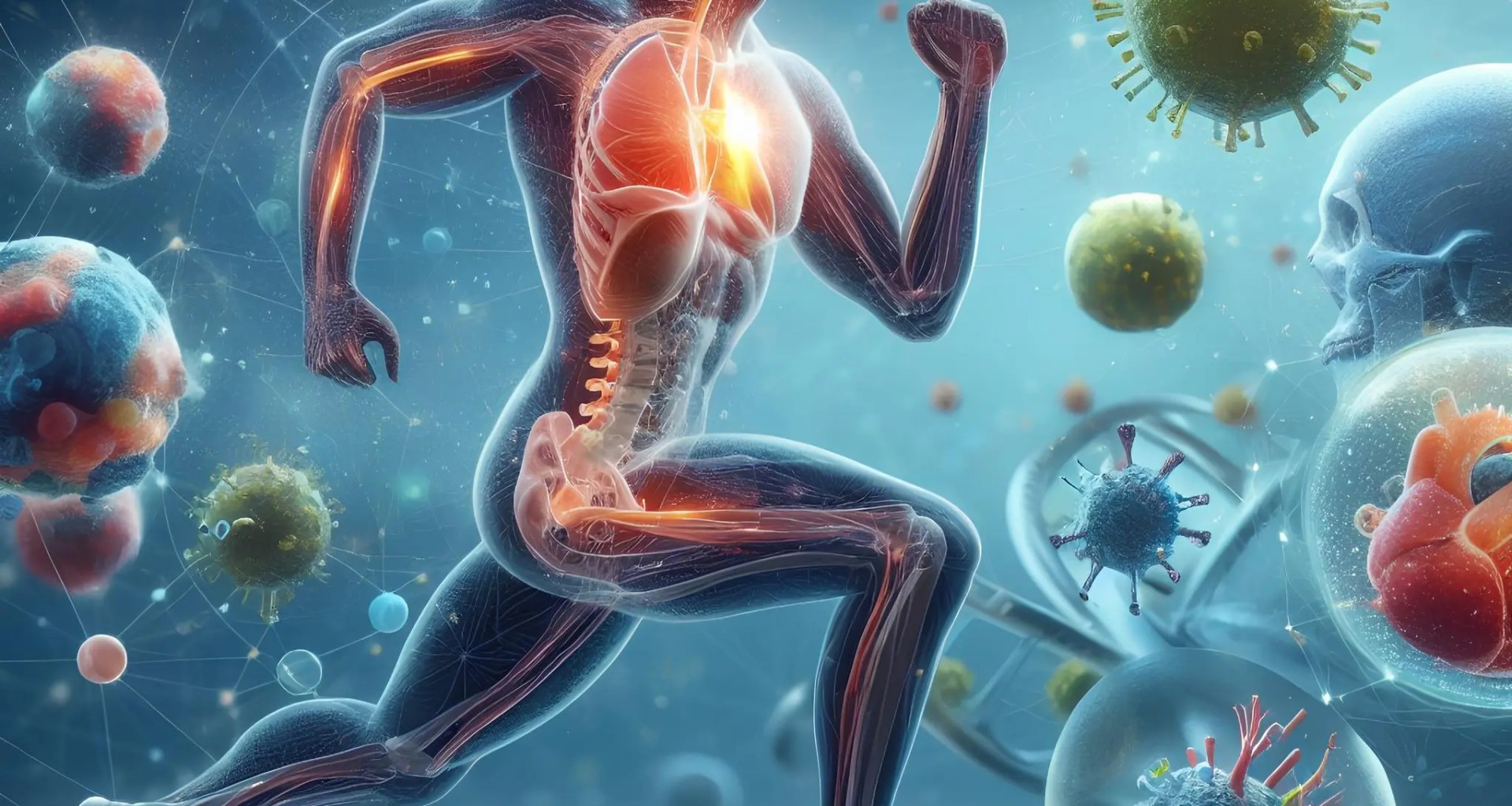
APA 7: TWs Editor & ChatGPT. (2023, November 6). New Study Indicates That the Immune System is Responsible for Some of the Benefits of Exercise. PerEXP Teamworks. [News Link]
Conducted in mice, the study proposes that the advantageous impacts of exercise could be, to some extent, attributed to the immune system. It reveals that exercise-induced muscle inflammation prompts the activation of inflammation-reducing T cells, referred to as Tregs. These Tregs enhance the muscles’ capacity to utilize energy for fuel and consequently bolster overall exercise endurance.
While Tregs have been traditionally recognized for their role in mitigating abnormal inflammation associated with autoimmune conditions, this research team highlights their newfound significance in the body’s immune responses during physical exercise.
In discussing the study’s findings, senior investigator Diane Mathis, who holds the Morton Grove-Rasmussen Professor of Immunology position in the Blavatnik Institute at Harvard Medical School, underlines the far-reaching influence of the immune system, especially the T cell component. It extends beyond safeguarding against pathogens and managing cancer. The study underscores the significant impact of the immune system on muscle health during exercise.

The researchers emphasize that while these discoveries were made in mice and not humans, and therefore need validation in additional studies, this research marks a noteworthy stride in elucidating the cellular and molecular alterations taking place during exercise, which contribute to its health-enhancing effects.
Deciphering the molecular foundations of physical activity
Exercise has long been acknowledged for its ability to guard against cardiovascular disease, lower the risk of diabetes, and provide a defense against dementia. However, the precise mechanisms through which exercise promotes our well-being have captivated researchers’ curiosity for quite some time.
These recent discoveries surface as part of the escalating endeavors to unravel the molecular foundations of exercise. Delving into the immune system’s role in this mechanism represents just one facet of these research initiatives.
Study first author Kent Langston, who serves as a postdoctoral researcher in the Mathis lab, elucidates that while it has been a longstanding observation that physical exertion triggers inflammation, the intricate immune processes underlying this phenomenon have not been completely comprehended. The study he’s part of offers a highly detailed insight into the activities of T cells precisely within the muscle where exercise takes place.
In contrast to prior research in exercise physiology that primarily concentrated on the impact of various hormones released during exercise and their influence on different organs like the heart and lungs, this recent study delves into the immunological sequence of events taking place directly within the muscle, where the physical exertion occurs.
Guardian T cells and inflammatory adversaries
Physical exercise is recognized for inducing transient muscle damage, triggering a series of inflammatory reactions. This process upregulates the expression of genes that oversee muscle architecture, metabolic processes, and the functioning of mitochondria—small cellular powerhouses responsible for providing energy to cells. Mitochondria play a pivotal role in adapting to exercise by aiding cells in meeting the increased energy requirements associated with physical activity.
In their recent investigation, the researchers examined the cellular changes occurring in the hind-leg muscles of mice subjected to a single treadmill run and those of mice engaged in regular running. They subsequently compared these findings with muscle cells obtained from mice that remained sedentary.
Muscle cells from mice that engaged in treadmill running, whether it was a single session or regular exercise, displayed typical indicators of inflammation. These included heightened activity in genes controlling various metabolic functions and increased levels of pro-inflammatory molecules, such as interferon. In both groups of mice, there was an increase in Treg cells within their muscle tissues. Subsequent analyses revealed that Tregs effectively mitigated the inflammation triggered by exercise in both cases. These protective changes were absent in the muscle cells of sedentary mice.
Yet, the metabolic improvements and performance enhancements resulting from exercise were primarily observed in the mice that engaged in regular exercise—those that underwent repeated running sessions. Among this group, Tregs not only suppressed the inflammation and muscle damage induced by exertion but also induced significant alterations in muscle metabolism and performance, as demonstrated in the experiments.
This discovery is consistent with well-documented observations in humans, which emphasize that a single instance of exercise does not produce substantial performance improvements, highlighting the need for consistent physical activity over time to realize these benefits.
Subsequent analyses provided further confirmation that Tregs were the driving force behind the wider advantages observed in regular exercisers. Animals lacking Tregs experienced uncontrolled muscle inflammation, characterized by the rapid buildup of cells that promote inflammation in their hindleg muscles. Additionally, their muscle cells displayed significantly enlarged mitochondria, indicative of metabolic irregularities.
Significantly, animals devoid of Tregs failed to adapt to the escalating physical demands of exercise over time in the same manner as mice possessing intact Tregs. They did not experience the same overall body benefits from exercise and exhibited reduced aerobic fitness.
Additionally, the muscles of these animals displayed an overabundance of interferon, a recognized instigator of inflammation. In-depth investigations unveiled that interferon directly influences muscle fibers, modifying mitochondrial function and curtailing energy production. When interferon was blocked, it mitigated metabolic irregularities and enhanced aerobic fitness in the Treg-deficient mice. Langston highlighted the role of interferon as the culprit, emphasizing that when Tregs, the guardian immune cells, are absent, interferon can wreak uncontrolled havoc.
Interferon is recognized for its role in promoting chronic inflammation, which is a fundamental process associated with various chronic diseases and age-related conditions. This characteristic makes interferon an attractive target for therapeutic approaches aimed at mitigating inflammation. Additionally, Tregs have gained significant attention from both scientists and the industry as potential treatments for various immune-related disorders characterized by abnormal inflammation.
The study results offer valuable insights into the intricate cellular processes that underlie the anti-inflammatory effects of exercise, emphasizing the significance of leveraging the body’s innate immune defenses, according to the researchers. Current initiatives aim to develop interventions focused on Tregs for addressing immune-mediated diseases. Although conditions driven by abnormal inflammation necessitate precisely tailored therapies, the study suggests that exercise provides an additional means to mitigate inflammation, as outlined by the researchers.
In elaborating on the findings, Mathis pointed out that exercise serves as a natural method to enhance the body’s immune responses for reducing inflammation. While the study focused on the muscle, Mathis suggested that exercise might potentially elevate Treg activity in other parts of the body as well.
Resources
- NEWSPAPER Harvard Medical School. (2023, November 3). Some benefits of exercise stem from the immune system, suggests new study. Medical Xpress. [Medical Xpress]
- JOURNAL Langston, P. K., Sun, Y., Ryback, B., Mueller, A. L., Spiegelman, B. M., Benoist, C., & Mathis, D. (2023). Regulatory T cells shield muscle mitochondria from interferon-γ–mediated damage to promote the beneficial effects of exercise. Science Immunology, 8(89). [Science Immunology]


nice article. ill leave my thoughts…
Thanks for reading , Love The Blog !!