


The diversity among energy models becomes apparent in their level of detail, structural nuances, varied parameters, and distinct objectives. Consequently, when applied to project the outcomes of specific climate policies and interventions, these models can yield divergent results.
A collaborative effort involving researchers from PBL Netherlands Environmental Assessment Agency, Utrecht University, and other European institutes aimed to systematically quantify disparities in outcomes generated by pivotal energy models. Published in Nature Energy, their study introduces ‘fingerprints’ of energy models, which are illustrative diagrams delineating the distinctive characteristics of each model.
Mark Dekker, a researcher involved in the study, emphasized the deliberate inclusion of multiple energy modeling teams in their research projects. This intentional approach recognizes the significance of incorporating diverse perspectives within the scientific community. Given the potential for substantial variations in model outcomes in their field, the researchers aim to transparently address these differences before interpreting the results.
Mark Dekker and his colleagues conducted a comprehensive study as part of the European Climate and Energy Modeling Forum (ECEMF H2020). The overarching aim of this project is to provide insights for shaping energy and climate policies applicable at both European and national levels.
Prior to embarking on calculations to evaluate potential pathways for achieving Europe’s net-zero emissions target, the researchers opted to conduct a series of thorough diagnostic tests. Although these tests were intricate and time-intensive, they proved to be valuable, uncovering intriguing results.
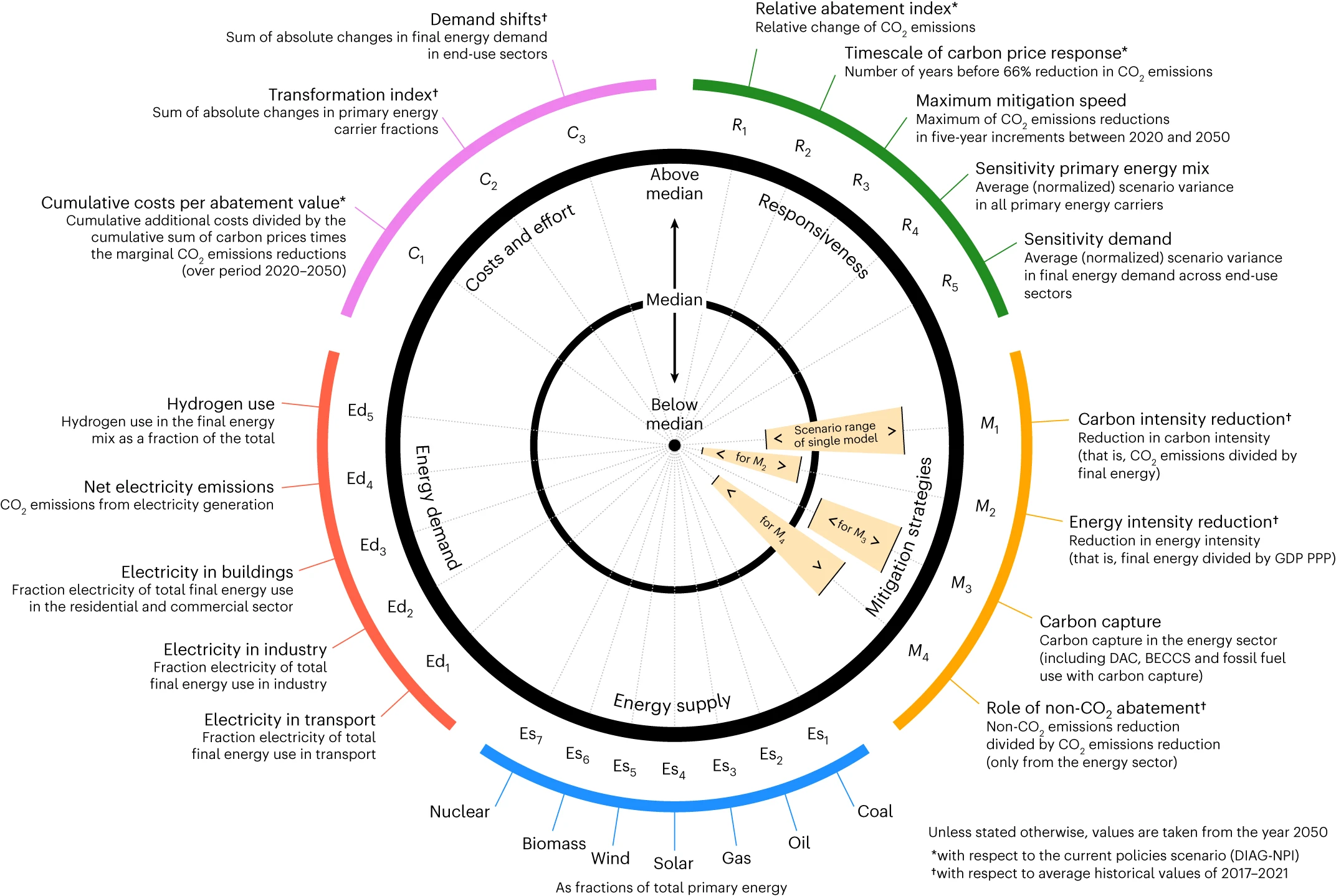
Mark Dekker elaborated on the concept of expressing diagnostic outcomes through ‘diagnostic indicators,’ a notion rooted in previous papers published in Environmental Research Letters and Technological Forecasting and Social Change. The idea of developing model ‘fingerprints,’ as opposed to the conventional approach of individually comparing such indicators (as seen in previous literature), emerged during Dekker’s personal analysis of the results. Recognizing that a model’s unique behavior in one dimension could provide insights into its behavior in another, the researchers aimed to consolidate multiple dimensions into a cohesive framework, ultimately achieving success in this endeavor.
During their testing process, Mark Dekker and his team sought to outline diagnostic indicators for energy models, concentrating on five essential dimensions. These dimensions encompassed a model’s responsiveness and its suggested mitigation strategies, along with its projections for energy supply, energy demand, and the costs/efforts associated with mitigation.
Mark Dekker and his team conducted diagnostic tests on eight energy models, employing them across 10 potential scenarios designed for mitigating greenhouse gas emissions in Europe. Through these tests, they generated ‘fingerprints’ for each model. These ‘fingerprints’ are illustrative diagrams that serve as unique representations, akin to how fingerprints or DNA uniquely identify individuals.
Mark Dekker emphasized a crucial practical implication stemming from their study. Individuals now have the means to contextualize modeling studies, particularly those reliant on a single model. The study articulates the bias or behavior of that specific model in relation to others. For instance, if a model consistently projects higher levels of renewable energy compared to others, this information becomes vital for readers interpreting its forecasts on renewables. The ability to understand a model’s unique characteristics in comparison to its counterparts enhances the interpretative context for such studies.
The collaborative efforts of this research team offer valuable insights that may serve as a guide for future studies comparing predictions from various energy models or seeking to contextualize their estimates. Such collective research endeavors hold the potential to enhance the accuracy of predicting outcomes related to climate policies and energy interventions. The implications of these studies could be instrumental in informing the decision-making processes of entities such as the EU Commission and other European policymakers.
Mark Dekker shared ongoing research endeavors, focusing on exploring the broader significance of model differences and identifying structures within extensive scenario databases. He highlighted the challenge faced by general users when navigating scenario databases that may appear complex, akin to ‘spaghetti.’ The aim is to categorize scenarios into groups, each conveying a distinct narrative. This categorization approach is expected to contribute to a clearer understanding of the future landscape of energy and climate, aiding both researchers and general users in interpreting and utilizing scenario databases effectively.
Resources
- ONLINE NEWS Fadelli, I. & Phys.org. (2023, November 30). Study identifies the “fingerprints” of energy models exploring emission mitigation scenarios. Phys.org. [Phys.org]
- JOURNAL Dekker, M., Daioglou, V., Pietzcker, R., Rodrigues, R., De Boer, H., Longa, F. D., Drouet, L., Emmerling, J., Fattahi, A., Fotiou, T., Fragkos, P., Fricko, O., Gusheva, E., Harmsen, M., Huppmann, D., Kannavou, M., Krey, V., Lombardi, F., Luderer, G., . . . Van Vuuren, D. (2023). Identifying energy model fingerprints in mitigation scenarios. Nature Energy. [Nature Energy]
Cite this page:
APA 7: TWs Editor. (2023, November 30). Identifying the ‘Fingerprints’ of Energy Models in Emission Mitigation Scenarios. PerEXP Teamworks. [News Link]


