



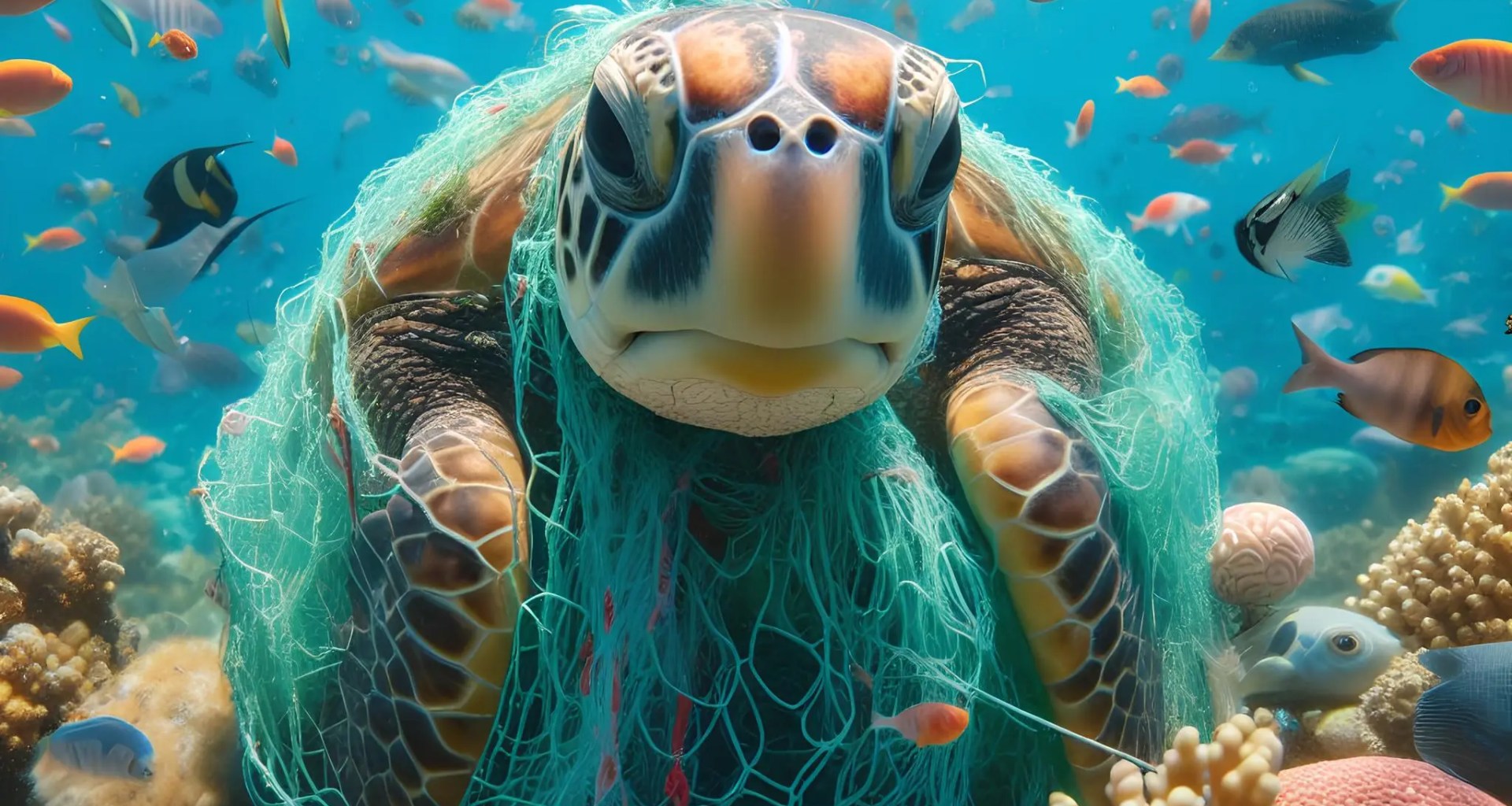
Scientists have pioneered a method for predicting potential entanglements of whales and turtles in fishing gear, with a foresight capability extending up to a year. Revealed in a study published on December 5 in Nature Communications, this innovative technique holds promise for safeguarding marine life and supporting the sustainability of fisheries. While forecasting tools have been developed to anticipate the impact of heatwaves on fish distribution and aquaculture productivity, there has been limited focus on safeguarding marine animals from the risks associated with human activities like fishing.
Marine ecologist Stephanie Brodie at the Commonwealth Scientific and Industrial Research Organisation in Brisbane, Australia, emphasizes the substantial impact of a forecast approach. The technique crafted by Brodie and her colleagues serves as a valuable tool for both conservationists and those dedicated to fostering sustainable fisheries. Moreover, it offers a more accessible option for researchers compared to previous methods.
Ecological forecasting models have the capacity to anticipate the probable locations of marine animals based on sea-surface temperatures. Unlike previous forecasting tools, which often demand researchers to deduce high-resolution sea temperatures in a particular region from lower resolution global data—a complicated process necessitating powerful computers—according to Brodie.
Rope injuries on sea life
Brodie and her team have demonstrated an alternative approach, utilizing readily accessible, low-resolution, global forecasts of sea-surface temperature. This method proves effective in accurately predicting instances when whales are likely to approach the shores off the coast of California. This coastal area is significant, as a local fishery deploys crabbing pots on the seabed from approximately November to June. The ropes extending from these pots pose a potential risk to the marine animals.
Brodie highlights the significance of the rope gear, emphasizing that whales can become entangled in such equipment. This entanglement poses risks, causing rubbing injuries on their fins, mouth, or tail. These injuries, in turn, can hinder the whales’ ability to dive, feed, and, in severe cases, lead to fatalities.
To mitigate the entanglement risk, the local crab fishery presently relies on the sea-surface temperatures from the past month in the region. This information guides monthly decisions on whether crabbing activities can proceed, based on the compression of a current of cold, nutrient-rich water—known to attract whales—toward the shore.
The extent of this phenomenon is quantified through the Habitat Compression Index (HCI). When the HCI falls below a specific threshold, it signals the likelihood of whales moving inshore, prompting fishers to suspend crabbing. However, this reactive approach provides limited time for fishers to adapt to the economic impacts of sudden fishing closures, as noted by Brodie.
In contrast, the research team discovered that by using global temperature forecasts to calculate the HCI for each month, particularly during a 33-month heatwave in 2015, they could accurately forecast when the whale’s habitat would be compressed toward the shore up to 11.5 months in advance. This proactive forecasting approach offers a substantial extension of lead time for fisheries to prepare and adapt.
Protecting turtles
The research team also examined another local fishery employing floating fishing nets. In this case, the decision-making process involves analyzing the past 6 months of unusual sea-surface temperatures to assess the likelihood of loggerhead turtles getting ensnared in the nets within the same region. Loggerhead turtles are known to follow warmer waters, so if the fishing areas experience elevated temperatures, the fishery may opt to close temporarily, explains Brodie. She emphasizes that when turtles become entangled in these nets, it can result in strangulation or hinder their ability to move and feed.
The research team discovered that they could rely on global sea surface temperature forecasts to precisely predict when temporary closures were essential to safeguard turtles during the 2015 heatwave, providing an advanced lead time of up to 11.5 months.
Marine ecologist Kathy Mills at the Gulf of Maine Research Institute in Portland expresses optimism about the study’s findings. According to Mills, the results offer hope for dependable ecological forecasts, particularly in regions where high-resolution local ocean models might be lacking. She underscores the importance of providing ocean resource users, managers, and communities with relevant, timely, and reliable information, especially in the face of climate change and the growing occurrence of marine heatwaves.
Resources
- JOURNAL Wong, C. (2023). Forecast warns when sea life will get tangled in nets — a year in advance. Nature. [Nature]
- JOURNAL Brodie, S., Buil, M. P., Welch, H., Bograd, S. J., Hazen, E. L., Santora, J. A., Seary, R., Schroeder, I. D., & Jacox, M. G. (2023). Ecological forecasts for marine resource management during climate extremes. Nature Communications, 14(1). [Nature Communications]
Cite this page:
APA 7: TWs Editor. (2023, December 6). A New Way to Forecast the Risk of Sea Life Entanglement in Nets: A Year-Long Advance Warning. PerEXP Teamworks. [News Link]




Great Read Can i leave my thoughts ?! –
Thanks for reading , Love The Blog !!
Thanks – TheDogGod – https://pomeranianpuppies.uk/
Hey there! We deeply regret for the comment on your website. We’re committed to improving and learning.
hey
cool blog 🙂 will give it a follow and a like !
https://ketodietrecipes.co.uk/
Hey there! We really enjoy reading people’s blogs and the thoughtful content that creators like you publish.
hey
cool blog 🙂 will give it a follow and a like !
hey
cool blog 🙂 will give it a follow and a like !
lovely blog hope all is well. happy blogging.
Hey there! Came across your post on the WordPress feed and couldn’t resist saying hello. I’m already hooked and eagerly looking forward to more captivating posts.
lovely blog hope all is well
Excellent article!