





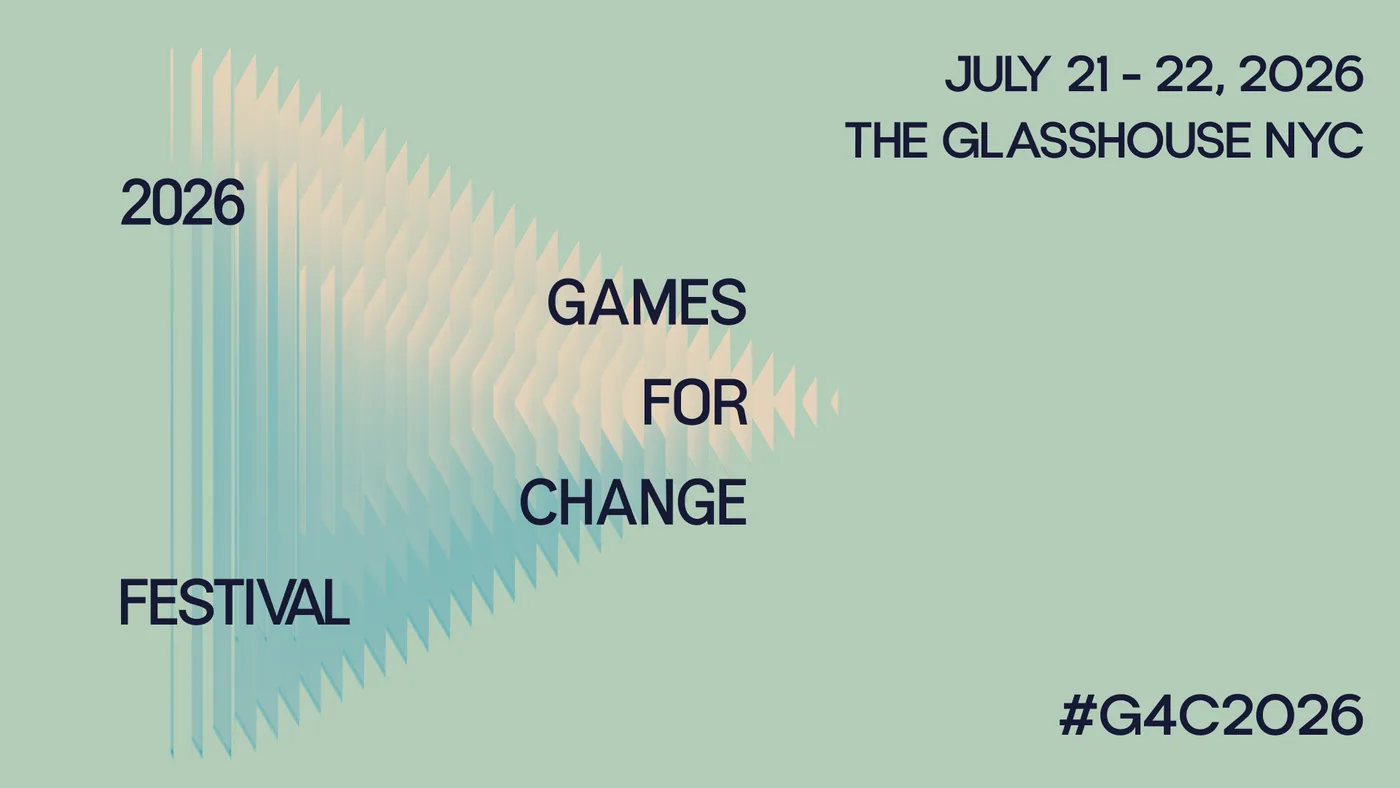
Games for Change has revealed the official award finalists for the 2026 Games for Change Festival, celebrating interactive titles that address social issues, environmental preservation, and community health. The annual conference convenes in New York City on July 21 and 22 to showcase how playful mechanics inspire civic action. Organizers selected indie creators and major studios who use games to educate students and support healthcare workers. It’s a slate that highlights how design choices shape real-world impact across public classrooms, therapy clinics, and cultural centers. The summer gathering opens in Manhattan [1].
Games for Change Award Nominees for 2026
TearyHand Studio and publisher Kodansha earned nominations in both the Best Narrative and Best Gameplay categories for an interactive novel that invites players to view the world through fresh perspectives. Hexecutable LLC joined both shortlists with its lifestyle simulation built around dietary balance and daily life. Studio 11 bit studios secured a narrative nod for a project where personal survival drives the core story [1]. Independent juries evaluated dozens of entries before selecting the finalists [3].
Compulsion Games and Xbox Games Studio earned recognition in Best Gameplay and Best in Impact for a folktale set in the American South, sending players through regional folklore to face mythical beasts. In the community empowerment category, Nebraska Public Media and PBS Wisconsin were shortlisted for Mamāceqtawak ‘s Kēwāēyah, with Nyamakop’s rescue mission heist and Paintbucket Games’ courtroom investigation based on true crimes. Winning isn’t just about high-budget visual fidelity; jury panels weigh community purpose together with artistic polish [1].
Learning games also took center stage in the jury selections. Creators Jackie Nam and Minami Matsumoto earned a nomination for an inventive project where players place physical characters, close the lid, and watch their story come to life. Paintbucket Games received a second nod in the learning bracket, while Nurture Holdings Ltd gained recognition for software teaching life skills through narrative play [1]. Independent peer review teams evaluate every shortlisted title before the summer showcase, ensuring that game design craftsmanship and artistic storytelling carry equal weight with educational messaging across all competitive categories. Peer reviews determine every winner [3].
Studios Tackle Climate Action and Health Challenges
Environmental impact nominees showed how interactive systems make ecological issues tangible. Studio Wristwork received a nomination for FACEMINER, a biometric data harvesting thriller clicker set in 1999. MIT Media Lab and Quanta created an embodied experience exploring future Amazonian worlds, while Yaldi Games was shortlisted for an outdoor simulation letting players discover more than 100 real plants and mushrooms in nature [1].
Timescapes and Polygoat earned an emerging media nomination for a poetic story about two lovers saying goodbye. In the same bracket, Sony Interactive Entertainment gained recognition for a climate story. In the platform division, Playerthree and BBC Bitesize teamed up to tackle global challenges, while MindTrust introduced young players to 123 Sesame Street with Elmo, Abby, and Cookie Monster [1].
Healthcare developers and tabletop designers also presented practical social tools for medical therapy and civic education. Augment Therapy secured a nomination in Health and Wellness by using the human body as a game controller for therapeutic movement, while the ReNUSHU Team at Carnegie Mellon University Entertainment Technology Center used smart footwear to make physical therapy more engaging for patients recovering from injury. Year of the Cicadas Team rounded out the clinical bracket with a game exploring personal grief. In the tabletop category, the Oswaldo Cruz Foundation in Brazil earned a nomination for a cooperative board game that turns menstrual health into open dialogue. Wehrlegig Games, founded by Jo Kelly and Cole Wehrle, celebrated eighteenth-century queer history, while Spica-Design and Bird’s View Co. delivered a crisis decision title where every choice carries life-or-death weight [1].



How G4C Arcades Bring Games to Communities
Outside conventional festival halls, the organization brings nominated titles directly to the general public through its traveling G4C Arcades. These mobile installations place impact games into public libraries, school cafeterias, and municipal parks where everyday visitors can play them without buying festival badges. Curators tailor each setup to local community needs, scaling from single pop-up kiosks to expansive interactive museum galleries [2].
Over previous seasons, G4C Arcades have appeared at major gatherings including the Tribeca Film Festival, PlayNYC, the Youthful Festival, and Upswell. The Washington Post has also hosted interactive showcases to let readers test impact mechanics firsthand. That community presence mirrors broader moves to engage outside audiences, much like recent industry board expansions at the GDC Festival of Gaming that connect indie development with wider public oversight. That’s why public installations prove effective for social dialogue [2].
Public access helps bridge abstract civic ideas with interactive play. Young players don’t just consume digital stories; they test working prototypes created by students and professional studios alike [4]. Visitors who can’t attend the Manhattan conference can still experience impact gameplay in their hometowns. These pop-up installations turn ordinary street plazas into accessible classrooms [2].
Global Tour Stops Across Twelve International Cities
While New York City serves as the primary gathering point each July, the 2026 calendar includes twelve regional summits across six continents. The global circuit opened on April 15 with G4C @ London Games Festival in the United Kingdom, followed by the Games and SDG Summit in Nairobi, Kenya, from April 21 to 23. In May, organizers traveled to Tel Aviv for the G4C Israel Summit, before convening events in Seoul and Victoria, Hong Kong [2].
The summer and autumn schedule takes the festival to South America, Africa, Australia, and Europe. Rio de Janeiro hosts G4C Latin America – Esports for Change in June 2026, exploring competitive video games through an inclusive civic lens. Later convenings include the G4C India Festival in September, the G4C Africa Festival in Johannesburg, and Melbourne’s G4C Australia Festival from October 6 to 8 [2].
The international tour wraps up with three major European and Mediterranean events. Rome hosts a second Games and SDG Summit in October, followed by the Invest in Change gathering in Stockholm in November. The year concludes in Istanbul with the G4C Türkiye Festival on December 5 and 6. December brings the final gathering. These local gatherings complement our reporting on the 2026 festival theme and Manhattan venue, connecting regional chapters to the central movement [2].
Two Decades of Games for Change History
Benjamin Stokes, Suzanne Seggerman, and Barry Joseph founded Games for Change in 2004 to demonstrate how serious digital games could support charitable causes. New York hosted the inaugural gathering. Convened by the New York Academy of Sciences, that first event brought together nonprofit directors and independent software designers. Over twenty-two years, the group grew from a small workshop into what Forbes described as the Sundance for video games and immersive media [3].
The organization operates as a 501(c)(3) nonprofit with a core staff of 10 to 15 employees under president Susanna Pollack. Past festival stages have hosted prominent figures, including former U.S. Vice President Al Gore and Supreme Court Justice Sandra Day O’Connor. Entertainment Software Association leader Stan Pierre-Louis also took part, while past award winners include Life Is Strange, Nintendo Labo, and Sky: Children of the Light [3].
Educational programs and historical game curation remain central to the organization’s mission. Through the G4C Student Challenge, middle and high school students in New York City, Detroit, Atlanta, and Los Angeles learn computer programming and game design. Curators also preserve historical impact titles like Sweatshop, a 2011 tower defense simulator developed by Littleloud and British charity Labour Behind The Label [3]. As the 2026 festival approaches, these initiatives continue showing how play drives social progress [4].
- WEBSITE Games for Change. (2026). 2026 Games for Change Award Nominees. Games for Change Festival. [Article Link]
- WEBSITE Games for Change. (2026, May 21). Events & Convenings – Games for Change. Games for Change. [Article Link]
- WEBSITE Wikimedia Foundation, Inc. (2006, July 15). Games for Change. Wikipedia. [Article Link]
- WEBSITE Games for Change. (2026, August 11). Home – Games for Change. Games for Change. [Article Link]
- ONLINE NEWS Game Developer. (n.d.). Games 4 Change Festival. Game Developer. [Article Link]


