




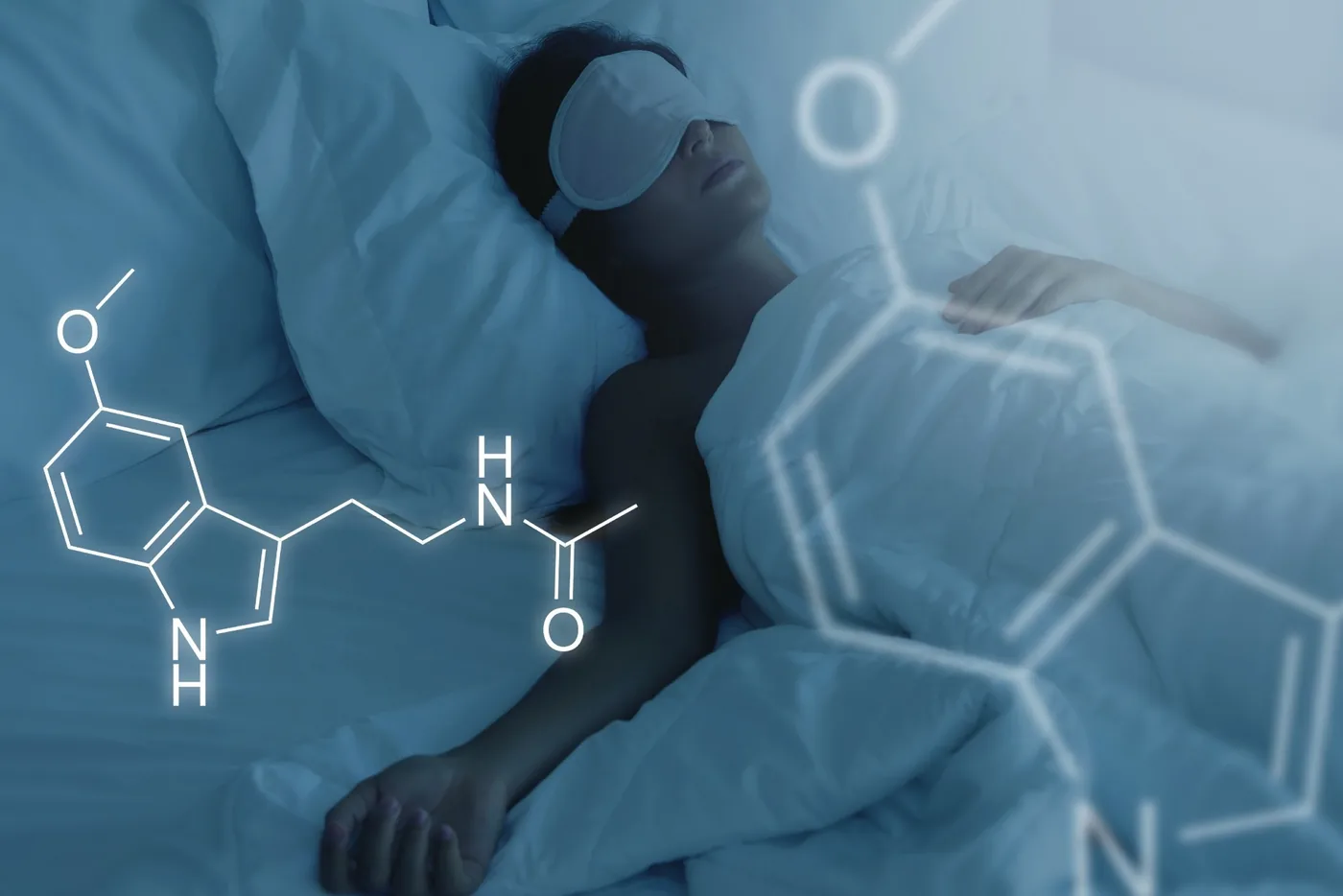
Human circadian biology relies on chemical messengers to align body organs with the solar day. Inside the brain, the small pineal gland produces melatonin when ambient darkness arrives, signaling tissues that night has begun. Nighttime signaling lowers core body temperature, slows digestive motion, and prepares the brain for rest. While synthetic pills sell widely as over-the-counter sleep aids, the natural molecule acts as a timing cue that helps synchronize human daily rhythms [1].
How Pineal Melatonin Works
Physicians and biochemists first identified the molecule in 1958, when researcher Aaron B. Lerner and colleagues at Yale University isolated an active substance from bovine pineal tissue that caused skin lightening in common frogs [12]. Molecular analyses classified the compound as an indoleamine with the chemical designation N-[2-(5-methoxy-1H-indol-3-yl)ethyl]acetamide and an average molecular mass of 232.283 daltons [3]. Ancient evolutionary pathways preserve this identical structure in bacteria, fungi, and higher plants, showing that its cellular roles began long before mammals developed specialized sleep systems [12].
In humans and other mammals, pineal synthesis starts with the essential dietary amino acid L-tryptophan, which enzymes convert into 5-hydroxytryptophan before decarboxylation yields the neurotransmitter serotonin. A key enzyme known as arylalkylamine N-acetyltransferase, abbreviated as AANAT, then adds an acetyl group to create N-acetylserotonin. Finally, hydroxyindole O-methyltransferase transfers a methyl group from S-adenosylmethionine to build the finished neurohormone. Sympathetic nerve fibers control this process during the night by releasing norepinephrine, which raises cyclic adenosine monophosphate inside cells to protect AANAT from fast breakdown by proteasomes [12].
Environmental daylight acts as the main switch controlling this production cascade through photosensitive ganglion cells located inside the human retina. These retinal neurons contain the photopigment melanopsin and send nerve signals straight to the suprachiasmatic nucleus, the master circadian clock located within the anterior hypothalamus [8]. Exposure to bright morning light causes this central pacemaker to halt noradrenergic stimulation, which prompts pinealocytes to break down their synthetic enzymes quickly. Optical research shows that narrow-band blue light, especially between 460 and 480 nanometers, causes the strongest suppression of hormone production, while light wavelengths above 530 nanometers do not shut down nighttime release [12].
Hormone Levels by Age
Healthy adults maintain very low circulating hormone levels during daylight hours, typically measuring between 10 and 20 picograms per milliliter of blood serum. Once evening darkness arrives, the pineal gland steadily raises production until circulating levels reach a peak between 80 and 120 picograms per milliliter, usually between 2:00 AM and 4:00 AM [8]. The body produces about 30 micrograms of the hormone each day, with nearly 80 percent made during the night [12]. Because pineal cells do not store finished molecules in vesicles, newly synthesized hormone diffuses directly into local blood vessels and cerebrospinal fluid to travel throughout the body [8].
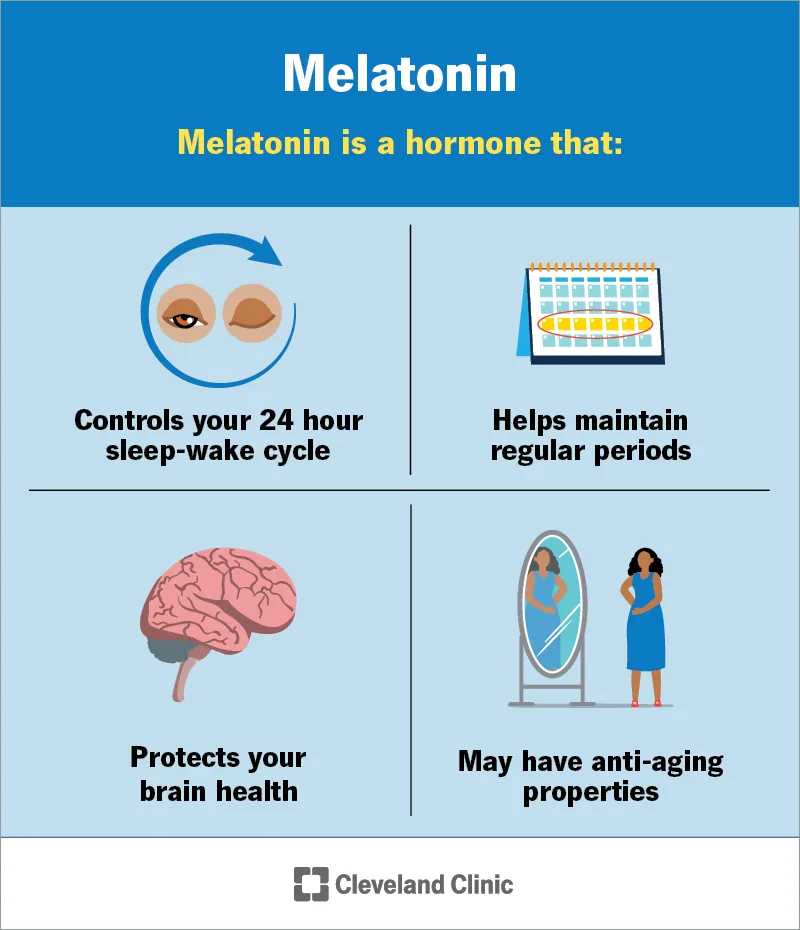
Circulating amounts change markedly as people move through life stages. Newborn babies do not produce their own hormone supplies at birth, receiving it instead from maternal transfer through the placenta during gestation and through breast milk during early feeding. An infant develops an independent 24-hour cycle at roughly three to four months of age. Natural levels climb to their lifetime peak during early childhood right before puberty starts, followed by a steady drop during teenage years. Output stays relatively stable from early adulthood until about age 40, after which pineal production begins a gradual lifetime decline [1].
Once released into systemic blood circulation, the liver clears the molecule quickly. Hepatic enzymes, mainly the CYP1A2 pathway with minor help from related enzymes, break the hormone down into 6-hydroxymelatonin. Sulfate binding follows, allowing the kidneys to remove inactive waste through urine [12]. Simple immediate-release pills have a short elimination half-life between 20 and 50 minutes, meaning the liver clears the active agent shortly after absorption finishes. By contrast, prolonged-release pharmaceutical tablets maintain steady blood levels across an elimination half-life of 3.5 to 4 hours, mimicking natural nocturnal release [13].
Clinical Evidence for Sleep Disorders
Public conversations often confuse circadian timing hormones with common sleeping pills that chemically knock out central brain circuits. Dr. Michael Howell, a neurologist and sleep specialist at the University of Minnesota, explained that the hormone acts as a natural clock signal rather than an anesthetic drug. “Melatonin is a circadian cue of darkness,” Howell said. “It lets our body know when the sun has gone down.” Howell noted that natural nocturnal release prompts coordinated physical changes, such as lowering core body temperature and slowing digestive activity. The molecule does not force unconsciousness; it simply signals that sleep time has arrived [11].
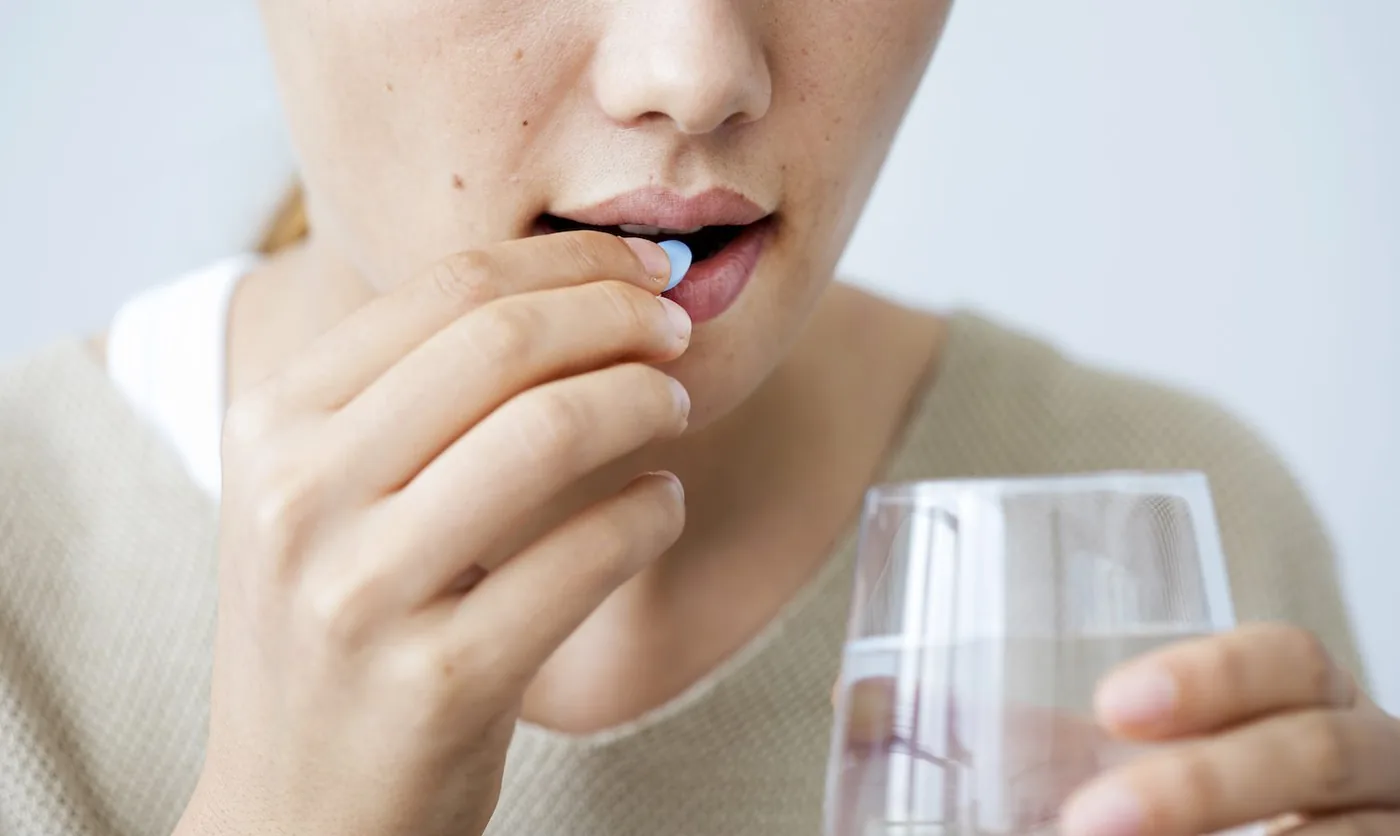
Clinical research indicates that supplemental doses help people diagnosed with delayed sleep-wake phase disorder. Patients with this circadian mismatch struggle to fall asleep before 2:00 AM and find early morning wakeups difficult. In 2016, a review of trial data found that taking an evening dose helped patients with this condition fall asleep an average of 22 minutes faster than those taking a placebo. A 2018 randomized controlled trial of 307 participants showed that taking a supplement one hour before a target bedtime advanced sleep onset by 34 minutes and improved daytime alertness [2].
Supplementation also helps individuals living with non-24-hour sleep-wake rhythm disorder, a condition seen most often in totally blind adults. Because these individuals lack ocular light perception, sunlight cannot reset the retinal pathways that keep the hypothalamic master clock locked to the solar day. As a result, their internal sleep cycle drifts later each day, causing alternating cycles of daytime fatigue and nighttime sleeplessness. Taking a small supplement dose at a set time each evening provides a dependable chemical anchor, helping the hypothalamic pacemaker stay locked to a normal 24-hour schedule despite the complete absence of light cues [10].
Shift Work and Jet Lag
Air travel across time zones breaks the connection between internal biological clocks and destination day-night cycles. Evidence gathered by the National Center for Complementary and Integrative Health indicates that supplemental doses ease traveler fatigue following eastward flights. Four clinical trials evaluating 142 travelers showed that taking a dose at local bedtime helped reduce overall jet lag symptoms and speed circadian adjustment. Benefits after westward flights appear smaller, though two trials involving 90 travelers still found better symptom relief compared to placebo pills [2].
Industrial night shifts disrupt biological timing by requiring workers to stay alert during nocturnal hours and sleep during daylight. Research reviews on night shift workers show modest improvements from daytime doses, lengthening daytime sleep by roughly 24 minutes without shortening the time needed to fall asleep [2]. Bad timing can make circadian misalignment worse. Dr. Howell warned that early risers who naturally sleep at 8:00 PM and wake before 4:00 AM should avoid taking sleep hormones. “If that person takes melatonin, you’re only going to make your problem worse,” Howell said, noting that evening doses pull wake times earlier [11].
Although millions of people buy over-the-counter supplements for chronic insomnia, major medical guidelines do not endorse them as a main treatment. The American Academy of Sleep Medicine found that clinical evidence shows weak efficacy for chronic sleeplessness and advised against relying on nonprescription pills. Leading medical groups recommend cognitive behavioral therapy for insomnia as the first choice for chronic sleep problems [2]. European regulators approved a prolonged-release drug called Circadin for patients aged 55 and older, but American health agencies still treat the compound strictly as a dietary supplement [13].
How Melatonin Supplements Are Used
Many people assume that larger supplement doses produce stronger sleepiness, but medical researchers point out that high amounts do not improve rest [9]. Retail bottles offer doses ranging from 0.5 to 3 milligrams, and studies show that amounts below one milligram work just as well as larger doses [10]. Clinical reviews indicate that sleep benefits peak around four milligrams, with higher doses providing no additional help falling asleep. Taking excessive amounts floods the body with synthetic hormone that lingers into morning daylight, causing daytime grogginess, brain fog, and headaches [9].
The timing of a dose decides whether it helps someone fall asleep tonight or shifts their broader sleep cycle over several days [5]. People who want to fall asleep faster should take their pill about 30 minutes before bedtime [10]. Night owls trying to train their bodies to sleep earlier need to take their dose two to three hours before going to bed [5]. Dr. Howell recommended taking about one milligram several hours before sleep for circadian phase delays, noting that this schedule pulls the biological rhythm earlier over several days [11]. Dimming household lamps and avoiding bright phone screens helps this process, since artificial light weakens the hormone’s sleep signal [6].
Stores sell the hormone in many common forms, including swallowed capsules, liquid drops, chewable tablets, and fruit-flavored gummies [7]. Records in the federal DailyMed database show dozens of repackagers marketing oral preparations across pharmacies [4]. Fast-acting tablets dissolve quickly in the gut to create an early blood peak, while prolonged-release tablets release their contents slowly to imitate natural pineal secretion through the night. Over-the-counter sales remain common in the United States and Canada, whereas Britain and several European nations require a doctor’s prescription to protect consumer safety [13].
Risks and Drug Interactions
Short-term supplementation is generally safe for healthy adults, but unwanted reactions occur in some users [8]. Common side effects include morning drowsiness, mild headaches, dizziness, nausea, and vivid dreams [7, 13]. Certain groups face higher risks and should avoid taking supplements without medical guidance [6]. Pregnant and nursing women should avoid supplemental doses because the molecule passes freely into the placenta and breast milk, where its effects on fetal development remain unstudied [7]. People with autoimmune diseases or seizure disorders should also talk with a physician before starting any sleep aid [6].
Taking sleep supplements alongside prescription medications can create harmful chemical interactions inside the body. Patients taking blood thinners need close medical supervision because the hormone may alter normal blood clotting pathways [6]. Combining the supplement with sedatives like diazepam or clonazepam can cause heavy drowsiness and poor muscle coordination [7]. Dr. David S. Seres, director of medical nutrition at Columbia Medical Center, warned that consumers should check with doctors before taking sleep supplements, noting that driving under their influence creates serious accident risks [4].
Giving supplements to children raises special medical concerns, despite the popularity of chewable gummies in grocery aisles. A 2019 review of 1,021 children found modest sleep improvements for youth diagnosed with autism or ADHD. However, pediatricians caution that long-term effects on developing endocrine systems and puberty timing remain unknown [2]. Accidental child ingestions have grown rapidly in recent years. Researcher Karima Lelak and colleagues documented 260,435 pediatric ingestions reported to American poison control centers between 2012 and 2021 as retail sales expanded [7].
Quality Issues in Melatonin Gummies
Because the Food and Drug Administration regulates the hormone as a dietary supplement, manufacturers do not need to prove product purity or dosing accuracy before putting bottles on store shelves [2]. This loose oversight leads to wide gaps between label claims and bottle contents. In a 2023 study published in JAMA, Dr. Pieter A. Cohen and colleagues tested 25 commercial gummy brands. Laboratory tests showed that 22 out of 25 products had inaccurate labels, with actual amounts ranging from 74 percent to 347 percent of the stated dose [2, 8]. One tested brand contained no detectable hormone at all [2].
The surge in sleep aid sales inspired novelty baked goods, including chocolate brownies sold under names like Lazy Cakes, Kush Cakes, and Lulla Pies. These store-bought snacks contained roughly eight milligrams of synthetic hormone per serving. Sleep researchers strongly criticized these products. “It’s making it much more difficult for the consumer to recognize that they are taking a drug,” said Dr. Charles A. Czeisler, chief of sleep medicine at Harvard’s Brigham and Women’s Hospital. Czeisler warned that putting sleep drugs into sweets encourages mindless snacking and confuses consumers about what they are eating [4].

People looking for dependable sleep supplements can protect themselves by choosing products with independent certification seals. Verification programs like the USP Verified mark test manufacturing batches to confirm that bottle contents match label numbers without hidden contaminants [10]. Speaking with a pharmacist or doctor provides another layer of safety before taking any new supplement [1]. Sticking to simple single-ingredient tablets rather than novelty gummies helps avoid accidental overdoses and ensures predictable dosing [10].
Cellular Protection Beyond Sleep
Beyond regulating circadian clocks in the brain, the molecule serves as a versatile antioxidant in cells throughout the body. Scientists discovered these antioxidant properties in 1993, showing that the compound directly neutralizes dangerous reactive oxygen species like hydroxyl radicals and reactive nitrogen compounds like nitric oxide. In laboratory cell studies, the molecule proved twice as effective as vitamin E at neutralizing peroxyl radicals. Because the small molecule slips easily through cell membranes and the blood-brain barrier, it shields delicate brain tissues that face high oxidative stress during daily cellular activity [8, 12].
Cellular studies show that the hormone concentrates heavily inside mitochondria, reaching levels far higher than those found in circulating blood plasma [12]. Inside these cellular powerhouses, the molecule protects mitochondrial DNA from mutations and supports clean energy generation during cellular stress [8]. In addition to clearing radicals directly, receptor signaling stimulates cells to produce vital antioxidant enzymes, including superoxide dismutase, glutathione peroxidase, and catalase. As it neutralizes free radicals, the compound turns into helpful antioxidant metabolites, including N1-acetyl-N2-formyl-5-methoxykynuramine (AFMK) and N1-acetyl-5-methoxykynuramine (AMK), maintaining protection through multiple chemical steps [12].
These protective actions have encouraged medical research into eye conditions and tissue aging. In a 2019 review in Current Pharmaceutical Design, Dr. Luca Scuderi and colleagues showed how local ocular production fights oxidative stress in eye tissues, pointing to possible benefits for glaucoma and macular degeneration [14]. Other studies examine how the molecule supports immune balance, calms inflammation, and aids bone remodeling [8, 12]. While laboratory research into cellular pathways continues to expand, the hormone’s best understood medical role remains helping human bodies keep accurate circadian time [1].
- WEBSITE Cleveland Clinic. (2023, September 6). Melatonin. [Article Link]
- WEBSITE National Center for Complementary and Integrative Health. (2019, October 10). Melatonin: What You Need To Know. [Article Link]
- WEBSITE European Bioinformatics Institute. (2021, October 26). Melatonin (CHEBI:16796). ChEBI. [Article Link]
- ONLINE NEWS Saint Louis, C. (2011, May 15). Dessert, Laid-Back and Legal. The New York Times. [Article Link]
- WEBSITE Ajmera, R. (2018, September 14). Melatonin: Benefits, Uses, Side Effects and Dosage. Healthline Media. [Article Link]
- WEBSITE Seed, S. (2026, March 12). Melatonin Dos and Don’ts. WebMD. [Article Link]
- WEBSITE Bruce, D. F., & Wiginton, K. (2026, February 13). Melatonin: Uses, Side Effects, Interactions, Pictures, Warnings & Dosing. WebMD. [Article Link]
- WEBSITE Cuffari, B. (2011, November 20). What is Melatonin? News-Medical. [Article Link]
- WEBSITE Van De Walle, G., Raman, R., & Seladi-Schulman, J. (2020, August 5). What You Should Know About Melatonin for Sleep. Healthline Media. [Article Link]
- WEBSITE Bryan, L., & Cotliar, D. (2009, April 17). Melatonin. Sleep Foundation. [Article Link]
- ONLINE NEWS Williams, V. (2026, July 2). How melatonin works and what you should know about it. Aging Untold. [Article Link]
- WEBSITE Wikipedia contributors. Melatonin. Wikipedia, The Free Encyclopedia. [Article Link]
- WEBSITE Wikipedia contributors. Melatonin as a medication and supplement. Wikipedia, The Free Encyclopedia. [Article Link]
- ACADEMIC JOURNAL Scuderi, L., Davinelli, S., Iodice, C. M., Bartollino, S., Scapagnini, G., Costagliola, C., & Scuderi, G. (2019). Melatonin: Implications for Ocular Disease and Therapeutic Potential. Current Pharmaceutical Design, 25(39), 4185-4191. [Article Link]


