



Two independent teams of astronomers have identified a potentially habitable exoplanet known as Gliese 12 b, where surface temperatures reach about 42°C, mirroring conditions found on Earth.
According to researchers, future studies of the planet’s atmosphere will be crucial in determining its habitability. Specifically, scientists aim to investigate whether Gliese 12 b possesses an atmosphere more akin to Earth’s rather than Venus‘. Such investigations could significantly advance our understanding of planetary habitability.
Shishir Dholakia, a doctoral student at the University of Southern Queensland, highlighted the significance of Gliese 12 b as a prime candidate for studying whether Earth-sized planets orbiting cool stars can maintain their atmospheres. This research is seen as a pivotal step toward enhancing our knowledge of habitable conditions on planets throughout our galaxy.

Exploring the quest for habitable exoplanets beyond earth
Scientists have discovered over 5,000 exoplanets, celestial bodies located beyond our solar system. Despite this abundance, only a select few merit detailed investigation, as noted by NASA.
A primary scientific objective is to determine the habitability potential of these exoplanets, a quest that promises profound insights into the origins and evolution of life on Earth, as well as the possibility of life elsewhere in the cosmos.
Studying exoplanets presents unique challenges due to their lack of visible light emission compared to stars. Therefore, thorough examination is primarily feasible for transiting exoplanets—those that periodically pass between their host star and Earth, causing a measurable dimming of the star’s brightness. This phenomenon enables scientists to infer crucial properties such as size and orbital characteristics.
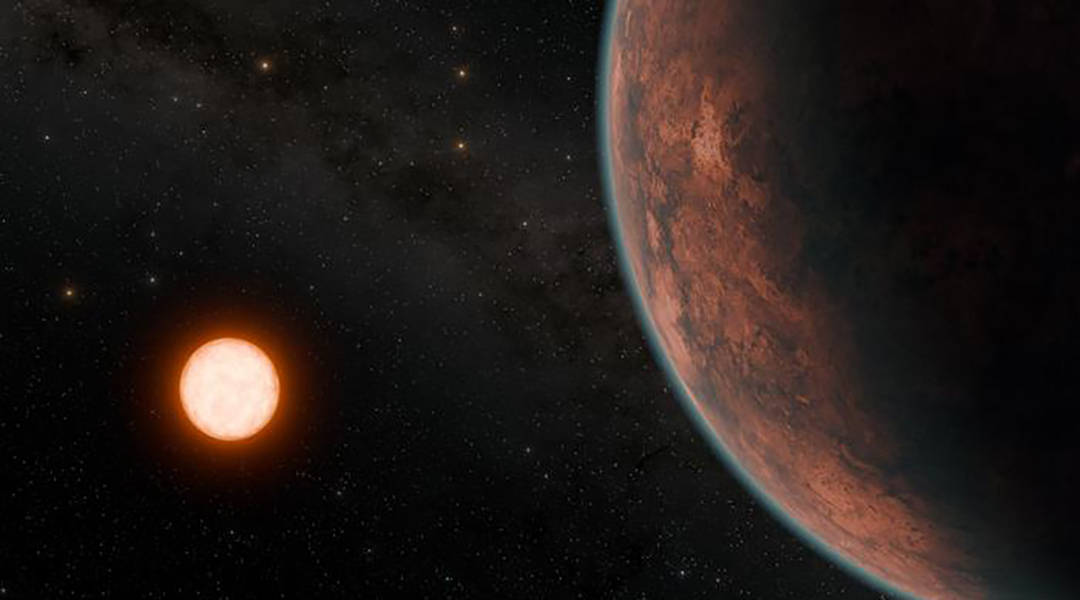
Gliese 12 b, a newly discovered exoplanet located in the Pisces constellation and about 40 light-years away, falls into the category of transiting exoplanets. Its relative proximity makes it one of the closest exoplanets known, facilitating more detailed study.
Using data from the TESS Space Observatory, which initially observed Gliese 12 b in August 2021, supplemented by observations from ground-based telescopes, researchers have determined that the planet bears similarities to both Earth and Venus in several aspects.
Masayuki Kuzuhara, an assistant professor at the Astrobiology Center in Tokyo, emphasized the significance of this find, describing Gliese 12 b as the nearest known transiting Earth-size planet with temperate conditions.
Does Gliese 12 b resemble earth or venus more?
Detailed observations have unveiled that Gliese 12 b orbits an M-dwarf star, a type significantly smaller and cooler than our Sun. Despite this, the exoplanet orbits much closer to its star than Earth does to the Sun, receiving a comparable amount of solar radiation. In terms of size, Gliese 12 b is remarkably similar to Earth, differing in radius by only about 10 percent.
These striking resemblances prompt critical inquiries into the composition of Gliese 12 b’s atmosphere. The nature of its atmosphere is pivotal as it influences surface temperatures and the potential presence of liquid water—both fundamental prerequisites for habitability.
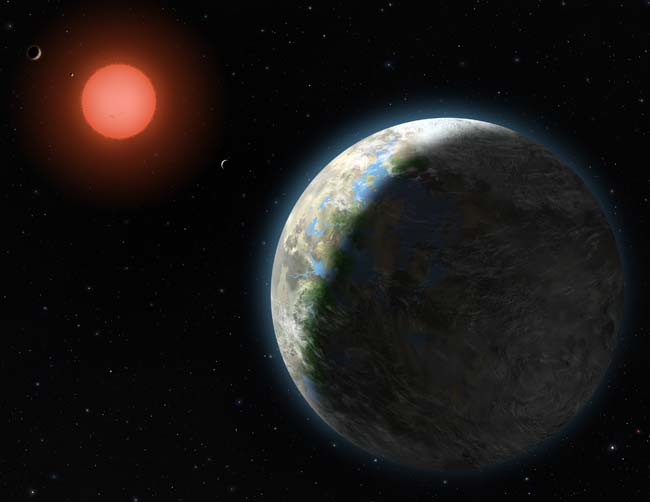
According to Shishir Dholakia, this exoplanet’s scientific significance lies in understanding the type of atmosphere it might possess. Positioned between Earth and Venus in terms of solar irradiance, Gliese 12 b offers a unique opportunity to bridge the knowledge gap between these two planets within our own solar system.
Larissa Palethorpe, co-lead researcher from the University of Edinburgh and University College London, underscores the comparative study of Gliese 12 b’s atmosphere. Drawing parallels with Earth’s habitability and Venus’s inhospitable conditions—largely due to its lost water—she highlights the potential insights into planetary habitability pathways that Gliese 12 b could provide.
Unlocking key insights with the James Webb Telescope
Despite the current study’s efforts, the tools used lacked the sensitivity required to conduct a thorough analysis of Gliese 12 b’s atmosphere. More advanced instrumentation is necessary to accurately assess how closely the planet’s atmospheric composition resembles that of Earth or Venus.
One promising solution is the James Webb Space Telescope, renowned for its unparalleled resolution. Its advanced optics and orbital position minimize interference from Earth’s atmosphere and solar radiation, significantly reducing observational noise.
Future investigations employing the James Webb Space Telescope or similar cutting-edge instruments hold promise in uncovering the similarities and distinctions between Earth and Gliese 12 b. Such studies aim to elucidate the potential habitability of planets orbiting M-dwarf stars, which are prevalent throughout our galaxy, thereby advancing our understanding of habitable environments in the Universe.
- ONLINE NEWS Feldman, A. (2024, June 10). Gliese 12 b: An exo-Venus with Earth-like temperatures. Advanced Science News. [Advanced Science News]
- JOURNAL Dholakia, S., Palethorpe, L., Venner, A., Mortier, A., Wilson, T. G., Huang, C. X., Rice, K., Van Eylen, V., Nabbie, E., Cloutier, R., Boschin, W., Ciardi, D., Delrez, L., Dransfield, G., Ducrot, E., Essack, Z., Everett, M. E., Gillon, M., Hooton, M. J., . . . Wright, D. (2024). Gliese 12 b, a temperate Earth-sized planet at 12 parsecs discovered with TESS and CHEOPS. Monthly Notices of the Royal Astronomical Society, 531(1), 1276–1293. [Monthly Notices of the Royal Astronomical Society]
- JOURNAL Kuzuhara, M., Fukui, A., Livingston, J. H., Caballero, J. A., De Leon, J. P., Hirano, T., Kasagi, Y., Murgas, F., Narita, N., Omiya, M., Orell-Miquel, J., Palle, E., Changeat, Q., Esparza-Borges, E., Harakawa, H., Hellier, C., Hori, Y., Ikuta, K., Ishikawa, H. T., . . . Osorio, M. R. Z. (2024). Gliese 12 b: A Temperate Earth-sized Planet at 12 pc Ideal for Atmospheric Transmission Spectroscopy. The Astrophysical Journal Letters, 967(2), L21. [The Astrophysical Journal Letters]
APA 7: TWs Editor. (2024, June 20). Gliese 12 b: A Venus-Like Exoplanet with Earthly Temperatures. PerEXP Teamworks. [Online News Link]


