



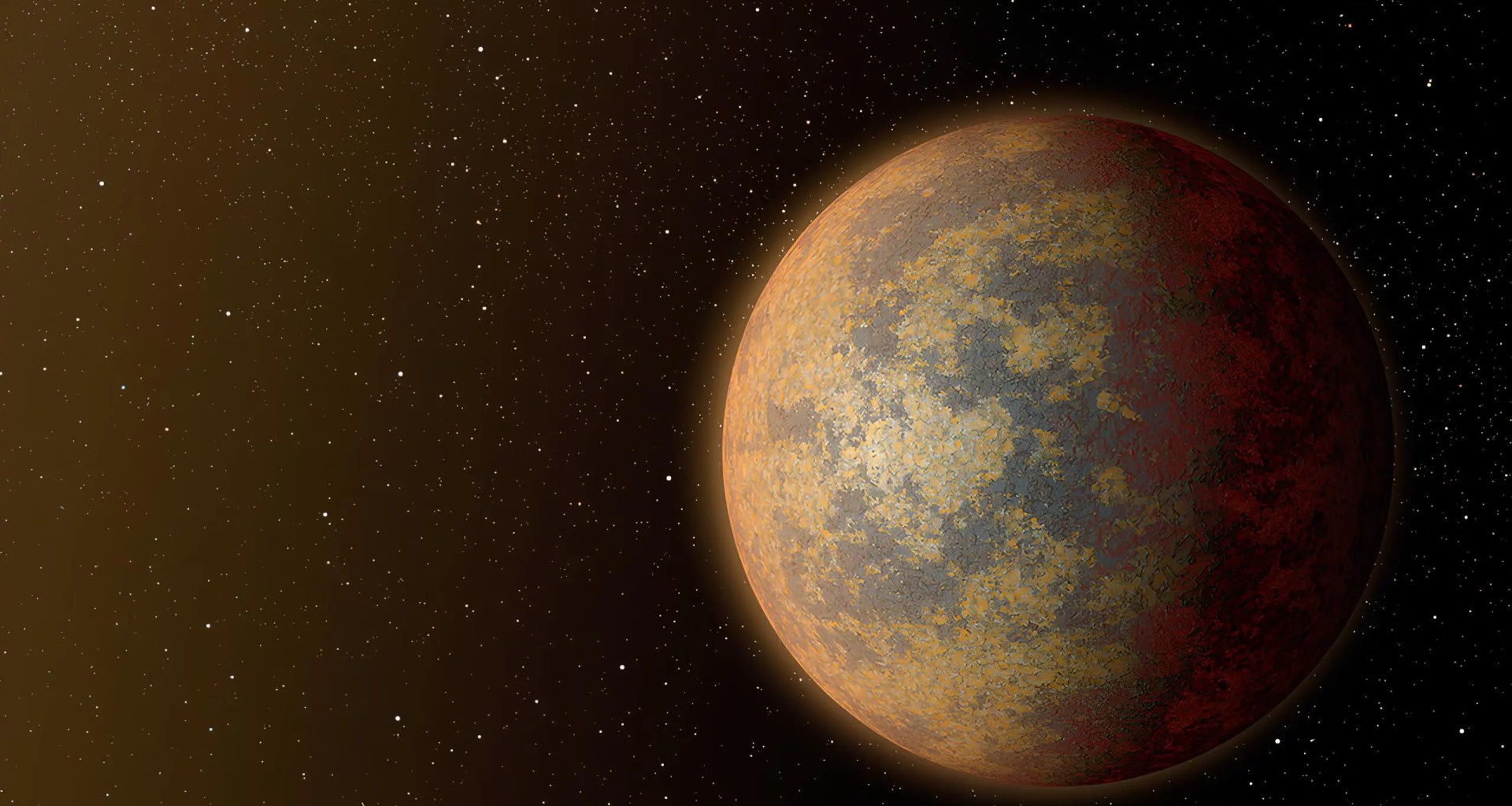
Employing the advanced capabilities of the James Webb Space Telescope (JWST), astronomers have meticulously scrutinized the characteristics of Gliese 367 b, an exoplanet of sub-Earth size situated in our cosmic neighborhood. This intriguing alien world, colloquially known as Tahay and officially designated GJ 367 b, has recently been subjected to scrutiny, yielding compelling results. The investigation, detailed in findings published on January 2 via the pre-print server arXiv, discloses a unique set of features characterizing this celestial body.
Tahay, originally identified in December 2021 through NASA’s Transiting Exoplanet Survey Satellite (TESS), dances in orbit around Gliese 367, also recognized as Añañuca. Añañuca is an M-dwarf star of spectral type M1.0V, situated approximately 31 light years away—a mere half the size and mass of our sun. This stellar system reveals further complexity as it shelters at least two additional planets, residing at more distant orbits from their central celestial host.
Noteworthy details regarding Gliese 367 b, garnered from previous observations, paint a vivid picture of this sub-Earth entity. Exhibiting dimensions approximately 30% smaller than Earth, GJ 367 b possesses a mass of around 0.67 Earth masses. An equilibrium temperature of 1,367 Kelvin characterizes the environment of this distant world, as it diligently completes an orbit around its parent star in a mere 7.7 hours.
A research endeavor led by Michael Zhang from the University of Chicago has leveraged the James Webb Space Telescope’s Mid-Infrared Instrument (MIRI) to conduct a comprehensive analysis of Gliese 367 b’s atmosphere. This pioneering exploration has yielded a wealth of insights, shedding light on the nuanced properties and essence of this intriguing exoplanet.
Utilizing the Mid-Infrared Instrument on JWST, the team undertook a vigilant monitoring of GJ 367 b for an extensive period of 12.7 hours, equivalent to 1.6 complete planetary orbits. The researchers meticulously documented their findings, revealing crucial details about the atmospheric composition and thermal dynamics of Gliese 367 b.
The observational data unveiled that Gliese 367 b presents itself as a celestial body devoid of a discernable atmosphere, featuring no discernible heat redistribution and exhibiting a dark surface within the MIRI bandpass, characterized by a blackbody emission spectrum. Importantly, the dayside temperature of Gliese 367 b was determined to be 1,728 Kelvin, while its nightside temperature was estimated to be below 847 Kelvin.
Delving further into the intricacies of Gliese 367 b’s atmospheric constitution, the research outcomes disprove certain hypotheses. Specifically, the results negate the possibility of Gliese 367 b harboring a carbon dioxide atmosphere with a pressure exceeding 1 bar. Furthermore, they rule out scenarios involving an outgassed atmosphere with a pressure surpassing 10 millibar under heavily reducing conditions, as well as an outgassed atmosphere with a pressure exceeding 0.01 millibar under heavily oxidizing conditions.
The amassed data from the study strongly suggests that Gliese 367 b likely boasts a predominantly molten dayside. In light of this, any volatile substances present in the planet’s silicate mantle are inferred to be distributed into the atmosphere. Consequently, the researchers, as outlined in their publication, draw the conclusion that Gliese 367 b is devoid of an atmosphere unless its overall composition is entirely free from volatiles.
Adding depth to these findings, the scientists propose that the conspicuous absence of an atmosphere in Gliese 367 b implies a notable scarcity of volatiles across the entire planetary mass when compared to Earth. This inference leads them to postulate that the dearth of an atmosphere on Gliese 367 b may be attributed to the removal of initial volatile substances through the intense stellar irradiation experienced by the planet. In essence, this insight contributes to our understanding of the complex interplay between stellar conditions and the composition of exoplanetary atmospheres, providing valuable clues about the broader characteristics of celestial bodies in our cosmic neighborhood.
Resources
- ONLINE NEWS Nowakowski, T. & Phys.org. (2024, January 9). Gliese 367 b is a dark and hot sub-Earth with no atmosphere, study finds. Phys.org. [Phys.org]
- JOURNAL Zhang, M., Hu, R., Inglis, J., Dai, F., Bean, J. L., Knutson, H. A., Lam, K. W. F., Goffo, E., & Gandolfi, D. (2024). GJ 367b is a dark, hot, airless sub-Earth. arXiv (Cornell University). [arXiv.org]
Cite this page:
APA 7: TWs Editor. (2024, January 9). New Study Reveals Gliese 367 b: A Airless and Sweltering Sub-Earth in Darkness. PerEXP Teamworks. [News Link]


