



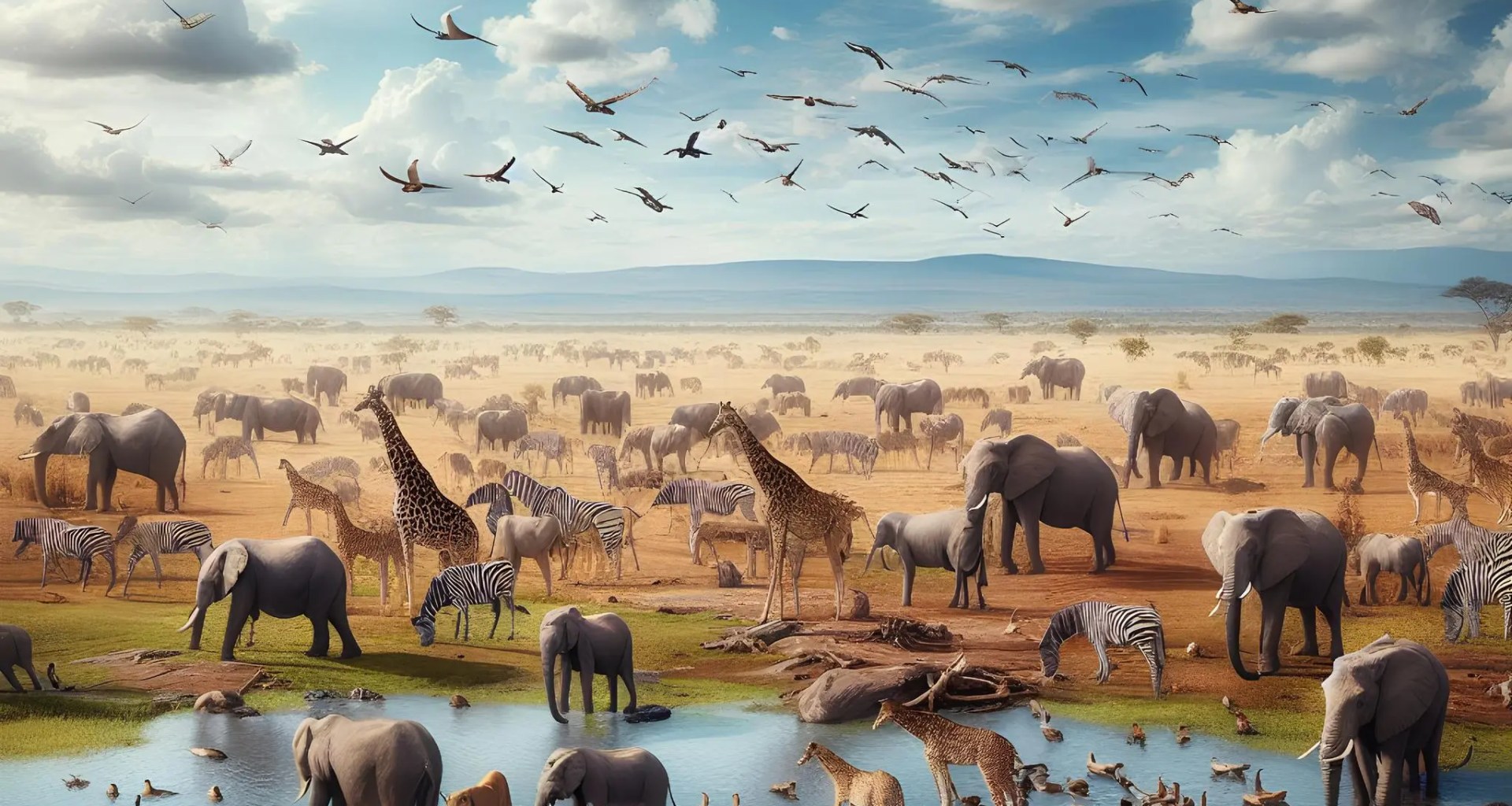
For eons, a diverse array of colossal herbivores, known as megafauna, wielded substantial influence over terrestrial ecosystems. From the mammoth elephants of Europe to the towering giant wombats of Australia, and the lumbering ground sloths of South America, these majestic creatures shaped landscapes and ecosystems in profound ways. However, their reign met a tragic end, coinciding with the global spread of humanity, ushering in a wave of extinctions that triggered profound and yet incompletely understood transformations in ecological dynamics. Even those species that managed to survive faced significant declines, with many teetering on the brink of extinction today.
Despite numerous case studies and theoretical explorations into the consequences of megafauna presence, efforts to quantitatively synthesize their impacts and establish overarching patterns have been notably absent.
In a groundbreaking endeavor, an international consortium led by researchers from Aarhus University and the University of Göttingen has meticulously compiled and analyzed a wealth of individual case studies. Their findings, published in Nature Ecology & Evolution, unveil a tapestry of generalized impacts attributable to large animals—effects that likely remain largely overlooked in contemporary ecosystems.
Megafauna’s impact on vegetation diversity and structure
Among the general impacts attributed to large wild herbivores are alterations in soil and plant nutrients, the fostering of open and semi-open vegetation, and the regulation of smaller animal populations. Additionally, research underscores that megafauna contribute to ecosystem diversity by enhancing the structural variability within vegetation.
Highlighting this, Aarhus University Ph.D. student Jonas Trepel, who spearheaded the study, emphasizes the significance of megafauna in augmenting biodiversity across various ecological scales. The study, primarily focusing on megafauna’s influence at smaller scales, suggests that these animals play a pivotal role in bolstering biodiversity across landscapes.
The transformation of vegetation structure by large herbivores occurs through biomass consumption, the fragmentation of woody plants, and the trampling of smaller flora—a process believed to be contingent on the herbivore’s body size. Analyzing data encompassing a wide range of body sizes (45-4,500 kg), researchers examined how this trait influences the impact of large animals.

For instance, the study reveals that communities of megafauna containing larger herbivores generally exert positive effects on local plant diversity, whereas those dominated by smaller species (e.g., <100 kg) tend to diminish local plant diversity. Erick Lundgren, one of the study’s senior authors, explains that larger herbivores can consume lower-quality food such as branches and stems, leading to proportionally greater impacts on dominant plant species and thereby offering less competitive plants better opportunities to thrive in sunlight and space.
Assistant professor Elizabeth le Roux, another senior author, underscores the findings’ support for the expectation that the absence of a few large herbivores cannot be fully compensated for by many small herbivores.
Power of meta-analysis in ecology
In a notable meta-analysis, researchers have meticulously examined data from various studies concerning the role of large animals in ecosystems. Meta-analyses are esteemed for their capacity to draw insights from extensive data pools, transcending local contexts.
Senior author Jens-Christian Svenning highlights the significance of this meta-analytical endeavor, which amalgamates direct experimental and semi-experimental evidence from diverse locales worldwide. The study, a collaboration involving a comprehensive review of 297 studies and 5,990 individual data points, represents a crucial advancement in understanding the broader implications of large herbivores in ecosystems.
Svenning, who heads the Center for Ecological Dynamics in a Novel Biosphere (ECONOVO) at Aarhus University, underscores the pivotal findings of the analysis. The research elucidates that the presence of large herbivores significantly influences various ecological phenomena, spanning from soil conditions and vegetation structure to the composition of plant and animal species. Notably, these effects manifest not only in the general state of ecosystems but also in their spatial variation across landscapes.
A key methodology employed in the study involves comparing adjacent areas with distinct megafauna communities, either present or absent due to known reasons. Most studies in the dataset adopt exclosure methodologies, wherein certain areas are fenced off to prevent the ingress of large animals. By juxtaposing different plots within and outside these fences, researchers discern the multifaceted impacts of megafauna on ecosystems.
Revitalizing ecosystem dynamics: The vital role of large herbivores in conservation and restoration
The absence of large herbivores in ecosystems has highlighted significant gaps in ecosystem functioning and conservation strategies. The loss of wild megafauna has implications for how we perceive and approach nature conservation and restoration efforts.
Today, many protected areas lack the presence of large animals, depriving these ecosystems of crucial functions. This means that even regions we consider pristine may not be as naturally balanced as assumed. Reintroducing large animals emerges as a promising strategy to enhance ecosystem dynamics and resilience to disturbances.
Large animals contribute to structural variability within ecosystems, offering refuges during extreme weather events and creating diverse niches for other species. This diversity helps prevent the dominance of a few species and promotes the coexistence of ecologically similar species, thus bolstering ecosystem resilience in the face of global change.
Recognizing the pivotal roles large animals play in ecosystem health and biodiversity, researchers emphasize the importance of not only conserving existing megafauna species but also actively restoring megafauna populations as part of broader ecosystem restoration initiatives. Such endeavors are critical for fostering positive outcomes in Earth’s biosphere, especially in light of increasingly unprecedented global environmental challenges.
Resources
- ONLINE NEWS Aarhus University. (2024, February 9). Global study: Wild megafauna shape ecosystem properties. Phys.org. [Phys.org]
- JOURNAL Trepel, J., Roux, E. L., Abraham, A., Buitenwerf, R., Kamp, J., Kristensen, J. A., Tietje, M., Lundgren, E. J., & Svenning, J. (2024). Meta-analysis shows that wild large herbivores shape ecosystem properties and promote spatial heterogeneity. Nature Ecology and Evolution. [Nature Ecology and Evolution]
Cite this page:
APA 7: TWs Editor. (2024, February 11). Megafauna: The Legacy of Earth’s Giants. PerEXP Teamworks. [News Link]


