



The ongoing expansion of the universe dictates that galaxies are gradually distancing themselves from one another, and the farther they are from our vantage point, the more swiftly they move. This dynamic relationship between a galaxy’s velocity and its distance is encapsulated by Hubble’s constant, currently estimated at approximately 43 miles (70 km) per second per megaparsec—a unit of length in astronomy. To put it into perspective, this implies that a galaxy accumulates an additional 50,000 miles per hour for every million light years it resides away from us.
However, a challenge to the standard model has emerged, introducing what scientists term the Hubble tension. Recent measurements of the expansion rate, conducted by research teams utilizing nearby galaxies and supernovas (exploding stars), have revealed a value 10% higher than predictions based on the cosmic microwave background (CMB) observations—creating a perplexing discrepancy.
In their latest publication in the Monthly Notices of the Royal Astronomical Society, the research team proposes a potential explanation for this tension: the concept of residing in an expansive cosmic void, an area characterized by below-average density. The researchers posit that such a void could distort local measurements through matter outflows originating from the void itself. These outflows would manifest when denser regions surrounding the void exert a gravitational pull, causing it to undergo expansion as the higher-density matter exerts a stronger gravitational force than the lower-density material within the void. This intriguing hypothesis introduces a novel perspective on the cosmic structures influencing our measurements of the universe’s expansion.
In this proposed scenario, our observational vantage point would be situated close to the center of an extensive void, encompassing approximately a billion light years in radius. This hypothetical void would exhibit a density roughly 20% below the average density prevalent across the entire universe, emphasizing that it is not entirely devoid of matter.
The existence of such an expansive and profound void contradicts expectations set by the standard model of cosmology, rendering it a topic of controversy. The cosmic microwave background (CMB), which offers a snapshot of the universe’s structure during its infancy, implies a more uniform distribution of matter in the present epoch. Nevertheless, a distinct perspective emerges when gauging the galaxy count in various regions, indicating that we might indeed occupy a localized region characterized by a void in the cosmic expanse. This dichotomy underscores the complexity and ongoing debates within the realm of cosmological understanding.
The modification of gravity: A novel approach
In an endeavor to scrutinize the concept of residing in a large void that originated from a minor density fluctuation in the early stages of the universe, a research team sought to align diverse cosmological observations. Contrary to the prevalent Lambda-cold dark matter (ΛCDM) model, the team opted for an alternative theory known as Modified Newtonian Dynamics (MOND).
Originally proposed to elucidate irregularities in the rotational speeds of galaxies, anomalies that had initially prompted the postulation of an imperceptible entity termed “dark matter,” MOND proposes an alternative explanation. It suggests that the observed anomalies arise due to a breakdown in Newton’s law of gravity when gravitational forces are exceedingly weak, particularly in the outer reaches of galaxies.
While the overarching cosmic expansion history in MOND closely parallels that of the standard model, the distinction lies in the accelerated growth of structures, such as galaxy clusters, in the MOND framework. The research team’s model delves into depicting the local universe’s appearance under the assumptions of a MOND universe, asserting that the expansion rate measurements today may exhibit fluctuations contingent on our observational location.
To validate their model, the team leveraged recent galaxy observations, focusing on the velocity predictions at different locations. This validation involves measuring the bulk flow, an average velocity metric for matter within a given sphere, regardless of its density. Notably, recent observations have indicated the persistence of the bulk flow phenomenon across a span of up to a billion light years. This novel approach presents a critical examination, offering insights into the potential influence of a MOND universe on the observed cosmic dynamics.
A noteworthy revelation emerges from the analysis of the bulk flow of galaxies on a cosmic scale, indicating a quadruple acceleration in speed compared to the anticipated rate in the standard model. Intriguingly, this heightened velocity appears to escalate in tandem with the region’s size—an observation contradictory to predictions made by the standard model. The probability of such alignment with the standard model stands at less than one in a million, underscoring the substantial deviation from conventional expectations. This unexpected cosmic behavior challenges existing models and underscores the necessity of exploring alternative theories to comprehensively grasp the intricacies of the universe’s expansive dynamics.
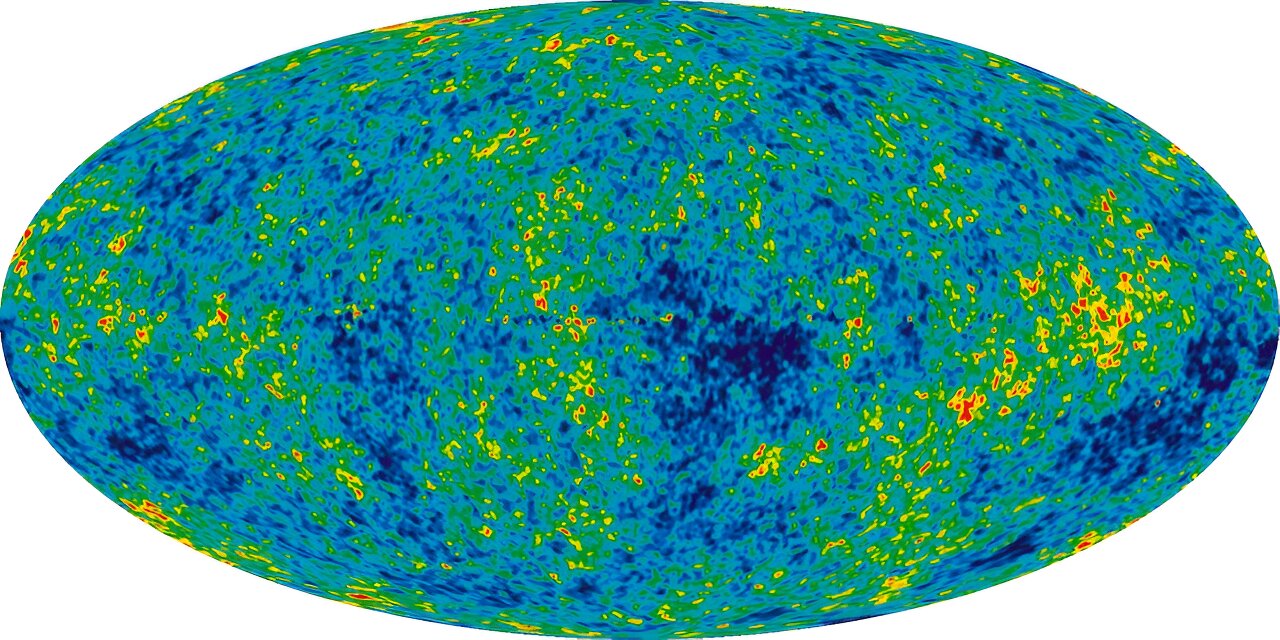
The research team, prompted by these observations, investigated the predictions of the study concerning the bulk flow. Remarkably, their findings indicated a compelling alignment with the observed data. This alignment suggests our proximity to the center of the void and highlights the void’s distinctive feature of being most devoid of cosmic matter at its central core.
Is the case closed? A question of certainty
The research team’s findings enter the discourse at a critical juncture when popular resolutions to the Hubble tension face challenges. Some proponents advocate for more precise measurements, while others suggest a potential solution by assuming that the locally measured high expansion rate aligns with the correct one. However, this proposition entails a nuanced adjustment to the early universe’s expansion history to ensure the cosmic microwave background (CMB) still conforms to observational expectations.
Regrettably, an influential review underscores seven critical issues associated with this proposed adjustment. If the universe expanded at a rate 10% faster throughout the majority of cosmic history, it would concurrently be approximately 10% younger—creating a discrepancy with the ages attributed to the oldest stars.
The identified presence of a profound and expansive local void in galaxy counts, coupled with the observed rapid bulk flows, strongly suggests that cosmic structures evolve at a pace exceeding the expectations outlined in the Lambda-cold dark matter (ΛCDM) model, particularly on scales ranging from tens to hundreds of millions of light years. This divergence from theoretical predictions challenges current cosmological paradigms and underscores the complexities inherent in our understanding of the universe’s expansive dynamics.
Fascinatingly, the formation of the massive galaxy cluster El Gordo poses a challenge to the standard model as it emerged too early in cosmic history, exhibiting an unexpectedly high mass and collision speed. This discrepancy adds to the accumulating evidence that the standard model inadequately accounts for the pace of structure formation.
Given that gravity plays a predominant role on these large cosmic scales, there arises a compelling need to extend Einstein’s theory of gravity, general relativity—specifically on scales surpassing a million light years. However, the lack of gravitationally bound objects of such immense proportions poses a significant challenge in accurately measuring how gravity behaves on these larger scales.
While assuming the continued validity of General Relativity and comparing it with observations has been a prevailing approach, this method has led to the pronounced tensions currently confronting our foremost cosmological model. In the words of Einstein, it is asserted that one cannot solve problems with the same thinking that gave rise to the problems initially. The discernible discrepancies, even if requiring subtle adjustments, could signify a noteworthy juncture, providing substantial evidence that, after more than a century, a reevaluation and modification of our theory of gravity may be warranted.
Resources
- ONLINE NEWS Banik, I. & The Conversation. (2023, December 1). Do we live in a giant void? That could solve the puzzle of the universe’s expansion, research suggests. Phys.org. [Phys.org]
- JOURNAL Mazurenko, S., Banik, I., Kroupa, P., & Haslbauer, M. (2023). A simultaneous solution to the Hubble tension and observed bulk flow within 250 h−1 Mpc. Monthly Notices of the Royal Astronomical Society. [Monthly Notices of the Royal Astronomical Society]
Cite this page:
APA 7: TWs Editor. (2023, December 2). Research Suggests That Living in a Giant Void Could Solve the Puzzle of the Universe’s Expansion. PerEXP Teamworks. [News Link]


