




During the overnight shift, the first person to notice something unusual was a shovel operator, glimpsing a glimmer of white as the massive mound of dirt was lifted and deposited into a waiting dump truck. Subsequently, when the truck driver emptied the load, another set of eyes, belonging to a dozer driver, halted the process to investigate the peculiar white object he, too, had spotted.
To the astonishment of the miners, a remarkable discovery unfolded – a mammoth tusk, measuring an impressive 7 feet (2.1 meters) in length, emerged from the depths of an old streambed, approximately 40 feet (12.1 meters) below the surface at the Freedom Mine near Beulah, North Dakota. The mine, spanning 45,000 acres (18,210 hectares), specializes in lignite coal production, yielding up to 16 million tons (14.5 million metric tons) annually.
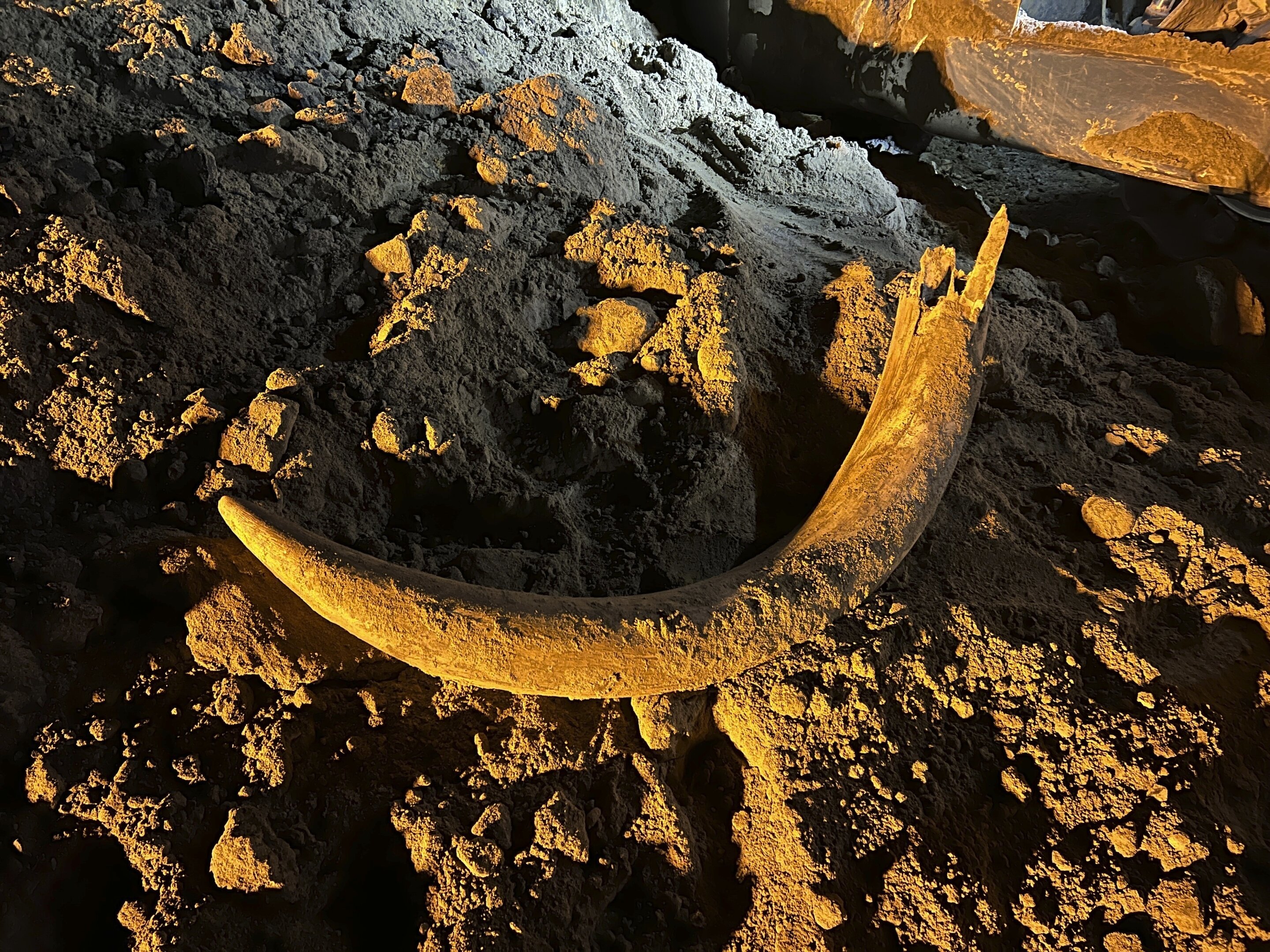
David Straley, an executive of North American Coal, the mine’s owner, expressed gratitude for the fortuitous find, acknowledging the team’s luck in stumbling upon such a rare artifact. Following the discovery of the mammoth tusk, mining operations in the vicinity were promptly halted, and experts were summoned to assess the significance of the find.
Paleontologist Jeff Person from the North Dakota Geologic Survey was among the specialists called in to examine the tusk. Expressing surprise at its relatively well-preserved condition, considering the formidable equipment used at the site, Person marveled at the apparent resilience of the ancient artifact, estimating its age to be between 10,000 and 100,000 years. The discovery of the mammoth tusk adds a fascinating chapter to the region’s geological and paleontological history, raising questions about the prehistoric landscape and the creatures that once roamed the area.

Following the initial discovery of the mammoth tusk at the Freedom Mine near Beulah, N.D., a subsequent excavation at the site revealed more than 20 mammoth bones. Among these finds were a shoulder blade, ribs, a tooth, and sections of hips. Although the collection may not represent a complete mammoth skeleton, the significance lies in the association of these bones, offering valuable insights into the prehistoric creature’s presence in the region. According to Jeff Person, a paleontologist with the North Dakota Geologic Survey, while the number of bones may be relatively modest compared to a full mammoth skeleton, the discovery is noteworthy for being one of the most comprehensive findings of a single animal in North Dakota.
Mammoths, larger than contemporary elephants and characterized by their thick woolly coats, once roamed various continents, including parts of Africa, Asia, Europe, and North America. Despite being relatively common to uncover isolated mammoth bones, teeth, or fragments of tusks in North Dakota, finding associated remains is less frequent due to glaciations and ice sheet movements during the last Ice Age, which often destroyed such remnants.
Comparatively richer deposits of mammoth remains, such as bonebeds with complete skeletons, have been discovered in other regions like Texas and South Dakota. In certain cases, frozen mammoth carcasses have even been found in the permafrost of Canada and Siberia.
According to Paul Ullmann, a vertebrate paleontologist at the University of North Dakota, mammoths, which became extinct about 10,000 years ago in North Dakota, continue to capture public fascination. Their size, distinctive appearance, and depictions in ancient cave paintings, some dating back 13,000 years, contribute to their status as “media superstars,” often likened to dinosaurs.
Among the discovered mammoth bones is an ivory tusk weighing over 50 pounds (22.6 kilograms). Recognized as fragile, the tusk is meticulously wrapped in plastic to control dehydration, preventing potential damage or fragmentation. Person emphasized the delicate nature of the preservation process, noting that excessive dehydration could compromise the structural integrity of the bone.

Numerous other mammoth bones, carefully preserved in plastic, have found a temporary home within drawers. The paleontologists anticipate keeping the bones encased in plastic for several months as they develop a safe method to remove water without risking damage. The exact identification of the mammoth species will be determined at a later stage, as indicated by Person.
The mining company overseeing the discovery has altruistic plans for these ancient remains – a donation to the state for educational purposes. David Straley, an executive of North American Coal, expressed the company’s aspiration to contribute these fossils to benefit children: “Our goal is to give it to the kids.”
North Dakota boasts a remarkable fossil-rich landscape that extends beyond mammoths, encompassing dinosaur remains and more. Dakota, a well-known mummified duckbilled dinosaur with fossilized skin, stands out among the state’s fossil treasures, according to Ullmann. The fertile fossil record in North Dakota is attributed to the region’s historically lush and ecologically productive environments, combined with its geological conditions.
Situated adjacent to the Rocky Mountains, North Dakota has been a receptive receptacle for eroding sediments and river deposits over 80 million years or more, effectively preserving animal remains. Ullmann characterized the state’s geological setting as “the perfect scenario” with a harmonious blend of thriving ecosystems and ideal burial conditions.
Resources
- ONLINE NEWS Dura, J. (2024, January 7). Coal miners in North Dakota unearth a mammoth tusk buried for thousands of years. Phys.org. [Phys.org]
Cite this page:
APA 7: TWs Editor. (2024, January 8). North Dakota Coal Miners Discover Millennia-Old Mammoth Tusk during Excavation. PerEXP Teamworks. [News Link]


