





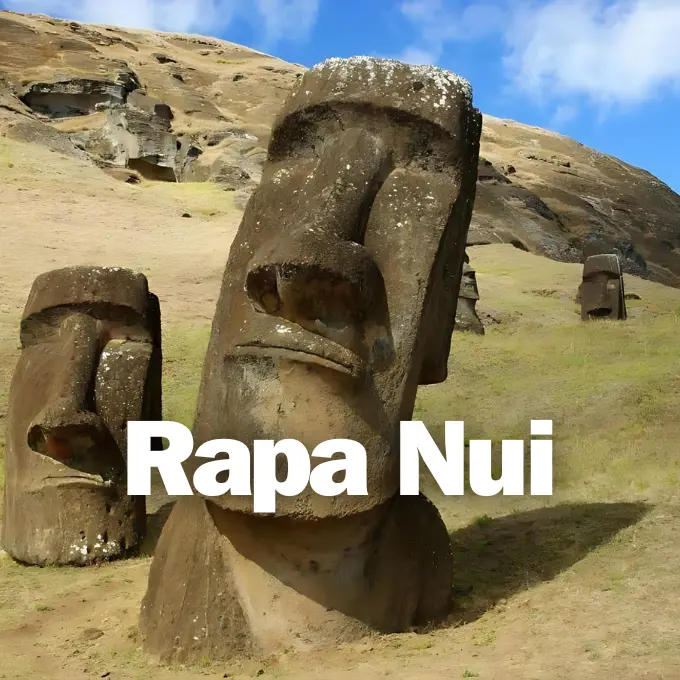
The collapse of Rapa Nui society, famously known as Easter Island, has intrigued researchers for decades. Early settlers of the island of Rapa Nui are renowned for their creation of massive stone statues. However, they have often been blamed for triggering a population boom that supposedly led to ecological and social disaster. One of the most studied cases of societal decline, it has often been attributed to overpopulation and environmental degradation by the indigenous people. However, recent research sheds new light on this historical event.
A new analysis of the island’s landscape suggests that Polynesian seafarers who arrived at Rapa Nui around 800 years ago maintained a modest farming system and a small but stable population, which never exceeded approximately 3,900 individuals until Europeans arrived in 1722 and renamed the island Easter Island, according to a report published on June 21 in Science Advances.
This finding challenges the popular overpopulation disaster theory, which posits that growing communities on Rapa Nui expanded so much that they depleted the island’s resources, leading to societal collapse by the time Europeans arrived in what has been termed an “ecocide” event, according to archaeologist Dylan Davis of Columbia University and his colleagues. The new study’s population estimate aligns with early European accounts suggesting that about 3,000 people lived on the island.
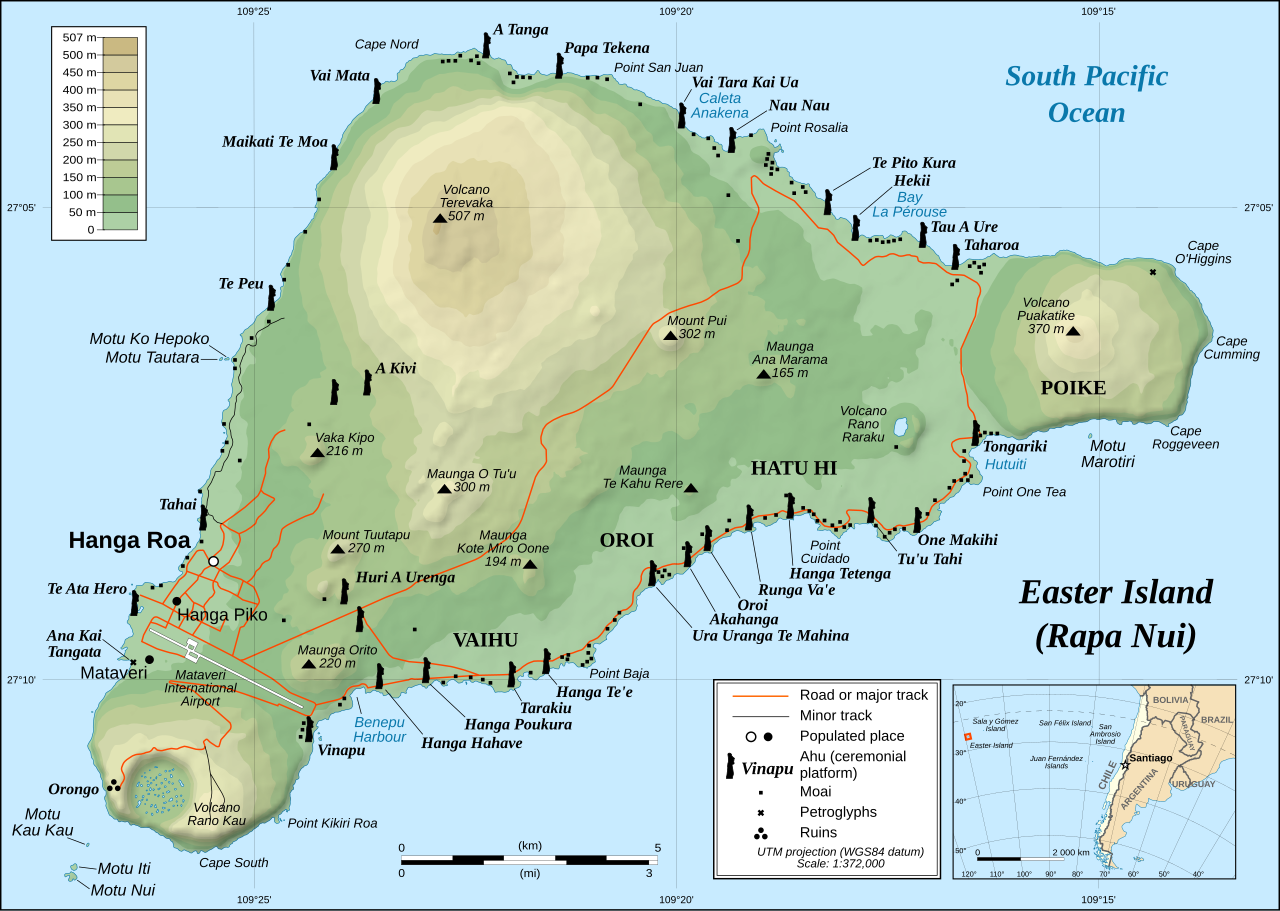
However, some researchers studying Rapa Nui argue that the new investigation is based on data that are too limited to make definitive conclusions about the island’s agricultural productivity and the number of people it could have supported.
Estimating the number of early settlers on Rapa Nui has been challenging due to limited knowledge about the island’s diverse farming practices and the range of crops cultivated.
Two previous studies attempted to unravel this agricultural mystery using various climate and soil measures. Researchers have established that crops were grown in rock gardens, where rocks enriched the volcanic soil. Strategically placed rocks and boulders protected cultivated sweet potatoes from wind, reduced rainwater evaporation, minimized weed growth, and increased soil nutrients. However, the total number and locations of these rock gardens remain undetermined.
One investigation utilized satellite data, specifically near-infrared light wavelengths to distinguish between rocks and vegetation, estimating that 2.5 percent to 12.7 percent of Rapa Nui‘s approximately 164-square-kilometer surface was covered by rock gardens. Another study suggested that about 19 percent of the island was suitable for growing sweet potatoes, with populations potentially ranging from around 3,000 to over 17,500, depending on crop yields and other factors.
In the new study, Davis and colleagues conducted ground surveys on Rapa Nui in 2019 and 2023 to identify chemical and geological features characteristic of rock gardens, bare soil, grassy areas, forests, and other parts of the landscape. This approach aims to provide a clearer understanding of the island’s agricultural capacity and its implications for the overpopulation disaster theory.

Using the collected data, the research team trained three machine-learning models to leverage ground survey information for identifying rock gardens across the island using newly available satellite images. These images were detailed enough to discern differences in vegetation and soil composition. The shortwave infrared wavelengths in the images could detect key features of rock gardens, such as areas with higher moisture and increased nitrogen levels. The most effective machine-learning model accurately identified rock gardens previously recorded in ground surveys approximately 83 percent of the time.
The analysis determined that rock gardens covered less than one-half of 1 percent of Rapa Nui‘s territory, amounting to less than 0.76 square kilometers of the 164-square-kilometer island.
A rough calculation of the nutritional value of sweet potatoes grown in these rock gardens, along with fish, other sea foods, and less nutritious crops like bananas, suggests a maximum population of around 3,901 individuals, with a margin of about 800. This indicates that while rock gardening made Rapa Nui soils productive enough to cultivate sweet potatoes, this technique alone was not sufficient to support a large population. This finding aligns with the argument that the island’s agricultural practices could not have sustained a significantly larger community, challenging the overpopulation disaster theory.
However, the new study significantly underestimates the extent of Rapa Nui covered by rock gardens and, consequently, the number of people who could have lived there in pre-contact times, according to archaeologist Christopher Stevenson of Virginia Commonwealth University in Richmond. Stevenson, who coauthored two earlier studies on Rapa Nui’s rock gardens and population sizes but did not participate in the new study, believes the new estimates are too low.

Stevenson points out that Davis and his colleagues trained their machine models using environmental data collected primarily near Rapa Nui’s coastline. This training did not include evidence from surveyed rock gardens in the island’s upland areas. He notes that rock gardens are present on the mid-slopes of Rapa Nui’s largest volcano, a fact not reflected in the new study.
Davis acknowledges that a comprehensive evaluation of past population sizes on Rapa Nui has yet to be conducted. Even if rock gardens were more numerous than assumed in the new report, his team believes their pre-contact population estimate provides a solid basis for further research.
Additionally, the new study does not consider other cultivation practices that may have boosted agricultural productivity on Rapa Nui. Archaeologists Sarah Sherwood of the University of the South in Sewanee, Tennessee, and Jo Anne Van Tilburg of UCLA highlight this oversight. Their excavations at an inland site, where statue carving occurred, have revealed signs of plant cultivation in exceptionally fertile soil that did not require rock gardens.
Another issue raised by Sherwood and Van Tilburg is the difficulty in determining whether the rock gardens considered in the new study were used simultaneously or at different times. This makes it hard to exclude the possibility that rock gardens were sparsely used or unsuccessful adaptations that could not adequately feed a fast-growing population.
Despite these challenges, there is consensus that advanced satellite imagery, informed by continued investigations of cultivation areas on Rapa Nui, will help refine estimates of pre-contact human numbers on the island, contributing to a more accurate understanding of its historical population and challenging the overpopulation disaster theory.
- ONLINE NEWS Bower, B. (2024, June 21). A new study challenges the idea that Rapa Nui islanders caused an ‘ecocide.’ Science News. [Science News]
- JOURNAL Davis, D. S., DiNapoli, R. J., Pakarati, G., Hunt, T. L., & Lipo, C. P. (2024). Island-wide characterization of agricultural production challenges the demographic collapse hypothesis for Rapa Nui (Easter Island). Science Advances, 10(25). [Science Advances]
- JOURNAL Puleston, C. O., Ladefoged, T. N., Haoa, S., Chadwick, O. A., Vitousek, P. M., & Stevenson, C. M. (2017). Rain, Sun, Soil, and Sweat: A Consideration of Population Limits on Rapa Nui (Easter Island) before European Contact. Frontiers in Ecology and Evolution, 5. [Frontiers in Ecology and Evolution]
- JOURNAL Ladefoged, T. N., Flaws, A., & Stevenson, C. M. (2013). The distribution of rock gardens on Rapa Nui (Easter Island) as determined from satellite imagery. Journal of Archaeological Science, 40(2), 1203–1212. [Journal of Archaeological Science]
APA 7: TWs Editor. (2024, June 23). Rapa Nui: Study Refutes Overpopulation Disaster Theory. PerEXP Teamworks. [Online News Link]


