



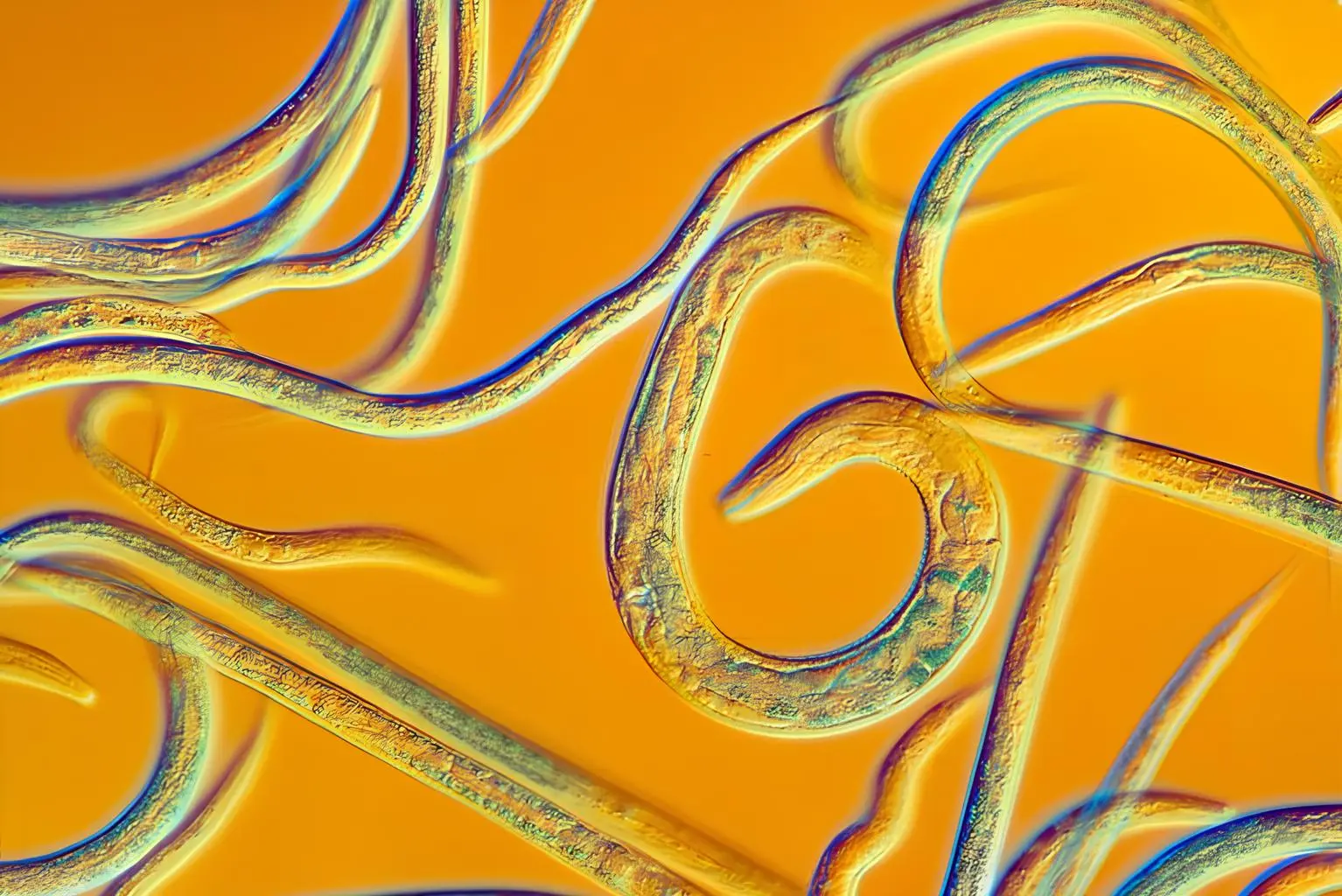
Concerns have arisen regarding the reliability of a cancer risk detection test offered by a Japanese start-up company. The test, named N-NOSE and developed by Hirotsu Bio Science in Tokyo, utilizes microscopic nematode worms to identify the potential risk of certain types of cancer from a urine sample. In response to apprehensions expressed by multiple doctors, two Japanese medical societies have initiated an investigation into the accuracy of these tests.
Hirotsu Bio Science asserts that the N-NOSE test can identify indications of 15 different types of cancer, encompassing breast, prostate, stomach, and esophageal cancers. Since its introduction to the Japanese market in 2020, these tests, priced at ¥14,800 (approximately US$100) each, have been widely available. Despite its popularity, concerns have prompted an in-depth examination of the testing methodology and accuracy.
The medical societies conducting the investigation aim to assess the scientific basis behind the N-NOSE test and ensure its reliability in accurately identifying cancer risks. The test’s unique approach involving nematode worms raises questions about its effectiveness and precision, prompting a careful evaluation of its scientific underpinnings.
Hirotsu Bio Science encourages individuals who receive results indicating a high risk of cancer to seek specialized medical advice. Reportedly, approximately 5% of the 500,000 individuals who have undergone the N-NOSE test fall into this high-risk category. As the investigation unfolds, the outcome will not only impact the credibility of the N-NOSE test but also potentially influence the broader landscape of cancer detection methods and their reliability in the healthcare industry.
The diagnostic test in question employs a unique methodology, utilizing a proprietary algorithm to evaluate the movement of nematode worms towards a urine sample in a laboratory dish. The concept for this innovative approach emerged when Takaaki Hirotsu, the president of Hirotsu Bio Science, took inspiration from reports indicating that larvae of the nematode worm Anisakis simplex displayed an attraction to stomach tumors. Intrigued by the prospect of utilizing the laboratory nematode Caenorhabditis elegans, which boasts an extensive array of olfactory receptors, Hirotsu speculated whether these worms could be drawn to cancerous conditions. The measurement of worm movement toward tumors or the chemicals emitted by tumors thus became a potential diagnostic tool.
The team’s initial observation in 2015, revealing C. elegans‘ attraction to urine samples from individuals with cancer, received validation from independent research groups in Italy and the United States, particularly in cases of breast and prostate cancer, respectively. However, both groups noted the contextual dependency of this effect, emphasizing that it may not be consistently observed under all testing conditions.
In a 2021 paper, the developers of the N-NOSE test presented compelling results showcasing its commercial viability. The test demonstrated a sensitivity of approximately 87%, indicating that out of 100 individuals with cancer, 87 would receive a positive result. Furthermore, the specificity of the test was reported to be 90%, meaning that out of 100 individuals without cancer, 90 would receive an N-NOSE result indicating a low risk.
While these figures suggest a promising level of accuracy, ongoing scrutiny is essential, considering the variability highlighted by independent research groups. As the medical community grapples with the evolving landscape of cancer diagnostics, the exploration of innovative methods like the N-NOSE test underscores the continuous quest for improved accuracy and reliability in medical screening.
A touchy topic
Controversy surrounds the reliability of the N-NOSE test’s diagnostic figures, with several medical professionals expressing reservations about potential inaccuracies, including elevated rates of both false negatives and false positives among test users.
At a cancer detection and diagnosis conference held in Fukuoka in June, Dr. Kuniyuki Tashiro from the Fukuoka Wajiro Positron Emission Tomography (PET) Imaging Diagnostic Clinic raised concerns during a dedicated session on nematode testing. Dr. Tashiro reported that out of 333 individuals who underwent the N-NOSE test and received results indicating high risk, only 8 were confirmed to have cancer. Intriguingly, two of these cases were of a cancer type that the N-NOSE test does not claim to detect. Additionally, Dr. Yoichi Mizutani from Nishinokyo Hospital in Nara shared findings that none of the 28 individuals flagged as high risk by N-NOSE actually had cancer. Further skepticism was voiced by Dr. Seigo Fujita, the director of a cancer center at Miyazaki Tsuruta Memorial Clinic in Miyazaki City, Japan, who disclosed encountering ten cases where individuals diagnosed with cancer received N-NOSE results indicating a low risk of cancer.
These discrepancies raise pivotal questions about the accuracy and effectiveness of the N-NOSE test, emphasizing the need for a comprehensive reassessment of its diagnostic capabilities. The medical community grapples with the challenge of reconciling divergent results and determining the test’s suitability for widespread application. As debates unfold, it becomes increasingly clear that an in-depth and transparent evaluation of the N-NOSE test’s performance is essential to establish its credibility and provide clarity for both healthcare professionals and the individuals relying on its outcomes for cancer risk assessment.
Amid growing concerns about the reliability of the N-NOSE test, a collaborative effort has been initiated by radiologists associated with the PET screening for the Japanese Association for Cancer Detection and Diagnosis in Tokyo. This effort is in conjunction with a working group from the PET Nuclear Medicine Subcommittee of the Japanese Society of Nuclear Medicine in Tokyo. Together, they have launched a comprehensive survey aimed at scrutinizing the efficacy and impact of the N-NOSE test. The survey involves reaching out to member clinics to gather information on the number of patients who underwent PET scans for cancer based on N-NOSE test results and the eventual outcomes of their PET screenings.
In response to this medical societies’ survey, Hirotsu Bio Science, the company behind the N-NOSE test, provided a statement to Nature. The company asserted that PET screening is not deemed suitable for the early detection of the specific types of cancer for which N-NOSE is intended. According to Hirotsu Bio Science, the survey initiated by the medical societies “cannot provide a reliable verification” of the N-NOSE technology.
This ongoing scrutiny underscores the complexities surrounding the integration of innovative diagnostic methods into mainstream medical practices. As the survey unfolds, it is anticipated to shed light on the practical implications and effectiveness of the N-NOSE test in guiding further diagnostic procedures, while simultaneously raising questions about the alignment of the test with existing cancer screening methodologies. The intersection of medical science and innovative technologies prompts a continuous exploration of their synergies and challenges, ensuring that advancements are rigorously evaluated to meet the highest standards of accuracy and reliability in patient care.
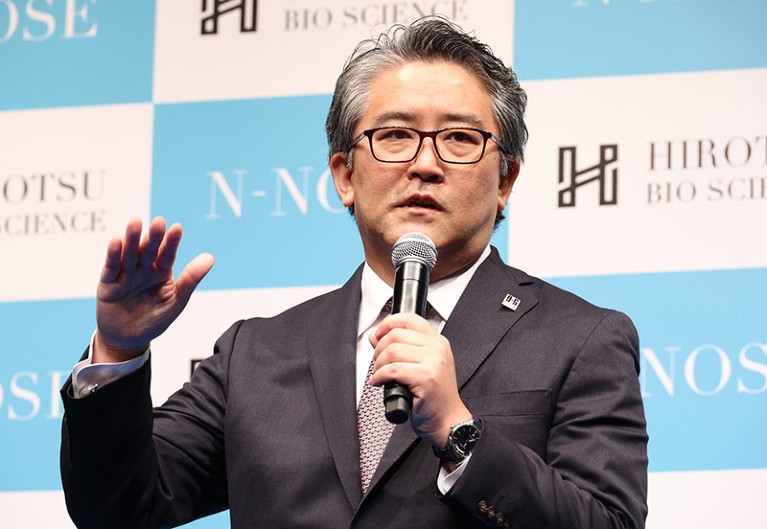
In addition to its current endeavors, Hirotsu Bio Science is set on a trajectory of expansion, as unveiled during a press conference in June. At this event, Takaaki Hirotsu solidified the company’s growth plans by signing a memorandum of understanding with the Global Health Equity Fund. This investment fund, supported by the WHO Foundation in Geneva—a charitable entity affiliated with the World Health Organization—and Israeli venture-capital firm OurCrowd in Jerusalem, is poised to bolster the company’s global reach.
Hirotsu Bio Science has not only showcased its research on the N-NOSE test at a press conference but has also taken its innovative technology to prestigious international platforms. The company presented its findings at the World Economic Forum in Davos, Switzerland, emphasizing the global relevance of its contributions. Additionally, Hirotsu Bio Science participated in the Science and Technology in Society forum in Kyoto, a prominent gathering that brings together scientists and policymakers from around the world.
Despite criticisms raised by some doctors regarding the N-NOSE test, the company remains resolute in its mission and plans for further internationalization. Currently, N-NOSE is available in the Chinese market, and the company is gearing up for a launch in the United States next year. Eric di Luccio, the company’s Chief Technology Officer, dismissed the criticisms, stating that they are “100% bullshit.” As the company advances its global footprint, it navigates both acclaim and skepticism, underscoring the dynamic landscape of innovative healthcare technologies and their reception on the global stage.
Amidst the controversy surrounding the N-NOSE cancer-screening test, Eric di Luccio, the Chief Technology Officer at Hirotsu Bio Science, responded to criticisms by referring Nature to an analysis prepared by the company. The analysis, accompanied by a statement, highlights that the concerns raised by doctors have not undergone peer review, unlike the figures presented by the company, which are featured in published papers. While acknowledging that the N-NOSE test is not flawless—as very few tests are—the company asserts its commitment to actively collaborating with other institutions to enhance accuracy.
The statement emphasizes that the primary purpose of N-NOSE is not diagnosis but providing guidance on risk levels. The company recognizes the evolving nature of this technology and aims to foster understanding over time. According to di Luccio, “This is a new technology, and it takes time and effort to make people understand it.”
However, concerns persist, particularly as both false positives and false negatives in cancer diagnostics can have significant consequences. Yuji Yamada, a Japanese geriatrician at the Icahn School of Medicine at Mount Sinai in New York City, underscores the potential harm caused by inaccurate results. False positives may lead to unnecessary invasive procedures like biopsies or radiation-exposing scans. On the other hand, false negatives could delay cancer detection, reducing the chances of successful treatment and survival.
The impending investigation by Japanese medical societies, expected to conclude early next year, will play a crucial role in shedding light on the validity and reliability of the N-NOSE test. As the medical community grapples with the implications of innovative diagnostic technologies, the outcome of this investigation will likely influence not only the trajectory of N-NOSE but also the broader discourse on the integration of novel diagnostic tools into mainstream healthcare practices.
Resources
- JOURNAL McNeill, D., & Suda, M. (2023). Scientists question cancer tests that use microscopic nematode worms. Nature. [Nature]
- JOURNAL Sonoda, H., Yamamoto, K., Ozeki, K., Inoye, H., Toda, S., & Maehara, Y. (2014). An anisakis larva attached to early gastric cancer: report of a case. Surgery Today, 45(10), 1321–1325. [Surgery Today]
- JOURNAL Hirotsu, T., Sonoda, H., Uozumi, T., Shinden, Y., Mimori, K., Maehara, Y., Ueda, N., & Hamakawa, M. (2015). A Highly Accurate Inclusive Cancer Screening Test Using Caenorhabditis elegans Scent Detection. PLOS ONE, 10(3), e0118699. [PLOS ONE]
- JOURNAL Lanza, E., Di Rocco, M., Schwartz, S., Caprini, D., Milanetti, E., Ferrarese, G., Lonardo, M. T., Pannone, L., Ruocco, G., Martinelli, S., & Folli, V. (2021). C. elegans-based chemosensation strategy for the early detection of cancer metabolites in urine samples. Scientific Reports, 11(1). [Scientific Reports]
- JOURNAL Thompson, M. A., Feria, N. S., Yoshioka, A., Tu, E., Çivitçi, F., Estes, S., & Wagner, J. T. (2021). A Caenorhabditis elegans behavioral assay distinguishes early stage prostate cancer patient urine from controls. Biology Open, 10(3). [Biology Open]
- JOURNAL Inaba, S., Shimozono, N., Yagi, H., Enomoto, M., Morishita, M., Hirotsu, T., & Di Luccio, E. (2021). Accuracy evaluation of the C. elegans cancer test (N-NOSE) using a new combined method. Cancer Treatment and Research Communications, 27, 100370. [Cancer Treatment and Research Communications]
Cite this page:
APA 7: TWs Editor. (2023, December 21). The Controversy Over Using Tiny Nematode Worms for Cancer Testing. PerEXP Teamworks. [News Link]


