



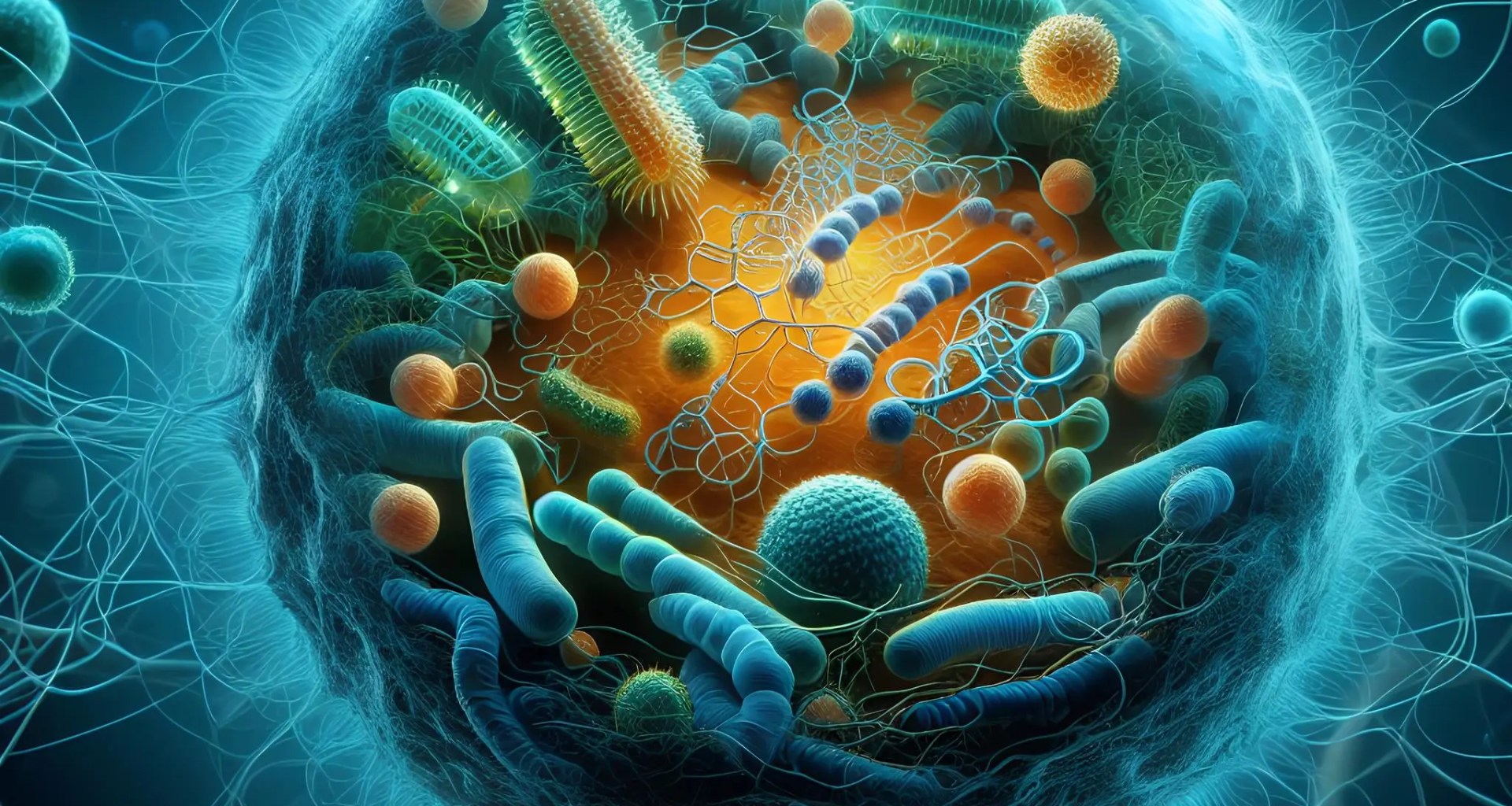
Salmonella, renowned for its capacity to endure and multiply within macrophages—a typically hostile environment for invading bacteria—has been the subject of a recent study revealing the intricate role of TamAB proteins in its survival strategy.
This foodborne pathogen causes over a million infections annually in the U.S., posing a significant threat, particularly to the young, elderly, and immunocompromised individuals, with potentially fatal consequences. The exceptional danger posed by Salmonella lies in its adeptness at evading the host’s immune responses.
Macrophages, designed as a defense mechanism, employ various antibacterial tactics, including exposure to acidic environments, magnesium withholding, and the release of antibacterial products, targeting bacterial outer layers. Salmonella, however, has evolved mechanisms to not only withstand but also flourish in this hostile milieu.
Under normal circumstances, Salmonella utilizes a complex known as Bam to assemble specific proteins crucial for its outer membrane layer. Previous studies demonstrated that within macrophages, this complex is compromised. Consequently, Salmonella relies on the PhoPQ system to sense its environment and orchestrate necessary alterations in the outer membrane. The newly discovered TamAB system further illuminates Salmonella’s adaptive prowess within macrophages, offering insights that could potentially inform strategies to combat its virulence.

Building on insights from studies in other bacteria, researchers explored the role of the TamAB complex in Salmonella, a bacterium notorious for its survival in macrophages. Previous research indicated that TamAB functions similarly to the Bam complex. The present study revealed that the genes responsible for TamAB production were under the control of the PhoPQ system.
Recognizing the structural similarity between TamA and BamA, the researchers hypothesized that PhoPQ induces TamAB to compensate for the Bam complex’s challenges in the macrophage environment. To test this hypothesis, TamAB was removed from Salmonella, resulting in surprising findings: the mutants could still cause infections in mice. However, when the Bam complex was also compromised, TamAB-deficient mutants struggled.
These observations were replicated in test tubes simulating macrophage-like conditions, reaffirming the importance of both Bam and TamAB complexes for Salmonella’s resilience. Mutants lacking both complexes exhibited sensitivity to vancomycin, emphasizing the collaborative role of these systems in Salmonella’s survival strategies.
The investigation into the interaction between vancomycin, Salmonella, and the TamAB and Bam complexes has unveiled intriguing insights, challenging conventional knowledge about antibiotic sensitivity. Despite vancomycin traditionally being ineffective against Salmonella due to its inability to penetrate the outer membrane, the study reveals an unexpected sensitivity when both the TamAB and Bam complexes are impaired.
Yekaterina Golubeva, a research scientist in the Slauch lab, elucidated that TamAB appears to play an indirect role in facilitating the Bam complex’s function by creating favorable conditions. However, the precise mechanism through which this occurs remains elusive. The intricacies of the outer membrane make studying its components challenging, as disruptions to one complex, such as Bam, can reverberate through interconnected machinery essential for outer membrane synthesis.
Professor Slauch acknowledges the complexity of the system, stating, “If you mess up the Bam complex, it disrupts additional machinery required for the synthesis of the outer membrane. As a result, understanding the contributions of these proteins is difficult.”
Despite the challenges, the research team is determined to unravel the mystery surrounding TamAB’s role. Their approach involves utilizing suppressor mutants with diverse mutations, enabling growth even in the presence of defective Bam and Tam complexes. These mutants offer a unique avenue to explore Salmonella’s outer membrane structure and function.
Slauch emphasizes the broader implications of their findings, particularly in the context of biotechnological efforts targeting the Bam complex to combat Salmonella infections. Understanding the outer membrane’s structure during Salmonella’s interaction with macrophages becomes crucial, as it sheds light on the factors influencing drug sensitivity. The unexpected sensitivity to vancomycin aligns with this perspective, hinting at potential avenues for drug development and treatment strategies.
The comprehensive findings of this study have been detailed in the Journal of Bacteriology, providing a foundation for further exploration into the intricate interplay of bacterial complexes and their implications for antibiotic susceptibility.
Resources
- ONLINE NEWS Sen, A. & University of Illinois at Urbana-Champaign. (2024, January 11). Study discovers how a system of proteins helps Salmonella survive inside macrophages. Phys.org. [Phys.org]
- JOURNAL Ramezanifard, R., Golubeva, Y. A., Palmer, A. D., & Slauch, J. M. (2023). TamAB is regulated by PhoPQ and functions in outer membrane homeostasis during Salmonella pathogenesis. Journal of Bacteriology, 205(10). [Journal of Bacteriology]
Cite this page:
APA 7: TWs Editor. (2024, January 12). Proteins’ Role in Salmonella Survival Within Macrophages Revealed by Study. PerEXP Teamworks. [News Link]


