



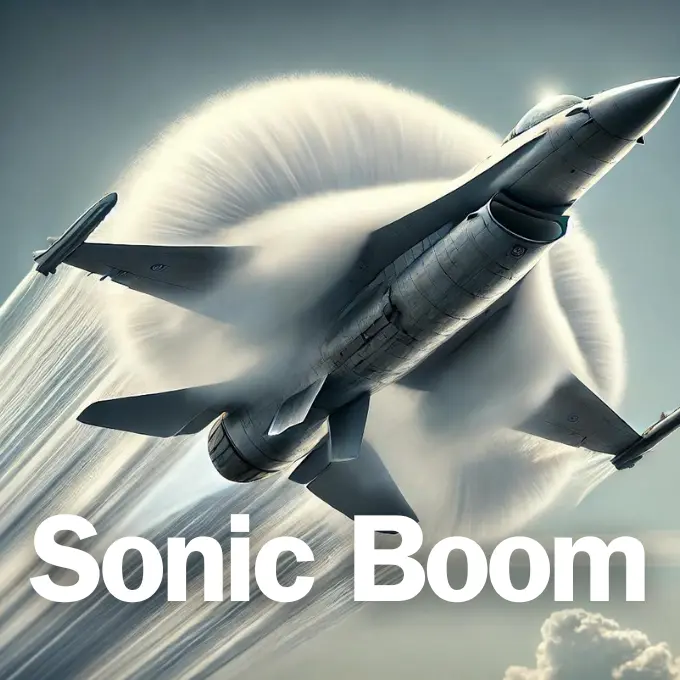
A sonic boom is a powerful and explosive sound phenomenon that occurs when an object travels through the air at supersonic speeds, meaning faster than the speed of sound. Understanding what is a sonic boom involves grasping the interaction of shockwaves produced by the object as it breaks the sound barrier. These shockwaves merge to create a loud and distinctive noise, often referred to as Bombshock in certain contexts. The question of what causes a sonic boom is directly related to this abrupt change in air pressure as the object moves boom supersonic.
What is a sonic boom?
A sonic boom is the loud, thunderous noise produced when an object travels through the air at a speed faster than sound, known as supersonic speed. When this happens, the object creates shockwaves that compress and combine, generating a sudden and intense sound wave. Understanding what is a sonic boom involves recognizing that it is the result of these pressure waves merging as the object breaks the sound barrier.
This phenomenon, sometimes referred to as Bombshock, is caused by the rapid change in air pressure, leading to the distinctive and powerful boom that people often hear. The question of what causes a sonic boom can be answered by examining this interaction between the object and the air, which results in the characteristic noise known as a sonic boom.
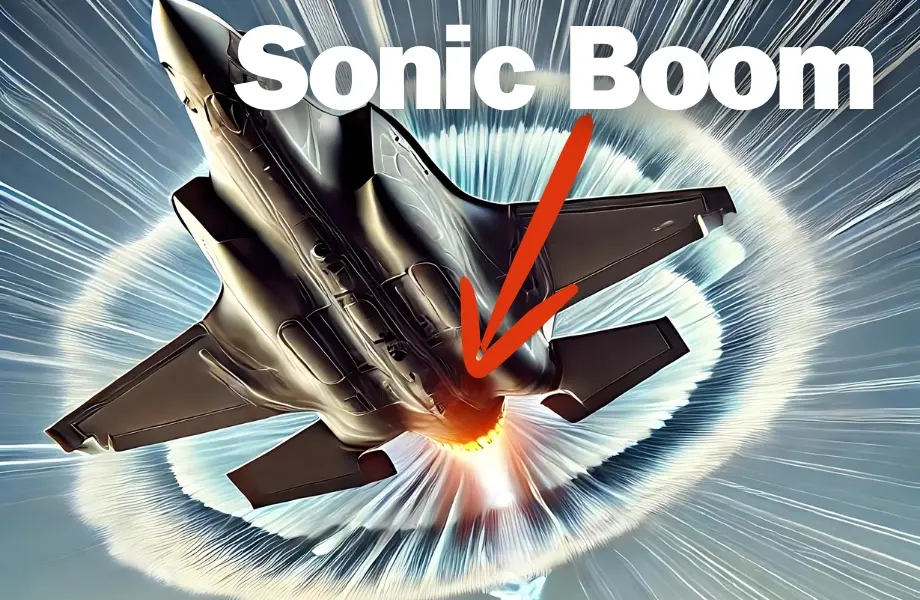
The history of the sonic boom dates back to the era of supersonic flight. The concept became widely recognized during the mid-20th century when military jets began to break the sound barrier. Before this time, the idea of what caused the sonic boom was largely theoretical. However, as technology advanced and aircraft began to reach boom supersonic speeds, the sonic boom became a real and observable phenomenon. Early examples of this phenomenon often surprised and alarmed communities, leading to extensive research and study.
Notable instances of sonic booms have been recorded over the years, especially during space shuttle launches and landings. As the space shuttle re-entered the atmosphere at supersonic speeds, it generated a series of shockwaves, culminating in a powerful sonic boom. Similarly, military jets flying at boom supersonic speeds have also produced sonic booms that can be heard and felt over large distances. These examples highlight the dramatic impact of this phenomenon and their relevance in modern aviation and space exploration.

The science behind sonic booms
The science behind a sonic boom begins with the basics of sound waves. Sound travels through the air as a series of pressure waves that move outward from their source. These waves move at the speed of sound, which varies depending on factors like temperature and altitude. To understand what is this phenomenon, it’s essential to grasp how these sound waves interact when an object travels at supersonic speeds. As the object moves faster than the speed of sound, it outruns these pressure waves, causing them to compress and merge. This merging of waves results in a sudden and powerful shockwave that we hear as a sonic boom.
Supersonic speed refers to any velocity that surpasses the speed of sound. This speed is often measured in Mach numbers, with Mach 1 representing the speed of sound. When an object reaches speeds greater than Mach 1, it is said to be traveling boom supersonic.

Understanding what causes a sonic boom involves recognizing that as the object breaks the sound barrier, the pressure waves it generates cannot disperse normally. Instead, they accumulate, leading to the intense shockwave that creates the sonic boom. The Mach number helps quantify how much faster than sound the object is traveling, with higher Mach numbers indicating higher supersonic speeds.
The shockwave created by an object moving at supersonic speeds is what gives rise to the sonic boom. As these shockwaves form, they spread out in a cone shape behind the object. The impact of these shockwaves on the environment can be significant, often resulting in the characteristic double boom sound that is sometimes referred to as Bombshock. This double boom occurs because two main shockwaves are generated: one at the front of the object and another at the rear. These shockwaves can cause vibrations and even minor damage to structures, depending on the intensity of the this phenomenon.


Applications and implications of sonic booms
In the context of military and aviation uses, the sonic boom is perhaps most famously associated with the Concorde, the first commercial supersonic passenger jet. The Concorde, which flew between 1976 and 2003, regularly created sonic booms during its transatlantic flights. These booms became a significant issue, particularly over populated areas, leading to restrictions on where the Concorde could fly boom supersonic. The shockwaves generated by the Concorde’s sonic booms were powerful enough to cause public concern and contribute to the aircraft’s eventual retirement.

In military aviation, sonic booms are commonly experienced during training exercises and operations involving fighter jets like the F-22 Raptor and the F-35 Lightning II. These aircraft, designed for supersonic speeds, create sonic booms as a byproduct of their high-speed maneuvers. The shockwave effect can be used tactically, but it also presents challenges in terms of noise pollution and public relations, especially when these exercises occur near civilian areas.
Regarding environmental and social concerns, the 1960s and 1970s saw extensive research into the effects of sonic booms on communities, particularly in the United States. NASA conducted the “Oklahoma City Sonic Boom Tests” in 1964, where residents were subjected to eight sonic booms a day for six months. The tests were intended to gauge public tolerance to the noise, but they led to numerous complaints and lawsuits, highlighting the disruptive nature of this phenomenon.

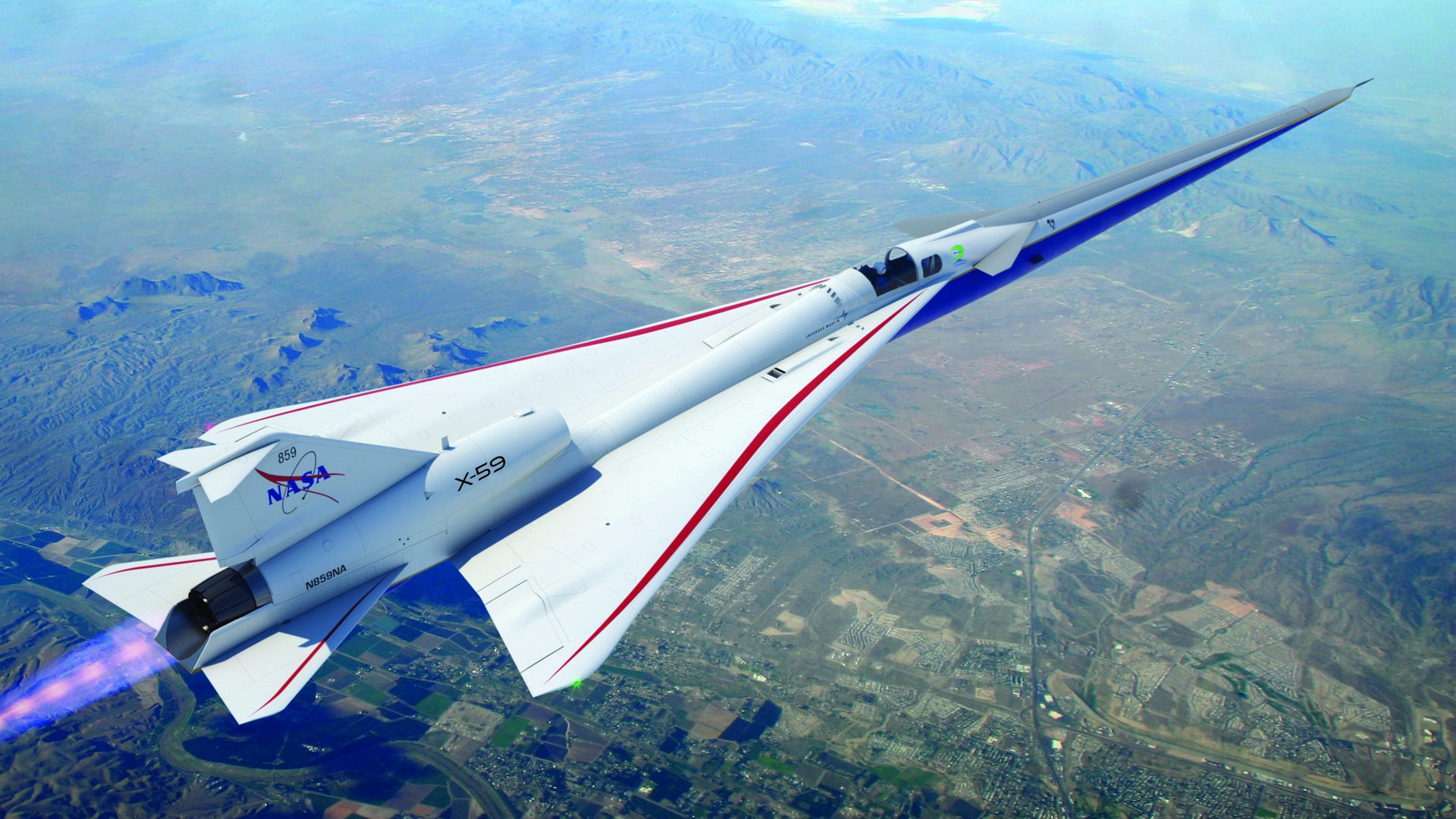
Current research and innovations are aimed at mitigating these effects. NASA’s X-59 QueSST (Quiet Supersonic Technology) is an experimental aircraft designed to reduce the intensity of sonic booms to a quieter “thump,” rather than the traditional Bombshock. This project represents a significant step forward in addressing what causes a sonic boom and aims to pave the way for the return of supersonic commercial flight without the associated noise problems. By altering the shape of the aircraft, the X-59 seeks to minimize the shockwave impact, potentially allowing supersonic flights over land without disturbing communities below.
The future of sonic booms
In the realm of advances in technology, NASA’s X-59 QueSST (Quiet Supersonic Technology) project is a leading example of how the future of sonic booms is being reimagined. The X-59 is designed to reduce the shockwave created by supersonic travel, transforming the loud Bombshock of a traditional sonic boom into a quieter “sonic thump.” This experimental aircraft is expected to fly over communities in the United States to test public reaction to the reduced noise, potentially paving the way for supersonic commercial flights that don’t disrupt populated areas.
Regarding regulatory considerations, the Concorde, the world’s first supersonic passenger jet, provides a historical example of how regulations have been shaped by sonic booms. The Concorde was subject to numerous restrictions due to the disruptive shockwaves it generated, limiting its routes and ultimately contributing to its retirement. However, with emerging technologies like the X-59, there is potential for these regulations to evolve. If quieter supersonic aircraft prove successful, we could see a relaxation of the current bans on boom supersonic flights over land, allowing for faster commercial travel across continents.
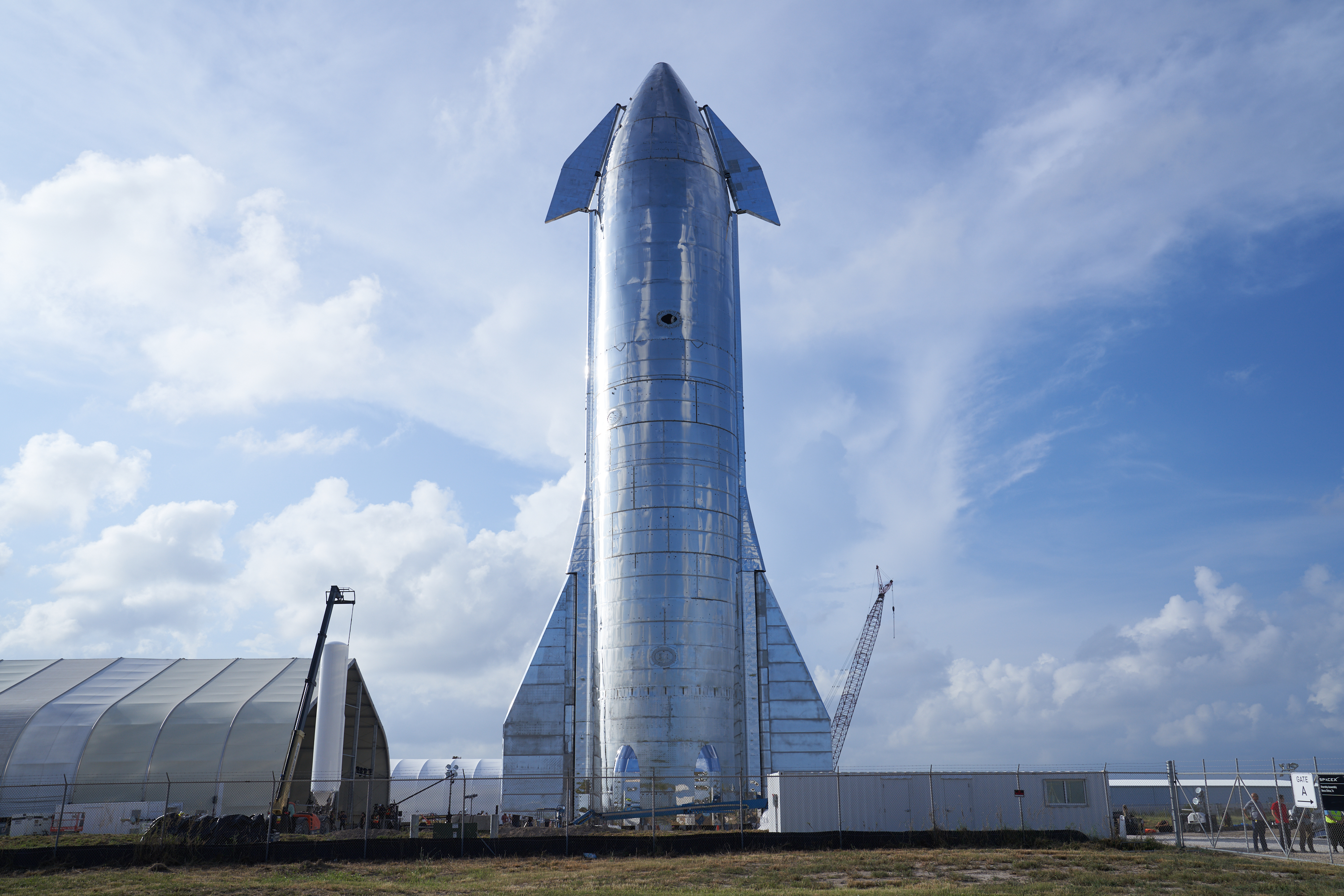
In terms of potential new applications, SpaceX’s Starship and similar spacecraft could benefit from sonic boom research. As these vehicles re-enter Earth’s atmosphere from space, they create sonic booms that can be heard over large areas. By applying the principles of shockwave management and supersonic flight, engineers could develop spacecraft that minimize noise and structural impact during re-entry. This would not only make space travel more palatable to those on the ground but could also improve the safety and durability of the spacecraft themselves. Additionally, as futuristic concepts like boom supersonic trains or high-speed cargo systems are explored, lessons from sonic boom mitigation could be crucial in making these ideas a reality.
In conclusion, this phenomenon is a fascinating and complex aspect of supersonic travel that has captured both scientific curiosity and public attention. From its basic definition and historical context to the intricate science behind what causes this phenomenon, the impact of shockwaves on our environment and communities is significant. As technology advances, the potential for quieter supersonic flights and innovative applications grows, promising a future where the benefits of boom supersonic speeds can be enjoyed without the disruptive Bombshock effects. With ongoing research and evolving regulations, the future of this phenomenon holds exciting possibilities that could reshape how we think about high-speed travel and its implications.
- WEBSITE Henderson, A. (2023, September 23). What is a sonic boom? Unraveling the thunderous phenomenon. HowStuffWorks. [HowStuffWorks]
- ONLINE NEWS Loboy, J. (2023, June 5). What is a ‘sonic boom?’ WKBN.com. [WKBN.com]
- WEBSITE Bittel, J. (2023, June 14). What is a sonic boom—and is it dangerous? National Geographic. [National Geographic]
- WEBSITE Spike Aerospace. (2013, November 22). Supersonic aircraft and the sonic boom some jets make. Spike Aerospace. [Spike Aerospace]
- DICTIONARY ENTRY Wikipedia English. (n.d.). Shock wave. In Wikipedia English. [Wikipedia English]
APA 7: TWs Editor. (2024, August 17). Sonic Boom: Breaking the Sound Barrier. PerEXP Teamworks. [Article Link]


