



Browsing Tag
Geometry
9 posts
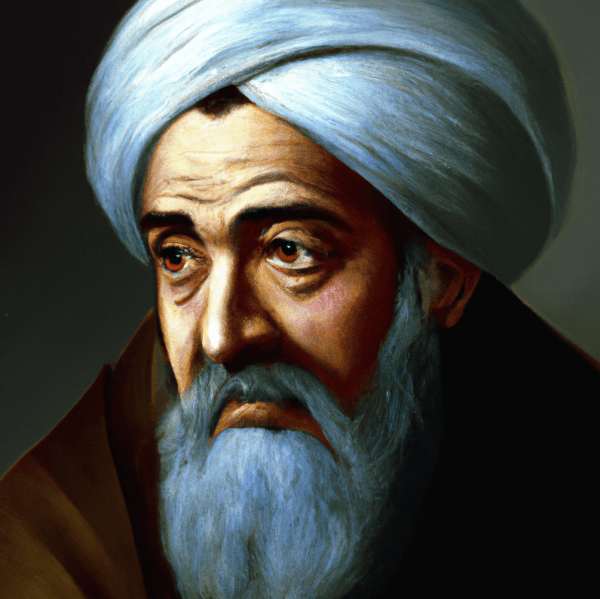
Avicenna
Avicenna (Persian: ابن سینا), Abu Ali Sina (Persian: ابوعلی سینا) or "Ibn Sina" as Easterns call him (980 – June 1037) was a Persian polymath (Hezarfen / a person with extensive knowledge in many different disciplines). He is considered one of the most significant doctors, astronomers, thinkers, writers, and scholars of the Golden Age of Islam period, and a physician known as the father of polymeric (Multiple fields) early medicine.

Khwarizmi
Khwarizmi, Al-Khwarizmi, Khwarizmi (The names may differ. Persian: خوارزمی) or full name Abu Jafer Muhammad bin Musa al-Khwarizmi (780, Khwarizm - 850, Baghdad); is a Persian scientist who worked in the fields of mathematics, astronomy, geography, and algorithms. Latin translations of his works on Indian numerals introduced the decimal positional number system to the Western world in the twelfth century.

Jia Xian
Jia Xian (Simplified Chinese: 贾宪, Traditional Chinese: 賈憲, Pinyin Alphabet: Jiǎ Xiàn, Wade-Giles /Beijing Chinese: Chia Hsien; 1010-1070) was a Chinese mathematician and astronomer. Besides the fact that he succeeded in defining Pascal's triangle in the eleventh century, he made many mathematical inventions and astronomical discoveries.

Brahmagupta
Brahmagupta (Sanskrit: ब्रह्मगुप) (598 – 668 AD) was an Indian mathematician and astronomer. He has two important works on mathematics and astronomy, the theoretical “Brāhmasphuṣasiddhānta (628)” and the more practical “Khaṇḍakhādyaka (665)”. Brahmagupta is the scientist who first gave the rules for trading with zero. Since the proofs are not offered, it is not known where Brahmagupta's mathematics was derived from.

Aryabhata
Aryabhata (Devanagari/Indian and Nepalese alphabet: आर्यभट) (476 – 550 AD) was an Indian scientist from the classical Indian traditions of mathematics and astronomy. He is the father of the Indo-Arabic numeral system, which is universally used today. His well-known works are "Aryabhatiya" and "Arya-siddhanta". It was inspired by the name of the first Indian unmanned satellite launched.

Aristotle
Aristotle is an Ancient Greek philosopher and scientist. He is a respectable figure in the history of philosophy and has worked in many fields. According to him, natural philosophy is the most important for philosophers. In addition to natural sciences such as physics, chemistry, biology, zoology (Animal science), botany (Plant science), psychology, political science, ethics; logic, metaphysics; history, literary knowledge, and rhetoric, he was interested in social fields such as.

Thales
Thales of Miletus (624-620 BC/548-545 BC) was an Ancient Greek philosopher and one of the Seven Sages of Greece. He is known for his belief that everything has a basic principle and his contributions to mathematics and astronomy, claiming that the Earth is a flat disk floating in a vast sea.

Liu Hui
Liu Hui (Chinese: 劉徽; pinyin: Liú Huī; 225-295 AD) was a Chinese mathematician who lived during the Wei Dynasty. His contributions, especially the narrative he wrote called "Nine Chapters on the Art of Mathematics" include a proof of the Pythagorean Theorem, theorems of solid geometry, an improvement on Archimedes' π approach, and a systematic method for deciphering linear equations in several unknowns.

Pythagoras
Pythagoras of Samos is a mathematician, naturalist, and philosopher who lived in Antiquity. Pythagoras, the owner of geometric and mathematical inventions, also founded the Pythagorean philosophical school. In addition, he was the first scientist who managed to formulate sounds.