



APA 7: Esen, N. N. (2023, August 17). Yıldızımızdan Sistemindeki Uydulara: Güneş Sistemi’nde Gezinti. PerEXP Teamworks. [Article Link]
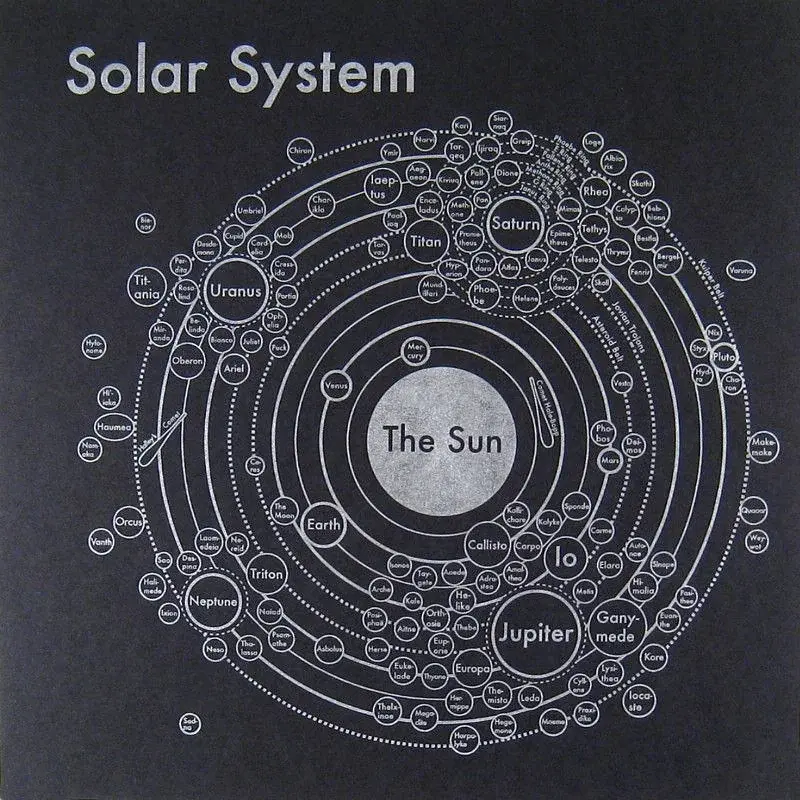
The Solar System is a collection of celestial bodies held in orbit by the Sun’s gravitational attraction. So, what takes place in the Solar System?
Celestial bodies located in the Solar System
According to the data we have, our Solar System:
- Sun,
- Eight planets (Mercury, Venus, Earth, Mars, Jupiter, Saturn, Uranus, and Neptune),
- 150 confirmed satellites on eight planets,
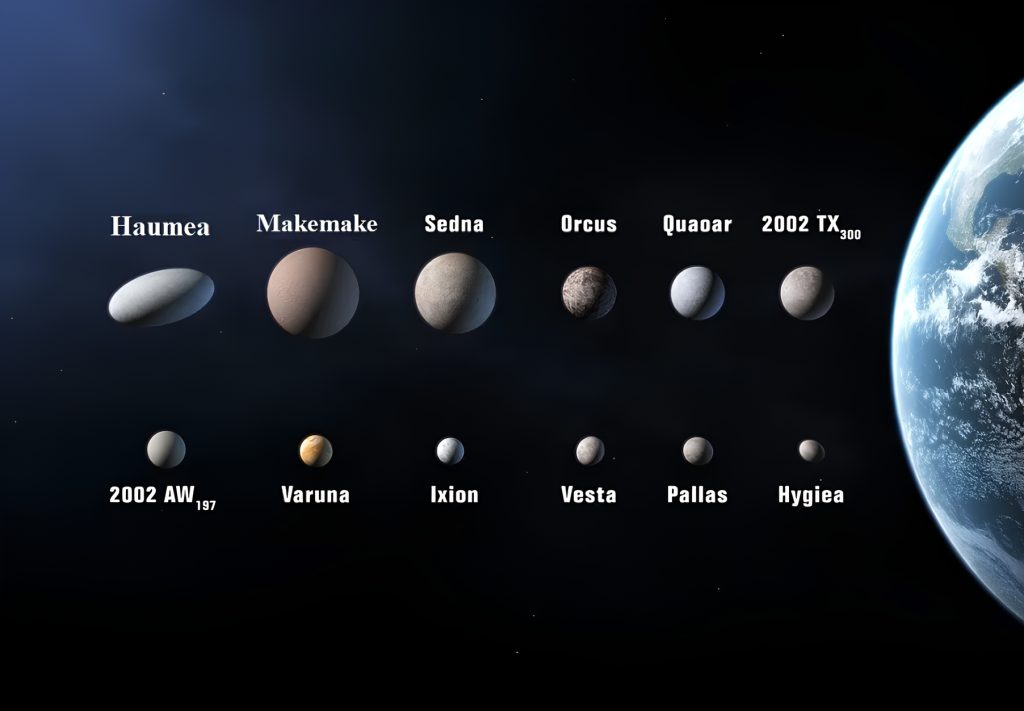
- Five dwarf planets,
- It consists of eight confirmed moons of dwarf planets and, concurrently, billions of small celestial objects (Asteroids, the Kuiper Belt, comets, blue stones, and interplanetary dust). [1]
How did the Solar System form?
It is suggested that the Solar System was formed per the Nebula Hypothesis, first proposed by the astronomer Emanuel Swedenborg in 1734 and later expanded by Immanuel Kant in 1755. According to this hypothesis:
- The formation and evolution of the Solar System began about 4.5 billion years ago, when a small part of a giant molecular cloud collapsed under the influence of gravity.
- Most of the collapsed mass gathered in the center to form the Sun, while the rest flattened out into a “Proto-planetary” disc, where planets, moons, asteroids, and other small celestial bodies, which we mentioned in the previous section of the article, were formed.
Another astronomer, Pierre-Simon Laplace, put forward a similar hypothesis at the same time as Kant, unbeknownst to him. According to Laplace:
- The Solar System was formed as the result of the collapse of a giant molecular cloud 4.6 billion years ago.
- As a result of studying very ancient celestial stones, the discovery of chemical elements that can only form at the center of stars that explode and release enormous energy proves that the Sun formed in a cluster of stars and near several supernova explosions.
- The shock waves from these explosions have created regions of high density in the surrounding nebula, defeating the gas pressure and causing internal collapse. This inward collapse may have triggered the formation of the Sun by creating a gravitational force.
The common point and summary of Laplace’s and Kant’s theories are as follows:
- The parts of the rotating solar nebula exert a gravitational force on each other. Thanks to this, a large amount of matter accumulates in the center. These substances form the “Front Sun” by getting trapped, heating up, and starting to glow. Then the collapse center gets denser, and starts a nuclear reaction at the center, and a star is formed. This star is none other than our Sun.
- One of the things that the theory brings with it is the order in which planets are formed. This sequence is from the outside to the inside. In other words, Mercury, which is the closest to the Sun in our system, occurred last, and Neptune, which is the farthest, occurred first. Nevertheless, over the course of the system’s billions of years of growth, a few planets have shifted. In other words, the first planet to form in our current system is neither Neptune nor Mercury, the last planet to form. [2] [3]

Other celestial bodies in the Solar System
Now, let’s examine the other celestial bodies in our Solar System.
Planet
A planet is an astronomical body orbiting a star or stellar remnant that has cleared its neighboring region of planetesimals. It is large enough to become round due to its gravity, but not large enough to initiate a thermonuclear fusion.
The word “Planet” is derived from “Astères planètai,” that is, “Wandering stars,” in the expression of people who lived in ancient times. The fact that they say “Traveler” is because they have noticed their movements. [4]
Dwarf planet
A dwarf planet is a planetary-mass celestial body that is not a satellite and does not dominate its space region. For an object to become a planet, it must meet the following conditions:
- It should go around the Sun.
- It should be large enough to be spherical.
- Through the force of gravity, it must have cleared the orbit in which it is located.
For a celestial body to be classified as a “Dwarf planet,” it must meet the properties of two of these substances.
Pluto, once in the category of “Planet” in the Solar System, was placed in the same category as our other dwarf planets, Eris, Haumea, Makemake, and Ceres, due to its inability to provide the third substance in 2006. [4]
Asteroid
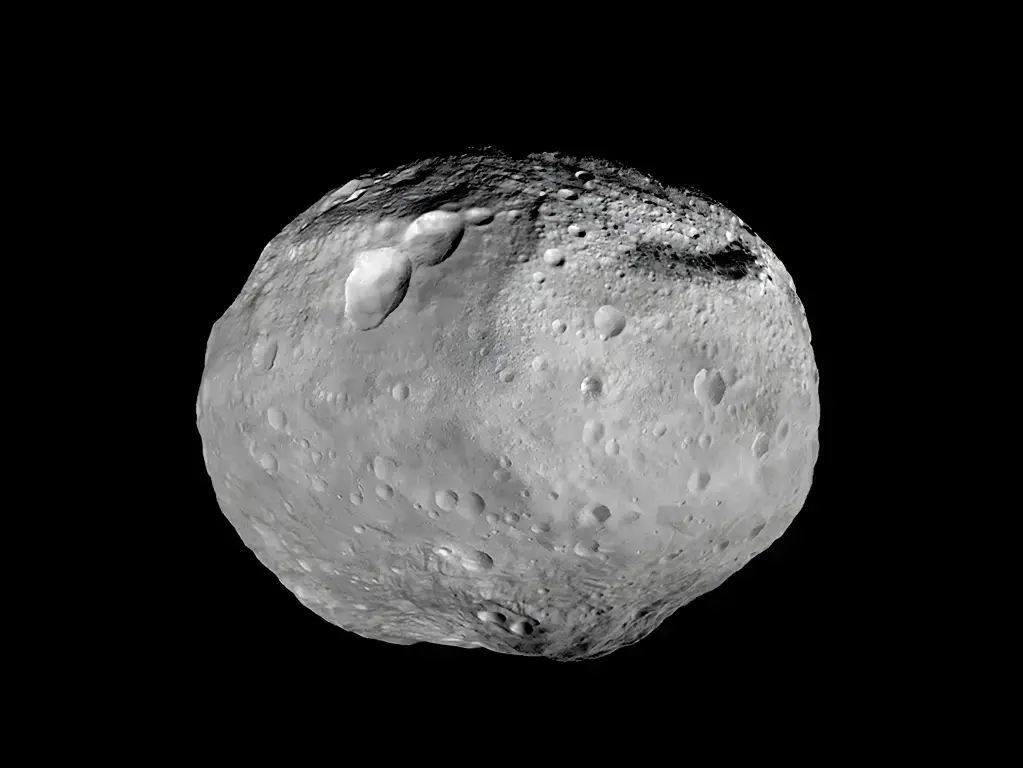
Asteroids are small stones and celestial objects that orbit the Sun. As a result of the merger of the remaining substances during the formation of our Solar System, they were formed. Asteroids are named according to their location:
- Asteroids are pieces of rock that are located between Mars and Jupiter.
- A meteorite is a small part of rock broken off from an asteroid or comet.
- Meteors are celestial stones that enter the atmosphere.
- Meteorites are celestial stones that utterly burn up after entering the Earth’s atmosphere and reaching the Earth.
At the same time, scientists also use asteroids and meteorites to learn about the history of our system, since they formed at the same time as the Solar System. [5]
Comets
A “Comet,” also known as a “Dirty snowball,” is an icy celestial object that heats up and begins to release gas when passing near the Sun. They appear to have a tail because of the gas that the heat releases.
The size of their nuclei can vary from a few hundred meters to kilometers. Comets do not observe warming until they enter the asteroid belt. As Mars approaches its orbit, heat is released, and most of the ice in the core sublimates. Since the pressure in space is zero, and it cannot exist in liquid form, we call this state change “Sublimation.” Only comets can have liquid water reserves in the nucleus. Due to the low pressure in space, they gush from the comet’s surface. Even the idea that comets brought most of the water to Earth has been entertained. [5]

Planets in the Solar System
Mercury

- It is the smallest planet in our Solar System, and also the closest planet to the Sun.
- It completes its movement in its orbit faster than other planets in the Solar System.
- It moves around its axis in 58.65 days, and its rotation around the Sun takes 88 days.
- It has no known satellites.
- It takes its name from the messenger of the gods, the Roman god Mercury. [6]
Venus

- It is in second place in terms of distance to our Solar System and first place in terms of temperature. The reason for this is the density of the atmosphere.
- Venus does not allow the rays from the Sun to come out.
- It has no known satellites.
- In contrast to every other planet in the Solar System, Venus revolves around its axis in the opposite direction.
- It completes its rotation around itself in 243 days and its rotation around the Sun in 225 days.
- Since it is closer to the Sun according to the Earth’s position, it can only be observed from the Earth before sunrise or after sunset. For this reason, it is also called “Evening Star,” “Morning Star,” or “Shepherd’s Star.”
- It takes its name from the ancient Roman goddess Venus. [6]
Earth
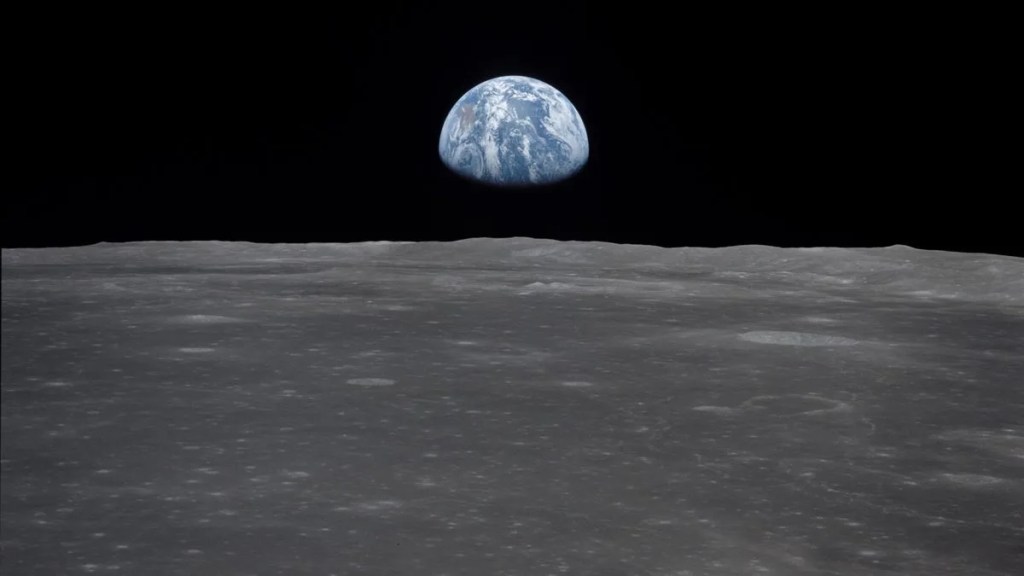
- It is the third-closest planet to the Sun in the Solar System, and is currently the only planet known exactly to contain life and liquid water on it.
- It completes its tour around the Sun in 365 days. It also completes its tour around its axis in one Earth day.
- The Earth’s rotation axis is tilted relative to the orbital plane, and this tilt causes the formation of seasons.
- It has one known satellite. (Moon) [6]
Mars

- It is the fourth planet in the Solar System.
- Mars is considered the most likely planet to contain liquid water and life among the planets in the Solar System, except for Earth.
- Just like Earth, it is a terrestrial planet containing valleys, deserts, and polar regions.
- It has a reddish appearance due to the widespread iron oxide (Fe2O3) on its surface. That’s why it’s also called the “Red Planet.”
- It has two satellites. (Phobos, EN: Fear; Deimos, EN: Horror)
- At the same time, Mount Olympus on Mars is the largest known mountain in the Solar System, and the canyon called “Valles Marineris,” also located on Mars, is the largest known canyon in the Solar System.
- It completes its tour around itself in 24 hours and 39 minutes, and its tour around the Sun in 320 days and 18.2 hours.
- It is named after Mars, the god of war in Roman mythology. [6]
Jupiter
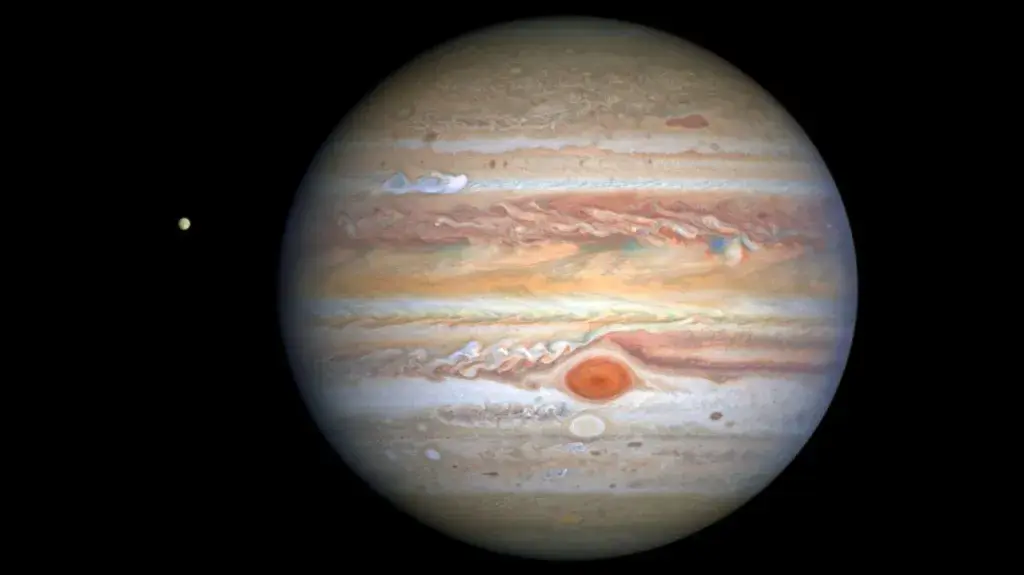
- It is the largest planet in the Solar System.
- It is in fifth place in the distance ranking relative to the Sun.
- It is largely composed of hydrogen and helium, so it is also in the “Gas giant” class.
- It has 92 known natural satellites. (However, according to May 2023 data, 12 more satellites are waiting to be approved.)
- Jupiter completes its orbit around itself in 9 hours and 55 minutes, and its orbit around the Sun takes 12 Earth years.
- It takes its name from Jupiter, the greatest of the gods in Roman mythology. [6]
Saturn

- It ranks sixth in the Solar System in terms of proximity to the Sun.
- It comes after Jupiter in magnitude.
- It is one of the five planets that can be observed with the naked eye. (The others are Mercury, Venus, Mars, and Jupiter.)
- The gas giant has attracted the attention of mankind for many years with its fascinating rings.
- It is in the class of gas giants such as Jupiter, since most of it consists of hydrogen and helium.
- It rotates around its axis in 10 hours and 33 minutes and completes its orbit around the Sun in 10,759 days.
- It has 146 known satellites.
- It takes its name from Cronus in Greek mythology. [6]
Uranus

- It is in seventh place in terms of distance to the Sun.
- It comes in third place in terms of size.
- It is a planet with an ice giant.
- It completes its tour around itself in 17.5 hours and its tour around the Sun in 84 days.
- It has 27 known satellites.
- It takes its name from the sky god Uranos in Greek mythology. [6]
Neptune
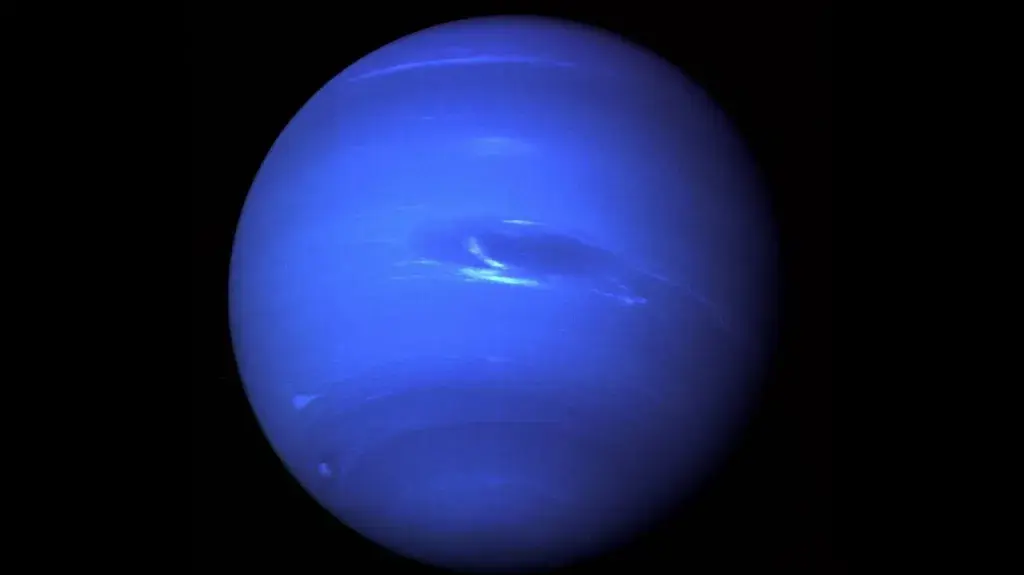
- It is the eighth planet in the Solar System in terms of distance from the Sun.
- It is one of the most distant planets and has no solid surface.
- It is the fourth-largest planet in the system by diameter and the third-largest planet by mass.
- It has 14 known satellites.
- It takes its name from the Roman god of the sea, Neptunus. [6]
What is the Inner Planet?
Planets with a dense, rocky composition, with few or no satellites or rings, located in the inner orbits of the Solar System are called “Inner Planets” or “Terrestrial Planets.” Venus, Earth, and Mars, which are located in our system, are Inner Planets. [1]
What is a Superior Planet?
It is the name given to the planets located in the outermost orbits of the Solar System. They are also called “Giant Planets.” These planets, unlike the Inner Planets, are made of gas. Jupiter and Saturn are classified as “Gas giants,” and Uranus and Neptune are classified as “Ice giants.” All of our outer planets have rings, but only Saturn’s rings can be easily observed from Earth. [1]
Trans-Neptunian Objects
- Objects observed beyond Neptune are called “Trans-Neptunian Objects”. Celestial bodies located in the Solar System whose average orbit is larger than the average orbit of Neptune fall into this category.
- The Kuiper Belt, the Oort Cloud, and scattered disc bodies are in this category.
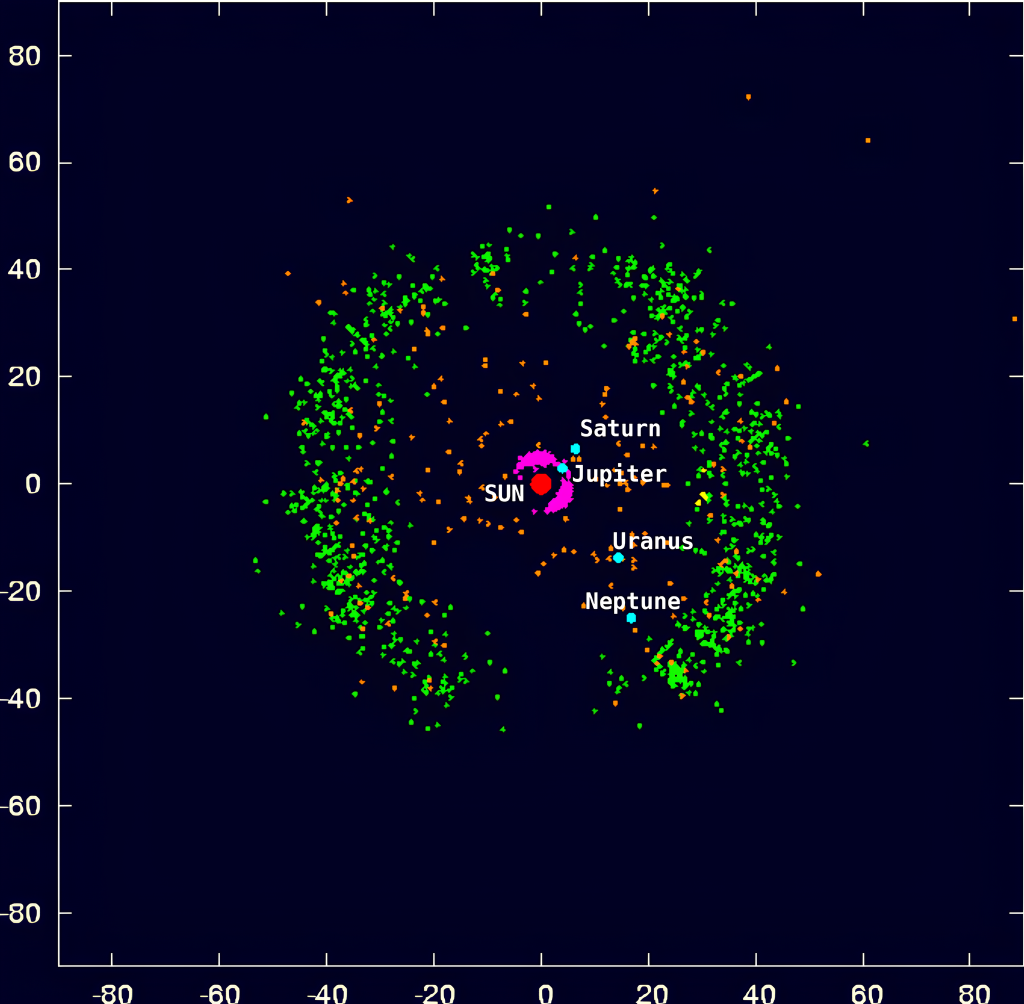
- The first Trans-Neptunian Object discovered was Pluto in 1930. It then took more than sixty years to discover a second “Independent” object similar to this. In 1992, 1992 QB1 was observed. Since then, until the end of 2008, 1075 Trans-Neptunian Objects with different sizes and orbits have been found. [8]
- The largest known Trans-Neptunian Object is Eris, discovered in 2005. [2] [9]

Active artificial satellites in our system
What is an artificial satellite?
Artificial satellites are satellites that humans have developed and placed into the orbit of the Earth or other planets. Thousands of satellites have been launched since Sputnik 1, the first artificial satellite launched by the USSR in 1957, and these satellites have different purposes from each other and are divided into categories according to them. Some of these categories are:
- Communication satellites,
- Meteorological satellites,
- Astronomy satellites,
- Biosatellites,
- Minisatellites,
- Navigation satellites,
- Surveillance satellites,
Our national satellites
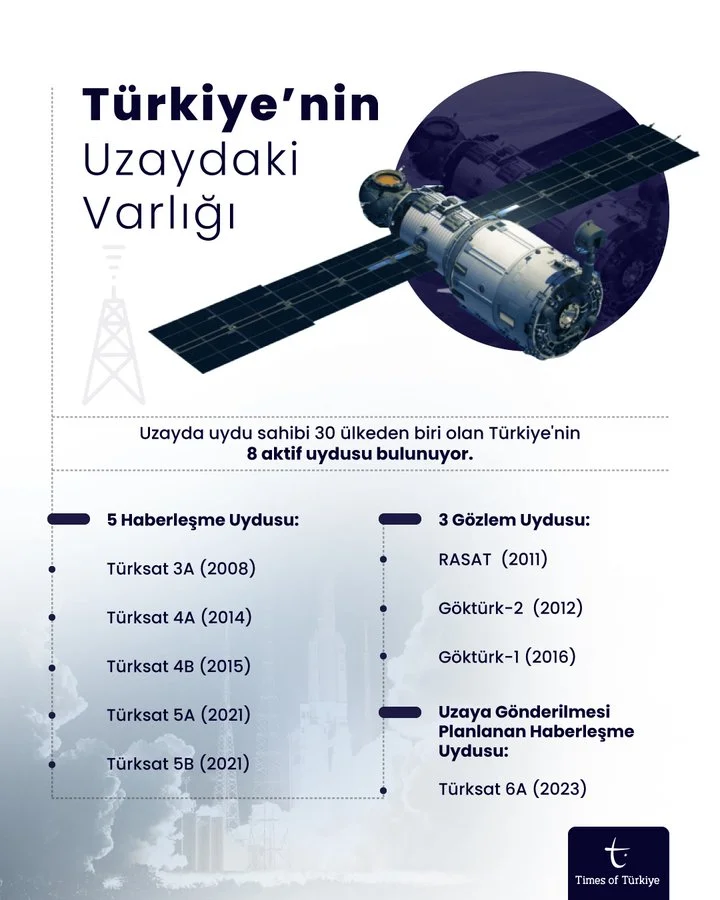
Turkey, one of the thirty countries that own satellites in space, has eight active satellites, five of which are communications (Türksat 3A, Türksat 4A, Türksat 4B, Türksat 5A, and Türksat 5B) and three of which are observations (Göktürk-1, Göktürk-2, and RASAT). [11]
Resources
- WEBSITE Çeviren, K. Ş. (2020, March 7). Güneş sistemi için bir kılavuz: Güneş sistemi içindeki cisimler hakkında neler biliyoruz?. Evrim Ağacı. [Evrim Ağacı]
- WEBSITE Sever, M. Ç. (2019). Güneş sistemi nasıl oluştu?. Evrim Ağacı. [Evrim Ağacı]
- WEBSITE Çelikten, B., Kaya, E. (n.d.). Güneş Sistemi I: Güneş Sistemi ve Oluşumu. İTÜ Astronomi Kulübü. [İTÜ Astronomi Kulübü]
- WEBSITE Bilim, R. (2022). Gezegen nedir?. Evrim Ağacı. [Evrim Ağacı]
- WEBSITE ASTEROİT NEDİR?. Türkiye Uzay Ajansı. (n.d.). [TUA]
- WEBSITE Planets. (n.d.). NASA Solar System Exploration. [NASA]
- WEBSITE Akın, Y. (2020). Kuiper Kuşağı nedir? Güneş sisteminin sınırındaki nesneler arasında neler bulunur?. Evrim Ağacı. [Evrim Ağacı]
- WIKIPEDIA ENTRY Güneş sistemi. (2004, June 2). In Wikipedia. [Wikipedia]
- BOOK Özel, M. E., & Saygaç, T. (1997). Gökyüzünü tanıyalım. TÜBİTAK, 38–41, 232–234.
- DICTIONARY ENTRY Uzay Ansiklopedisi (2021, January). All About Space, 15, 42–45.
- WIKIPEDIA ENTRY Yapay uydu. (2006, December 13). In Wikipedia [Wikipedia]
This translation was made by Ahmet Ege Çarıkçıoğlu


1 comment