



Water dowsing—also known as water witching—is an ancient practice where individuals use tools like water dowsing rods or water witching rods to locate underground water sources. This technique has been passed down through generations, with practitioners claiming the ability to find water through subtle natural energies. Despite its long history, questions such as how to water dowsing or how does water witching work remain points of debate, especially as science continues to scrutinize its effectiveness.
What is water dowsing?
Water dowsing, often referred to as water witching, is a practice that has intrigued people for centuries. It involves the use of tools like water dowsing rods or water witching rods to locate underground water sources. The idea behind water dowsing is simple: some people believe they can tap into natural energies or forces that guide them to hidden water. While practitioners claim effectiveness, scientific studies have not consistently validated these claims, and water dowsing lacks empirical support in the scientific community.
Many wonder how to water dowsing or how does water witching work, especially since it’s a skill that’s been passed down through generations without much scientific backing. Despite the skepticism from some quarters, water dowsing continues to be used in various parts of the world, particularly in rural areas where traditional methods are still valued. Whether one views it as a form of intuition or simply a fascinating tradition, water dowsing remains a compelling subject.

Historically, water dowsing has played a crucial role in many societies, particularly where access to reliable water sources was essential for survival. Ancient texts and archaeological findings suggest that the practice was used in ancient Egypt, China, and Greece. In medieval Europe, water witching was so integral that dowsers were often sought out by farmers and landowners who relied on their expertise to find water sources in agricultural lands. In these historical contexts, water dowsing was not only a practical tool but also embedded in the cultural and spiritual practices of the time.
In modern times, despite the availability of advanced technology for detecting water, water dowsing remains relevant in some parts of the world. In rural areas and regions where modern drilling equipment is unavailable or cost-prohibitive, water dowsing is still used as a traditional method to locate water sources. The practice endures because it connects people to their historical roots and provides a method that some still find valuable and effective. Although the scientific community remains skeptical, the persistence of water dowsing underscores its cultural significance and the continued belief in its efficacy among those who practice it.
Methods and tools used in water dowsing
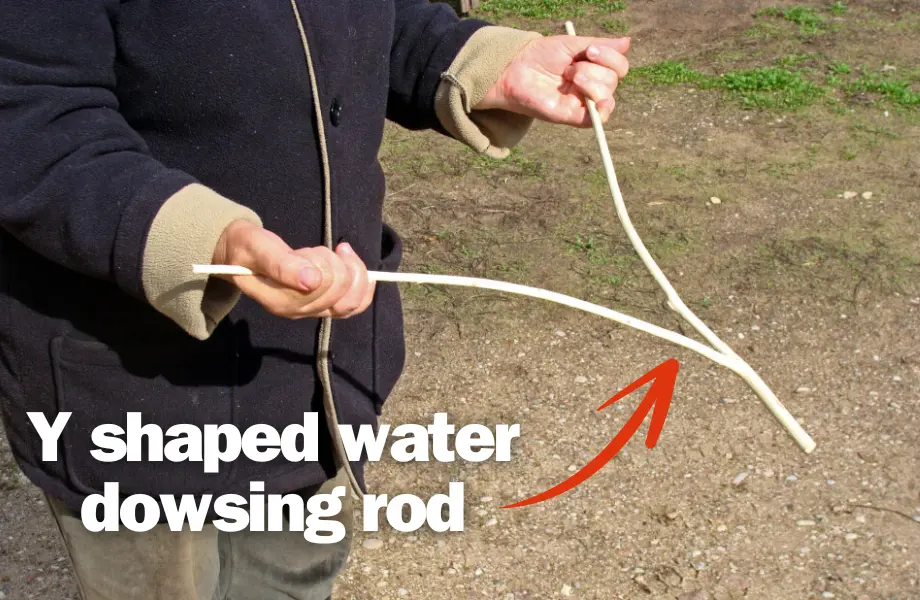
Water dowsing relies on a variety of traditional tools and techniques to locate underground water. Among the most common tools are water dowsing rods and water witching rods. These rods are typically made from materials such as metal, wood, or plastic. Water dowsing rods are often shaped like an “L” (There are also Y shaped ones) and are held loosely in the hands of the dowser. When the rods cross or move apart, it is believed to indicate the presence of water. Water witching rods, on the other hand, can vary in shape but are similarly used to detect water sources. Another tool sometimes used is the pendulum, which is a weight suspended from a string or chain. The pendulum is held still, and its movement is interpreted to indicate the presence of water.
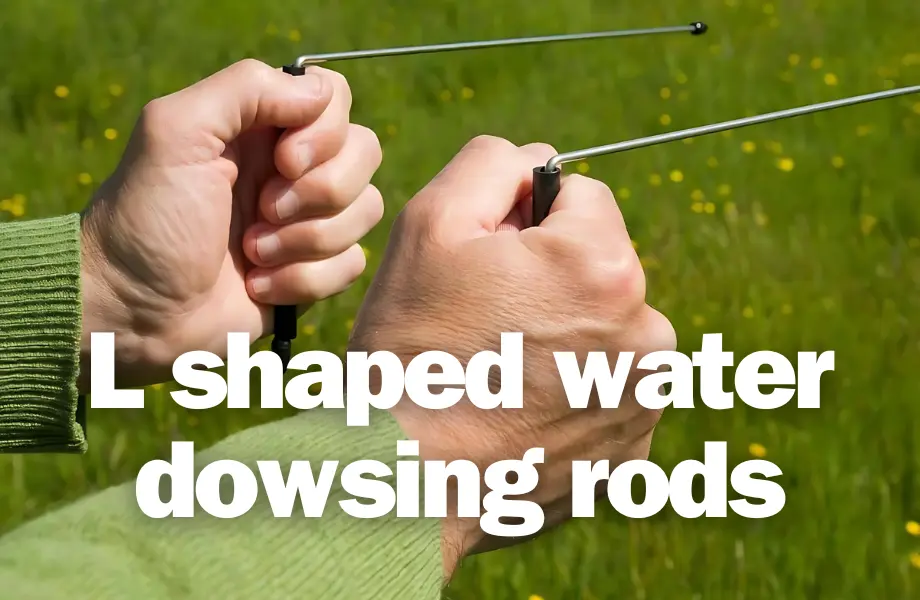
The practice of water dowsing involves several techniques and methods. To begin water dowsing, the dowser typically walks slowly over the area where they believe water may be located, holding the rods or pendulum in front of them. As they move, they observe the movements of the tools. For instance, water witching rods may cross each other or point downward, which is interpreted as a signal that water is present beneath the surface. Some practitioners also use a method where they hold the rods or pendulum while standing still, focusing on any subtle movements or changes.
There are also variations in how does water witching work based on geographical and cultural differences. In different regions, dowsers might use different types of rods or pendulums, and the interpretation of their movements can vary. For example, in some cultures, water dowsing is closely linked with local spiritual beliefs, and the practice may involve specific rituals or prayers. In other areas, the focus might be more practical, with dowsers using straightforward techniques to find water for agricultural or personal use. The diversity in methods reflects the adaptability of water dowsing across various cultures and environments, highlighting its long-standing presence and the range of ways people have sought to connect with the natural world.
Scientific perspectives on water dowsing
Water dowsing has been a subject of various scientific studies and experiments over the years. Researchers have conducted numerous tests to determine whether the practice of water witching—using water dowsing rods or water witching rods to find water—has any scientific basis. In many cases, these studies have found no reliable evidence supporting the effectiveness of water dowsing beyond what could be explained by chance. Controlled experiments often show that dowsers are unable to locate water sources with greater accuracy than random guessing, raising questions about the validity of the claims made by practitioners.
The scientific community remains skeptical about water dowsing, with debates centering on its lack of empirical support. Many scientists argue that there is no consistent, reproducible evidence that water witching works as claimed. This skepticism is partly due to the difficulties in designing experiments that can account for the subjective nature of how does water witching work and the variations in dowsing practices. Critics also point out that many successful dowsing cases can often be attributed to the psychological effects of expectation and chance rather than any inherent ability of the dowsing method.


Despite the lack of scientific validation, there are several possible explanations for why water dowsing might appear to work for some individuals. One explanation is the ideomotor effect, where small, unconscious movements by the dowser could cause the rods or pendulum to move in response to their expectations. Another possibility is the pattern recognition or “hunches” that dowsers might develop over time, allowing them to notice subtle environmental cues that inform their practice. Additionally, the confidence and belief of the dowser might influence their perception of success, contributing to the perception that water witching is effective.
Water dowsing in popular culture and folklore
Water dowsing has appeared in various forms of popular culture, often depicted in literature, films, and folklore. In literature, water witching is sometimes portrayed with an air of mysticism. For example, in the novel “The Water Dancer” by Ta-Nehisi Coates, dowsing is used symbolically to represent a deeper connection with nature and hidden truths. “The Water Diviner” (2014) is a movie that features scenes showcasing the practical use of water witching. In this film, viewers are shown how water dowsing rods are employed to locate water sources, providing a detailed look at the application and techniques of dowsing in the search for water.
Stories and anecdotes from dowsers and communities that practice water witching often emphasize personal experiences that reinforce the belief in its effectiveness. For instance, in rural parts of the United States, many farmers recount how their families have used water witching rods for generations to locate water sources, with some attributing their success to inherited skills or intuition. In the UK, a well-known dowser named Guy Underwood published books sharing his experiences and methods, adding to the body of anecdotal evidence that supports the practice despite scientific skepticism.
In rural and agricultural societies, water dowsing has historically played a crucial role in managing water resources. In places like the French countryside, water witching has been used to locate wells and irrigation sources, often in areas where modern drilling equipment was unavailable. Similarly, in parts of Australia, water witching is still used by some landowners to find water for their livestock and crops. The practice’s enduring presence in these settings reflects its practical value and the traditional knowledge that persists alongside technological advancements.
Water dowsing is a practice rich in cultural and historical significance, often depicted with intrigue in literature, films, and folklore. Despite its longstanding presence and anecdotal success stories, scientific evidence does not robustly support its effectiveness. While water witching rods and water dowsing rods hold a place in tradition, modern technologies offer more reliable methods for locating and managing water resources. Balancing the cultural value of how to water dowsing with the advancements in technology can help ensure that water use remains both respectful of tradition and effective in addressing contemporary challenges.
- WEBSITE Kanuckel, A. (2024, June 7). Water witching: fact or fake? Farmers’ Almanac. [Farmers’ Almanac]
- WEBSITE U.S. Geological Survey. (2018, June 6). Water dowsing. U.S. Geological Survey. [U.S. Geological Survey]
- WEBSITE Donovan, J. (2023, October 31). Is Dowsing real, or just a bunch of Hocus-Pocus? HowStuffWorks. [HowStuffWorks]
- WEBSITE Baird, C. S. (2015, April 15). How does water dowsing work? Science Questions With Surprising Answers. [Science Questions with Surprising Answers]
- WEBSITE Jarry, J. (2023, March 17). Dowsing: Dowse it work? McGill Office for Science and Society. [McGill Office for Science and Society]
APA 7: TWs Editor. (2024, August 5). Water Dowsing: Find Hidden Water Sources? PerEXP Teamworks. [Article Link]


