



APA 7: TWs Editor & ChatGPT. (2023, September 30). NASA’s Webb Identifies Carbon Source on Surface of Europa, One of Jupiter’s Moons. PerEXP Teamworks. [Article Link]
Europa, one of Jupiter’s moons, is among the select celestial bodies within our solar system that could conceivably offer an environment conducive to life. While it’s been established that beneath Europa’s icy shell lies a saltwater ocean with a rocky seabed, the presence of life-sustaining chemicals, especially carbon, had not been definitively confirmed by planetary scientists.
Utilizing information gathered by NASA’s James Webb Space Telescope, astronomers have detected the presence of carbon dioxide in a distinct area on Europa’s icy surface. Analysis suggests that this carbon dioxide probably originated from the moon’s subsurface ocean, rather than being brought in by meteorites or external sources. Furthermore, it appears to have been deposited relatively recently in geological terms. This finding holds significant implications for assessing the potential habitability of Europa’s ocean.

On Earth, life likes chemical diversity – the more diversity, the better. We’re carbon-based life. Understanding the chemistry of Europa’s ocean will help us determine whether it’s hostile to life as we know it, or if it might be a good place for life.
Geronimo Villanueva
NASA’s Goddard Space Flight Center in Greenbelt, Maryland
(Lead author of one of two independent papers describing the findings.)
We now think that we have observational evidence that the carbon we see on Europa’s surface came from the ocean. That’s not a trivial thing. Carbon is a biologically essential element
Samantha Trumbo
Cornell University in Ithaca, New York
(Lead author of the second paper analyzing these data.)
In October 2024, NASA is set to initiate the launch of its Europa Clipper spacecraft. This mission is designed to execute numerous close flybys of Jupiter’s moon Europa, aimed at conducting in-depth investigations into the potential habitability of this intriguing celestial body.
Connection between surface and ocean
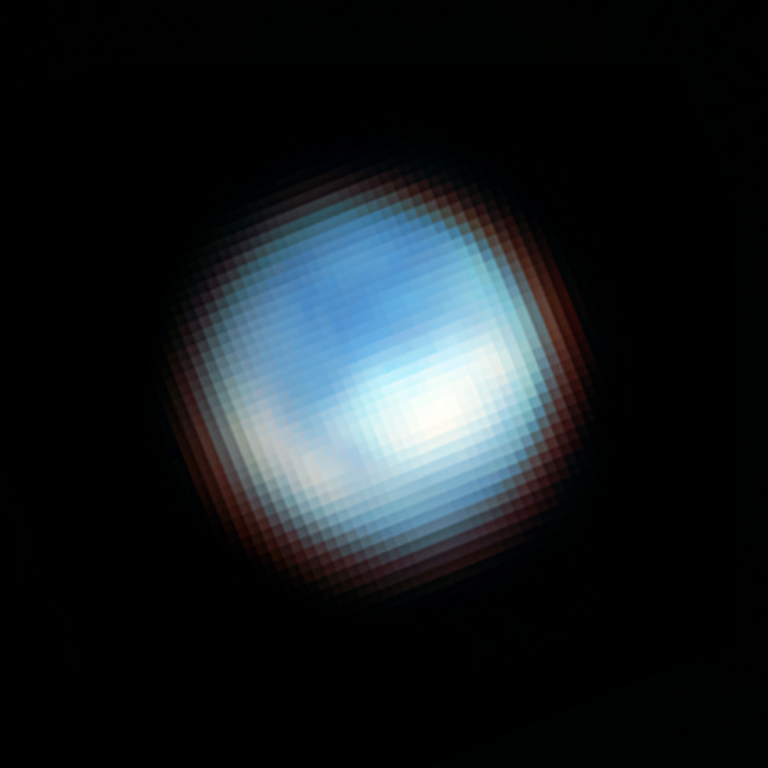
Webb’s observations reveal that carbon dioxide is predominantly concentrated on the surface of Europa within an area identified as Tara Regio. This region, known as “chaos terrain,” is characterized by relatively recent geological activity that has altered the surface ice. These findings suggest that there has been an interchange of materials between Europa’s subsurface ocean and its icy surface.
“Previous observations from the Hubble Space Telescope show evidence for ocean-derived salt in Tara Regio,” Trumbo said and continued: “Now we’re seeing that carbon dioxide is heavily concentrated there as well. We think this implies that the carbon probably has its ultimate origin in the internal ocean.”
“Scientists are debating how much Europa’s ocean connects to its surface. I think that question has been a big driver of Europa exploration,” said Villanueva. “This suggests that we may be able to learn some basic things about the ocean’s composition even before we drill through the ice to get the full picture.”
The detection of carbon dioxide by both research teams was made possible through the utilization of data gathered by Webb’s Near-Infrared Spectrograph (NIRSpec) integral field unit. This instrument mode offers detailed spectra with a remarkable resolution of 200 x 200 miles (320 x 320 kilometers) across Europa’s surface. Considering Europa’s diameter of 1,944 miles, this technology enables astronomers to precisely pinpoint the locations of various chemical compounds.
Carbon dioxide does not remain in a stable state on the surface of Europa. As a result, scientists propose that its presence is most likely the result of relatively recent geological processes. This hypothesis gains additional support from the fact that carbon dioxide is concentrated in an area characterized by youthful terrain.
These observations only took a few minutes of the observatory’s time. Even with this short period of time, we were able to do really big science. This work gives a first hint of all the amazing solar system science we’ll be able to do with Webb.
Heidi Hammel
Vice president of the Association of Universities for Research in Astronomy (AURA)
In pursuit of a plume
Villanueva’s team also conducted an investigation to detect any signs of a water vapor plume emerging from the surface of Europa. Scientists utilizing NASA’s Hubble Space Telescope made initial observations of potential plumes in 2013, 2016, and 2017. Nevertheless, establishing conclusive evidence has proven to be a challenging task.
The recent data collected by Webb has not revealed any indications of plume activity. This finding enabled Villanueva’s team to establish a stringent upper limit regarding the potential rate of material being ejected. It’s important to note, though, that their inability to detect a plume does not entirely discount the possibility of its existence.
“There is always a possibility that these plumes are variable and that you can only see them at certain times. All we can say with 100% confidence is that we did not detect a plume at Europa when we made these observations with Webb,” explained Hammel.
These discoveries hold valuable implications for NASA’s upcoming Europa Clipper mission and the European Space Agency’s (ESA) forthcoming Jupiter Icy Moons Explorer (JUICE).
Resources
- WEBSITE Nasa Webb Telescope Team. (2023, September 21). NASA’s Webb finds carbon source on surface of Jupiter’s Moon Europa. NASA. [NASA]


