






Researchers in the Netherlands have made a significant advancement in studying snake venom by developing a novel model involving miniaturized human blood vessels grown on a chip. In other words, they carried out this study using organ-on-a-chip technology. This innovative approach, pioneered by Mátyás Bittenbinder and his team at Vrije Universiteit Amsterdam and Naturalis Biodiversity Center, marks the first time the effects of snake venom can be accurately replicated and observed in real-time.
Traditionally, research into the impact of snake venom has been limited to two primary methods: cell culture and animal testing. In cell culture, human endothelial cells are grown on flat surfaces, which fails to mimic the tube-like structure of blood vessels and lacks crucial environmental factors such as blood flow and the extracellular matrix. This matrix is vital as it holds cells together and maintains their interaction with their surroundings.
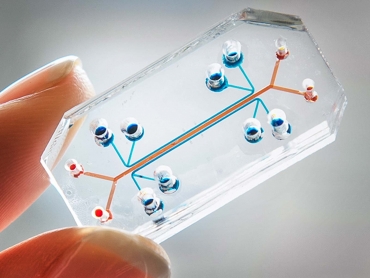
(Credit: Universiteit Leiden)
Animal testing, particularly on mice, presents its own set of challenges. The effects of venom in mice can only be studied post-mortem, making it impossible to observe the real-time progression of venom-induced damage. This limitation hampers the ability to understand the timeframe and dynamics of venom effects accurately.
The new model overcomes these challenges by enabling researchers to observe the real-time effects of snake venom on blood vessels. This development is particularly significant given the global impact of snakebite envenoming, which the World Health Organization reports results in over 100,000 deaths annually and causes severe injuries to more than 400,000 people each year. Understanding the mechanisms of venom toxicity is crucial for the development of effective antivenoms.
Bittenbinder hopes that this new model will reduce the reliance on animal testing, thereby decreasing the number of mice used in toxicity studies. This advancement not only promises to enhance the study of snake venom but also aligns with ethical considerations in scientific research by potentially lowering the need for animal testing.
Simulating blood vessels on a chip
The new method, detailed in Scientific Reports, aims to address the limitations of cell culture and mouse studies in snake venom research. Developed by researchers in collaboration with Mimetas, a Dutch company specializing in organ-on-a-chip models, this innovative approach leverages these tiny devices to replicate human tissue environments for medical research.
Organs-on-chips are small devices that allow cells to grow in conditions mimicking their natural environment within the body. In this study, the chips featured three channels, one of which served as a tube where human blood vessel cells were cultivated. This design ensured that all sides of the tube were conducive to the attachment and growth of endothelial cells, eventually forming a minuscule blood vessel. Researchers could then introduce snake venom directly into this tube to observe its effects.

The team tested venoms from four different snake species using this blood vessel organ-on-a-chip. They identified two primary mechanisms by which snake venoms cause internal bleeding.
The first mechanism involved a direct attack on the blood vessel cells. The venom compromised the cell membranes, causing the cells to leak their contents and die. This effect was notably seen in the venom of elapids, a family of snakes that includes cobras.
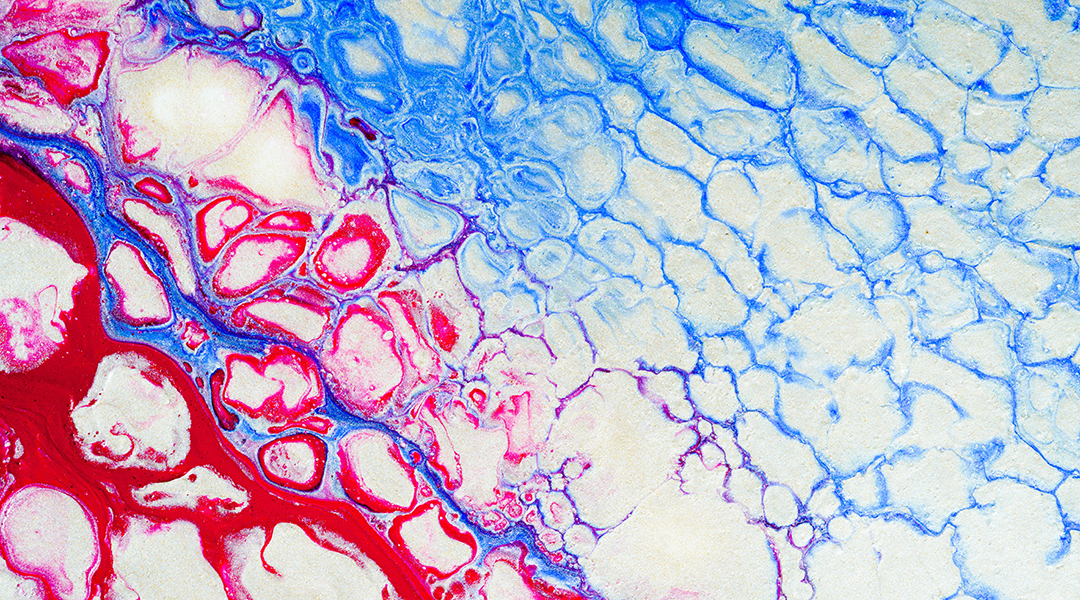
The second mechanism affected the blood vessel cells indirectly by targeting the extracellular matrix. In this scenario, the cells themselves remained intact, but the venom degraded the structural support provided by the extracellular matrix. As a result, the blood vessel collapsed, leading to blood leakage. This mechanism was observed with viper venoms.
By using this organ-on-a-chip technology, the researchers could accurately replicate and observe the real-time effects of snake venom on blood vessels. This breakthrough not only enhances the understanding of how snake venoms cause internal bleeding but also offers a promising alternative to traditional methods, potentially reducing the reliance on animal testing in toxicity studies.
Current antivenoms are primarily produced by injecting animals with snake venom and collecting the antibodies generated by their immune systems in response. The recent findings on the distinct mechanisms of snake venom action could be instrumental in developing new antivenom drugs that directly target and neutralize these specific effects.
In future studies, researchers aim to delve deeper into the workings of these venoms by isolating and examining individual toxins. By identifying the specific toxins responsible for the observed effects, they hope to gain a more detailed understanding of venom action. Additionally, they plan to initiate neutralization studies to determine if they can counteract the venom’s effects effectively. This approach could lead to the creation of more precise and effective antivenoms, enhancing treatment options for snakebite victims.
- ONLINE NEWS Fernandez, C. R. (2024, June 12). Organ-on-chip shows effects of snake venom on blood vessels for the first time. Advanced Science News. [Advanced Science News]
- JOURNAL Bittenbinder, M. A., Bonanini, F., Kurek, D., Vulto, P., Kool, J., & Vonk, F. J. (2024). Using organ-on-a-chip technology to study haemorrhagic activities of snake venoms on endothelial tubules. Scientific Reports, 14(1). [Scientific Reports]
APA 7: TWs Editor. (2024, June 20). Organ-on-a-Chip Reveals Snake Venom’s Impact on Blood Vessels. PerEXP Teamworks. [Online News Link]


