



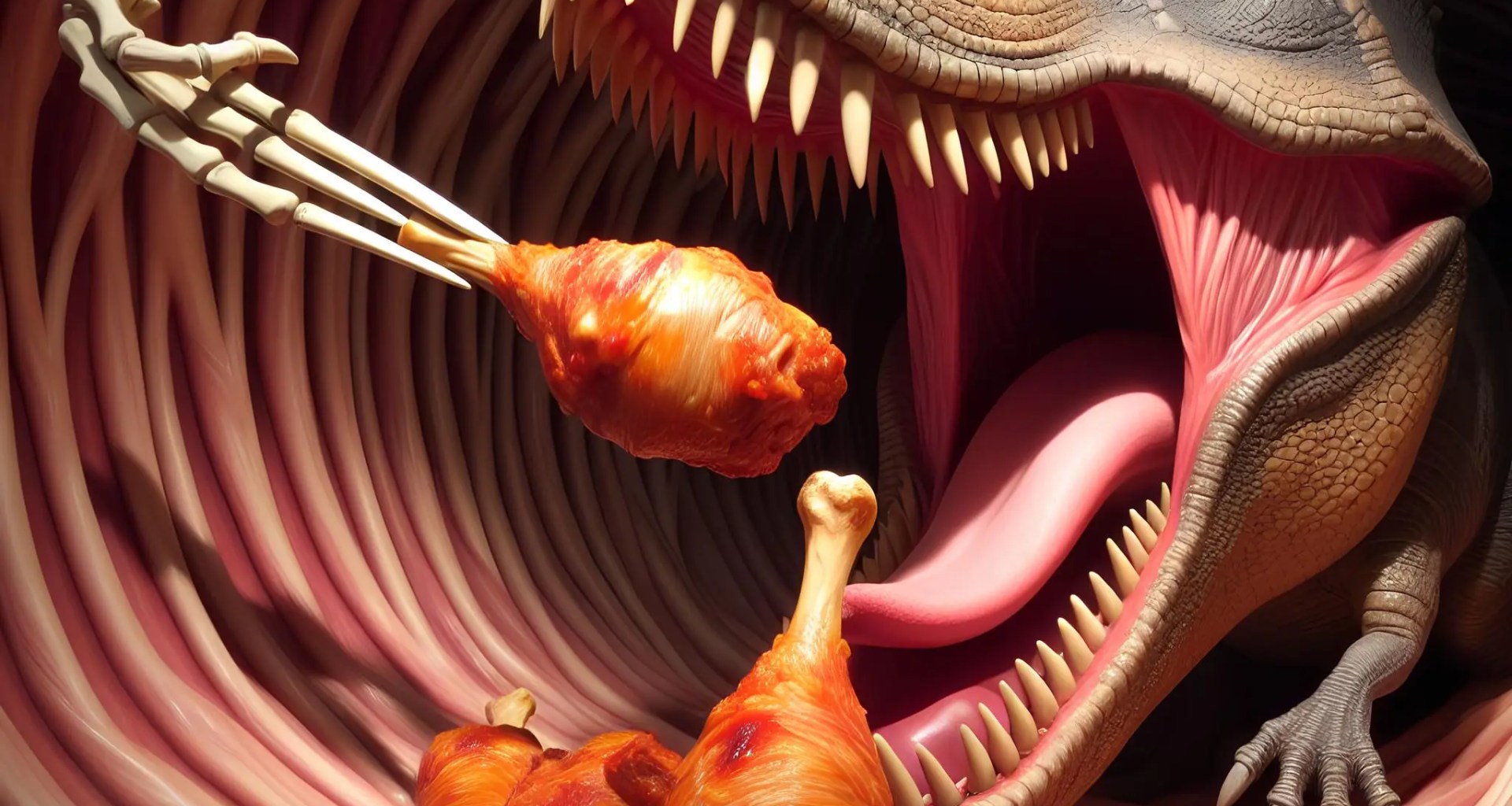
The discovery of a Gorgosaurus skeleton, a member of the tyrannosaurid family akin to the T-Rex, has provided valuable insights into the growth and dietary habits of these fearsome dinosaurs. The specimen, believed to be around six years old at the time of its demise over 75 million years ago, was unearthed in 2009 at Dinosaur Provincial Park, east of Calgary, Canada. Upon closer examination in the lab, researchers were astonished to find well-preserved remains of the dinosaur’s last meal still in place.
The remarkable aspect of this discovery was the presence of small leg bones protruding from the Gorgosaurus’s ribcage, which turned out to belong to two juvenile, bird-like dinosaurs called Citipes. Unlike the massive plant-eating dinosaurs typically associated with adult tyrannosaurs’ diets, Citipes were small, feathered, and walked on two feet, somewhat resembling modern-day cassowaries.
The study’s lead author, Francois Therrien of the Royal Tyrrell Museum, expressed amazement at finding the remains of the Gorgosaurus’s last meal intact. The surprise deepened as it became apparent that this young tyrannosaur had been a “fussy eater,” utilizing its sharp teeth to consume only the legs of the juvenile Citipes. In the words of co-author Darla Zelenitsky, a paleontologist at the University of Calgary, “This teenage Gorgosaurus seems to have had an appetite for drumsticks.”
Sometimes prey, sometimes predator
The recent discovery of a Gorgosaurus skeleton, a member of the tyrannosaurid family similar to the iconic T-Rex, has not only shed light on the dietary preferences of these formidable predators but has also provided rare insights into their growth and evolution. The findings suggest a significant shift in diet for tyrannosaurids as they transitioned from juveniles to adults.
In their early years, young tyrannosaurs exhibited slender heads and legs, armed with sharp, knife-like teeth suited for dissecting carcasses. These juveniles likely resembled the velociraptors depicted in “Jurassic Park” more than the massive T-Rex. With the ability to run swiftly, they primarily preyed on smaller, turkey-like dinosaurs. However, as they reached middle age around 11 years old, tyrannosaurs underwent a remarkable transformation.
During this growth phase, their bodies expanded nearly tenfold, reaching weights exceeding 3,000 kilograms (6,600 pounds). Their heads broadened, and their teeth evolved into robust structures, likened to “killer bananas,” capable of crushing large bones. This drastic change was accompanied by a shift in diet, as the tyrannosaurs abandoned their youthful preference for smaller prey and transitioned to hunting giant plant-eating dinosaurs.
According to Darla Zelenitsky, a paleontologist at the University of Calgary, the Gorgosaurus fossil represents the first solid evidence that tyrannosaurids underwent significant dietary changes during their growth. This adaptation likely contributed to their ecological success, allowing them to evolve from mesopredators in their youth to apex predators in adulthood. The transition mirrors patterns observed in other species, such as crocodiles and Komodo dragons, which undergo similar shifts in diet as they mature.
The researchers argue that this flexibility in dietary preferences might be a key factor in why tyrannosaurs, including the T-Rex, were so successful and dominant in the ecosystems of North America and Asia during the late Cretaceous period. The ability to fill different roles in the food chain likely contributed to their evolutionary success.
Resources
- ONLINE NEWS Lawler, D. (2023, December 8). “Appetite for drumsticks”: First prey found in a tyrannosaur stomach. Phys.org. [Phys.org]
- JOURNAL Therrien, F., Zelenitsky, D. K., Tanaka, K., Voris, J. T., Erickson, G. M., Currie, P. J., DeBuhr, C. L., & Kobayashi, Y. (2023). Exceptionally Preserved Stomach Contents of a Young Tyrannosaurid Reveal an Ontogenetic Dietary Shift in an Iconic Extinct Predator. Science Advances, 9(49), eadi0505. [Science Advances]
Cite this page:
APA 7: TWs Editor. (2023, December 9). A Leg Bone in a Tyrannosaur’s Belly: The First Evidence of Its Prey. PerEXP Teamworks. [News Link]


