



Browsing Category
Articles
26 posts
The page with all of our science and art articles!
Subcategories

Deep Learning: What Does It Do, How Does It Work, Why Is It Important?
Deep learning is like a key that allows one to step into the mysterious world of images, sounds, and texts. This technology recognizes faces, understands objects, and searches for the secrets of language by deciphering complex patterns. It creates a revolutionary impact in every field, from medicine to automation, finance to transportation. Deep learning shapes the future by enabling us to make discoveries in an ocean of data full of unknowns. For more information, don't forget to check out the "Deep Learning: What Does It Do, How Does It Work, Why Is It Important?" (Spesific article) article, written by Ne Bilim and edited by Ahmet Ege Çarıkçıoğlu!

From The Infinity Gauntlet to Across to the Spider-Verse: These Six Galaxies Were Never Supposed to Exist
No one was expecting them. They weren't supposed to be there. And now no one can explain how they were formed.
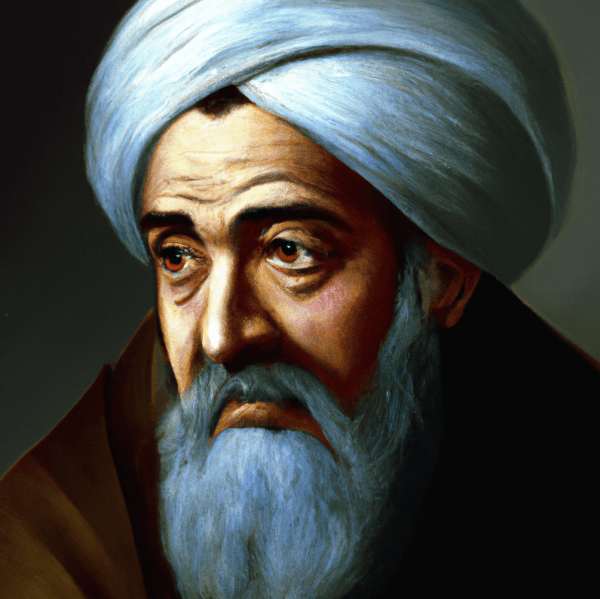
Avicenna
Avicenna (Persian: ابن سینا), Abu Ali Sina (Persian: ابوعلی سینا) or "Ibn Sina" as Easterns call him (980 – June 1037) was a Persian polymath (Hezarfen / a person with extensive knowledge in many different disciplines). He is considered one of the most significant doctors, astronomers, thinkers, writers, and scholars of the Golden Age of Islam period, and a physician known as the father of polymeric (Multiple fields) early medicine.

Chronological Dating of Archaeopteryx and Its Fossils
If you want to perform a study in paleontology and paleozoology, you should have findings in your hand. Because the main thing that advances these branches of science is discovery, any fossil that can be found can completely disprove your hypothesis or move it toward a different area. So, the topic of this article will also be a creature that has entirely changed our perspective on feathered dinosaurs.

Khwarizmi
Khwarizmi, Al-Khwarizmi, Khwarizmi (The names may differ. Persian: خوارزمی) or full name Abu Jafer Muhammad bin Musa al-Khwarizmi (780, Khwarizm - 850, Baghdad); is a Persian scientist who worked in the fields of mathematics, astronomy, geography, and algorithms. Latin translations of his works on Indian numerals introduced the decimal positional number system to the Western world in the twelfth century.

Jia Xian
Jia Xian (Simplified Chinese: 贾宪, Traditional Chinese: 賈憲, Pinyin Alphabet: Jiǎ Xiàn, Wade-Giles /Beijing Chinese: Chia Hsien; 1010-1070) was a Chinese mathematician and astronomer. Besides the fact that he succeeded in defining Pascal's triangle in the eleventh century, he made many mathematical inventions and astronomical discoveries.

Brahmagupta
Brahmagupta (Sanskrit: ब्रह्मगुप) (598 – 668 AD) was an Indian mathematician and astronomer. He has two important works on mathematics and astronomy, the theoretical “Brāhmasphuṣasiddhānta (628)” and the more practical “Khaṇḍakhādyaka (665)”. Brahmagupta is the scientist who first gave the rules for trading with zero. Since the proofs are not offered, it is not known where Brahmagupta's mathematics was derived from.

Aryabhata
Aryabhata (Devanagari/Indian and Nepalese alphabet: आर्यभट) (476 – 550 AD) was an Indian scientist from the classical Indian traditions of mathematics and astronomy. He is the father of the Indo-Arabic numeral system, which is universally used today. His well-known works are "Aryabhatiya" and "Arya-siddhanta". It was inspired by the name of the first Indian unmanned satellite launched.

Kidinnu
Kidinnu is a Mesopotamian scientist who lived in the fourth century BC, whose name was given to a Lunar crater with a surface area of more than Croatia (60 km2), made lots of contributions to astronomy and mathematics, and is considered the “Father of science”.

Aristotle
Aristotle is an Ancient Greek philosopher and scientist. He is a respectable figure in the history of philosophy and has worked in many fields. According to him, natural philosophy is the most important for philosophers. In addition to natural sciences such as physics, chemistry, biology, zoology (Animal science), botany (Plant science), psychology, political science, ethics; logic, metaphysics; history, literary knowledge, and rhetoric, he was interested in social fields such as.