




Early screenings of David Fincher’s new film The Further Mis-Adventures of Cliff Booth sparked backlash after viewers reported obvious generative AI visuals. The complaints surfaced days before the movie’s November 25 premiere on Netflix, with attendees posting about distorted background details, strange visual glitches, and inconsistent face textures [1]. The reaction puts David Fincher AI use under public scrutiny, especially given his long reputation for visual perfection on films like Fight Club and The Social Network [2].
Reactions to David Fincher AI Visuals
Complaints surfaced across social media following private critic screenings held last week ahead of the release. Several attendees claimed the sequel looked full of inconsistent imagery that felt closer to online slop than to Fincher’s typical visual standards. Some viewers vowed on X that they would never watch another movie from Fincher or Brad Pitt. The early responses quickly created a test for how viewers react to generative tools in major releases [1].
Much of the frustration centered on how unusual such flaws seem from a director praised for invisible VFX. Fincher directed Se7en in 1995. He followed it with Fight Club in 1999 and The Social Network in 2010, building a reputation for control over every frame. But he has always used digital tools to correct tiny flaws that most viewers would never notice. For the 4K restoration of Se7en, he used generative AI tools to clean up shot compositions that he found sloppy [2].
In March, Bloomberg reported that Fincher was using AI-powered post-production tools built by InterPositive, a company started by Ben Affleck. That earlier report gained fresh attention as attendees from the advance screenings posted their reactions. The online discussion around David Fincher AI use also revived interest in his past technical experiments [2]. A few critics suggested the rough shots might just be bad computer graphics, but many viewers felt the strange textures pointed to generative models [1].
Patrick Tomasso on Advance Screenings
One of the most vocal reactions came from filmmaker and critic Patrick Tomasso, who runs a technical film channel on YouTube. Tomasso walked out. After attending an advance screening, Tomasso said on X that he felt “completely gutted” by what he described as “some of the most blatant and egregious AI use” he had ever seen from a major studio production. He added that the film featured “slop as you know and loathe it” and compared the look to output from Higgsfield [1]. In a follow-up post, Tomasso described specific visual anomalies from the screening, noting that character faces changed mid-scene, fine lines garbled, and backgrounds displayed unnatural motion. He also listed erratic signs, fire, traffic, and full body performance swaps that undermined the realism of the scene [2].
Another user who claims to work in VFX replied to Tomasso on X, writing that “the amount of AI in the CLIFF BOOTH movie is astounding to an absurd degree” [1]. The complaints show growing viewer sensitivity toward automated imagery in feature films, especially as unconvincing synthetic projects struggle for credibility at the box office [2]. Creative skepticism of automation in Hollywood echoes broader industry debates documented in Ben Feder’s comparison of creative AI resistance to Toy Story. The reaction suggests that even minor visual errors can provoke strong pushback when attached to prominent filmmakers like Fincher [1].
Neither Netflix nor Fincher has confirmed or denied whether generative software was used on the film. Netflix’s silence allowed questions to circulate among fans throughout the weekend. But viewers pointed out that Netflix has backed several machine learning initiatives, making automated tools in a prominent release seem plausible to many observers [1].

Suspicious Shots in the Trailer
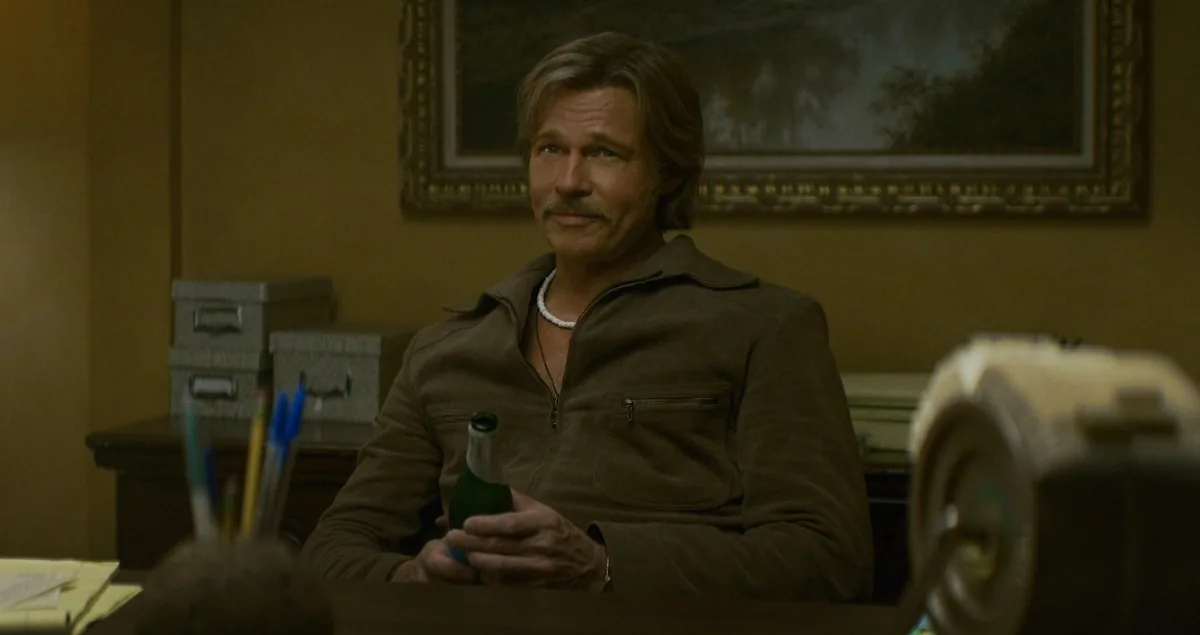
Set in 1977, roughly a decade after Once Upon a Time in Hollywood, the film follows Cliff Booth, played by Brad Pitt, after he leaves stunt work to become a fixer for Hollywood elites. Pitt stars as Booth. Booth takes side jobs as a bartender and projectionist as he helps wealthy clients manage private scandals. The story focuses on his romance with talent agent Karen Crosby, played by Elizabeth Debicki, and his work for television actor Charlie Peters (Scott Caan), who hires Booth to stop his wife (Carla Gugino) from being murdered [1].
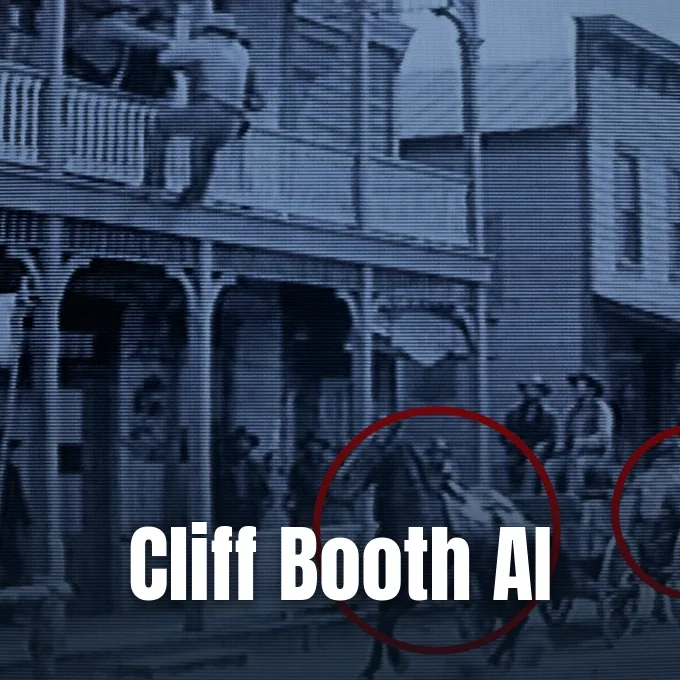
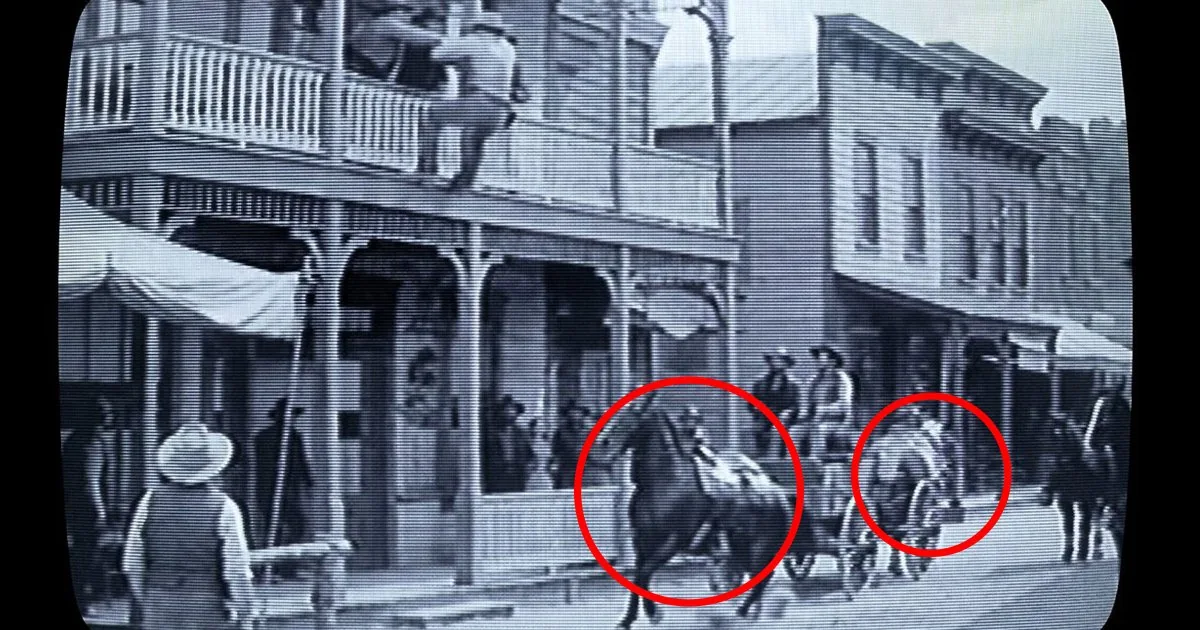
Questions about the imagery spread beyond private screenings after viewers spotted strange moments in the official trailers on YouTube. One trailer features a shot of two people riding backward in a horse-drawn wagon holding reins for horses that are situated behind them on the road [1]. Film fans clipped the scene and shared it online, arguing that the backwards posture and odd physical movement matched typical mistakes produced by generative video generators [2].

Viewers pointed out that carriage reins and moving animals are difficult for automated models to generate with realistic spatial geometry [2]. Digital composition software can create odd perspective errors during hurried production, but the carriage scene became a key talking point for critics. The trailer gave viewers a concrete clip to examine as they waited for the full movie to arrive on Netflix [1].
Netflix and InterPositive
Much of the suspicion around the film stems from corporate deals Netflix completed earlier this year, when it bought Ben Affleck’s startup InterPositive for roughly $600 million. Unlike commercial tools that create synthetic images from simple text prompts, InterPositive designs models to produce visual assets based on actual footage captured during production. Netflix stated that the system helps crews adjust lighting, remove background objects, and match a director’s style without expensive reshoots [1].
Fincher is known for shooting dozens of takes to achieve exact camera angles and lighting setups [1]. Using AI-powered tools from InterPositive fits his pattern of embracing digital software to adjust small details during editing [2]. Linking David Fincher AI experiments to proprietary studio software raises broader questions about automated tools. If those tools caused the garbled lines and distorted faces described by viewers, the acquisition could raise questions about how automated software affects visual quality on major productions [1].
Netflix bought the startup and absorbed the InterPositive team to speed up post-production workflows on original movies. The studio wanted to show how machine learning tools could support high-budget filmmaking. But the controversy around The Further Mis-Adventures of Cliff Booth risks turning the $600 million deal into a warning about using automated tools on screen [1].
Where David Fincher AI Debates Head
Fincher addressed generative tools in an interview with the Los Angeles Times, defending the use of new technology in cinema. When asked about his perspective on automated tools, he said, “I’m not a Luddite, so I don’t fear the unknown”. He asked why people want artists to stop experimenting with technology, pointing out that painting has evolved over 40,000 years as movies are barely a century old [1].
In the same interview, Fincher pushed back against demands for filmmakers to abandon new digital methods. He questioned whether directors should return to celluloid when cinema is only a hundred years old compared to 40,000 years of painting. Fincher argued that demanding an end to technological iteration makes little sense when tools allow creators to adjust details like eye color on screen. “Well, it exists,” he said of generative tools. “Should we not use it?” [1].
The debate over David Fincher AI tools shows growing friction between studio adoption and audience expectations of human craft. With The Further Mis-Adventures of Cliff Booth launching on November 25, viewers can soon watch the entire film on Netflix and decide whether the controversial shots were generative glitches or ordinary visual effects errors. The reaction will likely influence how openly studios discuss automated tools on upcoming films [1].
- ONLINE NEWS Pulliam-Moore, C. (2026, November 24). David Fincher is being dragged for suspected use of AI in his latest film. The Verge. [Article Link]
- ONLINE NEWS Landymore, F. (2026, November 22). David Fincher’s new movie is apparently stuffed with AI. Futurism. [Article Link]


