




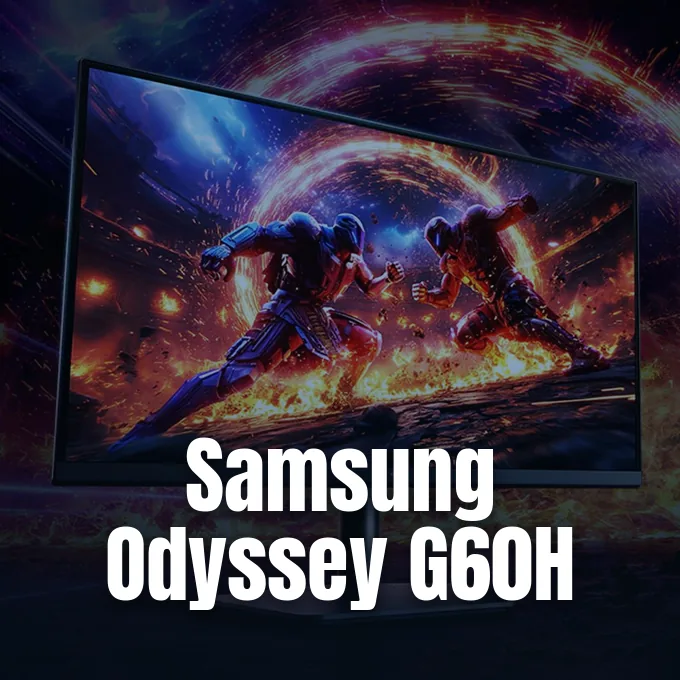
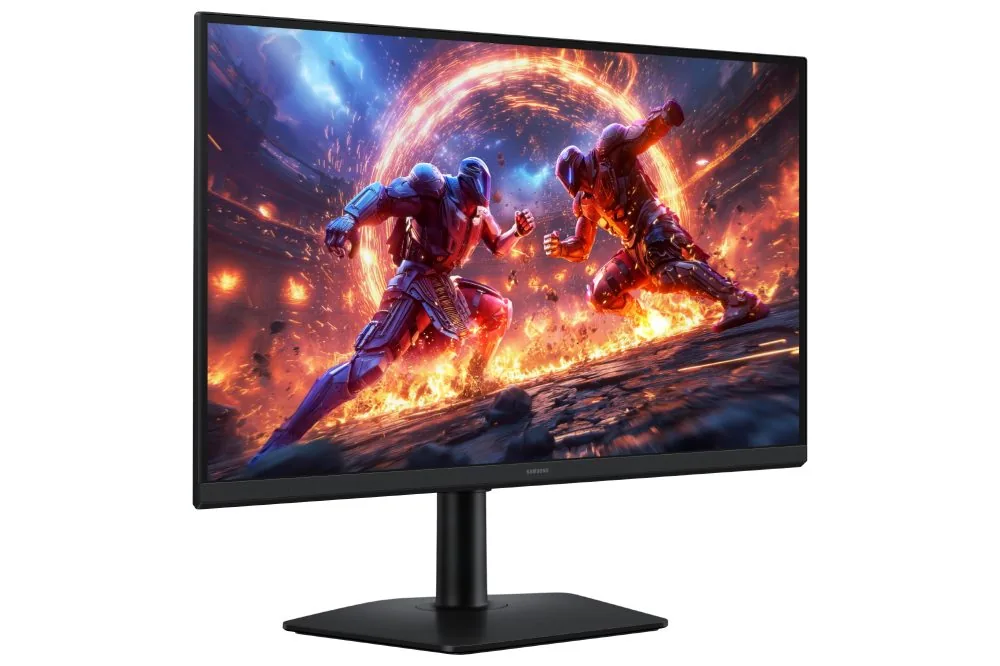
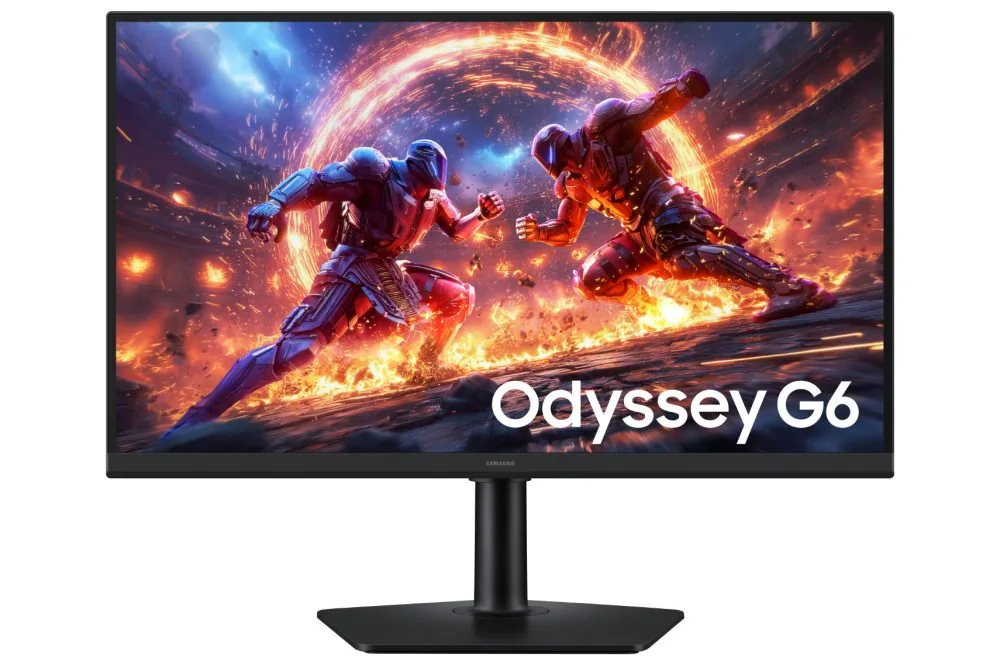
On November 24, 2026, Samsung unveiled the Samsung Odyssey G60H, a 27-inch gaming display capable of reaching an 1,100Hz refresh rate in high-definition resolution [1]. The display relies on hardware-based Dual Mode switching, allowing players to alternate between native QHD resolution at 600Hz and 720p at 1,100Hz. Designed specifically for competitive esports players who prioritize input responsiveness over visual fidelity, the monitor listed on Amazon for $894 to deliver extreme frame pacing without unnecessary price markups [2].
Dual Mode Refresh Rate Mechanics
In its native state, the monitor operates as a 2560×1440 panel running at 600Hz without requiring user overclocking, delivering fluid motion output directly through standard graphics interfaces [2]. Engaging the Dual Mode feature instructs the internal scalar to drop resolution down to 1280×720 [1]. That adjustment allows the panel to redraw an image every 0.91 milliseconds [2].
Cutting the resolution to 720p slashes total pixel volume by 75%, reducing the active image to exactly one fourth of standard QHD output. This trade-off will turn away casual players who want sharp desktop text or sprawling open-world visuals, but competitive shooters operate under entirely different requirements. Zak Killian of Tom’s Hardware pointed out that games such as Valorant or Counter-Strike easily generate massive frame rates at low resolutions when paired with fast processors, giving tournament participants lower display latency when tracking fast opponents across the screen [2]. Samsung built this resolution switch directly into the display scalar, allowing instantaneous toggling without software reconfigurations. Competitive teams frequently configure custom low resolutions to maximize frame times during tournaments. Players can swap between crisp productivity and tournament speed with a quick setting change.
The monitor uses a Fast IPS liquid crystal panel with an official 1ms gray-to-gray response time [1]. Independent testing notes that manufacturer response numbers often reflect a measured range from 1.00 to 1.99ms rounded down to the lowest digit [2]. Under challenging pixel transitions, real response times might rise to 3 or 5ms.
Resolution Trade-Offs for Samsung Odyssey G60H
The Samsung Odyssey G60H makes a clear separation between visual sharpness and raw frame delivery. Stretching 1280×720 pixels across a 27-inch screen creates soft edges and noticeable pixelation during desktop tasks. João Silva of KitGuru said that dropping down to 720p means most gamers will likely stick to the 600Hz 1440p mode for everyday gaming, keeping the 1,100Hz profile ready for tournament matches [1]. It gives players flexibility without forcing them to buy two separate monitors for work and play. Running at 600Hz in 1440p already exceeds the refresh rates of almost every gaming display currently sold on the market.
Panel specifications include a typical brightness of 400 cd/m², claimed 99% sRGB color gamut coverage, and a 1000:1 native contrast ratio [2]. These figures align with standard gaming IPS monitors rather than high-contrast displays like the Alienware AW3426DW QD-OLED gaming monitor, but the IPS matrix avoids permanent burn-in risks during long gaming sessions.
Samsung also added HDR10+ Gaming certification to the feature set [1]. This protocol allows compatible graphics drivers and game engines to automatically calibrate tone mapping without manual menu adjustments, preserving contrast details during intense online matches. While it can’t transform a 400 cd/m² screen into a blinding light cannon, it prevents blown highlights in bright skyboxes. The monitor also includes basic HDR10 support, yet the absence of mini-LED local dimming zones means contrast remains typical for liquid crystal hardware [2]. Players get consistent visibility in dark corners where rivals might hide during competitive rounds. Balanced tone curves ensure fine textures remain visible under harsh arena lighting.

Odyssey Clear Motion and Motion Clarity
The monitor introduces Samsung’s proprietary Odyssey Clear Motion system [1]. Samsung stated that the feature “reduces motion blur to help players see fast-moving action more clearly during critical moments in gameplay” [2]. Motion blur reduction usually relies on black frame insertion or backlight pulsing, but Samsung previously offered backlight strobing for over a decade.
Samsung said that “through the optimised blur reduction algorithm, the Odyssey G6 keeps fast-changing scenes clear and crisp,” adding that it plans to bring the technology to future gaming displays. High refresh rates naturally diminish blur because pixel persistence shrinks with every frame update. Analysis from Blur Busters shows that a 1,000Hz refresh rate reduces motion blur to approximately one pixel per 1,000 pixels per second of movement at 1ms persistence, and reaching 1,100Hz trims that blur down to 0.91 pixels [2]. This tiny persistence level brings LCD motion clarity closer to the legendary sharpness of analog CRT monitors without sacrificing screen brightness, giving players a clean visual field during rapid camera rotations. Fast-moving targets remain sharp across the entire panel area during sudden mouse sweeps.
Adaptive synchronization is supported through AMD FreeSync Premium certification and Nvidia G-Sync compatibility [1]. Anyone studying variable refresh rates in G-Sync vs FreeSync monitors knows that synchronizing refreshes prevents screen tearing during frame rate dips. But Samsung confirmed an important limit: players cannot use FreeSync when running the monitor at its 1,100Hz ceiling [2].
Display Connections on Odyssey G60H
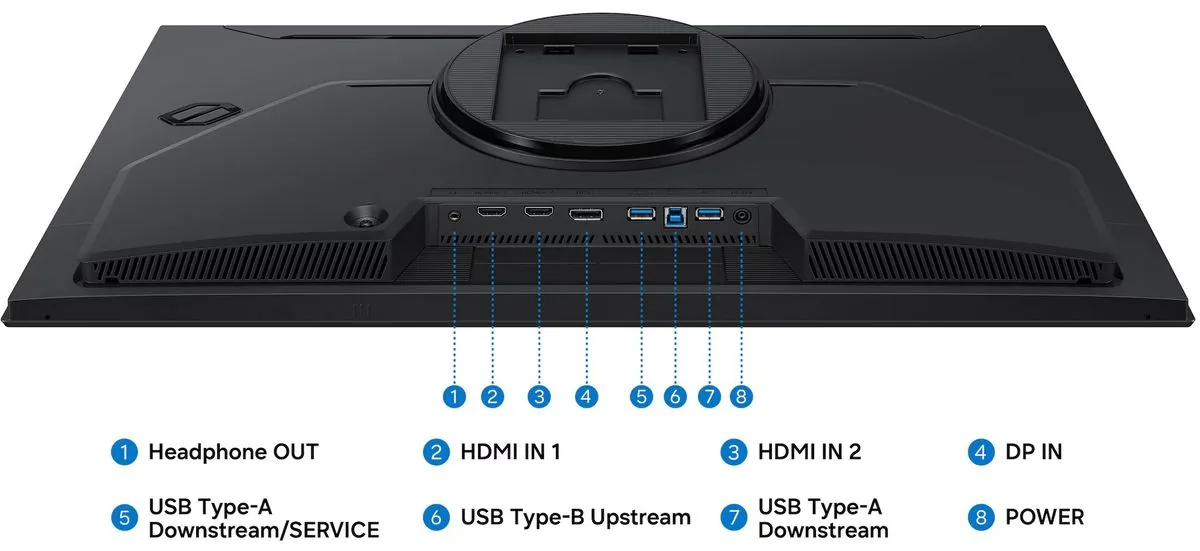
Video connectivity includes one DisplayPort 2.1 connection and two full-sized HDMI 2.1 ports [1]. These high-bandwidth inputs supply the throughput necessary to push 2560×1440 signals at 600Hz and 720p feeds at 1,100Hz without color compression artifacts, providing uncompressed data streams directly from modern graphics cards. Desktop players get plenty of flexibility when connecting both a gaming PC and a secondary streaming box to the same display. Switching inputs takes seconds through the on-screen display menu. Standard display cables easily handle both high-definition and quad-high-definition output modes without bandwidth constraints, keeping signal integrity stable through long matches. Robust physical connectors ensure reliable contact even when cables move during desk adjustments.
Peripheral connectivity features a USB Type-B upstream connector that links the computer to two USB Type-A downstream ports. Players can plug their esports mouse and keyboard straight into the display base to simplify desk wiring. An integrated 3.5mm headphone jack provides audio passthrough from HDMI sources, while internal speakers are omitted [2].
One notable omission from the connection panel is any form of USB Type-C connectivity [2]. While creator monitors and general productivity screens often rely on single-cable USB-C video and power delivery, high-refresh gaming displays rarely need laptop charging features, especially when paired with powerful desktop towers drawing hundreds of watts. Samsung focused port bandwidth on full desktop interfaces.
Retail Pricing and Competitive Esports
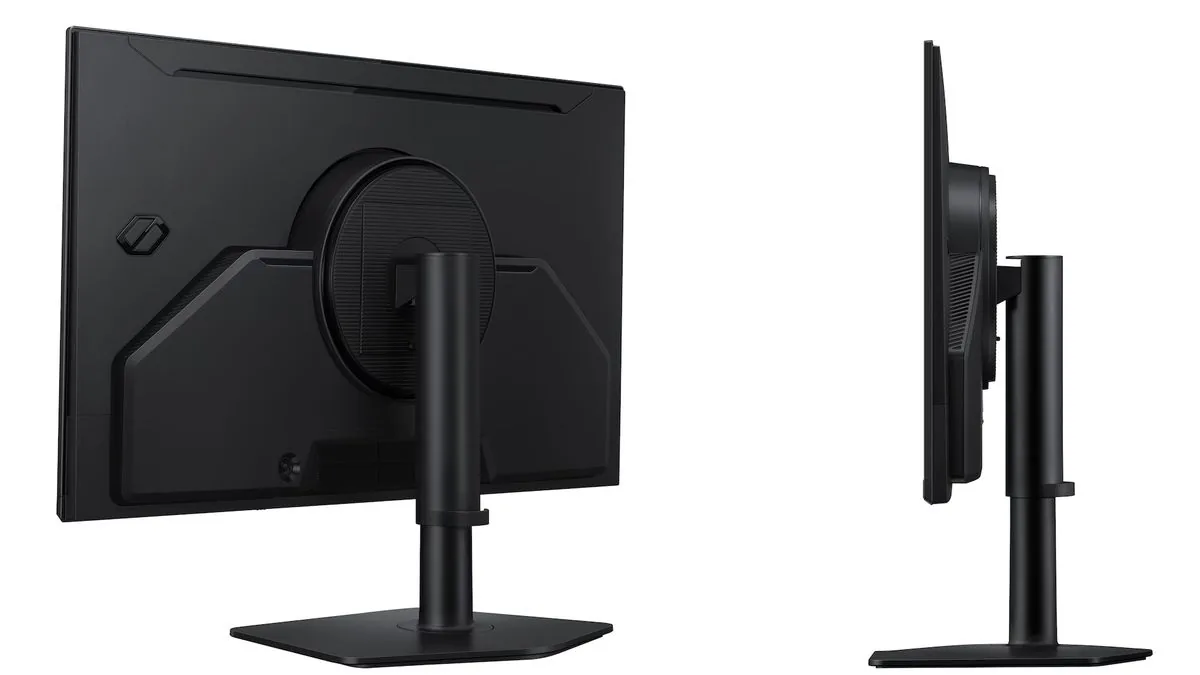
Ergonomic adjustments come built into the factory stand, which provides full tilt, swivel, pivot, and height tuning. Gamers can quickly pivot the panel into portrait orientation or adjust vertical clearance to match tournament desk heights. The chassis also supports standard 100×100 VESA mounting for aftermarket monitor arms [2]. Power delivery relies on an external AC adapter, which keeps heat away from the internal LCD panel and allows easy brick replacement if power fluctuations damage the adapter during transport between gaming events. Moving the transformer out of the main casing keeps the monitor chassis relatively thin and light. It helps players pack the display securely into travel crates when traveling to live competitions.
Carrying model number LS27HG602ENXZA, the display entered the retail market through Amazon at a price of $894 [2]. At this pricing point, the monitor’s numerical refresh rate actually exceeds its dollar price tag. While nearly nine hundred dollars represents a serious investment for a gaming monitor, it costs less than many flagship OLED panels that top out at 360Hz or 480Hz.
In professional gaming arenas, players routinely sacrifice resolution to ensure their crosshairs register without delay. The Samsung Odyssey G60H proves that display engineering can achieve four-digit refresh rates right now using clever dual-mode hardware [1]. Whether standard players embrace 720p gaming remains an open question, but competitive enthusiasts now have a working path to 1,100Hz speed without waiting for future panel generations.
- ONLINE NEWS Silva, J. (2026, November 24). Samsung unveils world’s first 1,100Hz gaming monitor. KitGuru. [Article Link]
- ONLINE NEWS Killian, Z. (2026, November 24). Samsung just launched a gaming monitor with a refresh rate higher than its price — dual-mode Odyssey G60H offers 1,100 Hz in HD. Tom’s Hardware. [Article Link]


