





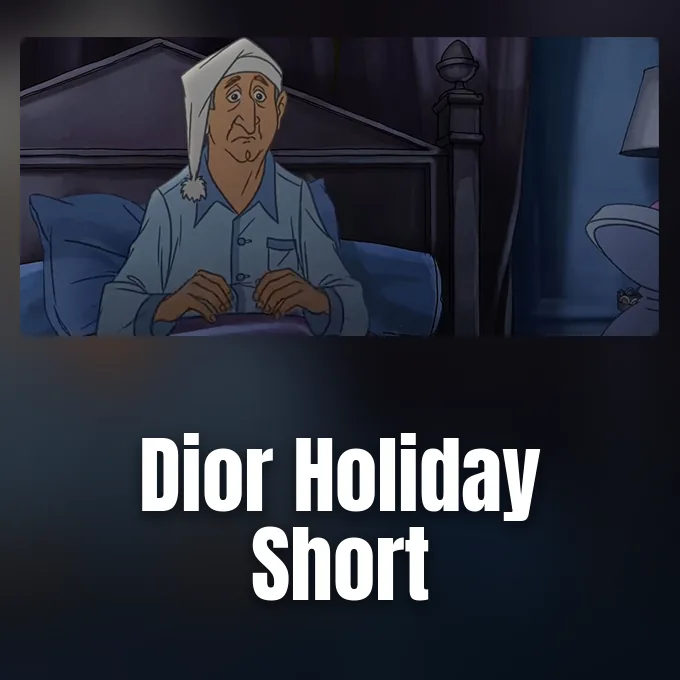
French animator Sylvain Chomet has pushed back against claims that generative artificial intelligence created the new Dior holiday ad, insisting that the six-minute film was drawn by hand [4]. The short, titled Christian Dior’s Night in Color, debuted for the French fashion house’s seasonal campaign on November 4 [3]. Speaking to trade journalists after online accusations spread, Chomet and producer Aton Soumache said a crew of twenty artists spent seven months drawing the project [4].
Why the Dior Holiday Ad Sparked Backlash
The controversy flared online shortly after Dior promoted the short as a celebration of heritage craft [4]. Online viewers closely examined the Dior holiday ad after social media posts flagged odd character movements and distorted line work [3]. Users froze frames to highlight bizarre details, including warped lettering, anatomical flaws such as a lazy eye, and a hand with what seemed to be six fingers [7].
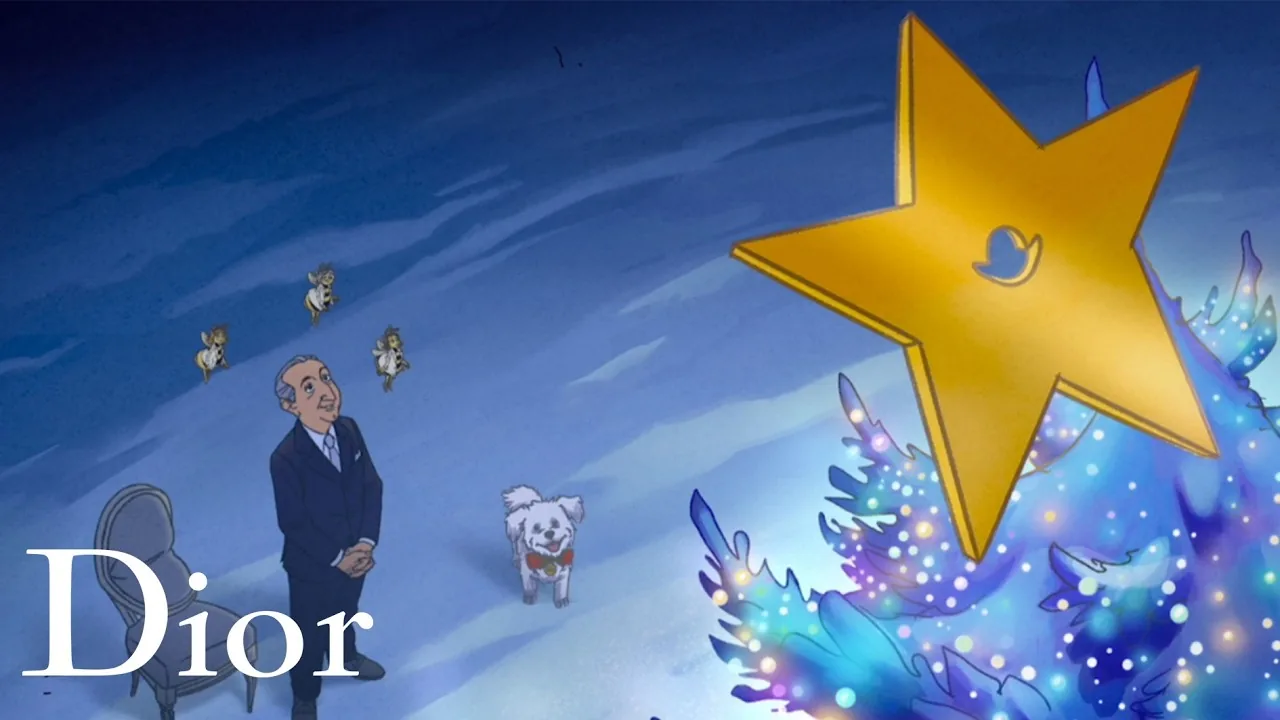
Other viewers pointed to blurry tree stars, a morphing dog collar, and strange bee tailors, arguing that such visual flaws matched defects commonly produced by generative video models [1]. Trade publications took notice [7]. Animation website Cartoon Brew had first published an article calling the film hand-drawn, but editor Jamie Lang soon issued a public correction and apology to his readers. Lang removed the hand-drawn label from his headline after social media users posted screenshots of suspicious details. In an editorial note, Lang explained that while promotional releases carried strong pro-artist messaging, the visual evidence gathered by online animators was compelling enough to warrant an immediate apology [2].
Journalists from The Business of Fashion and Fast Company contacted Dior and its parent company, LVMH, for comment, but received no reply. Dior never answered the press inquiries. The silence frustrated audiences because rival luxury house Prada had just released its own holiday film, Animated by Hand, created by former Disney animator John Pomeroy on paper [7]. Fashion Times UK noted that an Instagram user criticized the Dior short for a perceived lack of human intentionality behind each shot [3].
Seven Months of Hand Drawing
Speaking to Variety, Chomet and producer Aton Soumache rejected accusations that automated image synthesis generated the short’s visuals. Soumache dismissed rumors claiming Chomet took on the commission two weeks before release, explaining that the project required seven months of steady labor. The production employed roughly twenty artists, including six animators, storyboard artists, designers, background artists, compositors who merged drawing layers into finished frames, and film editors [4, 6]. Artists drew key poses and background plates on digital tablets. The workflow followed the traditional sequential principles Chomet practiced on The Triplets of Belleville and The Illusionist. Chomet said using a stylus changed his working surface from paper to glass, but left the fundamental creative drawing process intact [4].
The director called the accusations ironic because he has spent his career defending hand-drawn craft against commercial trends. He remembered Hollywood’s reaction following the release of Toy Story, when major American studios declared traditional 2D animation obsolete in favor of computer graphics. “I remember Disney declaring that traditional 2D animation was dead and that everything would be CGI, but I decided to continue making hand-drawn films,” Chomet said [4].
Chomet cited Disney’s 1961 classic One Hundred and One Dalmatians as his personal “madeleine de Proust,” a benchmark for graphic beauty in drawn cinema. Working on tablets brought personal artistic frustrations. Chomet said drawing on glass screens felt awkward and confirmed that he plans to return to pencil and paper on upcoming films because he prefers preserving physical original drawings. Soumache said Dior approached Chomet specifically for his recognizable authorial hand [4].

How the Dior Holiday Ad Uses Interpolation
The filmmakers clarified that their work on the Dior holiday ad did incorporate software assistance for automated interpolation between hand-drawn keyframes [4]. In animation, in-between frames fill the visual space between main poses to produce smooth motion. The Brief pointed out that generative AI creates images from text prompts or reference pictures, whereas interpolation simply calculates intermediate positions between existing drawings [6]. “We used an automated interpolation system for a very small part of the process, but the film itself is traditional 2D animation,” Soumache said [4].
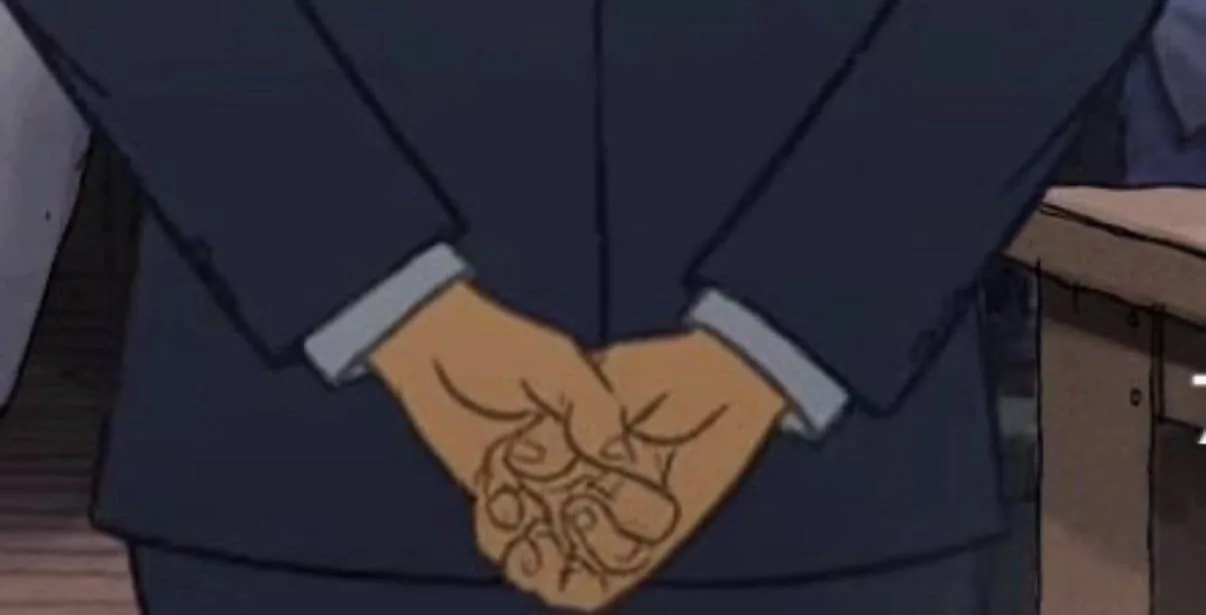
Chomet also addressed audience reactions to a frame showing a hand with six fingers [3]. “It’s a movement where the hand is spread out like a fan,” Chomet said. Animators intentionally sketch overlapping fingers to convey quick gestures in rapid action. He explained that human drawing frequently produces fleeting distortions during fast sequences, recalling historical examples where a character turning their head might briefly alter their nose across several frames without compromising the film [4]. Such quirks reflect traditional speed poses rather than machine hallucination [3].
Neither Chomet nor Soumache identified the specific interpolation software used on the film, leaving open questions about the exact technology in the pipeline. Cartoon Brew noted that automated interpolation covers a wide range of tools, including AI-assisted systems capable of synthesizing new pixels. Promotional statements from Dior further compounded the confusion. In an announcement with Women’s Wear Daily, Dior creative director Jonathan Anderson stated that the film was “all hand-drawn using techniques that go back to the 1940s”. Cartoon Brew pointed out that the lack of technical specifics left lingering doubts among industry animators [1].
The Voice Cast and Storyline
Actor Robert Pattinson narrates the six-minute short, guiding audiences through a story rooted in Christian Dior’s biography [4]. French actor Louis Garrel voices Christian Dior, and Camille Cottin plays Hollywood icon Marlene Dietrich. Dietrich sends an urgent message from Los Angeles after her director decides to shoot her upcoming movie in color instead of black and white [3]. The sudden decision sends Christian Dior and his seamstresses into a race against time to design a colorful dress, drawing direct narrative inspiration from the couturier’s historic Hollywood ties and his celebrated 1949 Junon gown [4].
Pop star Rihanna voices Dior’s Lucky Star [4]. Josh O’Connor plays an animated talking chair, and LaKeith Stanfield portrays the demanding Hollywood film director [3]. French performers Nine d’Urso, Nadia Tereszkiewicz, and Greta Lee supply the voices for three animated bees who assist the seamstresses in the Parisian couture workshop [4].
Jonathan Anderson developed the narrative concept with writer Martin Latham, taking inspiration from cinema’s historic technological shift toward Technicolor during preparation for Dior’s Cruise 2027 collection. Chomet came to the project following his work on A Magnificent Life, an animated biopic about French novelist Marcel Pagnol that premiered at Cannes. Anderson has long backed hand-drawn animation. During his earlier tenure at Loewe, Anderson commissioned three collaborative fashion lines with Japan’s celebrated Studio Ghibli [4].

Boutique Displays and Brand Craft
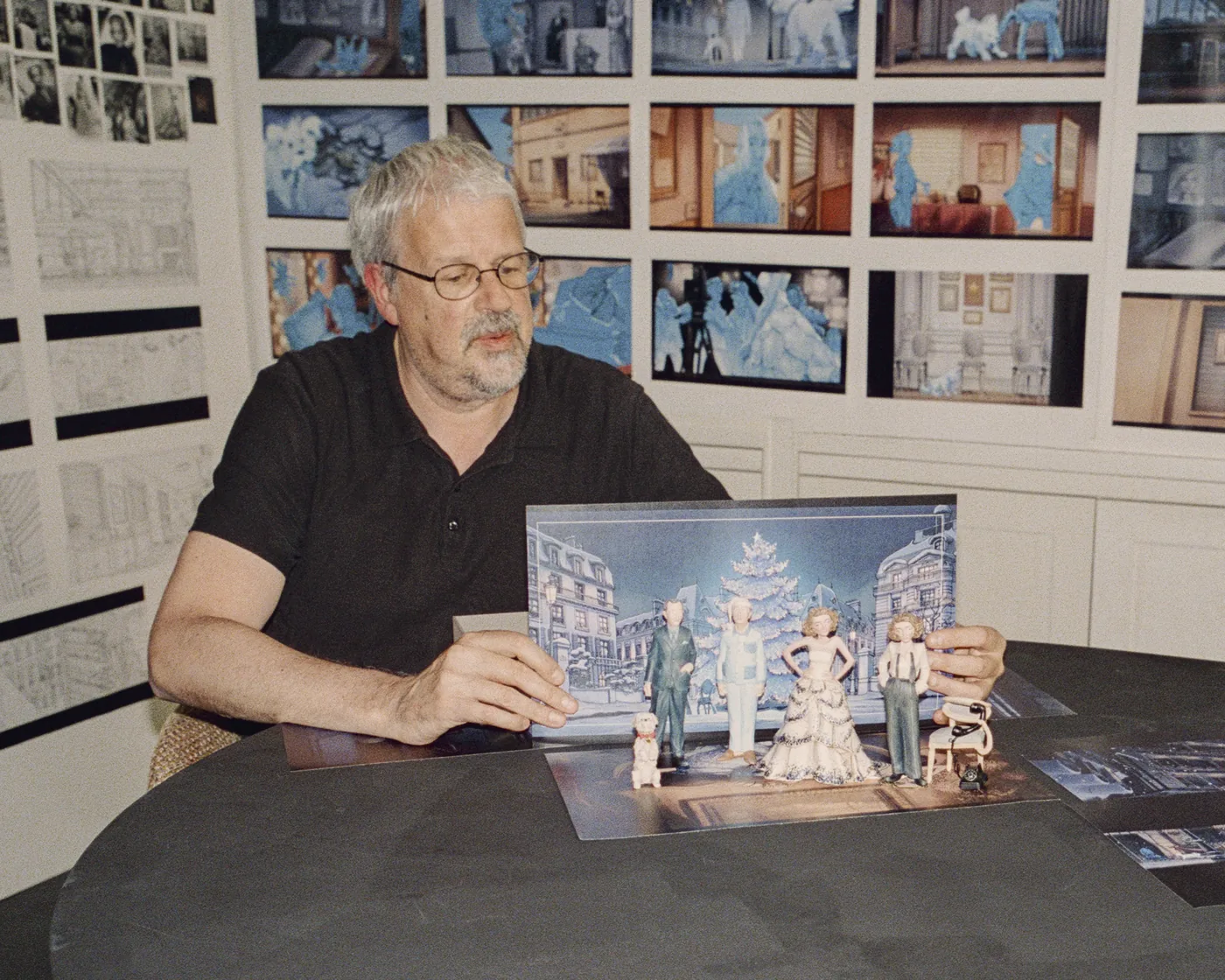
Chomet’s illustrations extended well beyond movie screens, providing the visual blueprint for Dior’s holiday rollout in retail boutiques across the world. Soumache said Dior requested concept drawings early in the year so artisan workshops could sculpt three-dimensional characters and miniature set pieces for festive store windows [4]. The physical displays demonstrate how luxury houses use animated campaigns as holistic seasonal branding rather than isolated internet advertisements [5].
The controversy reflects rising consumer skepticism toward automated imagery across high-end creative industries. Geo News observed that luxury brands rely on effort signaling, emphasizing human labor and artisanal heritage to justify premium price points. When companies market software-assisted projects as purely handmade, audiences perceive a breach of trust [7]. Arts & Voices writer Marcus Bennett noted that as AI scrutiny spreads across the animation sector, even established masters must now document their production pipelines frame by frame [5]. The Brief observed that audiences increasingly ask where human drawing ends and software calculation begins [6].
Neither Dior nor parent company LVMH has issued a formal statement about the Dior holiday ad following Chomet’s remarks [7]. Fashion Times UK noted that the debate raises a lasting question for the creative industry: can artists use modern technology to streamline mechanical tasks without audiences assuming AI did all the work [3]? For Chomet, the short remains a testament to human drawing. “We can tell very different stories from the ones Disney was telling at the time, but we can still preserve that beauty,” Chomet said [4].
- ONLINE NEWS Lang, J. (2026, November 7). Chomet Denies AI Use In Dior Ad, Cites ‘Automated Interpolation’. Cartoon Brew. [Article Link]
- ONLINE NEWS Lang, J. (2026, November 6). Sylvain Chomet’s Dior Ad Faces AI Accusations And We Apologize. Cartoon Brew. [Article Link]
- ONLINE NEWS Jewel, P. (2026, November 7). Sylvain Chomet Defends Dior Film Featuring Robert Pattinson After AI Backlash: ‘Everything Was Drawn by Hand’. Fashion Times UK. [Article Link]
- ONLINE NEWS Keslassy, E. (2026, November 7). ‘Triplets of Belleville’ Director Sylvain Chomet Fires Back at AI Accusations Over Dior Film Featuring Robert Pattinson’s Voice: ‘Everything Was Drawn by Hand’ (EXCLUSIVE). Variety. [Article Link]
- ONLINE NEWS Bennett, M. (2026, November 7). Sylvain Chomet Defends Dior Short From AI Accusations. Arts & Voices. [Article Link]
- ONLINE NEWS Villalba, J. (2026, November 7). Sylvain Chomet Denies Using AI on His Dior Animated Short. The Brief. [Article Link]
- ONLINE NEWS Web Desk. (2026, November 7). Did Dior quietly use AI to make its ‘hand-drawn’ holiday ad? Controversy explained. Geo News. [Article Link]


