



Apple is preparing to enter a new product category as the Apple smart home hub approaches an official debut. Bloomberg reporter Mark Gurman revealed that the long-rumored Apple home hub will arrive on October 13, representing the company’s first dedicated countertop command center under Chief Executive Officer John Ternus. Although early hardware development began years ago, delays tied to Apple Intelligence software pushed the release timeline into late 2026 [2]. The company has scheduled the hardware introduction for Tuesday, October 13 [4].
iMac G4 Design Anchors the Apple Smart Home Hub
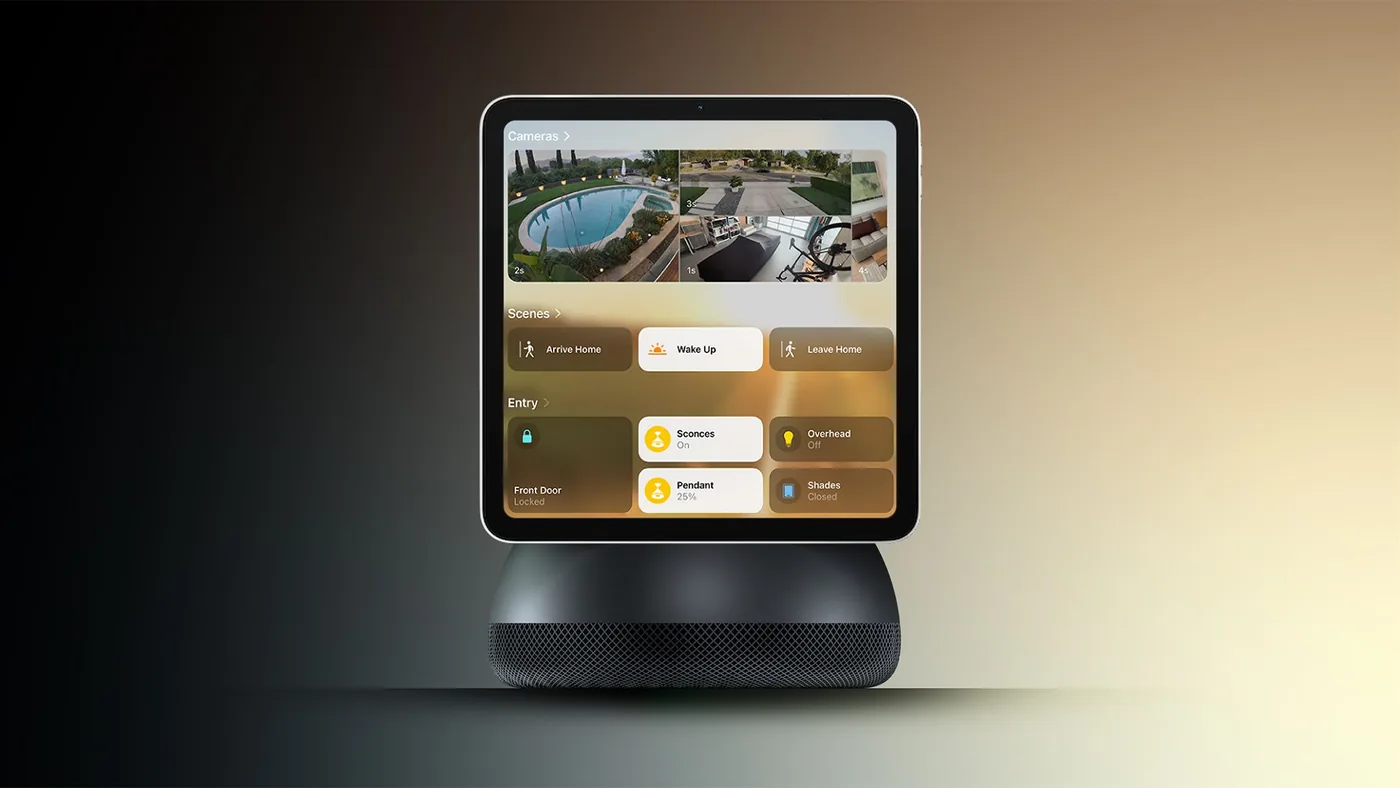
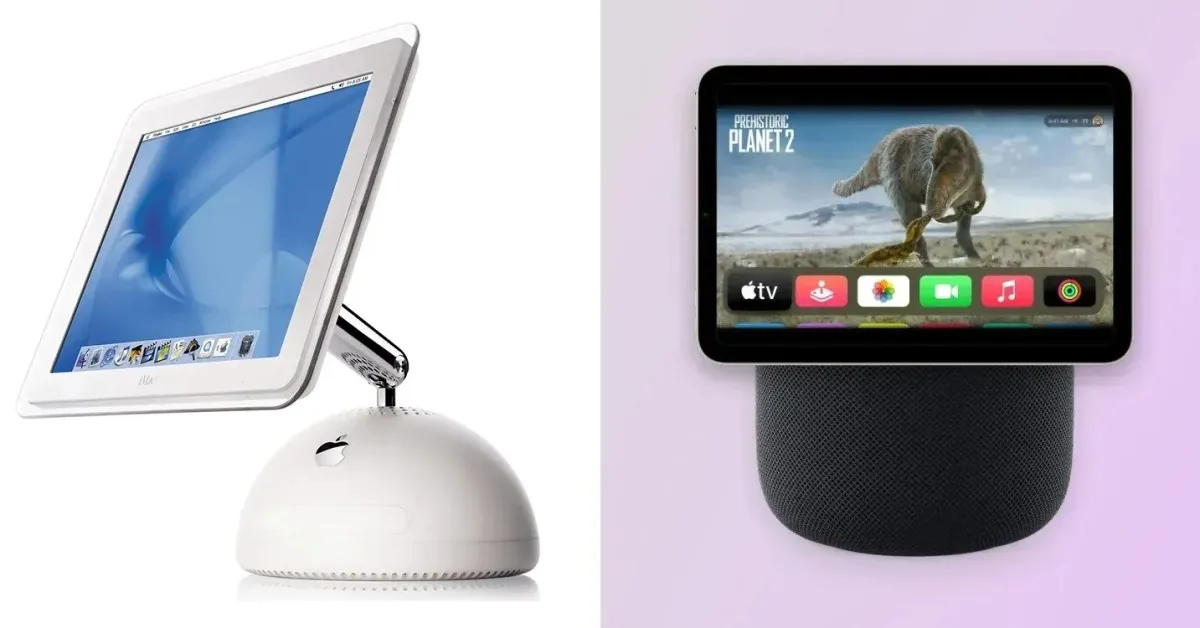
The physical chassis of the Apple smart home hub directly revives aesthetics from one of the company’s most celebrated personal computers [3]. The design pairs a compact screen with a hemispherical dome base, echoing the iconic iMac G4 released in 2002 [1]. A polished metal arm connects the display panel to the weighted base, allowing users to tilt the screen manually forward or backward for optimal viewing angles on desks or kitchen counters. The base features a rubberized bottom surface to prevent unwanted sliding during touch interactions [3]. The base houses twin speakers.
The display measures six inches. Rather than adopting widescreen proportions, Apple selected a square aspect ratio framed by quarter-inch black bezels reminiscent of classic iPad tablets [3]. The aluminum enclosure carries Apple’s signature gray metal finish, maintaining a slim profile roughly matching the thickness of an iPhone [1]. Multiple concentric rings of perforated speaker grilles wrap around the spherical base, allowing the integrated audio drivers to project sound evenly across an entire room [3].
Hardware controls have been eliminated across the exterior shell to preserve a seamless aesthetic. The unit includes no dedicated power toggle and no physical volume buttons, relying entirely on voice commands and touch gestures on the screen. Because the device lacks an internal battery, users must keep it connected continuously via a rear USB-C power port [3]. The port is standard USB-C. This design choice keeps the unit stationed in high-traffic common areas such as living rooms and kitchen islands [2].
Wall Mounting and Countertop Variants Under Code-Name J491
Apple developed two distinct hardware configurations to accommodate different rooms inside a home [3]. The primary tabletop model appeared inside internal builds of macOS Tahoe 27.6 under the hardware code-name J490 [2]. Meanwhile, engineers created a secondary wall-mounted edition identified in regulatory databases as J491 [3]. Unlike the desktop computing focus detailed in the Apple Launches New Mac Studio Release and M6 Mac Mini coverage, this dedicated home hardware prioritizes ambient utility over raw workstation performance [2].
The wall version mounts flat. It swaps the dome base for a slim enclosure containing speakers, microphones, and a continuous USB-C power connection [3].
Beyond these two immediate launch models, Gurman reported that Apple is actively prototyping a more ambitious version equipped with a larger nine-inch display mounted to a robotic motorized arm. That robotic display is designed to pivot and rotate autonomously to follow a person walking across a room, though it remains slated for a later launch window rather than the upcoming October presentation [2]. In the interim, the standard six-inch Apple smart home hub serves as the immediate foundation for the company’s broader ambient computing ecosystem, offering a fixed yet versatile interface that blends audio output with visual feedback for household management across shared family rooms [1].

Hybrid Operating System Powers the Apple Home Hub
The software driving the Apple home hub merges key architecture from several existing platforms. Engineers synthesized components from iOS, tvOS, and watchOS into a unified operating system built specifically for ambient shared screens [4]. The central interface revolves around an upgraded Siri AI assistant, presenting visual queries in the same dark graphic style deployed across other modern Apple devices [3]. Users navigate the system through responsive touch controls or hands-free voice interactions that wake the screen from sleep [1].
When resting idle, the interface displays photo slideshows and ambient clock faces modeled after StandBy Mode on the iPhone Duo. One custom clock face described by Gurman closely resembles “a lava lamp with an overlay of the time that shows the hour in digital form with minutes listed below”. A simple upward swipe from the clock or photo view opens the application launcher. From this screen, household members can organize widgets and application tiles by pressing and holding items, mirroring standard customization mechanics found on the iPhone [3].
The interface adopts a distinctive multi-panel layout across native applications. The Home Screen displays circular app icons reminiscent of the Apple Watch, but tapping an icon launches an iPad-style multi-pane workspace. In the Messages app, for example, conversation threads populate a left-hand navigation column while individual chat feeds expand across a right-hand pane. Core utilities shipping on the Apple smart home hub include Calendar, Reminders, Notes, Photos, Music, Podcasts, and FaceTime [3].

Sensors, Edge Lighting, and Visitor Privacy Protections
Personalization forms the functional core of the Apple smart home hub experience [1]. A front-facing FaceTime camera and far-field microphone array work together to identify household members through voice patterns and facial geometry [3]. When a recognized resident approaches the countertop unit, the screen dynamically rearranges itself to surface their individual calendar appointments, unread messages, and personal notes [1]. If another registered family member steps in front of the camera, the on-screen widgets adapt automatically to display their relevant data [2]. Microphones sit inside the base.
Because the integrated optical sensor lacks the sophisticated depth-mapping hardware found in iPhone FaceID modules, facial recognition accuracy remains comparatively modest [2]. Apple resolved this constraint by allowing users to enable secondary biometric verification through their iPhones for sensitive actions. A linked iPhone also functions as a fallback authenticator whenever the camera encounters ambiguous lighting or unrecognized angles. In darkened rooms, a specialized Mac-style Edge Light feature illuminates a white ring around the perimeter of the display to assist optical detection [3].
Privacy controls also extend to guests through an automated visitor mode. When an unfamiliar face approaches the screen, the system conceals sensitive calendar schedules and confidential notes. Residents can use the terminal to manage smart door locks, adjust connected thermostats, initiate multi-room intercom audio, or search cooking recipes hands-free while preparing dinner [2].
Apple TV Upgrades and the October 13 Event Schedule
The rollout of the Apple smart home hub marks a crucial milestone for Apple’s newly appointed Chief Executive Officer, John Ternus. Originally slated for introduction in 2024, the hardware was postponed after early engineering hurdles disrupted the initial development of Apple Intelligence. With the revised Siri AI engine finally launching this month, Apple now possesses the software backbone necessary to support an ambient household terminal [2]. John Ternus oversees the project.
The October 13 presentation will not showcase the hub in isolation [1]. Gurman reported that Apple plans to debut a refreshed HomePod mini and an upgraded Apple TV set-top box during the same event [3]. According to details from HotHardware writer Alan Velasco, the new Apple TV will adopt an A20 series chip to process local Siri AI queries while potentially introducing long-requested audio passthrough capabilities for home theater setups [1]. Tech analyst John Gruber of Daring Fireball separately indicated that Apple may distribute iPhone Duo review units to journalists on October 13 or 14, reinforcing expectations for a coordinated press showcase [4].
The planned hardware slate corroborates details previously outlined in the Apple Hardware Leaks Reveal iPad Mini 8 and HomePod Mini 2 report, which anticipated refreshed smart speakers in fresh color options [4]. By combining the Apple smart home hub with upgraded media streaming hardware and voice-activated speakers, Apple aims to establish a cohesive living room ecosystem capable of challenging existing smart displays [1]. Whether consumers embrace a countertop terminal without physical buttons will become clear once the hardware reaches living rooms following the October 13 unveiling [3].
- ONLINE NEWS Velasco, A. (2026, September 30). Apple preparing massive smart home push with new AI hub and Apple TV. HotHardware. [Article Link]
- ONLINE NEWS Dent, S. (2026, September 30). Apple’s smart home hub could arrive next month. Engadget. [Article Link]
- ONLINE NEWS Charlton, H. (2026, September 30). Apple smart home hub to feature iMac G4-style design. MacRumors. [Article Link]
- ONLINE NEWS Lovejoy, B. (2026, September 30). Apple’s HomePad smart home hub launching on Oct 13 with iMac G4 design – Bloomberg. 9to5Mac. [Article Link]


2 comments