





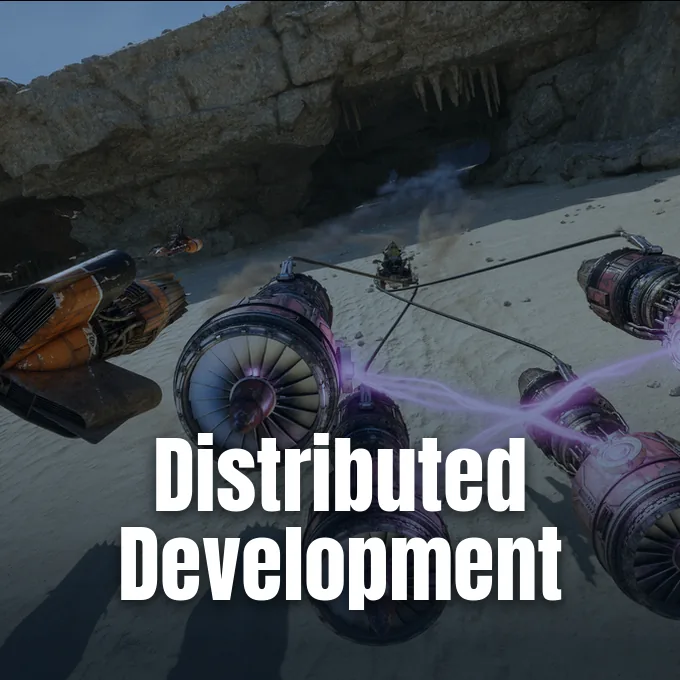
Matt Webster, CEO of UK game studio Fuse Games, revealed at Game Republic New Horizons that his team delivered Star Wars: Galactic Racer with a core in-house group of fewer than 75 staff. It launched on October 6 for PC, PlayStation 5, Xbox Series X/S, and Amazon Luna, earning a Metacritic score of 88 on PS5 following positive critical reception ahead of launch. Rather than swelling payroll to AAA levels, Fuse Games relied on distributed development to scale work through outside partners [1].
Why Galactic Racer Kept a Small Core Team
Major studios often hire hundreds of developers for blockbuster releases, as shown when Rockstar Games disclosed more than 4,700 staff members this month. Fuse Games chose a different path for Galactic Racer. It kept central staffing below 75 people from day one [1].
Webster said that keeping the core team small helps protect Fuse Games from painful boom-and-bust hiring cycles that disrupt long productions across the wider games industry. When teams shrink after shipping a big release, they don’t just cut payroll; they lose hard-won craft, working relationships, and shared team memory that costs far more to rebuild over time. Webster described the philosophy behind that decision in plain terms: “Because when you shrink, there’s a personal impact to people, but you also lose an incredible amount of knowledge, which I think is probably way more expensive to retrieve.” Partnering with publisher Secret Mode, the developers decided early on that scaling through outside partnerships would keep the company stable [1].
Fuse Games didn’t want to hire hundreds of people just to let them go once the game shipped, preferring to keep every permanent role secure throughout the multi-year production cycle. Webster said the core group “averaged a lot smaller than that” 75-person figure for most of production. That discipline worked. Every full-time member stayed close to the creative core [1].

Three Tiers of Distributed Development
To build a full-scale racing game with a lean staff, Fuse Games set up a three-tier model based on how closely outside groups interact with the home team during daily production tasks. The furthest tier covers standard asset outsourcing, which typically involves art teams in lower-cost locations delivering assets against fixed guidelines. Webster warned that studios shouldn’t view these arrangements as cold handoffs, stressing that personal respect yields better art: “You give a brief, you get an output back, and you integrate it in. Which sounds transactional, but you shouldn’t treat it as transactional. It’s very important that you build relationships with those folks, you get a better result when you do so” [1].
The middle tier involves external development, where an outside partner takes charge of a self-contained feature. Fuse Games handed the photo mode for Galactic Racer to an outside group as an isolated package. Because the game runs on Unreal Engine, that external team could build the user interface and tools independently [1].
The closest tier is co-development, where external creators work directly inside daily stand-ups, Slack rooms, and the shared code repository to solve technical hurdles with permanent staff. Webster said these developers are “to all intents and purposes, an extension of our team” who simply happen to work for another employer. Fuse Games partnered with UK teams in the same time zone (including Manchester-based Expression Games) so developers could talk without delay. Time zones matter. Webster said other groups can’t adopt this model casually: “You’ve got to configure your studio with it from the start” [1].
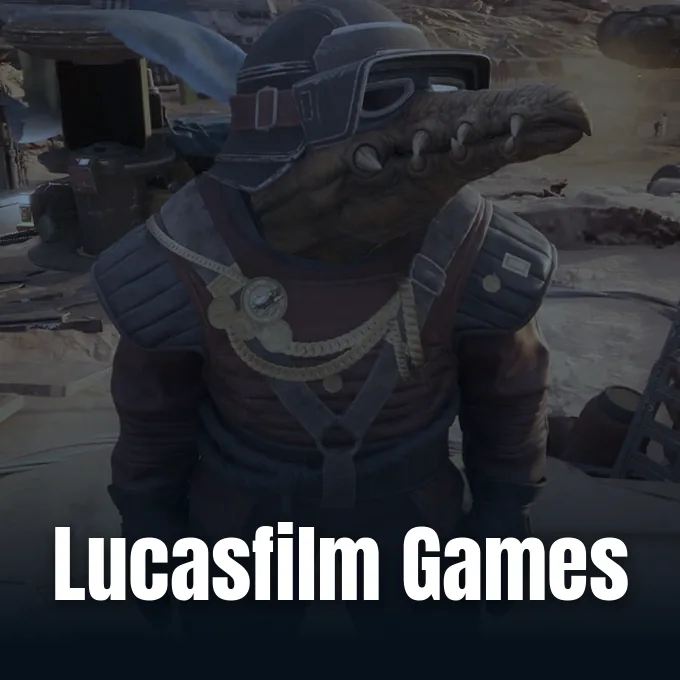
Paddock Narrative in Galactic Racer
Webster drew creative lessons from his past work at Criterion, where he led the X-wing VR mission for Star Wars Battlefront and saw how players connected with secondary galactic lore. Visiting Star Wars Celebration showed him that fans love obscure pilots, troopers, and background personalities just as much as main Jedi figures. Rivalry mattered more than Force powers. That insight led Fuse Games to shape Galactic Racer around personal garage politics instead of standard military battles [1].
The Netflix documentary hit Drive to Survive served as a prime influence for the game’s tone and structure. Webster wanted to capture Formula 1 drama away from the tarmac, saying “the intrigue and the excitement off track is as compelling as it is on track.” Players spend time in the paddock between races, talking with mechanics, rival racers such as Sebulba, and new figures like Biddy Blas to unlock storylines and pick up fresh contracts. This narrative pacing mirrors how Lucasfilm Games addressed the viral reaction to Biddy Blas during preview reveals [2].
Webster said paddock scenes give players essential breathing room between intense, high-speed contests on dangerous planetary circuits. Racing at top speed demands total focus, so spending a few quiet minutes in the garage talking with crew members keeps fatigue from setting in during long sessions. Webster put it simply: “Because there’s only so much time you can spend with your eyes on stalks at super high speed. You’ve got to have that light and shade.” Galactic Racer pairs that rhythm with a roguelike setup where an eighth-place finish still yields useful progress, a loop journalist Stephen Totilo praised while playing through early events with his son [1], [2].
Four Vehicle Classes from Landspeeders to Podracers
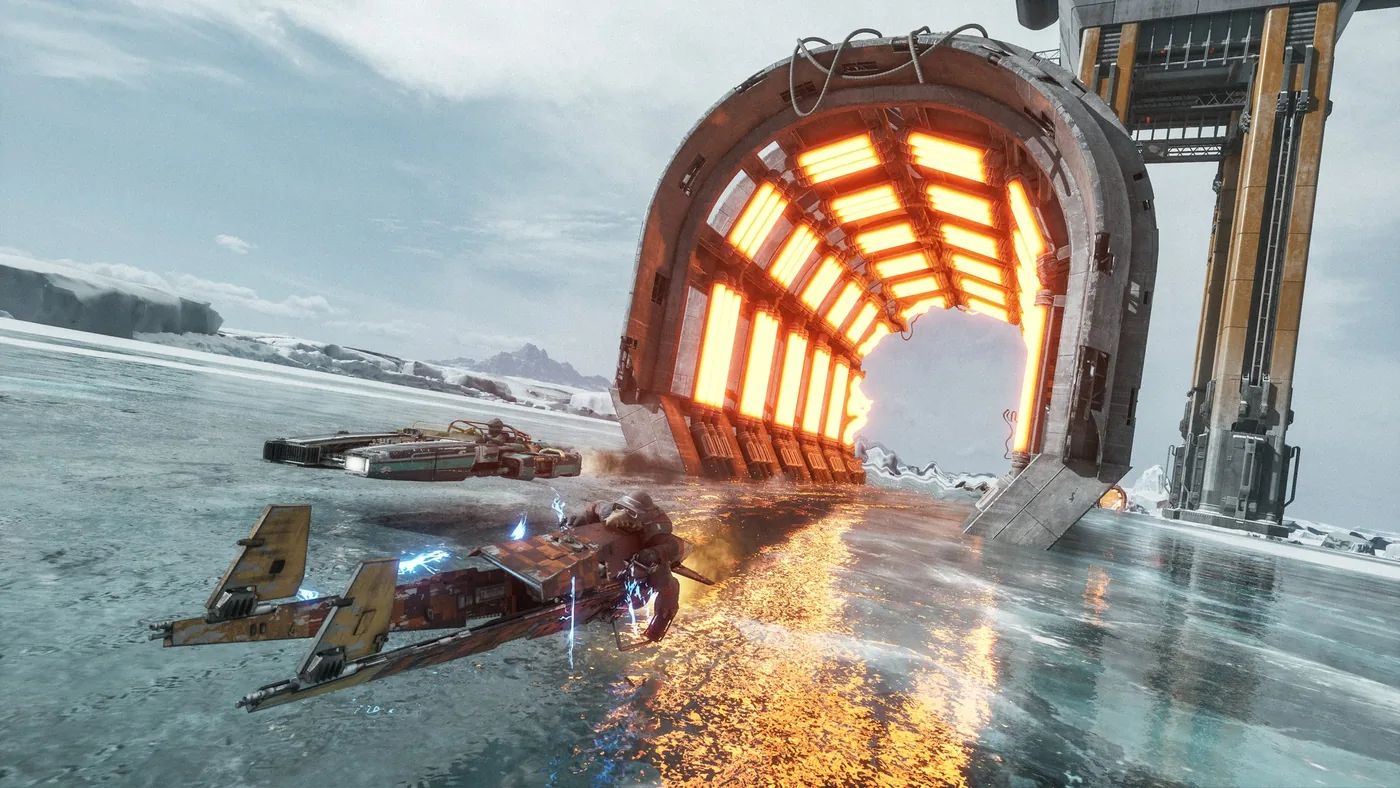
Galactic Racer builds its racing mechanics around four separate vehicle classes, each with its own handling quirks, progression systems, and custom parts. Players start the campaign in the Landspeeder. It is a sturdy craft that pairs moderate speed with forgiving armor, handling gently on wide curves so beginners can learn track layouts without wrecking their engines on the first lap. Its tail kicks out during heavy drifts. Overcorrecting on narrow tracks sends racers into walls, wiping out hard-earned momentum [3].
Speeder Bikes offer blistering acceleration off the starting line, but they lack stability and heavy plating. Racers must invest points into hull strength to survive collisions with aggressive opponents. Because steering is loose, riders rely on the Kinetic Burst drift mechanic to slide through tight corners and gain a fast speed boost on exit. Braking early before sharp turns and hitting the throttle early keeps the bike out in front [3].
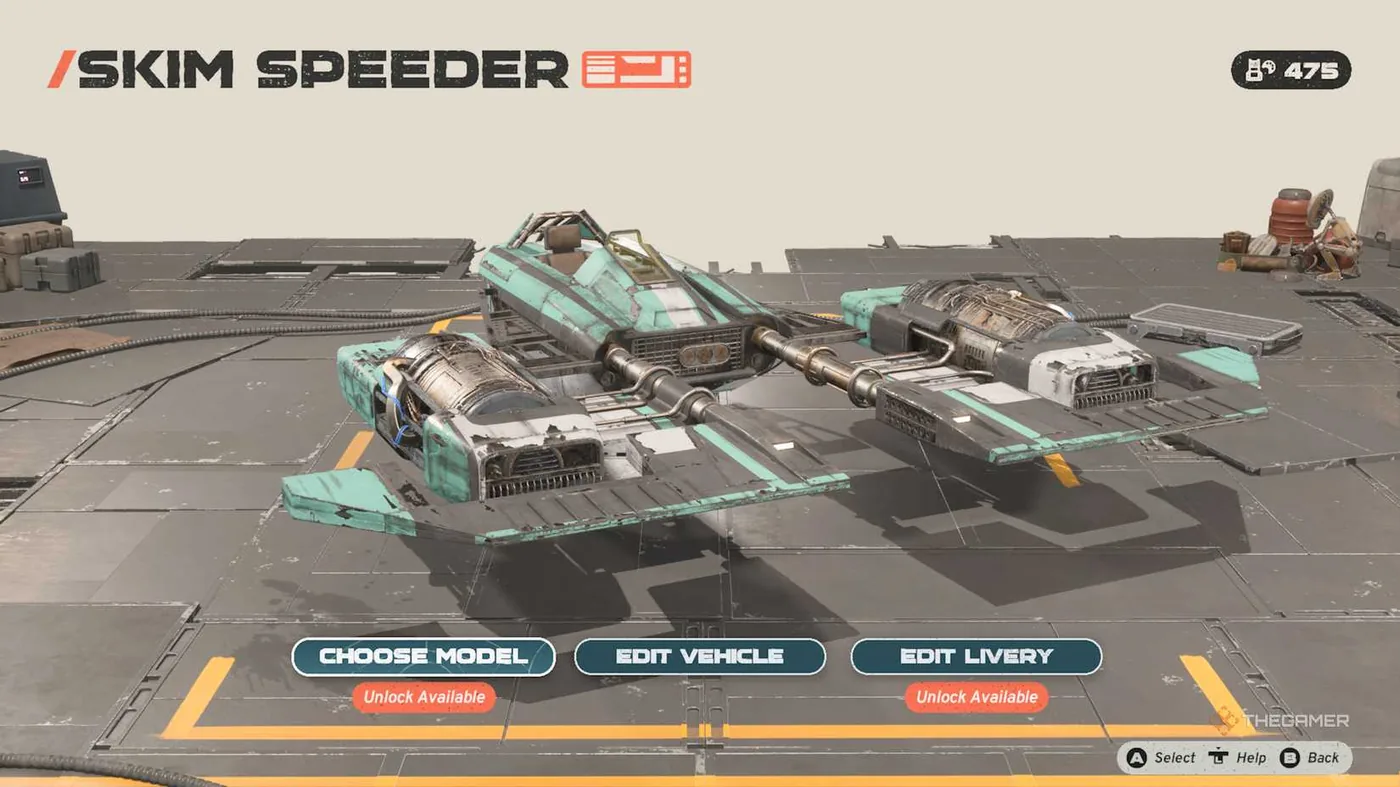
Skim Speeders are agile machines that sweep around chicanes with sharp turning precision, and their signature Knife Edge ability flips the hull on its side so pilots can clear tight corners with a narrow turning radius. That agility carries real vulnerability. Heavy impacts can trigger damaging system malfunctions. Meanwhile, Podracers appear in special modes (arcade, multiplayer, and flashback conversations) with Sebulba, demanding razor-sharp reflexes because a single wall strike causes instant destruction [3].
Sponsor Contracts and Backer Playstyles
Vehicle upgrades and progression in Galactic Racer tie into three distinct Backers who fund the tour. These sponsors act as built-in difficulty modifiers by attaching bonus Credits to specific racing styles. The Hutt offers the simplest contract goals, rewarding racers for making jumps, overtaking rivals, using the Ramjet booster, and holding first place [4].
The Pirate sponsor appeals to players who enjoy taking big risks on the track. Its contracts reward racers for drafting behind leaders, triggering system malfunctions in rival vehicles, and running the Afterburner boost. Impressing the Pirate means redlining engines right to the edge of catastrophic explosion [4].
The Broker serves as the most demanding Backer in the game. It rewards drivers who maintain top speeds with Ramjet and Afterburner boosts, log extended airtime over jumps, and knock rivals off the track with aggressive combat moves. As the first Star Wars racing title since 2002, the game has already received four balance patches to fine-tune these systems. Webster said Fuse Games will keep refining the racing systems based on player feedback, observing that “the launch is the beginning” [1], [4].
- ONLINE NEWS Packwood, L. (2026, October 16). How Star Wars: Galactic Racer kept the core team small and sustainable through “distributed development”. GamesIndustry.biz. [Article Link]
- ONLINE NEWS Packwood, L. (2026, October 16). The Netflix series Drive to Survive inspired Star Wars: Galactic Racer. GamesIndustry.biz. [Article Link]
- ONLINE NEWS Rivera, N. (2026, October 16). All Vehicle Types In Star Wars: Galactic Racer. TheGamer. [Article Link]
- ONLINE NEWS Pereira, M. (2026, October 16). Star Wars: Galactic Racer Guide – Selecting The Best Backer. GamingBolt. [Article Link]


